For a long time, the Toronto property story followed a familiar pattern. You bought what you could afford, waited for prices to rise, then sold and moved up to something bigger. In recent years that ladder has become much harder to climb. Higher borrowing costs, steep transaction fees and a shortage of the right homes in the right neighbourhoods have pushed many families toward a different question: what if we stayed and made this house work?
The numbers suggest a lot of people are reaching the same answer. A report from Angus Reid and Financeit found that 94 per cent of Canadian homeowners plan to stay in their current home for at least another year. When it came to renovation goals, 53 per cent said they wanted to improve how their home functions, and Ontario homeowners were the most likely to say so, at 63 per cent.
The hidden cost of moving
The price of a new home is the obvious number. The costs around it are easier to underestimate, and in Toronto they are unusually high.
Buyers in the city pay land transfer tax twice: once to the province and once to the City of Toronto, which sets its municipal rates to mirror Ontario’s on homes up to $3 million. On a $1.3 million house, that works out to roughly $22,475 in each tax, or about $44,950 in total before any first-time buyer rebates. Add real estate commission on the house you’re selling, legal fees, moving costs and the inevitable spending to make the new place feel like yours, and the cost of moving can easily climb past $100,000 without a single wall being improved.
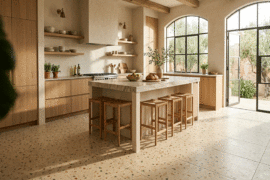
That money doesn’t disappear when you stay. Redirected into the house you already own, it can fund a new kitchen, a reworked main floor or a finished basement with a proper bathroom.
When renovating makes sense
Staying put is not always the right call, and good renovators will tell you so. The case for renovating is strongest when:
- You love the location. A neighbourhood, school catchment or commute you’d struggle to replace at today’s prices is worth a lot.
- The problem is layout, not size. Many older Toronto homes have plenty of square footage locked up in closed-off rooms, narrow kitchens and underused basements. Opening the main floor or reworking a staircase can change how a house lives without adding any space.
- The structure is sound. A solid house with good bones is a far better starting point than one that needs foundation work before anything else can happen.
- Your plans are long-term. Renovation pays off best when you’ll be there for years to enjoy it, not when you’re planning to list next spring.
When moving might be the better answer
If your family needs twice the space and the lot can’t accommodate an addition, or the commute has become unworkable, no renovation will fix that. The same is true if the house needs so much work that the cost approaches what you’d pay for a comparable home nearby. An honest early conversation, with a rough budget on the table, will usually make the right path clear.
Doing it without the chaos
The biggest worry most people have about renovating is not the cost but the disruption: months of dust, delays and decisions. That concern is reasonable, and it is why the way a project is run matters as much as what it builds.
The design-build model has become popular in the city for that reason. Instead of hiring an architect or designer, then putting drawings out to tender and hoping the builder interprets them as intended, a single firm handles design, permits and construction. Pricing is set once the design is complete, so the budget is tied to what will actually be built. Sosna, a Toronto design-build firm that has been working in the city since 2001, follows that approach with its own in-house team and a fixed-price contract.
Whichever route you choose, a few habits help: finalize design decisions before demolition begins, order long-lead items such as cabinetry and windows early, and plan where the family will cook and sleep during the noisiest phases. If you’re weighing a home renovation in Toronto, it’s worth sitting down with two or three firms early, before any design is fixed, and asking how they handle permits, scheduling and the inevitable surprises behind old walls.
A home that fits the life you have now
For many Toronto families, the decision to stay is as much emotional as financial. It is the street where the kids learned to ride bikes, the neighbours who keep an eye on the house in winter, the park within walking distance. Renovating lets them keep all of that while finally getting the kitchen, the extra bathroom or the open living space they’ve been missing.
The housing market will keep shifting. A home that genuinely suits the way you live is worth more than any short-term move up the ladder.