Space planning is one of the most important foundations in interior design, architecture, and even home renovation. It is the process of organizing furniture, movement, and functional zones in a way that makes a space efficient, comfortable, and visually balanced. Without strong space planning skills, even beautifully decorated rooms can feel impractical or confusing.
At its core, space planning is about understanding how people move and interact within an environment, then shaping that environment to support those behaviors. Good designers don’t just “fill a room”—they design how life happens inside it.
Developing this skill takes practice, observation, and structured thinking. Below are five essential steps that can help you build strong, professional-level space planning abilities.
1. Learn to Understand Function Before Design
The first step in developing space planning skills is learning to prioritize function over aesthetics. Every space has a purpose—living, working, relaxing, cooking, or a combination of these. A strong designer always starts by identifying what the space needs to do before deciding how it should look.
Professionals often begin by asking questions such as: Who will use the space? What activities will take place here? What problems need to be solved?
This stage is often called “analysis and discovery,” where the goal is to fully understand user needs, daily routines, and lifestyle requirements.
Once you understand function clearly, design decisions become easier and more logical. Furniture placement, zoning, and layout choices all stem from this foundation.
2. Measure and Map the Space Accurately
Accurate measurement is one of the most critical technical skills in space planning. Even small errors can lead to layouts that don’t fit or function properly.
Start by measuring:
- Wall lengths and room dimensions
- Ceiling height
- Window and door positions
- Fixed elements like columns or built-ins
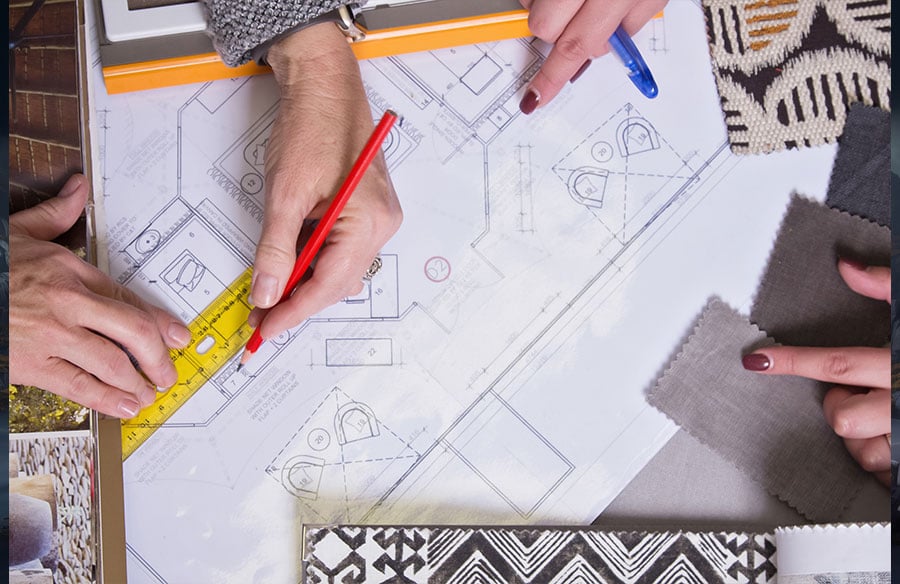
These details form the basis of a scaled floor plan, which acts as your working blueprint.
Many designers also sketch or digitally recreate the space before placing any furniture. This helps visualize how everything fits together and prevents costly mistakes later. In professional workflows, this step is considered essential because it turns abstract space into something measurable and controllable. Increasingly, professionals rely on architecture design software to build accurate 2D and 3D models of rooms, allowing them to test layouts, proportions, and spatial relationships before any physical work begins.
3. Study Circulation and Movement Flow
One of the biggest differences between beginners and experienced designers is how they handle movement within a space. This is known as circulation—the paths people naturally take when entering, leaving, and moving through a room.
Good space planning ensures that movement is smooth, intuitive, and unobstructed. Poor circulation leads to cramped layouts and awkward navigation.
A common guideline is to leave enough clear walking space between furniture and avoid blocking natural pathways like door-to-window or room-to-room transitions. Designers often map primary and secondary routes before placing any furniture.
When circulation is done well, a space feels effortless to move through—even if it is small or heavily furnished.
4. Practice Zoning and Functional Layouts
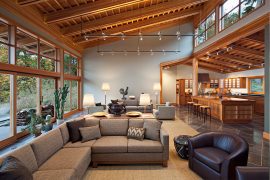
Zoning is the process of dividing a space into distinct functional areas. This is especially important in modern open-plan homes, where multiple activities happen in a single room.
For example, a living room might include:
- A seating/relaxation zone
- A media or entertainment zone
- A reading or work corner
These zones do not require walls. Instead, they are defined using furniture placement, rugs, lighting, or subtle layout changes.
Effective zoning allows multiple functions to exist in harmony without feeling cluttered or chaotic. It also helps improve usability by giving each activity its own clearly defined space.
As you practice, try experimenting with different zoning layouts for the same room. This builds flexibility and helps you understand how spatial decisions impact usability.
5. Refine Scale, Proportion, and Furniture Placement
Even a well-zoned space can fail if furniture is not scaled correctly. Scale and proportion ensure that everything in the room feels balanced in relation to the space and to each other.
Oversized furniture can make a room feel cramped, while undersized pieces can make it feel empty or unfinished.
To improve this skill, practice placing furniture in scaled drawings or digital tools before committing to real layouts. Many beginners also use cut-out templates or design software to experiment with arrangements.
A strong layout also considers focal points such as windows, fireplaces, or feature walls, anchoring the design around these visual elements for better harmony.
Over time, you will develop an instinct for what “fits” visually and functionally.
Bonus: Practice Through Real and Digital Exercises
Space planning improves significantly with repetition. Many learners practice by redesigning existing rooms, experimenting with different layouts, or using design software to simulate spaces.
Digital tools and sketching exercises help build spatial awareness—the ability to visualize how a space will feel once built.
You can also challenge yourself by redesigning the same room in multiple ways, each with a different purpose (e.g., social space vs. study space). This strengthens your adaptability and creativity.
Conclusion
Developing strong space planning skills is a gradual process that combines technical precision with creative thinking. By focusing on function, measurement, circulation, zoning, and scale, you build a solid foundation that can be applied to any interior design project.
The key is consistent practice and observation—learning how people actually use space, not just how it looks on paper. Over time, these five steps help transform basic layouts into thoughtful, functional environments that truly support everyday life.