When people think about sustainable living, they think they need a sprawling countryside property with plenty of land. But not everyone lives in the country.
Millions live in cities from San Francisco and London to Lagos and Nairobi. The UN’s 2025 World Urbanization Prospects report says 45% of the world’s population is urban. So can these city dwellers build a sustainable house in places such as these? The short answer: yes.
Sustainable house design is entirely possible in urban environments. A little planning, a little creativity, and a little help from modern building tech is all it takes. Here’s what you need to know.
What Is Sustainable House Design?
Sustainable house design means building or renovating your home to work with the environment instead of against it.
The main objectives are simple:
- Reduce overall energy consumption
- Lower carbon emissions
- Conserve precious water resources
- Minimize construction and daily waste
- Improve indoor comfort and health
Unlike what many people think, achieving some or all of those doesn’t need acreage. An apartment or townhouse can hit the same goals as a large house.
High-performance buildings in cities already demonstrate this. Recent U.S. General Services Administration data shows that high-performance buildings use 29% less water and 21% less energy than comparable legacy buildings. That’s real money off a monthly bill and eco-friendly living in what many people call the concrete jungle.
Key Strategies for Sustainable House Design in Cities
So, how can you make your urban living space sustainable? Here are six actionable strategies that make sustainable urban homes achievable.
Use Rooftops More Efficiently
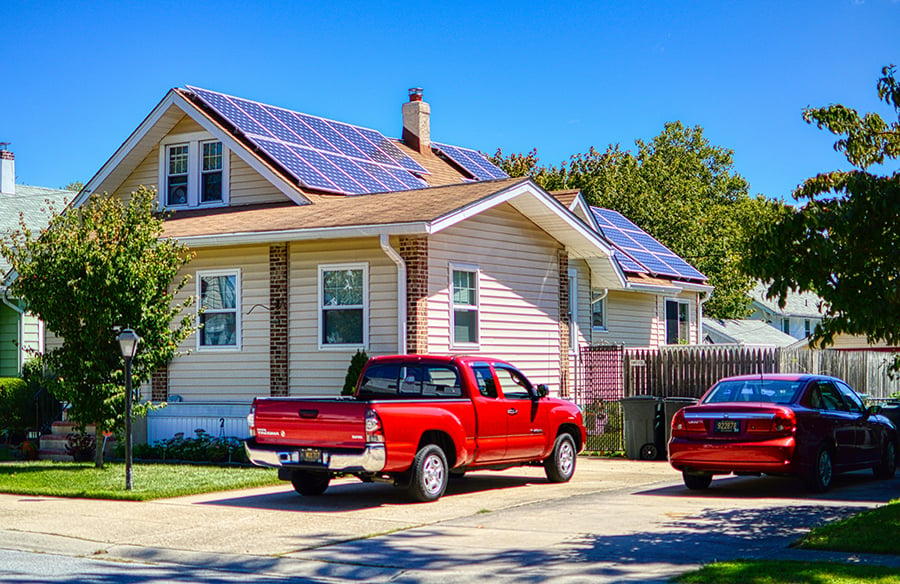
 Your roof is prime real estate for sustainability. Don’t let it go to waste. Installing solar panels is the obvious first step, but you can take it further.
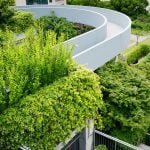
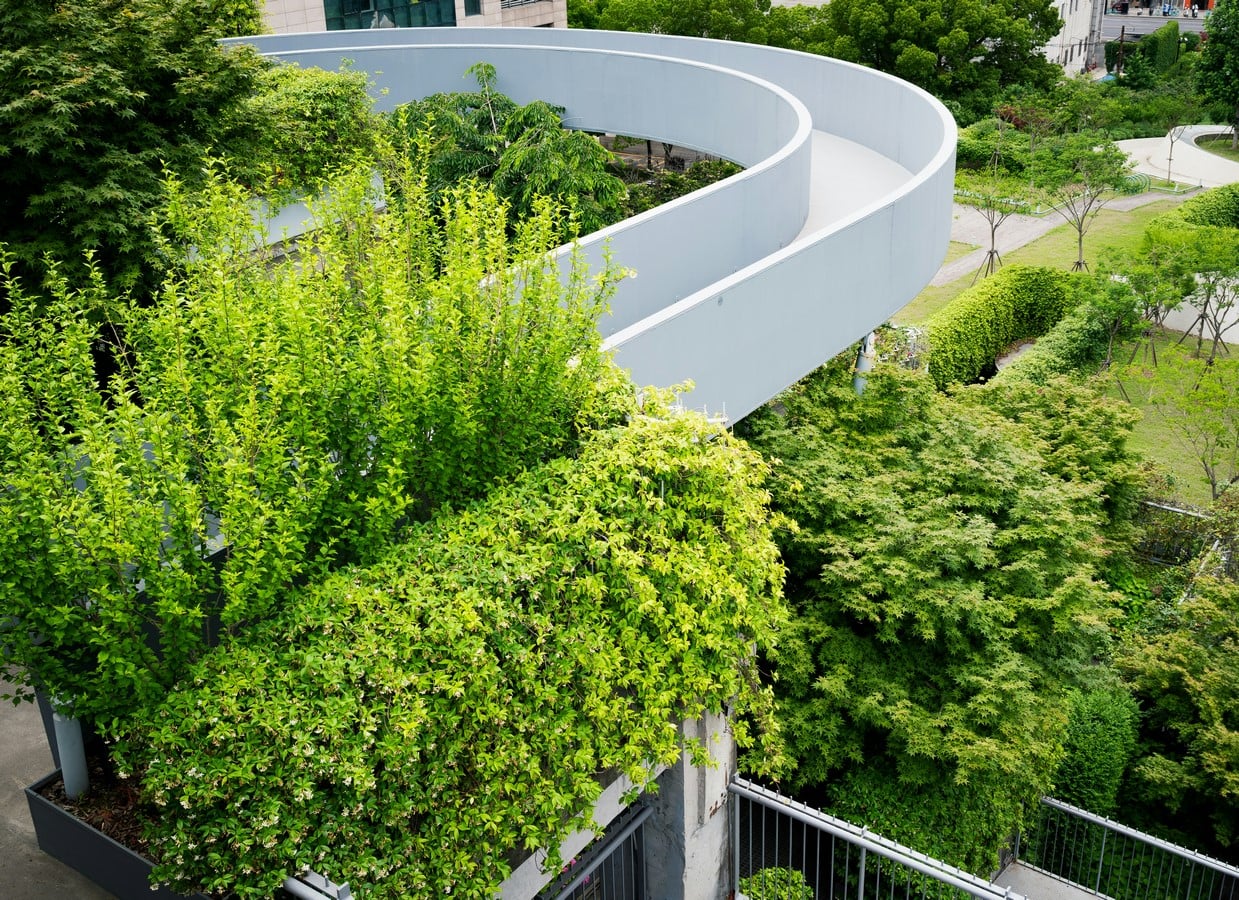
If you live in a packed city and have your own home, think about installing a green roof. It offers major sustainability benefits, including excellent insulation and reducing the urban heat island effect.
According to the American Society of Landscape Architects, on a typical two- or three-story building, green roofs can deliver up to 25% in energy savings during summer. For a household with a $250 monthly electric bill, that’s massive.
Incorporate Greenery
Going vertical is another strong option for eco-friendly house design. Living walls and climbing plants are some of the best ways to make this happen. They add greenery to your home without taking up valuable ground space.
But if space isn’t a problem, why not go the whole nine yards and go for drought-tolerant plants and eco-friendly hardscaping? Unlike the usual concrete paving, eco-friendly hardscaping options like turf and certain types of artificial landscaping allow rainwater to enter the soil, reduce runoff, and recharge groundwater.
In California’s East Bay area, especially Livermore, which experienced some of the hottest heatwaves in the Bay Area in 2024, this landscaping style can be a big help. And it’s probably why local homeowners now look for pavers in Livermore that offer durable, eco-friendly alternatives to traditional concrete. They want options that not only boost curb appeal, but also make sense for the environment.
Maximize Natural Light and Ventilation
This is a simple but highly effective strategy. It involves positioning your windows to maximize daylight and designing your floor plan for cross-ventilation. Obviously, this can only work if you’re building from scratch or doing major renovations.
That said, a well-placed skylight can reduce reliance on artificial lighting, while a natural breeze can cut out the need for air conditioning on mild days.
Choose Sustainable Building Materials
The materials you choose for your renovation or building project play a huge role in meeting your sustainability goals, so choose wisely. Opt for recycled steel, reclaimed timber, bamboo, and low-VOC paints and finishes that won’t release harmful chemicals.
Of course, no one expects your entire home to be built from recycled materials, especially in the city, but incorporate as much of it as possible. And source these materials locally. Long-distance transportation emissions will defeat your eco-friendly intentions.
Install Water-Saving Systems
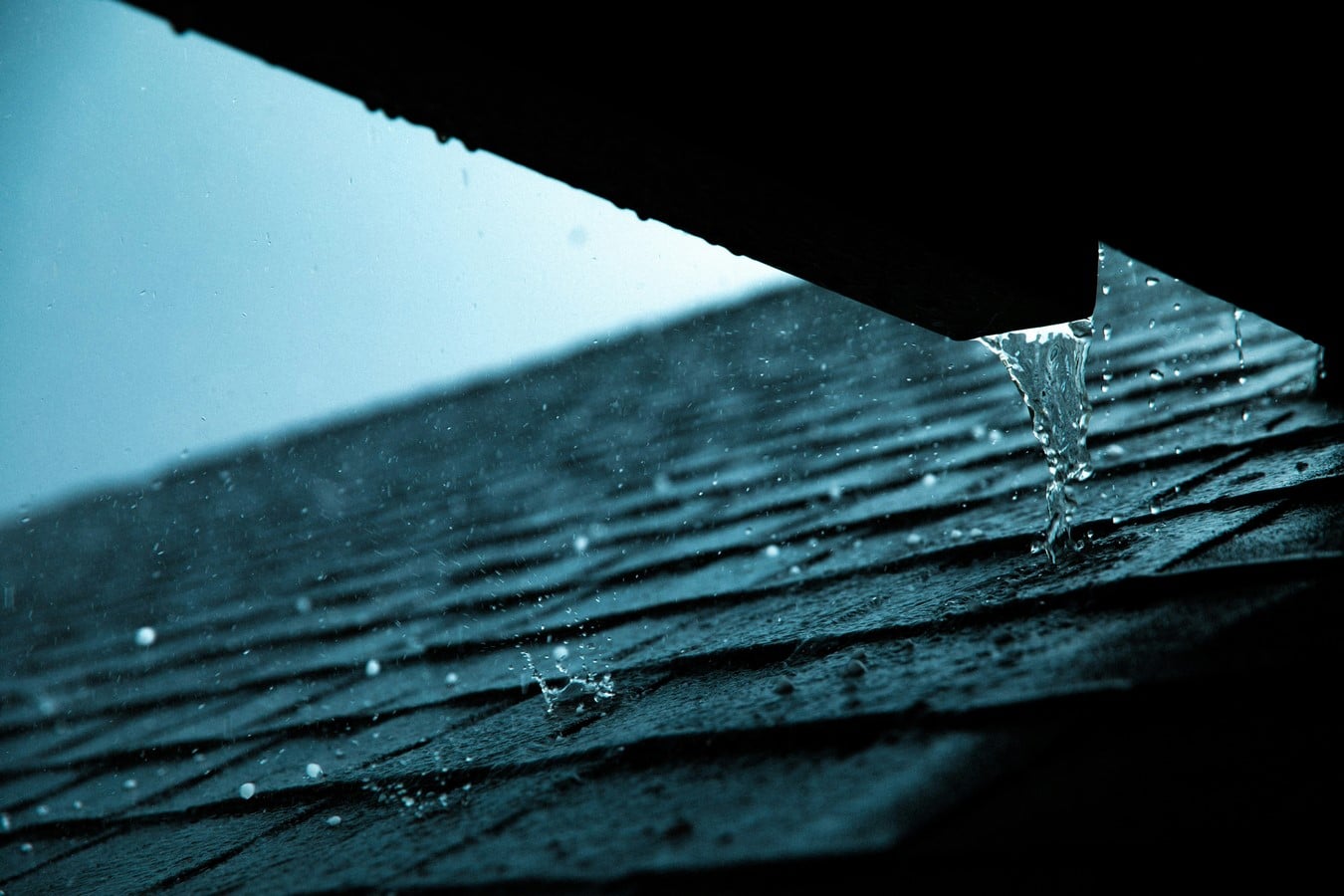 Harvesting rainwater can be a great addition to your sustainability efforts. But be sure to know how much you’re allowed to collect. In Colorado, for example, 110 gallons is the maximum you can store at a time.
But don’t stop with collecting rainwater. If your budget allows, install low-flow taps and showerheads, and choose dual-flush toilets. Pair these with smart irrigation systems and the permeable paving mentioned earlier to manage drainage and reduce runoff. The goal is to create an environment that manages water more efficiently.
Work with Professionals
Urban sustainable design comes with local codes, tight lots, and material trade-offs that can be genuinely tough to navigate alone. Many jurisdictions in the US base their building requirements on model codes developed by the International Code Council (ICC).
Experienced professionals understand these requirements and know which solutions work well on small urban sites and which ones only look good on paper. Bringing them in early helps keep your project on budget and on track.
As landscaping contractor Pavers and Turf puts it, “save yourself the financial burden and unnecessary headaches by making sure you’re working with licensed contractors who hold the correct classifications.”
FAQs
Can a small city house still be sustainable?
Absolutely. Small homes use less energy to heat and cool, and this makes them easier to make more sustainable. And you don’t even need to do much. Something as simple as maximizing natural light or installing energy-efficient appliances can be a good start.
Are sustainable homes more expensive to build?
It depends on how far you’re willing to go. That said, the long-term savings, both on energy and water bills, often make up for the extra upfront cost.
What is the biggest challenge of sustainable house design in urban areas?
The biggest challenge in sustainable homes design is usually the cost of land. Finding a plot that meets green criteria can be tough, coupled with zoning and building restrictions typical in big cities.
Sustainable House Design in Urban Areas: Points at a Glance
| Sustainability Strategy | Takeaway |
| Use Rooftops | Install solar panels and green roofs |
| Add Greenery | Use living walls, native plants, and eco-friendly paving |
| Daylight & Ventilation | Reduce reliance on artificial lighting and air conditioning |
| Sustainable Materials | Use recycled, reclaimed, locally sourced, and low-VOC materials |
| Save Water | Install rainwater harvesting, low-flow fixtures, and water-saving systems |
| Work with Professionals | Ensure the design meets local codes |
Final Thoughts
Sustainable house design isn’t a luxury for only people with lots of space or even rural dwellers. It’s just as possible in urban areas. More than that, it’s an increasingly necessary choice, and hopefully, this guide has shown you how possible it is and how to make it happen.
You mustn’t even start from scratch. A couple of improvements in and around your home can put you on the path to sustainable living.