You’ve found a finish you love. The color works with the house, and you can picture it from the kitchen window. Before committing to it, find out whether the surface underneath needs repair. That assessment helps you plan the visible changes alongside the preparation they require.
Start With What Your Pool Needs
Define the project before you shop. Studying architect-designed pools can help you name the shapes, edges and materials you respond to, but start with an honest record of your own pool. Walk around the pool with a notepad and record what you see: worn or rough patches, loose coping, cracked deck areas, places where water collects, and any water level drop that seems faster than usual.
Keep, repair or change. Water loss needs diagnosis before repairs are specified. Evaporation, splashing, cleaning and leaks can all lower the water level, so have a professional identify the cause before proposing a fix. Have qualified professionals assess cracks, electrical issues and proposed changes to the shell, too.
Refreshing a finish is a different job from altering the structure, and the right approach depends on what the pool is made of. Gunite and fiberglass shells need different preparation, so ask your contractor to identify the existing material and explain the preparation it needs.
Write a simple design brief. Note what you want to keep about the shape, how the pool is seen from the house, and which surrounding materials, such as siding, stone and patio paving, a new palette should work with. Set a budget that accounts for installation, ongoing care and eventual replacement, as well as the materials’ purchase price.
Include safety in the brief. A June 2026 CPSC report found that drowning remains the leading cause of death for children ages one to four. CPSC’s Pool Safely campaign recommends layers of protection, including a four-sided, non-climbable fence with self-closing, self-latching gates, door alarms and pool covers. These are general safety recommendations, so check local requirements with your city before finalizing the design.
Pair the Look With the Right Materials
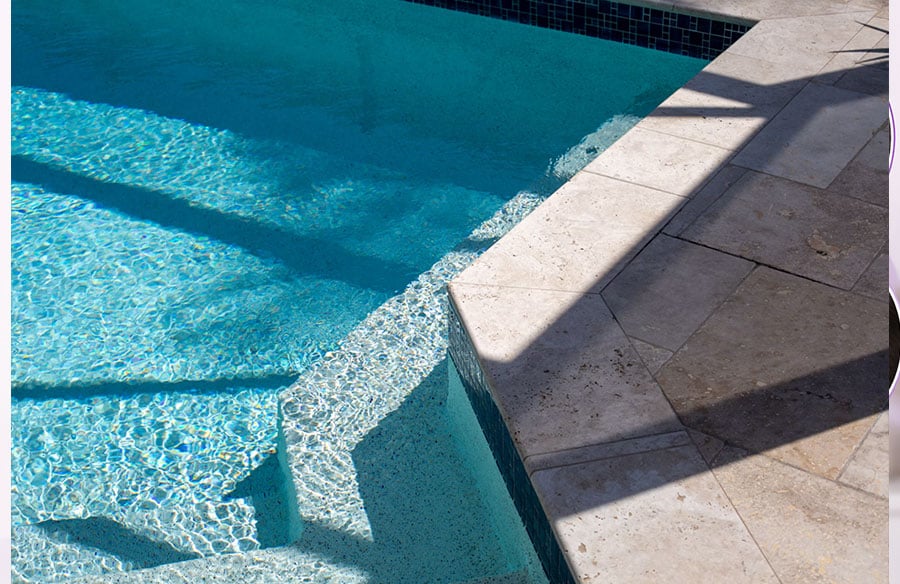
If the assessment supports a finish-focused renovation, consider refreshing the interior, choosing a restrained waterline band and repeating a compatible color at the coping and deck. Compare those choices together against the house and patio materials before approving them individually.
The interior finish. Options include plaster-based surfaces, aggregate finishes and polymer coatings such as ecoFINISH, offered for concrete, fiberglass and metal pool surfaces. Suitability depends on the existing shell, surface preparation, application and ongoing care. Ask whether the proposed system suits your pool’s construction. In Kansas City, for example, pool renovation contractor Probuilt Renovations offers ecoFINISH coatings alongside leak detection and crack repair.
Request physical samples and photographs of completed pools in similar light. PebbleTec notes that finish color, water depth, sun exposure and surrounding vegetation all affect how pool water looks, so an indoor sample cannot predict the finished appearance on its own. Ask the installer what routine care the chosen finish needs, including any winterization steps.
The waterline. A narrow tile band can connect the pool’s palette to stone on the house. Tile made for constant immersion is different from general decorative tile. Ask the supplier to confirm that the selected product suits its location and water exposure, because an outdoor rating alone does not establish that.
The edge and deck. Coping, the trim around the pool’s edge, and the deck need to suit barefoot use and wet conditions. Ask about slip resistance, comfort underfoot and drainage that moves water away from the house and pool edge. Confirm whether each product can withstand repeated freezing and thawing during Kansas City winters, and ask about UV and fade resistance.
Turn the Design Into a Written Scope
Compare the same work. FTC guidance recommends getting written estimates and a written contract that spells out the work, materials, start and completion dates, and price. For a pool renovation, request separate lines for assessment, repairs, surface preparation, the selected finish, deck work and aftercare. Have each contractor identify exclusions and explain how unforeseen defects will be documented and approved once the old surface comes off.
Ask for a schedule that accounts for repairs, preparation, weather and the chosen system’s startup requirements. Confirm what determines the refill and reopening dates, rather than relying on a completion date that leaves those steps unclear.
Establish who will perform and coordinate each part of the work, including whether one contractor handles the pool, repairs and deck, or whether the trades are split.
Review the equipment and pool cover before finalizing the scope. ENERGY STAR notes that certified pool pumps can be programmed to run at different speeds for different tasks. Ask whether equipment changes belong in the renovation, how they affect the schedule and what winterization instructions the installer will provide. Avoid assuming a fixed saving from an equipment upgrade.
Ask for the handover plan. Separate manufacturer product coverage from installer coverage. A manufacturer’s product warranty may not cover installation workmanship, so ask the installer about any separate workmanship coverage, its exclusions and how to make a claim.
Before signing, confirm that the handover will include startup and care instructions, how the water will be tested and balanced after filling, product identification, warranty documents and a named contact for problems.
Key takeaways: Diagnose water loss and structural concerns first, compare samples with the house and deck, and get preparation, exclusions, coverage and care instructions in writing.
Conclusion
A balanced plan connects the pool’s condition to the look you want. Start with a professional assessment, compare finish and edge samples in context, and require written scope, exclusions, coverage and handover instructions. This process supports design decisions that fit the shell, climate and care routine without treating any finish as maintenance-free.
FAQs
When should I assess the pool?
Before selecting finishes or accepting quotes, especially when you notice water loss, cracks, loose coping or electrical concerns.
Which finish lasts longest?
No finish is universally longest-lasting. Suitability depends on the shell, preparation, application and care requirements.
Should I check local safety rules?
Yes. Ask the city about current requirements for fences, gates, alarms and covers before finalizing the design.
What belongs in the estimate?
Request costs for assessment, repairs, preparation, finish, deck work, exclusions, schedule, coverage and handover instructions.