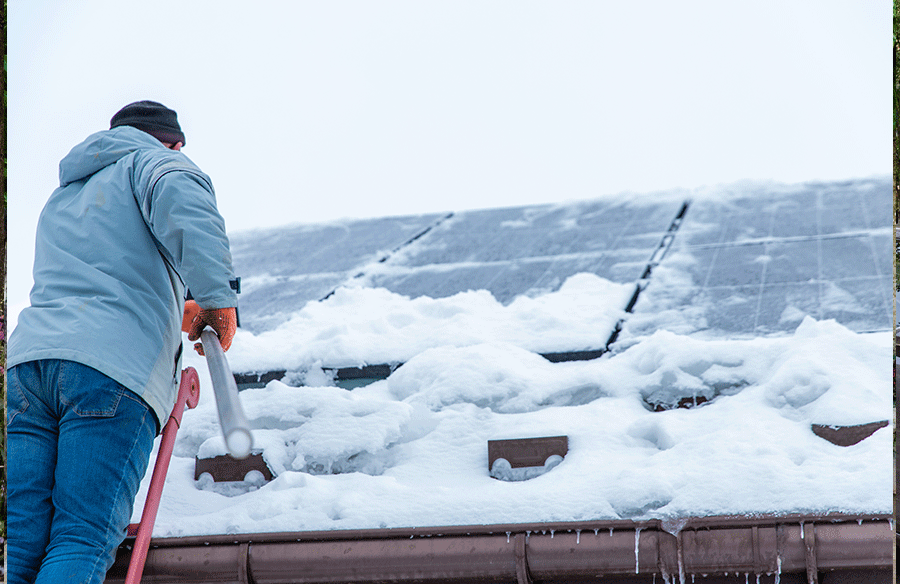
Six inches of wet snow on a roof you don’t trust will ruin a February faster than any heating bill. Ask anyone who’s spent a winter watching a ceiling stain grow. So here’s the promise: by the end of this piece you’ll know how to read a roofing quote like a contractor does, spot a storm chaser before they knock, and decide between patch and replacement with your eyes open. No fluff, just the gut checks I’d use on my own house.
The good news is that you don’t need to become an expert. You need a short list of questions and a working sense of what a fair, detailed estimate looks like. Most homeowners learn this stuff the hard way, halfway through a project, when the leverage is gone. Flip that order around and the whole process gets easier. If you’re in northern Michigan, the licensed roofing companies in Traverse City, MI deal with lake-effect snow as a design requirement, not an afterthought, and that distinction shows up in how they build.
Why does snow country punish a bad roof?
A roof near the Great Lakes faces a stacked deck: heavy snow loads, freeze-thaw cycles that pry at every seam, and wind gusts that find the one loose shingle on the whole plane. The National Weather Service tracks lake-effect events that can bury a ridge in a single night, and those storms reward good flashing and punish shortcuts. Repetition is the villain. A small installation error compounds every time the ice builds and melts.
This is why the cheapest quote usually isn’t cheap. Price gets cut from somewhere, and in roofing it’s often the underlayment, the ice-and-water shield at the eaves, or the ventilation detail nobody photographs because it’s hidden under the deck.
My rule of thumb: if two bids differ by a few thousand dollars, the difference is almost always what you can’t see once the job is done.
The 20-minute gut check
Before you call anyone, do a quick self-audit. Grab a notebook and spend twenty minutes on these. I’ll print the list so you don’t have to remember it later.
- Age and material. Asphalt shingles have a known service life, and if yours are near the end of it, patching is money down a hole. Metal, slate, and membrane systems each follow their own clock.
- Ceiling stains and attic streaks. A brown ring on the drywall is a report card. Find where water is actually getting in.
- Granule piles in the gutters. That grit is your shingles shedding their protective surface.
- Snow guards and valley condition. Snow needs somewhere to go, and valleys are where ice dams love to form.
Write down what you see and where. A contractor who asks questions based on your observations is a contractor who’s thinking. One who skips straight to a price is selling, not diagnosing.
Questions that separate pros from storm chasers
Every year, out-of-town crews follow big weather events and knock on doors. Some do fine work, but many vanish once the check clears. So ask these, and listen for specifics.
- Where’s your license and where’s your insurance? Get the certificate, not just the claim. A legitimate roofer won’t blink at the request.
- Do you have a physical address I can drive to? A PO box and a cell number tell you something.
- What’s in the estimate, line by line? Materials, tear-off, disposal, deck repair allowance. Vague scopes are where change orders are born.
- What warranty covers the workmanship, and is it transferable? Manufacturer coverage on shingles is common. Coverage on the installation labor is the one that actually matters when a leak shows up.
- Who’s on the crew, and who’s the foreman? Subcontractors are normal, but you deserve to know who’s swinging the hammer.
I’d rather hire a crew that’s slightly slow to return a call than one that calls me three times a day. Speed can mean desperation. Consistency means a business that’s still around next spring.
Patch, repair, or replace?
This is the decision most homeowners get wrong because it feels emotional. A rational read looks like this:
| Situation | Best move | Why
|
|---|---|---|
| One isolated leak, roof under half its service life | Targeted repair | Cheap, fast, and keeps you moving |
| Repeated leaks in several spots, same age as the house | Full replacement | Repairs start costing more than the roof |
| Missing or lifted shingles after a wind event | Inspect then decide | Wind damage often hides under an intact-looking surface |
| Ice dams every winter with no structural damage | Ventilation and insulation first | Fix the cause before you re-roof |
Here’s the part I’d push you on: ice dams are often an attic air problem wearing a roof costume. Solving the ventilation may spare you a replacement. A roofer who recommends that route is giving you advice, not a sales pitch.
The estimate should tell a story
Compare bids on what’s included, not just the bottom number. A one-page price with no material spec is a guess. A proper proposal names the underlayment, the shingle line, the ridge ventilation method, and the decking replacement cost per sheet. It also names what’s excluded, which is the honest part.
The roofing trade is also a major employer, and labor costs naturally reflect local wage baselines. The Bureau of Labor Statistics tracks roofing wages and employment, and that data quietly explains why a fair quote on a steep, snowy pitch costs more than a flat suburban ranch: steep-slope work in cold weather takes real time and labor. Anyone quoting far below local norms is planning to cut somewhere.
Timing your project around the season
Northern roofs don’t have a twelve-month calendar. Late spring through early fall is the window most contractors want, because shingles seal and adhesives cure at warmer temperatures. Shoulder seasons are better for inspections, since you can see the actual surface rather than guessing.
If you’re replacing, winter is also a planning season: inventory, financing, and detailed estimates all move faster when crews are less booked. According to the Home Builders Institute, skilled-trade labor availability is a long-running constraint across the construction sector, which is why the early call wins. Reach out in January for a summer install and you’ll have options.
A quick look at the whole system
A roof isn’t a solo act. Gutters carry meltwater away from foundations, and siding takes the wind load at the edges. Hiring one company for roof, gutter, and siding often means one warranty and one crew that already knows the house. That’s not a guarantee of quality, just fewer conversations to keep straight when a winter goes sideways.
Keep a simple folder: contract, warranty letters, photos of the finished work, and dated notes from each inspection. It’s a five-minute habit that pays for itself the day you call about a leak.
Before you sign anything
By now you’ve got the playbook. Diagnose first, ask the five questions, compare scopes, and respect the season. Start the conversation in the off-months and you’ll be negotiating from calm rather than from a bucket in the hallway. And when you eventually do need a roofer, remember the gut check: fast answers and vague scopes are a warning, specifics are the deal. So, which of these checks are you going to run first this week?