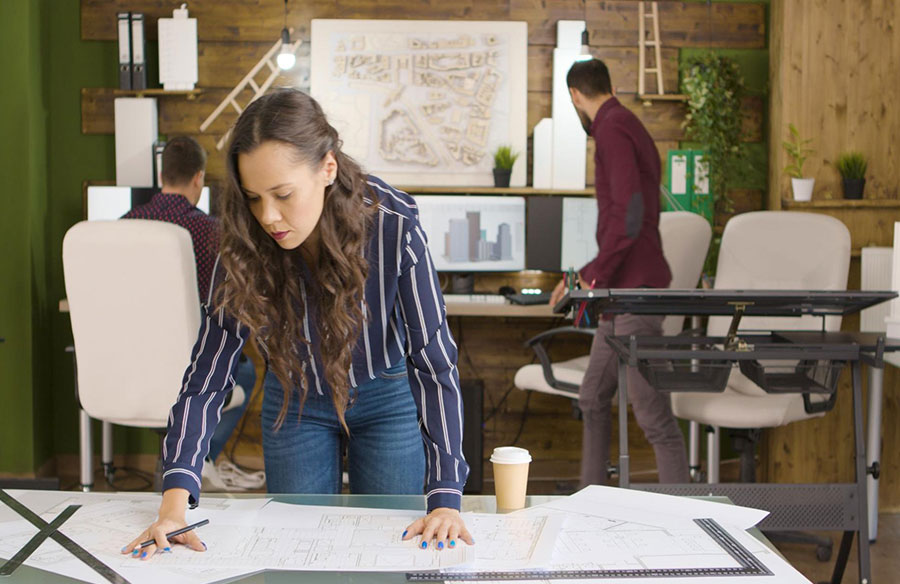
Architectural education is no longer centered only on form, history, and studio culture. Schools now respond to climate risk, new building tech, and shifting professional roles.
Universities are reshaping curricula to match how design work happens today. The goal is a graduate who can think creatively and operate in complex, real-world systems.
Why the shift is happening now
Design programs feel pressure from multiple directions at once. Environmental urgency, digital workflows, and social expectations all arrive in the same decade.
That mix pushes educators to update what they teach and how they teach it. The “classic studio” is evolving into a more networked learning model.
Climate realities and public expectations
Heat waves, flooding, wildfires, and material scarcity change how buildings are planned. Resilience and adaptation are no longer elective topics.
Clients also ask harder questions about carbon, wellness, and equity. Students must learn to justify decisions with more than taste.
Technology reshaping professional practice
BIM coordination, parametric modeling, and digital fabrication are standard in many offices. AI-assisted ideation and visualization are also entering daily workflows.
Because tools evolve quickly, schools emphasize transferable methods. Students practice learning new software without losing design intent.
AI tools help students in learning by supporting idea exploration and organizing complex information, and an AI text scanner helps them keep their writing original as they develop projects. This allows students to experiment freely while staying mindful of their own work. As they iterate on concepts, learners grow more confident in using digital tools alongside critical thinking. The process naturally blends creativity with careful attention to integrity.
Curriculum updates that reflect real-world practice
Most programs still value conceptual thinking and spatial skills. The difference is that “concept” now includes performance, context, and long-term impact.
Studios increasingly connect to building science, data, and project delivery. That alignment supports employability and better design outcomes.
Sustainability and regenerative design as core literacy
Sustainable architecture education has moved from a single seminar to a program-wide spine. Many schools treat carbon accounting like a basic design language.
These common learning targets show how the baseline is changing across studios and lectures:
- carbon awareness for buildings and neighborhoods;
- life-cycle assessment and embodied energy fundamentals;
- passive strategies for daylighting, ventilation, and thermal comfort;
- low-impact material selection and circular design thinking;
- post-occupancy evaluation and feedback loops.
When students use these ideas early, critiques become more grounded. A strong concept can still be poetic, but it also has measurable benefits.
Digital-first studios: BIM, parametric, and fabrication
Digital design is not just about making sharper renders. Programs teach modeling as a way to coordinate, simulate, and test alternatives.
Many studios now follow a workflow that mirrors practice while keeping space for experimentation:
- Define the brief, constraints, and success criteria.
- Build a massing model and test early options quickly.
- Develop a BIM or coordinated model for systems thinking.
- Run performance checks for daylight, energy, or comfort.
- Prototype details with digital fabrication where possible.
- Present outcomes with narrative, drawings, and metrics.
That structure helps students move from idea to execution without guesswork. It also reduces the gap between school projects and professional expectations.
New ways of teaching and assessing design
Assessment is changing because architectural work is changing. Collaboration, research, and iteration matter as much as the final boards.
Programs increasingly grade both process and evidence. The pin-up remains important, but it is no longer the only proof of learning.
Hybrid studios, critique culture, and remote collaboration
Hybrid learning expanded after recent global disruptions and stayed for practical reasons. Online juries can include international critics and diverse voices.
Remote teamwork also reflects distributed practice. Students learn clear file management, version control habits, and presentation skills across time zones.
Evidence-based design and performance metrics
Design decisions now compete with budgets, codes, and sustainability targets. Schools respond by teaching evaluation methods, not only intuition.
The table below shows how many courses reframe “good design” with added criteria:
| Area of learning | Traditional focus | Emerging focus in many programs |
| studio assessment | composition and concept clarity | concept plus performance evidence |
| building science | separate lecture topic | integrated into design iterations |
| representation | drawings and renderings | drawings plus simulation outputs |
| professional practice | contracts and ethics | delivery workflows and coordination |
| urban design | master plans and diagrams | resilience, mobility, and data layers |
These metrics do not replace creativity. They sharpen it by showing which ideas perform well in real conditions.
Interdisciplinary and community-engaged learning
Architecture sits between art, engineering, policy, and human behavior. Schools respond by breaking departmental silos more often.
Interdisciplinary studios also reflect how projects are delivered. A graduate who can communicate across fields is more valuable to any team.
Working with engineers, data experts, and health researchers
Collaborative courses often pair designers with structural, mechanical, or environmental specialists. Some programs also include public health, sociology, or computer science partners.
Common interdisciplinary modes include:
- joint workshops with engineering and construction management;
- GIS and urban analytics for site and mobility insights;
- acoustic and lighting labs for occupant comfort studies;
- material research with chemistry or manufacturing groups;
- computational design seminars with coding and data methods.
Students benefit because they learn shared vocabulary and negotiation skills. Better communication reduces redesign cycles and improves project quality.
Co-design with communities and stakeholders
Community engagement is becoming a core pedagogical method. Students practice listening, facilitating, and translating needs into spatial proposals.
Projects may involve local nonprofits, schools, or city agencies. That approach teaches ethics and shows how design affects everyday life.
Skills that matter for the next decade
Architectural careers are diversifying. Graduates may work in design, sustainability consulting, visualization, urban resilience, or product development.
Because of that variety, programs emphasize adaptable competencies. The most useful skills combine craft, analysis, and leadership.
Before choosing electives, it helps to track the abilities many employers and research labs value today:
- strong design narrative and clear communication;
- comfort with BIM coordination and model-based workflows;
- basic literacy in energy, carbon, and material impacts;
- collaboration skills across disciplines and cultures;
- ability to test ideas with prototypes and simulations;
- ethical reasoning around equity, accessibility, and inclusion.
These abilities support many career paths, not just traditional practice. They also help students remain relevant as tools and regulations evolve.
How students can make the most of the new landscape
The modern architecture student has more options than ever. That freedom can feel overwhelming without a strategy.
A practical plan keeps learning focused while leaving room for curiosity:
- Choose one “depth” track, such as sustainability or computation.
- Build a portfolio that shows process, not only final images.
- Practice critique by explaining trade-offs and constraints clearly.
- Learn one analysis method, like daylight studies or LCA basics.
- Join interdisciplinary teams to strengthen communication skills.
- Reflect on ethics, accessibility, and stakeholder impact regularly.
Progress becomes easier when goals stay specific. Over time, small choices create a portfolio that signals both creativity and competence.
The future studio is already here
Architectural education is adapting by becoming more integrated, more evidence-aware, and more collaborative. Climate action, digital practice, and social responsibility now sit inside the design core.
Students who embrace these changes gain a wider toolkit and stronger career flexibility. The profession will keep shifting, but the best programs teach how to keep learning.