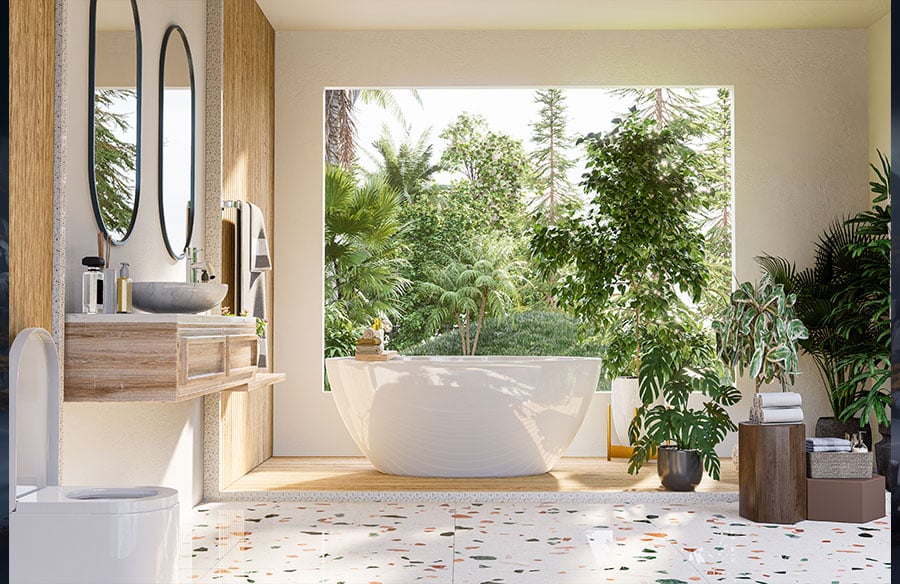
A bathroom designed for water reuse does more than look efficient, it changes how water moves through the space. With the right planning, fixtures, and help from a qualified plumber, greywater recycling systems can redirect lightly used water from showers, tubs, or sinks so the home can safely reuse shower water or sink water for approved non-potable purposes instead of sending every gallon straight down the drain.
Designing With Greywater Recycling Systems
Designing a bathroom that reuses its own water means treating the bathroom as a small water ecosystem instead of a one-way drain. In a conventional bathroom, clean drinking-quality water enters through taps, showers, and toilets, then leaves the home as wastewater after a single use. A water-reuse bathroom separates some of that lightly used water, treats it appropriately, and sends it to a second non-drinking use before it leaves the property.
Designing a bathroom that reuses its own water means matching each water source to the next safest and most useful purpose. The bathroom is not simply “saving water.” It is separating water by quality, treating it only as much as needed, and reusing it before sending it away.
Greywater recycling is one of the main systems that makes this possible, and greywater recycling systems are what turn that design idea into working plumbing. Greywater is wastewater from sources such as showers, baths, and bathroom sinks. It does not include toilet waste. Because it is less contaminated than blackwater, it can often be collected, filtered, disinfected where required, and reused for non-potable purposes such as toilet flushing, landscape irrigation, or sometimes laundry, depending on the system and local rules. EPA research describes onsite non-potable reuse as treating water generated within a building for uses such as toilet flushing, clothes washing, and ornamental plant irrigation.
In a conventional bathroom, every fixture is treated the same from a plumbing standpoint: clean water comes in, used water drains out, and the toilet uses potable water even though it does not need it. A reuse-focused bathroom changes that sequence. Shower, bath, or vanity water can be collected separately, filtered or treated, and reused for a non-potable job such as flushing a toilet or irrigating landscape areas.
The most important design idea is “right water, right use.” Drinking-quality water should be reserved for drinking, bathing, handwashing, and other high-contact uses. Lightly used bathroom water can often serve lower-contact purposes after proper handling. In practical terms, greywater recycling systems are the equipment and plumbing that make this possible: separate drains, filters, treatment components, tanks, pumps, controls, overflow routes, and dedicated non-potable supply lines.
The goal is not to make the bathroom independent from the water grid. The goal is to reduce unnecessary demand for fresh potable water. A well-designed greywater bathroom still protects health, keeps potable and non-potable plumbing separate, and gives homeowners a practical way to use the same gallon of water more than once.
A good greywater bathroom is not judged by how futuristic it looks. It is judged by whether the reused water has a clear destination, whether the system is easy to maintain, whether it avoids odors, and whether it protects the potable water supply.
Greywater vs. Blackwater
The most reusable bathroom water usually comes from showers, bathtubs, and bathroom sinks. These sources contain soap, shampoo, skin cells, toothpaste residue, hair, and small amounts of dirt, but they do not normally contain toilet waste. That makes them potential greywater sources.
Not all bathroom water has the same reuse potential. The cleanest candidates are usually shower and bath water because they are produced in larger volumes and often contain predictable contaminants: soap, shampoo, body oils, hair, and skin cells. Shower water is usually the most practical bathroom greywater source because showers generate enough volume to make collection worthwhile. Bath water is similar, although it may contain more oils, bath products, salts, dyes, or body-care additives depending on how the tub is used.
Bathroom sink water can also be reused, but it is more variable because it may contain toothpaste, shaving residue, cosmetics, hair products, cleaning residues, or disinfectants. Sink water can be useful, especially for toilet flushing, but it often produces smaller, more intermittent flows.
Greywater is the broader category that includes lightly used wastewater from non-toilet fixtures. In bathroom design, it usually means water from showers, tubs, and bathroom sinks, and sometimes laundry, depending on local definitions. Kitchen sink and dishwasher water are treated more cautiously in many codes because they can contain food waste, grease, and higher organic loads.
Blackwater is wastewater from toilets and, in some definitions, any water that has come into contact with fecal matter. Blackwater requires a much higher level of treatment and is not handled by a typical residential greywater system. The distinction matters because greywater can often be reused with simpler treatment, while blackwater belongs in a sewer, septic system, or advanced wastewater treatment system.
The overlooked point is that “greywater” is not a single uniform liquid. Its quality changes by fixture, household habits, cleaning routines, and even the time of day. A system that handles mostly shower water may have different filter, storage, and odor-control needs than one that also receives sink water with toothpaste and cosmetics.
How To Reuse Shower Water
Homeowners can reuse shower water safely when they treat it as non-potable water and design the system around the final use. Shower water should never be reused for drinking, cooking, handwashing, bathing, or any use where people may ingest it. The safest household applications are typically toilet flushing or subsurface irrigation, where exposure is limited and the system is designed for that purpose.
Homeowners can reuse shower water safely by controlling three things: contact, time, and treatment. Contact means the reused water should go only where people are unlikely to touch or ingest it. Time means untreated greywater should not sit long enough to become stagnant. Treatment means the system should remove the types of contaminants that would interfere with its next use.
A basic shower-water reuse pathway starts with collection. To filter shower water for reuse, the system first needs to separate debris before the water is stored or redirected. The shower drain is routed to a separate greywater line instead of directly into the sewer line. From there, the water passes through a filter that removes hair, lint, soap solids, and other particles. The first treatment step is usually coarse screening to capture hair and large debris. After that, the system may use sediment filtration, finer cartridge filtration, biological treatment, disinfection, or a combination of these, depending on whether the water is going to subsurface irrigation, toilet flushing, or another approved non-potable use.
The level of filtration should match the destination, because the way you filter shower water for reuse changes depending on whether the water will irrigate plants or flush a toilet. Water used for subsurface irrigation may need debris removal and a distribution design that prevents clogging and pooling. Water used for toilet flushing usually needs more controlled treatment because it is stored indoors and delivered through plumbing. That may require a tank, pump, overflow connection, automatic potable-water backup, backflow protection, and sometimes disinfection.
Storage is one of the most important safety details. Untreated greywater should not sit for long periods because it can develop odor and support bacterial growth. Many simple systems are designed to use greywater quickly or divert it to the sewer when reuse is not needed. More advanced systems use treatment and controlled storage to keep water suitable for the intended non-potable use. NSF/ANSI 350 is one standard used to evaluate onsite residential and commercial water reuse treatment systems, including systems that treat greywater for specific reuse applications.
Safe shower-water reuse also depends on household behavior. Even the best plan to filter shower water for reuse can perform poorly if harsh chemicals, dyes, or heavy residues enter the drain. Products that go down the drain matter. Biodegradable, low-salt, low-boron, and low-phosphate soaps are better for irrigation systems. Harsh cleaners, bleach, solvents, hair dyes, and strong chemicals should be kept out of greywater systems unless the system is specifically designed to handle them.
The best safety feature is often a bypass. A homeowner should be able to send shower water directly to the sewer or septic system during cleaning, dyeing hair, using strong chemicals, servicing the system, or leaving the home unused for a long period. Safe reuse is not about forcing every drop through the system. It is about giving the water the correct path at the correct time.
Bathroom Sink Greywater Recycling System Basics
A bathroom sink greywater recycling system captures water from the sink or vanity drain before it enters the main wastewater line or joins the toilet waste line. The water is diverted through a dedicated greywater pipe, screened or filtered to remove debris, and then either sent directly to a reuse point or routed to a small treatment and storage unit.
The simplest bathroom sink greywater recycling system designs are direct-use systems. For example, sink water may be diverted to subsurface landscape irrigation where allowed by code. These systems avoid long storage times and reduce complexity. More advanced systems collect sink water in a tank, filter it, treat it, and pump it to a non-potable plumbing line.
Realistically, bathroom sink greywater can go to toilet flushing, subsurface ornamental irrigation, ornamental plant watering, a central non-potable reuse tank, or other approved non-potable uses. Toilet flushing is attractive because the bathroom sink and toilet are close together, which can reduce piping distance. However, sink water alone may not provide enough volume for all toilet flushing needs in a home, so it often works best when combined with shower or bath greywater.
The key design challenge is volume. A bathroom sink usually produces less water than a shower, and the flow comes in short bursts. That makes sink greywater useful, but rarely enough on its own for a whole-house reuse strategy. It works best when the reuse point is close by, such as a toilet in the same bathroom, or when sink water is combined with shower and bath greywater in a larger system.
A bathroom sink greywater recycling system that feeds a toilet must be designed carefully. It needs separation from the potable water system, backflow prevention, overflow to sewer, accessible filters, odor control, and a backup water source for times when there is not enough greywater available. It should also be clearly labeled as non-potable water.
It is usually not realistic to reuse bathroom sink water for bathing, brushing teeth, handwashing, cooking, or drinking. It is also not ideal for spray irrigation because misting increases the chance of human contact.
Designers should pay attention to what actually goes down the sink. Toothpaste, mouthwash, shaving cream, cosmetics, sunscreen, cleaning sprays, and hair products can affect odor, filtration, and plant health. A bathroom sink greywater recycling system should be easy to divert away from reuse when the sink is used for harsh cleaning or chemical-heavy routines.
Greywater For Toilet Flushing At Home
Greywater can be used for toilet flushing when the system is designed, treated, and approved for indoor non-potable reuse. In other words, greywater for toilet flushing works best when it is treated as a controlled indoor non-potable supply, not as a simple drain shortcut. This is one of the most logical applications because toilets do not need drinking-quality water, and bathrooms often generate greywater close to where toilets are located. EPA describes toilet flushing as one of the potential indoor uses for treated onsite non-potable water.
Greywater toilet flushing is one of the more demanding residential reuse applications because it brings non-potable water back inside the bathroom, and greywater for toilet flushing must be planned around safety, storage, and code compliance. The system needs more than a pipe from the shower to the toilet. It needs controlled collection, treatment, storage, delivery, backup, and protection against cross-connection.
A practical greywater-to-toilet setup usually includes separate drain lines from showers, baths, or bathroom sinks; a collection point or greywater collection tank; filtration to remove hair and solids; treatment or disinfection as required; a non-potable storage tank; a pump or pressure system; and a dedicated non-potable supply line to the toilet tank or flush valve. The toilet must also have a safe, code-compliant backup connection to potable water, typically through an approved air gap or backflow-prevention arrangement, so the fixture can still operate when greywater is unavailable.
The most important plumbing principle is separation. Potable water and treated greywater cannot be cross-connected. Non-potable lines should be labeled, often color-coded, and installed so future plumbers or homeowners understand what the system carries.
The system also needs overflow and fail-safe paths. When the greywater tank is full, excess water needs a safe route to sewer or septic. When the system is offline for maintenance, the bathroom needs to function normally. If the water has been stored too long or quality sensors detect a problem, the system should dump or bypass rather than reuse.
Greywater for toilet flushing is often most practical when showers and toilets are grouped near each other or stacked vertically. Greywater toilet flushing is easier to plan in new construction or major remodels because walls, floors, and plumbing chases are already open. Retrofitting is possible, but it can become expensive if the bathroom layout does not allow easy pipe routing. In a retrofit, the cost depends less on the toilet itself and more on whether the existing layout allows separate greywater piping without major demolition.
Bathroom Layouts With Greywater Plumbing
Greywater plumbing should start before fixture locations are finalized. Architects and designers need to think about water sources, reuse destinations, pipe routes, maintenance access, and local code requirements as part of the bathroom layout rather than as an afterthought.
Homeowners should decide the reuse goal early. A bathroom designed for subsurface irrigation may need different routing than one designed for toilet flushing. A system intended for a single bathroom may look very different from a whole-home non-potable loop. The clearer the destination, the smarter the layout becomes.
The best layouts keep greywater sources close to reuse points. A shower, tub, vanity, and toilet grouped along a shared wet wall can make collection and redistribution simpler. Stacked bathrooms in multi-story homes can also create opportunities because gravity can help move greywater to a treatment unit or lower-level reuse point. Single-story homes may rely more on crawlspaces, mechanical rooms, garage-adjacent equipment, or exterior treatment units. Long pipe runs, awkward slopes, inaccessible filters, and hidden tanks make systems harder to maintain and more expensive to install.
Designers should also plan for dual plumbing, because greywater plumbing needs a clear path that is separate from regular wastewater and potable supply lines. Greywater systems need separate piping from regular wastewater, separate non-potable distribution lines, a safe overflow route, and often an accessible mechanical area for filtration, treatment, pumps, and controls. Access panels should be placed where homeowners can actually reach filters and service components.
Access is as important as pipe routing in greywater plumbing. Filters, tanks, valves, pumps, and control panels should be placed where people can inspect and maintain them. A system that requires removing tile or crawling into an awkward corner is likely to be ignored. Designers should also plan visible labeling for non-potable lines and leave enough space for future upgrades or replacement components.
Material choices matter too. Bathrooms that reuse water should avoid sending unnecessary chemicals into the greywater stream. Designers can support this by specifying fixtures, finishes, and cleaning approaches that reduce harsh residues. Homeowners should understand that a greywater-ready bathroom is not only a plumbing decision. It is also a daily-use system that depends on what goes down the drain.
Greywater System For Home Benefits
The main benefit of a greywater system is that it reduces the amount of fresh potable water used for jobs that do not require potable water. A greywater system for home use can make this reduction feel practical rather than experimental. Toilets, ornamental irrigation, and some other non-drinking uses can often be supplied with properly treated greywater instead of clean municipal water. Bathrooms are a strong target for water savings because toilets, showers, and faucets are major indoor water users. EPA WaterSense materials identify bathrooms as a clear opportunity for water savings in buildings.
Greywater reuse can also reduce the volume of wastewater leaving the home. In areas with stressed sewer systems, septic limitations, drought pressure, or rising water costs, that reduction can matter. For homes with landscaping, greywater can help keep plants alive with water that would otherwise be discarded, although irrigation reuse must be designed around soil conditions, plant health, local climate, and code.
From a sustainability perspective, greywater systems help align the bathroom with circular design principles. Water is used according to quality, not convenience. Drinking-quality water is reserved for drinking, bathing, cooking, and hygiene, while treated non-potable water is used where appropriate.
The water-saving value of a greywater system for home use depends on household behavior and system design. A family that showers daily and uses greywater for toilet flushing or irrigation may see more meaningful savings than a household with very low water use or minimal landscape demand. The best systems are sized around actual water patterns: how much shower and bath water is available, when it is produced, and where it can be reused soon afterward.
The sustainability benefit of a greywater system for home use is also broader than the water bill. Greywater reuse can reduce pressure on water supplies, sewer infrastructure, septic systems, and outdoor irrigation demand. It can pair well with low-flow fixtures, rainwater harvesting, drought-tolerant landscaping, smart irrigation, and efficient hot-water design.
Long-term value depends on location, water pricing, incentives, code support, and how well the system is designed. In drought-prone regions or high-performance homes, greywater infrastructure can make a property more resilient and future-ready. It can also support green building goals and certifications, especially when paired with efficient fixtures such as WaterSense-labeled faucets, showerheads, and toilets.
Long-term value is strongest when the system is integrated cleanly into the home rather than added awkwardly later. In regions with drought concerns, water restrictions, rising utility costs, or green building incentives, greywater-ready plumbing can become a resilience feature. Even when homeowners do not install the full system immediately, roughing in separate greywater lines during a remodel can preserve future options.
How To Filter Shower Water For Reuse Safely
A greywater system is only beneficial when it is safe, legal, and maintained. Homeowners should start with local code because greywater rules vary widely by jurisdiction. Some places allow simple irrigation systems with fewer barriers, while others require permits, engineered designs, specific treatment equipment, inspections, or restrictions on indoor reuse. Greywater Action notes that greywater codes vary significantly across states and localities, with some places regulating greywater more strictly than others.
Safety starts with correct use. Greywater is not clean water. It can contain bacteria, organic matter, soap, hair, skin cells, and household chemicals. It should not be sprayed into the air, stored untreated for long periods, used on edible plant parts, connected to potable plumbing, or allowed to pond where children or pets can contact it. Reused water should not be used for drinking, bathing, cooking, brushing teeth, handwashing, or surface spray applications that increase exposure.
Safety also begins with separation. Greywater lines should never be cross-connected with potable water lines. Non-potable pipes should be labeled, and the system should include approved backflow protection or air gaps where required.
Maintenance is unavoidable. Filters need cleaning or replacement. Tanks may need periodic inspection. Pumps, valves, disinfection systems, and sensors need service. If a system is too difficult to access, it is more likely to be neglected. Good design makes maintenance visible, simple, and routine. Homeowners should know how often filters need cleaning, what products should not go down the drain, how to bypass the system, and what odor or performance changes signal a problem.
Odor control depends on short storage times, proper venting, filtration, treatment, and avoiding stagnant water. Many odor problems come from greywater sitting too long or from organic material building up in filters and tanks. Systems should include bypasses so water can go directly to sewer or septic during maintenance, heavy cleaning, or periods when reuse is not appropriate. A well-designed system should have overflow, drain-down, or automatic diversion features so water does not sit stagnant. Odor is not just a nuisance; it is usually a sign that the system is holding water too long or not being maintained.
For indoor reuse, homeowners should look for systems that meet recognized performance standards and local requirements. NSF/ANSI 350 establishes material, design, construction, and performance requirements for onsite greywater and wastewater reuse systems, and NSF notes that it is referenced in major plumbing codes and required in many U.S. states.
The most common greywater problems come from treating the system as passive plumbing instead of active water management. Greywater needs the right destination, the right treatment level, and regular maintenance. Indoor reuse, especially toilet flushing, is usually more regulated than outdoor subsurface irrigation. Homeowners should verify rules before buying equipment or opening walls.
The Future Of Water-Reuse Bathrooms
Bathrooms may become more intelligent, more efficient, and more integrated with the rest of the home’s water strategy. Instead of treating every drain as the end of the water’s usefulness, future bathrooms may sort water by quality, treat it at the room or home scale, and send it to the next appropriate use.
A future bathroom might have a shower that sends lightly used water to a compact treatment unit, a vanity that contributes to toilet flushing, and a toilet supplied by a dedicated non-potable water loop. Sensors could monitor water quality, tank levels, filter condition, and system performance. Homeowners might receive alerts when a filter needs cleaning or when the system has diverted water to sewer because treatment standards were not met.
Future bathrooms may be designed around water quality zones, with greywater recycling systems helping each stream move to the safest next use. Instead of one supply system and one drain system, the bathroom could have potable water for high-contact uses, collected greywater from showers and sinks, treated non-potable water for flushing, and smart controls that decide when water should be reused or diverted.
The visible bathroom may not look dramatically different. The bigger change will be behind the walls: dual plumbing, compact treatment modules, accessible filters, quality sensors, small tanks, and labeled non-potable supply lines. Mechanical access, non-potable water labeling, compact treatment units, and water dashboards could become normal parts of high-performance bathroom design. Builders may begin roughing in greywater lines the same way many homes are now prewired for solar, EV charging, or smart-home systems.
Designers may also start planning bathrooms as part of a whole-home water map. Shower water might flush toilets. Bath water might support landscape zones. Rainwater and greywater might work together in a shared non-potable system. Fixtures may be selected not only for style and flow rate, but for how cleanly they fit into a reuse loop.
The biggest shift will be cultural. Water reuse will feel less like a specialty sustainability feature and more like basic design intelligence. Bathrooms will still need to be comfortable, beautiful, and easy to maintain, but they will also be expected to use water with more precision.
The most successful future bathrooms will not make homeowners manage water manually. They will make reuse automatic, safe, and quiet. The bathroom will still feel familiar, but the plumbing will be more intelligent about where water comes from, what it has touched, and what it can safely do next. The best future bathrooms will not ask homeowners to think about every gallon. They will quietly make each gallon work harder.