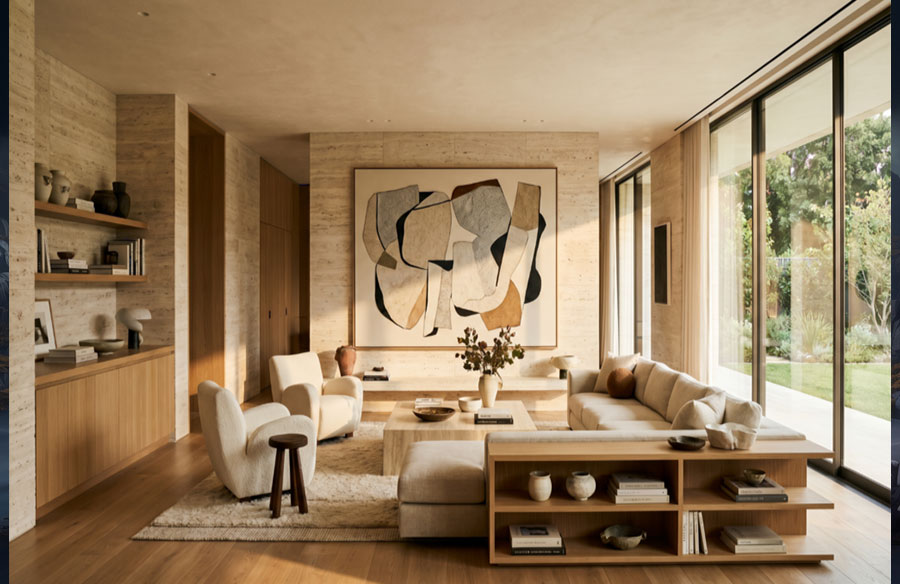
In contemporary residential design, wall art is often viewed as the finishing touch—a decorative layer applied once the architecture, furniture, and lighting have been established. However, this perspective overlooks the increasingly important role that art plays in shaping how spaces are experienced. Today, designers and homeowners are recognizing that wall art is not merely decorative; it is a powerful architectural tool capable of influencing mood, defining spatial hierarchy, and creating a deeper connection between occupants and their environment.
As modern homes continue to embrace open-plan layouts, minimalist aesthetics, and highly personalized interiors, thoughtfully selected artwork has become essential in transforming spaces from functional environments into meaningful places to live.
Art as a Spatial Anchor
Every successful interior requires a visual hierarchy. Just as architecture relies on focal points to guide movement and attention, interior spaces benefit from elements that anchor the eye and establish a sense of balance.
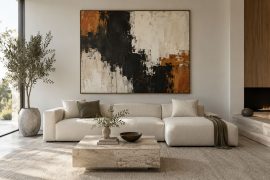
Wall art often performs this role more effectively than any other decorative feature. A large-scale artwork above a sofa, dining table, or bed immediately establishes a focal point, helping to organize the visual composition of a room. Rather than filling empty walls, art provides direction and purpose within a space.
In open-plan homes, where living, dining, and kitchen areas often flow into one another, strategically positioned artwork can subtly define zones without introducing physical barriers. This ability to create visual separation while maintaining openness is particularly valuable in contemporary architecture.
The Relationship Between Scale and Architecture
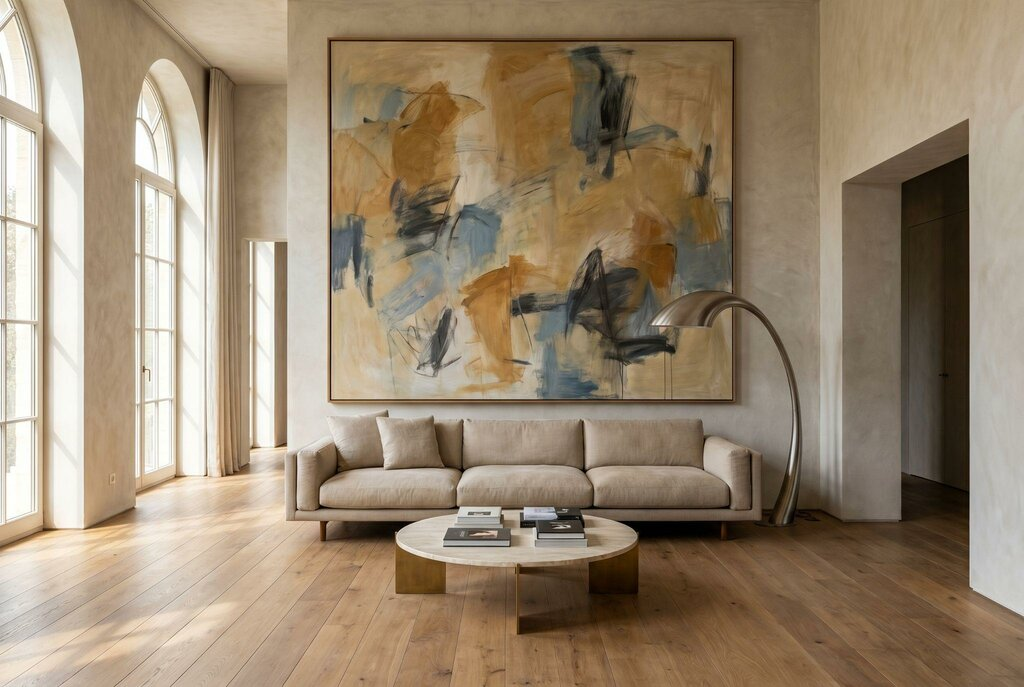 One of the most overlooked aspects of interior design is scale. Furniture, lighting, and decorative elements must relate proportionally to the architecture that surrounds them. Artwork is no exception.
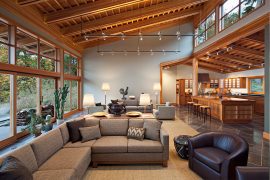
Small pieces placed on expansive walls can make a room feel disconnected and unfinished, while oversized artwork can establish presence and create a stronger dialogue with the surrounding architecture. In homes featuring high ceilings, wide wall expanses, and abundant natural light, larger artworks often help achieve visual balance.
Architects frequently use scale to create moments of emphasis within a building. Interior designers can achieve a similar effect through carefully selected wall art that responds to the proportions of the room. When scale is considered thoughtfully, artwork becomes integrated into the architecture itself rather than appearing as an afterthought.
Colour, Mood, and Environmental Psychology
The psychological impact of colour has long been acknowledged in both architecture and interior design. Artwork introduces colour in a uniquely flexible and expressive manner, allowing homeowners to influence the atmosphere of a space without altering structural elements.
Soft landscapes and muted compositions can create a sense of calm within bedrooms and private retreats. Bold abstracts may introduce energy and movement into social areas such as living rooms and dining spaces. Monochromatic pieces often complement minimalist interiors, while vibrant contemporary works can serve as striking visual counterpoints within neutral environments.
Beyond aesthetics, art contributes to emotional well-being. Studies in environmental psychology suggest that visual surroundings significantly affect mood, productivity, and comfort. By carefully curating artwork, homeowners can create environments that reflect their personalities while supporting the intended function of each room.
Creating Identity Through Art
Modern architecture increasingly prioritizes flexibility, allowing spaces to adapt to changing lifestyles and preferences. While this adaptability offers numerous advantages, it can sometimes result in interiors that feel generic or lacking in character.
Artwork provides an opportunity to introduce individuality and narrative into a home. Unlike furniture or finishes that may follow prevailing design trends, art often reflects personal experiences, interests, and values.
Whether through abstract compositions, photography, landscapes, or contemporary illustrations, curated art collections help create a distinctive identity for a space. This is one reason many homeowners and designers explore curated wall art collections from Nook At You when selecting artwork that complements contemporary interiors.
The Importance of Context
Successful integration of art requires consideration of context. Lighting, sightlines, materials, and surrounding architectural features all influence how artwork is perceived.
Natural light can dramatically alter colours and textures throughout the day, while carefully positioned accent lighting can transform artwork into a focal architectural feature during evening hours. Similarly, the relationship between artwork and adjacent materials—such as timber, stone, concrete, or metal—can significantly affect the overall composition of a room.
Rather than treating art as a standalone object, designers increasingly view it as part of a broader environmental experience. This holistic approach ensures that artwork contributes meaningfully to the overall architectural narrative.
Art as an Architectural Element
As residential design continues to evolve, the distinction between architecture, interiors, and art is becoming increasingly blurred. Wall art is no longer simply a decorative accessory added at the end of a project. It is an integral component of how spaces communicate, function, and feel.
By influencing visual hierarchy, reinforcing scale, shaping emotional responses, and expressing identity, artwork contributes to the architectural quality of a home in ways that extend far beyond decoration. The most successful interiors are often those in which art and architecture work together to create spaces that are not only beautiful, but also memorable and deeply personal.
In this context, wall art becomes more than something we look at—it becomes an essential part of how we experience the spaces we inhabit.