An open-concept kitchen can make your home feel larger, brighter, and more connected, but only when it’s designed with everyday living in mind. The biggest mistakes usually involve poor layout planning, lack of storage, weak ventilation, and overlooking how the kitchen interacts with the rest of the home.
Many homeowners choose open-design kitchens because they create a more social and inviting atmosphere. However, removing walls doesn’t automatically create a better space. The kitchen still needs to function efficiently while blending seamlessly with nearby living and dining areas.
Before choosing cabinets, countertops, or finishes, take time to understand the common design mistakes that can affect comfort, appearance, and long-term value.
Below are the five mistakes to avoid.
Mistake 1: Failing to Create Clear Functional Zones
One common mistake is treating the entire area as one large space. Even with a lack of walls, the kitchen still needs distinct zones for cooking, food preparation, cleaning, dining, and gathering. Without these zones, the space can feel chaotic and difficult to use.
A well-designed layout keeps the refrigerator, sink, stove, and prep areas connected while allowing enough separation for each activity. This creates a smoother workflow and makes daily tasks easier.
When planning your layout, think about how you actually use the kitchen rather than focusing solely on appearance.
Mistake 2: Ignoring Movement Flow
Open kitchens often become the busiest part of the house. Family members, guests, and pets frequently move through the space throughout the day. If walkways are too narrow or appliance doors block key pathways, the kitchen can quickly become frustrating.
Consider how people will move around:
- Around islands
- Between appliances
- To dining areas
- Through connecting rooms
A good layout allows multiple people to use the space without constantly crossing through the cooking zone. This becomes important when entertaining or preparing meals for larger groups.
Mistake 3: Not Planning Enough Storage
Storage problems become much more obvious in an open-concept kitchen because everything is visible. Small appliances, cookware, pantry items, and everyday clutter can quickly overwhelm countertops if storage is inadequate.
The more open your kitchen is, the more important it is to have designated places for everything. A clutter-free kitchen starts with a well-planned storage strategy.
Smart storage solutions include:
- Deep drawers
- Pull-out pantry systems
- Built-in organizers
- Appliance garages
- Floor-to-ceiling cabinetry
- Hidden storage compartments
Mistake 4: Overlooking Ventilation
In a traditional closed kitchen, cooking smells remain relatively contained. In an open layout, those same odors can spread throughout the home. Without proper ventilation, grease, smoke, moisture, and food smells can linger in living spaces long after cooking is finished.
A quality range hood should be considered an essential part of the design rather than an optional upgrade.
Good ventilation helps:
- Improve indoor air quality
- Reduce odors
- Minimize grease buildup
- Protect furniture and finishes
- Improve overall comfort
For homeowners who cook frequently, investing in ventilation is always a smart decision.
Mistake 5: Ignoring the Rest of the Home
An open kitchen doesn’t exist independently. It’s part of a larger visual environment.
Cabinet styles, flooring, paint colors, and finishes should connect naturally with adjacent spaces. When design elements clash, the entire area can feel disconnected.
Flooring is particularly important because it often extends across multiple rooms. Consistent materials or complementary finishes can help create a smooth transition between spaces.
The goal is to make the kitchen feel like it belongs to the rest of the house rather than looking like a separate design project.
Tips To Design an Open-Concept Kitchen
1. Don’t Underestimate Lighting Design
Lighting is one of the most overlooked aspects of open-concept kitchen design. A single ceiling fixture is rarely enough for a space that serves multiple purposes.
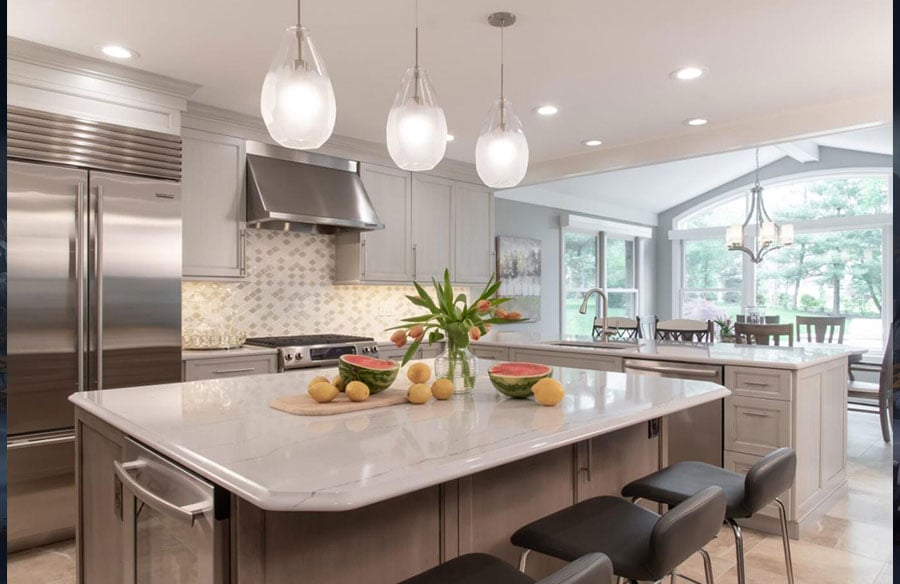
Pendant lights above an island, under-cabinet lighting, and recessed ceiling fixtures can work together to create a space that is both functional and welcoming.
Most successful kitchens use layered lighting that includes:
- Task lighting for food preparation
- Ambient lighting for general illumination
- Accent lighting for visual appeal
2. Think About Noise Control
Open layouts naturally allow sound to travel farther. Dishwashers, blenders, conversations, and range hoods can all affect nearby living spaces. This becomes especially noticeable in homes where family members work, study, or relax near the kitchen.
To reduce noise, consider:
- Quiet appliances
- Soft-close cabinetry
- Area rugs in adjacent spaces
- Acoustic materials where appropriate
A quieter kitchen often feels more comfortable on a daily basis.
3. Choose Easy-to-Maintain Materials
Maintenance is key, because open kitchens remain visible from surrounding rooms. Countertops, cabinets, and flooring should look attractive while standing up to everyday use.
Popular low-maintenance choices include:
- Quartz countertops
- Durable porcelain tile
- Easy-clean cabinet finishes
- Luxury vinyl flooring in appropriate spaces
Selecting practical materials can help the kitchen maintain its appearance for years.
4. Design for Social Interaction
One reason homeowners choose open-concept layouts is to create a more social environment. Kitchen islands, breakfast bars, and flexible seating arrangements allow people to gather comfortably while meals are prepared.
When designing the space, think about how guests and family members will interact. A kitchen that encourages conversation often becomes the most-used room in the home.
5. Consider Family-Friendly Features
Families often use the kitchen as a central hub for daily activities.
Features that can improve functionality include:
- Rounded island corners
- Easy-access storage
- Durable surfaces
- Wide walkways
- Clear sightlines
These details can improve both safety and convenience, particularly in households with children.
Questions to Ask Before Starting Your Remodel
Before finalizing your design, ask yourself:
- Will this layout work during busy mornings?
- Is there enough storage to keep counters clear?
- Can multiple people cook comfortably?
- Will ventilation handle frequent cooking?
- Does the design connect with nearby rooms?
- Are materials easy to clean and maintain?
- Will the space still meet my needs in five or ten years?
These questions help ensure the design supports real-life use instead of focusing only on trends.
Key Takeaways
- Clear functional zones make an open kitchen easier to use.
- Good traffic flow prevents congestion and frustration.
- Storage becomes even more important in visible spaces.
- Strong ventilation helps control odors and improve comfort.
- Lighting should support cooking, dining, and entertaining.
- Durable, low-maintenance materials simplify everyday upkeep.