How the cities of literature, cinema, and speculative design have always been more than stories they are blueprints for the real, rehearsals for the possible, and warnings about the probable.
In 1516, Thomas More published a small Latin book describing an island nation called Utopia, organised around communal property, rational city planning, and the careful distribution of labour and leisure. He was, on the surface, writing political philosophy. But Utopia was also, in precise and deliberate detail, an act of architectural imagination: its cities were described with the specificity of a planning document, their streets wide and regular, their houses uniform and well-maintained, their public spaces designed for the common good rather than private accumulation. More had never built anything. He was a lawyer and a statesman. And yet Utopia entered the vocabulary of urban thought so completely that the word itself — now simply meaning any ideal social vision — was originally a spatial concept: a good place, a well-designed place, a place that did not yet exist but could, if the right decisions were made.
This is the fundamental proposition of architectural fiction: that imagined cities are not merely metaphors or entertainments but productive instruments of urban thought. They allow architects, writers, filmmakers, and speculative designers to explore urban possibilities that the constraints of the real world — economic, political, technological, gravitational — do not yet permit. And then, with a regularity that is one of the most striking patterns in the history of architecture, those imagined cities leak back into the real world. They appear in the sketchbooks of architects, in the manifestos of urban movements, in the policy documents of city governments, and eventually in the concrete and glass and steel of buildings that millions of people inhabit without knowing that the template for their city was first sketched in a novel, drawn for a film set, or described in a work of speculative fiction.
“The role of the architect is to create an image of the future that is more vivid than the present.” — Lebbeus Woods, Anarchitecture Manifesto, 1993
Metropolis and the Vertical City: When Cinema Became a Brief
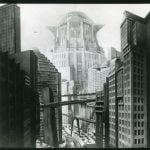
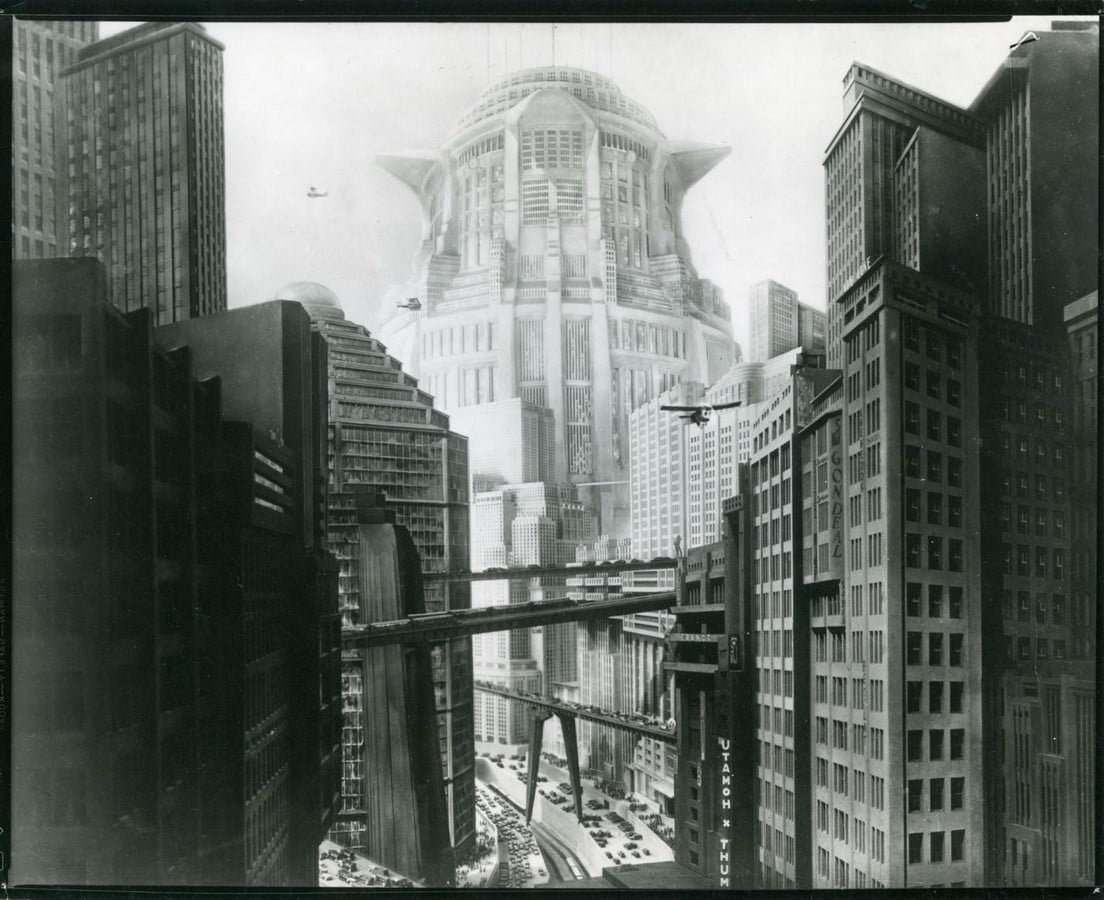
No work of architectural fiction has exerted a more direct and documentable influence on real urban design than Fritz Lang’s Metropolis (1927). The film depicts a future city divided into two worlds: an elevated world of glass towers, elevated highways, and pleasure gardens for the elite, and a subterranean world of industrial machinery, workers’ barracks, and the ceaseless labour that powers the city above. Lang and set designer Erich Kettelhut developed the visual language of Metropolis over two years of detailed preparatory drawings, producing a city that synthesised the expressionist architecture of Weimar Germany, the skyscraper ambitions of 1920s New York, and a fundamentally new spatial typology: the city as vertical social stratification, in which altitude is power and depth is oppression.
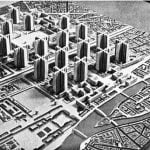
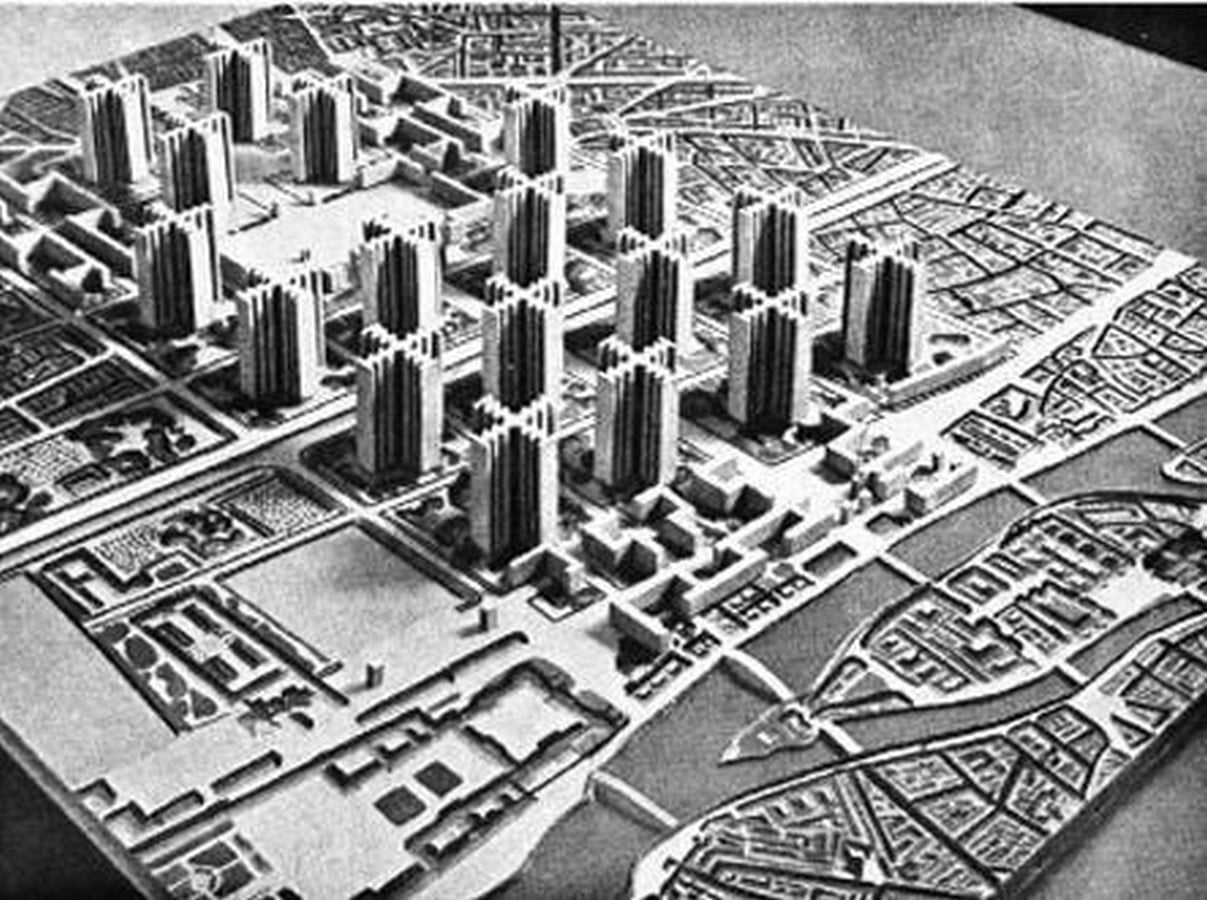
The influence of this fictional city on real urban design was immediate and lasting. The image of the elevated city — a megastructure above the ground plane, with traffic separated from pedestrians, and towers connected by aerial walkways — appears directly in Le Corbusier’s Ville Radieuse proposals of the 1920s and 1930s, in the elevated highways of mid-century urban renewal planning across the United States and Europe, and in the megastructuralist projects of Archigram in the 1960s. The vertical social stratification of Metropolis — its spatial encoding of class inequality — was also prophetic: the luxury penthouses and subterranean service infrastructure of every contemporary high-rise city are the Metropolis diagram made real, usually without anyone acknowledging the source.
Invisible Cities and the Architecture of Imagination
If Metropolis influenced architecture through spectacle, Italo Calvino’s “Le città invisibili” (“Invisible Cities,” 1972) did so through something more subtle and perhaps more enduring: the training of the architectural imagination itself. The book presents fifty-five cities, each described in a few pages by the traveller Marco Polo to the emperor Kublai Khan, each organised around a single conceptual conceit. There is Diomira, a city that reproduces itself from memory every night. There is Isidora, a city reached only at the age when one’s desires for it have already been satisfied. There is Octavia, a spider-web city suspended above a void, whose inhabitants know that the net will hold only so long and think about it as little as possible.
None of these cities can be built. They are descriptions of urban experiences, of the ways in which cities generate memory, desire, time, and fear, rendered in spatial terms with the precision of an architect and the compression of a poet. And they have been taught in architecture schools across the world — at the Architectural Association, at the Harvard GSD, at the School of Planning and Architecture in Delhi — not because they provide spatial templates but because they demonstrate the full range of questions that architecture can ask. What does it mean for a city to remember? What does it mean for a city to be forgotten? What is the relationship between the city that was planned and the city that was actually lived? Calvino’s fictional cities do not answer these questions. They teach architects how to ask them, which is a more valuable gift.
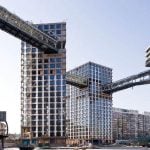
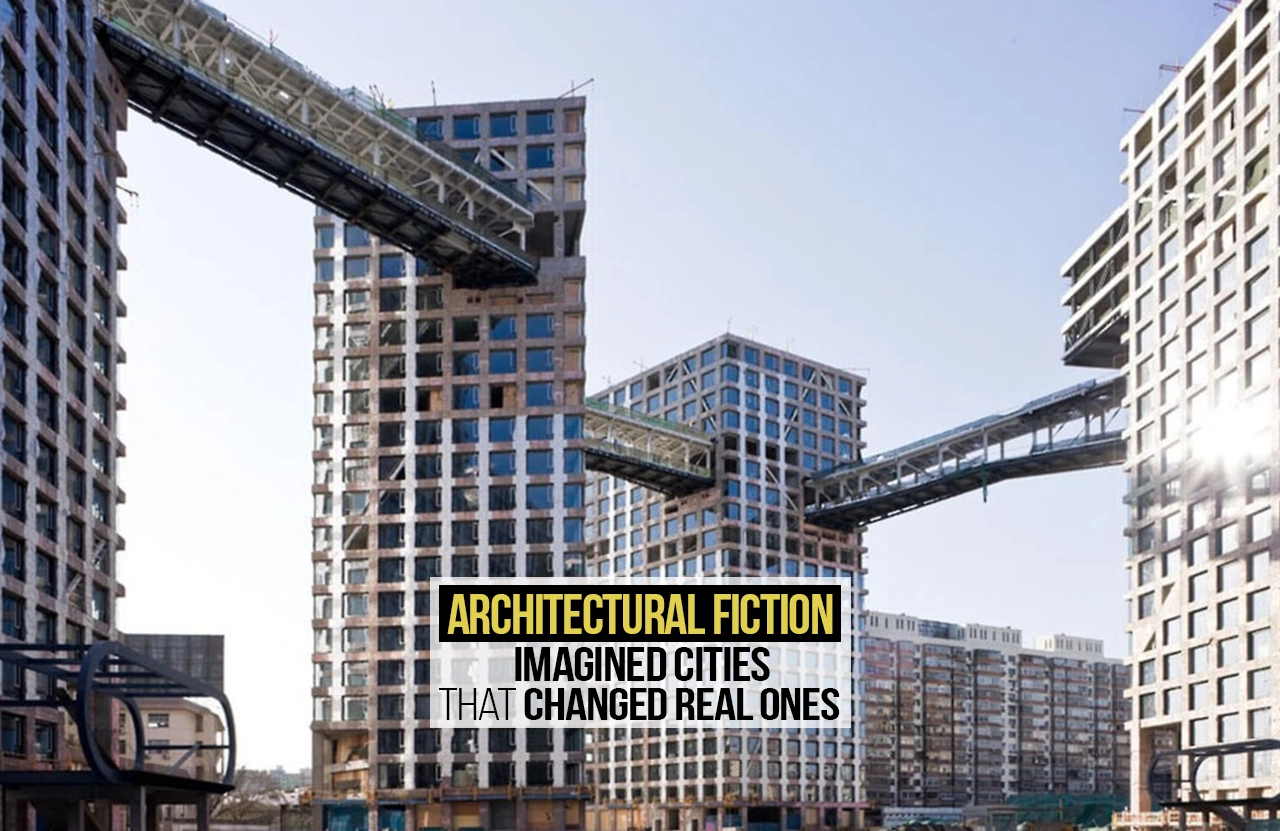
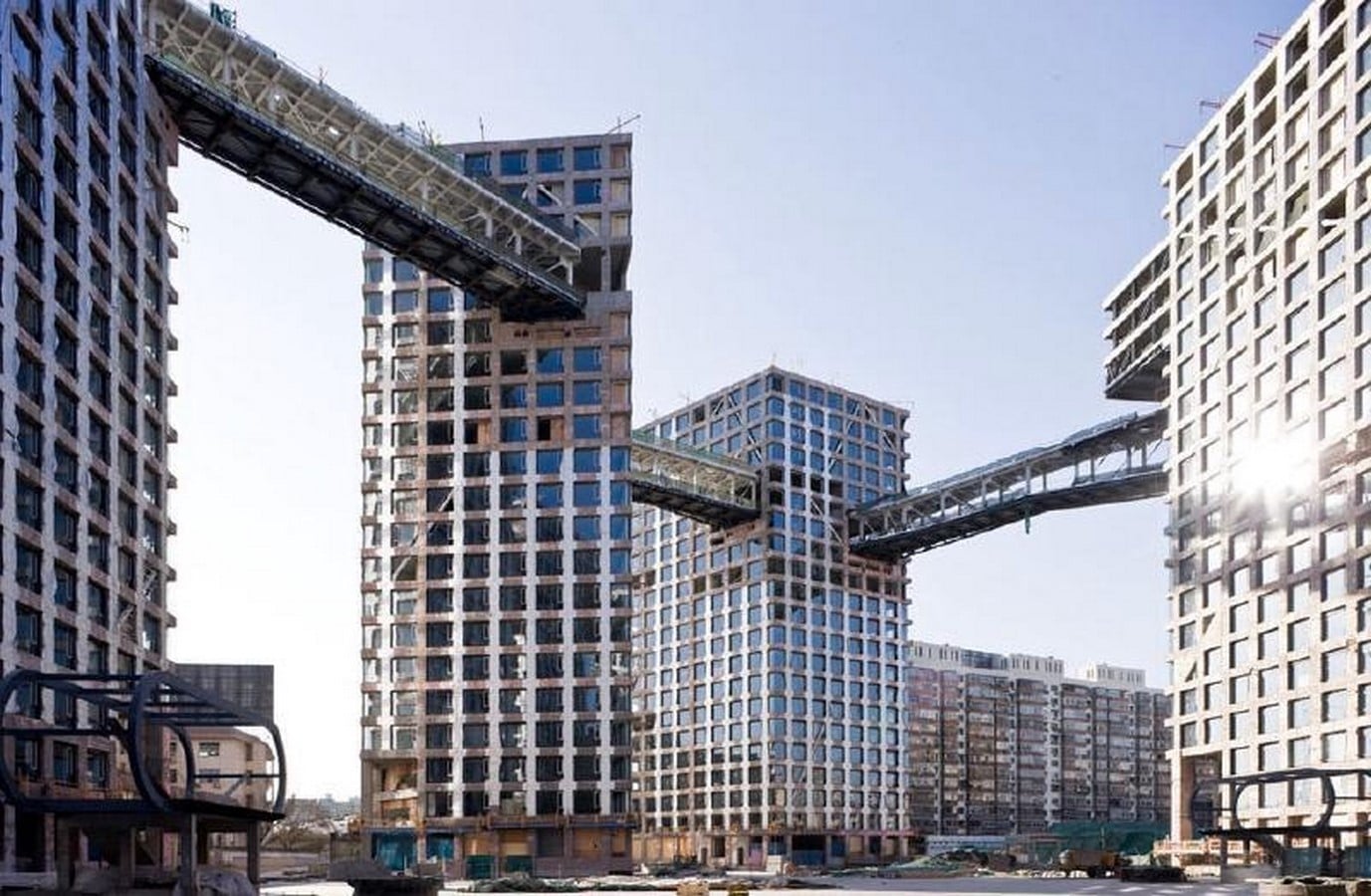
The influence of Invisible Cities on architectural practice is measurable in the generation of architects who trained in its wake. Steven Holl, one of the most phenomenologically sophisticated architects working today, has repeatedly cited Calvino as a foundational reference for his understanding of the relationship between space and experience. The Kiasma Museum of Contemporary Art in Helsinki (1998) and the Linked Hybrid housing complex in Beijing (2009) both demonstrate a concern with the city as a field of experiential relationships — with movement, light, memory, and the body in space — that is directly traceable to the Calvinian tradition of thinking about cities as structures of feeling rather than structures of function.
Blade Runner’s Wet Streets: Dystopia as Design Specification
Ridley Scott’s Blade Runner (1982), based on Philip K. Dick’s novel “Do Androids Dream of Electric Sheep?” (1968), produced the most influential cinematic city of the late 20th century: a Los Angeles of 2019 in which modernist towers have been overlaid by decades of ad hoc accretion, where neon signs in five languages compete with flying vehicles above a ground level of perpetual rain, market stalls, and compressed human density. Production designer Lawrence G. Paull and visual futurist Syd Mead developed the aesthetic of Blade Runner’s city from a specific diagnosis of urban modernity: that the future city would not be the clean, white, utopian megastructure of the International Style’s imagination but something messier, layered, and culturally hybrid — a palimpsest of architectural periods, demographic movements, and technological generations, all inhabiting the same compressed urban space simultaneously.
This diagnosis proved more accurate than any official urban forecast of the same period. The cities that most closely resemble Blade Runner’s Los Angeles are not the planned capitals of the late 20th century but the organically evolved megacities of Asia: Hong Kong, Tokyo, Mumbai, and Bangkok, where colonial-era masonry sits below modernist concrete sits below contemporary glass, where street markets operate in the shadow of luxury towers, and where the density of signage, infrastructure, and human activity creates exactly the kind of overwhelming, layered, saturated urban experience that Scott and Mead had imagined as dystopia and that millions of people experience as home. Blade Runner did not cause these cities. But it gave architects, urban theorists, and city planners a visual language for understanding them — a conceptual framework for the post-planned, post-utopian city that proved indispensable when the reality arrived.
The direct influence of Blade Runner on architectural practice is also documented. Rem Koolhaas and OMA’s engagement with the ‘generic city,’ with the idea of architecture as the management of programmatic complexity rather than the expression of formal purity, draws on the same urban diagnosis that Scott’s film articulated visually. Koolhaas’s “Delirious New York” (1978), published four years before Blade Runner was released but emerging from the same cultural moment, makes the same argument in theoretical form: that the congested, contradictory, excessive city is not a failure of planning but a condition of urban modernity that architecture must engage rather than correct.
“Architecture is too important to be left to architects.” — Giancarlo De Carlo, 1969. Fictional cities suggest it may also be too important to be left only to the real.
Lebbeus Woods and the Architecture of Catastrophe
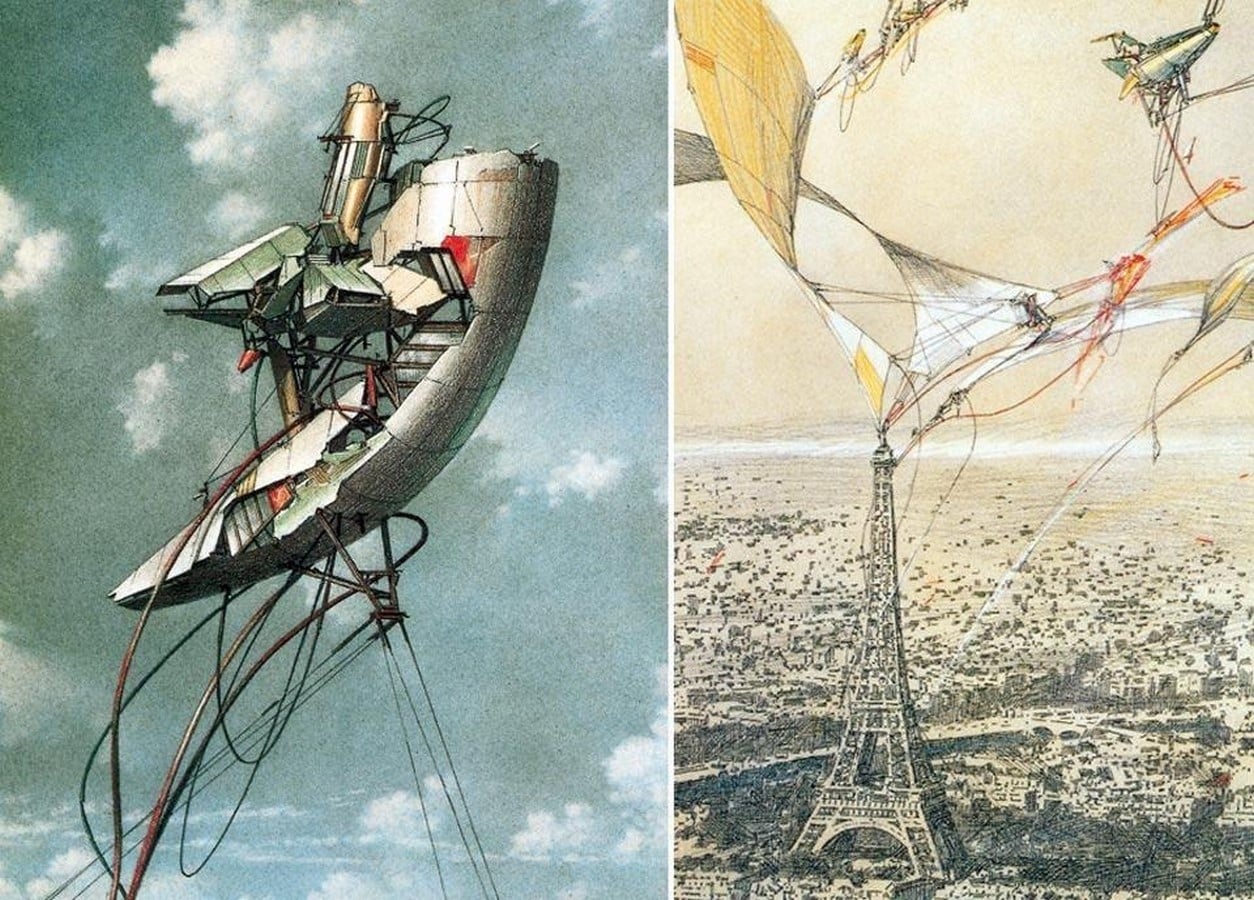
If Calvino taught architects to imagine cities of experience and Blade Runner taught them to imagine cities of accumulation, the American architect and artist Lebbeus Woods taught them something more unsettling: to imagine cities of destruction and regeneration, cities that had been broken and were rebuilding themselves in real time. Woods never built a building. His entire architectural career was conducted through drawings, manifestos, and speculative projects — most of them depicting urban environments after some unspecified catastrophe: earthquake, war, environmental collapse. His cities were inhabited by what he called ‘freespace’: zones of radical spatial freedom that emerged in the gaps and ruins left by the collapse of existing order.
Woods’s influence on architectural practice is extensive and largely unacknowledged, operating through the education of a generation of architects who encountered his drawings in school and found in them permission to think about architecture in terms of rupture, repair, and the spatial possibilities of crisis. His Sarajevo project (1993), which proposed specific spatial interventions into the war-damaged fabric of the besieged city, was one of the first instances of what would later be called ‘post-conflict urbanism’: the use of architectural design as a tool for social and spatial reconstruction in cities damaged by conflict. This is now an established field of practice, with dedicated programmes at schools of architecture worldwide. Woods did not invent it from nothing. But his fictional cities of catastrophe provided the imaginative framework within which the practice could develop.
Speculative Design and the Contemporary City: From Fiction to Policy
The most recent chapter in the relationship between architectural fiction and real cities is being written not in novels or films but in the field of speculative design: the practice of designing artefacts, systems, and environments that do not yet exist in order to provoke debate about the futures that are being made. Designers including Dunne & Raby, whose work ‘Designs for an Overpopulated Planet’ (2009) proposed foraging tools and digestive modifications for a world of extreme resource scarcity, and the futurist collective Superflux, whose ‘Mitigation of Shock’ installation depicted a domestic interior adapted to the conditions of climate breakdown, are working in a tradition that connects directly to More’s Utopia: the use of detailed, spatially specific imagination as a tool for political and social thought.
The relationship between speculative design and urban policy is increasingly direct. The Singapore government’s Centre for Strategic Futures has used speculative design scenarios as inputs into long-range urban planning. The UK government’s Foresight programme has commissioned speculative design projects as part of its planning for climate adaptation. In India, organisations including the Centre for Policy Research and the Aga Khan Trust for Culture have used speculative urban scenarios to explore the futures of heritage cities and informal settlements. The fictional city, in these contexts, is not an alternative to the real city. It is a tool for thinking about it — a way of making possible futures concrete enough to evaluate, debate, and either pursue or reject.
Conclusion: The Cities That Teach the Cities That Are Built
There is a pattern running through the history of architectural fiction that is worth naming directly. The cities that have most powerfully influenced real urban design are not those that proposed technically feasible solutions to identified problems. They are those that changed the questions. Metropolis did not provide a blueprint for the vertical city. It asked, with terrifying clarity, who the vertical city was for. Invisible Cities did not propose a new urban typology. It asked what a city actually does to the people who live in it. Blade Runner did not forecast the megacity. It asked whether the megacity could be inhabited rather than merely managed. Lebbeus Woods did not design reconstruction projects. He asked what architecture owes to a world that has been broken.
These are not technical questions. They are moral, experiential, and political ones. And the reason that architecture needs fictional cities to ask them is precisely that the real city, with its economic pressures, its regulatory frameworks, its political constituencies, and its immediate demands, rarely creates the conditions in which such questions can be asked with the necessary patience and radicalism. The imagined city is the space in which architecture can think — freely, speculatively, and without the obligation to be immediately useful. What it thinks there has a habit, over time, of becoming the city we build.
For architects and urban designers working today, in a moment of unprecedented urban challenge — climate breakdown, mass migration, digital transformation, the collapse of the public realm — architectural fiction is not an optional supplement to technical practice. It is a necessity. The cities of the next fifty years will be shaped, in part, by the fictional cities being imagined now: in studios, in novels, in films, in speculative design practices, and in the sketchbooks of students who have not yet been told what is impossible. The question is not whether architects should read fiction. It is whether they can afford not to.
References:
- Calvino, I. (1972). Le città invisibili [Invisible Cities]. Turin: Einaudi. Translated by W. Weaver (1974). New York: Harcourt Brace Jovanovich.
- Dick, P.K. (1968). Do Androids Dream of Electric Sheep? New York: Doubleday.
- Dunne, A. and Raby, F. (2013). Speculative Everything: Design, Fiction, and Social Dreaming. Cambridge, MA: MIT Press.
- Harbison, R. (1991). The Built, the Unbuilt and the Unbuildable: In Pursuit of Architectural Meaning. London: Thames and Hudson.
- Jameson, F. (2005). Archaeologies of the Future: The Desire Called Utopia and Other Science Fictions. London: Verso.
- Koolhaas, R. (1978). Delirious New York: A Retroactive Manifesto for Manhattan. New York: Oxford University Press.
- Lang, F. (dir.) (1927). Metropolis [Film]. Berlin: UFA.
- Metropolis Production Design Archive. (1927). Erich Kettelhut: Production Drawings for Metropolis. Deutsche Kinemathek, Berlin.
- More, T. (1516). De Optimo Reip. Statu deque nova insula Utopia [Utopia]. Louvain: Thierry Martens. Translated by P. Turner (1965). London: Penguin Classics.
- Scott, R. (dir.) (1982). Blade Runner [Film]. Burbank: Warner Bros.
- Superflux. (2019). Mitigation of Shock [Installation]. London: Somerset House. Available at: www.superflux.in [Accessed: 20 August 2026].
- Vidler, A. (1992). The Architectural Uncanny: Essays in the Modern Unhomely. Cambridge, MA: MIT Press.
- Woods, L. (1993). Anarchitecture: Architecture is a Political Act. London: Academy Editions.
- Woods, L. (2001). Radical Reconstruction. New York: Princeton Architectural Press. Rethinking the Future | Architectural Fiction