Healing architecture, in simple terms, can be perceived as a design philosophy where function follows form. The dichotomy of these architectural elements may raise the question of ‘what kind of built environment would be best suited to maintain the equilibrium between the durability of the space, whilst instilling a recovery? In this instance, the driving factor is promoting the health and well-being of the users and formulating an inclusive design. This conceptualisation of healing architecture is to create a built environment that supports mental, physical, and emotional healing. The key principles to achieving this optimisation may include (Brandt, 2024):
- Intertwining nature indoors and maximising natural light penetration
- Regulating the microclimate through natural ventilation
- Comforting acoustic environment
- Materiality and interior colours
- Art
Consequently, it can be argued that the design philosophy of healing architecture clashes with today’s rapidly growing real estate market trend, as it requires truly pausing and understanding user requirements and the provision of nature.
Evolution of Soulful Sculpting
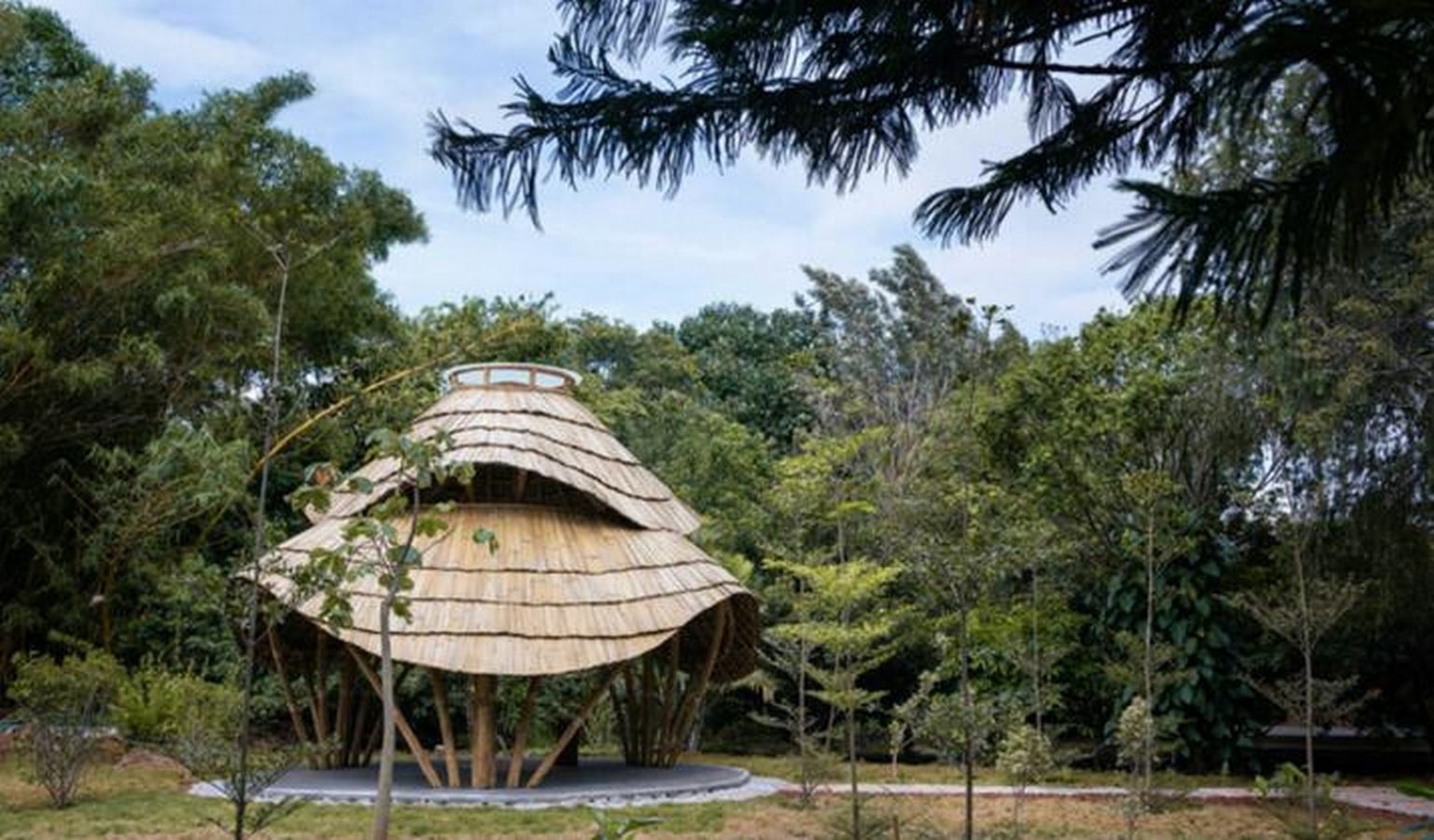
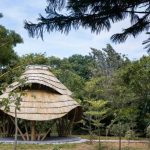
For instance, in Western cultures, dent towards technical intervention, many other cultures prioritise holistic well-being that encompasses emotional, spiritual, and ecological aspects (Ghisleni, 2025). Indigenous communities in Latin America, healing architecture may be perceived as ‘communion with nature and ritual circularity.’ (Ghisleni, 2025). It has widely been understood as reconnecting with nature and the ancestors of the community. Illness is perceived as a friction in the balance between humans and the spiritual world. Hence, the ecosystem designed helps heal the sanctity of the person and hence returns to the collective (Ghisleni, 2025). The form is quintessentially circular, and especially in Brazil, it is metaphorically considered to assemble in a circle and communicate through storytelling as a part of the healing process. Thus, it supports the preceding claim of ‘function follows form’. Moreso, fire and water are considered the important elements to be imbued within the healing architectural design. Subsequently, constructed using natural materials such as wood and thatched structures, the intertwining of nature into the functionality of the space supports the fulcrum of the philosophy.
Redefining the Purpose
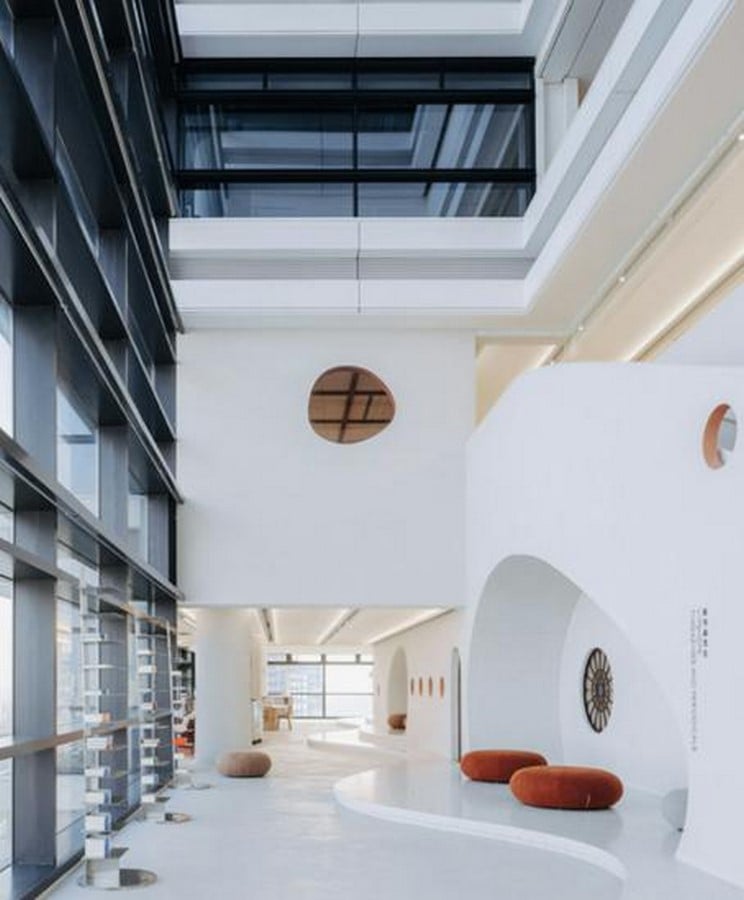
As reiterated in the preceding analysis, there has been a direct correlation with the expansion of the real estate market and nurturing traditional practices into the modern urban fabric. Over the years, although the crux of the space is preserved, it can be endeavoured that the projection of these values has evolved to integrate with the modern layout. For instance, Satori Harbor, situated in China, was constructed by Wutopia Lab. As the name ‘Satori’ derives from the ancient Chinese concept of a state of transcendence, the cultural library functions as a space to reflect ‘morning light across the entire earth’ (ArchDaily, 2021). Libraries generally can be perceived as a pivotal healing space to enhance knowledge and regain spiritual insights. The architect’s intention with this project can be argued to envision the library as the ‘micro vision of our mortal world- an abstract harbor city’ (ArchDaily, 2021) and guide users to experience a spiritual reading journey. Specific elements, such as a dim tunnel, are designed to elongate the pathway before arriving at the ‘city’. Towards the end, one can view the sound dome through which waves can be heard. This stimulates the connection of one experiencing the end of the city, therefore closer to the harbour and sea (ArchDaily, 2021). Thus, the healing architecture encompasses the moral place for the practice of life. Healing architecture with respect to this case study can be claimed as a visual expression of re-establishing the ancient principles into the urban fabric through the notion of ‘function follows form’.
References:
Brandt, S. (2024). What is Healing Architecture? | DAMPA. [online] DAMPA. Available at: https://dampa.com/what-is-healing-architecture/.
- Ghisleni, C. (2025). Architectures of Care: Healing Spaces Across Cultures. [online] ArchDaily. Available at: https://www.archdaily.com/1029247/architectures-of-care-healing-spaces-across-cultures.
- ArchDaily. (2021). Healing Architecture in China: Through a Sensorial and Spatial Experience. [online] Available at: https://www.archdaily.com/958330/healing-architecture-in-china-through-a-sensorial-spatial-experience.