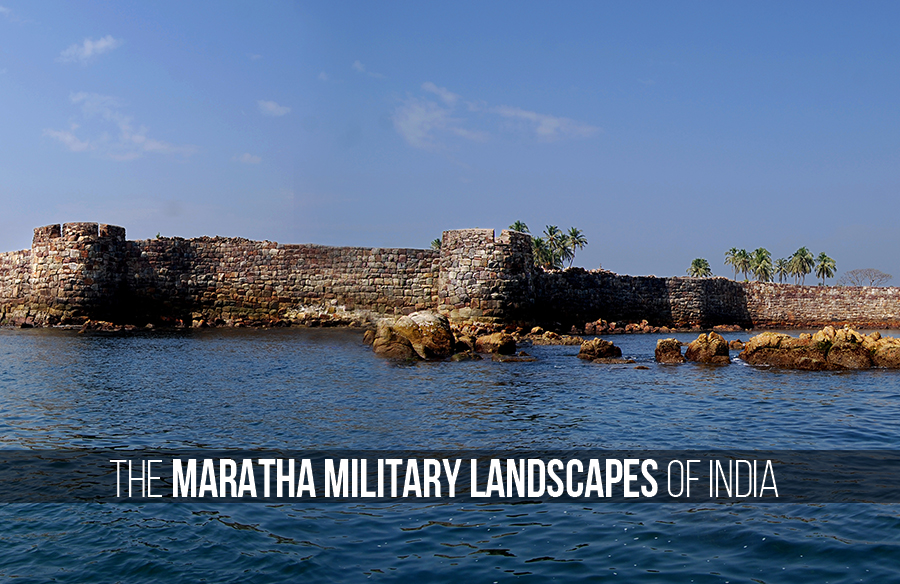
It’s typical to witness cultural and architectural artefacts famed for their aesthetics and uniqueness being represented as marvels and given recognition by esteemed institutions. But what about expressions of might, power, defence, and strategic thinking manifested as architectural expression? Well, let me take you through the military might and landscapes of fortifications of the Maratha Empire developed between the 17th and 19th centuries.
Strategically located on the distinctive terrain and diverse physiographic characteristics of the coastal and mountainous landscapes in the Sahyadri mountain ranges, Konkan coast, and Eastern Ghats, the Maratha Military Landscapes exhibit a unique defence system comprising major fortifications amidst the rise of the Maratha empire between the 17th and 19th centuries. Chhatrapati Shivaji Maharaj solidified the Maratha Empire in the 17th century, which continued till the 19th century. The Maratha Military Landscapes, a group of fortifications, a network of intricate defence and military dominance, built for warfare and strategic trade as well as territorial protection and control, express the military ideology of the Maratha rulers.
UNESCO World Heritage Listing and Process
The Sahyadri ranges, Konkan coast, and the Deccan Plateau, in parts of Maharashtra, boast around 390 forts of different scales and hierarchies unique to its topography, and they were studied by a group of experts before their nomination. Based on their location and military prowess, these forts were grouped into clusters. This expansive defence network created by Chhatrapati Shivaji Mahraj was studied and analysed in detail. Of the 390 forts, 60 were selected, and subsequently, a detailed mapping and analytic comparison of 29 forts was conducted based on strategic importance, topographic diversity, and distinguished Maratha defence features. A network of 12 forts termed the Maratha Military Landscape was selected, representing the overarching Maratha military and defence network, and nominated as a UNESCO World Heritage Site.
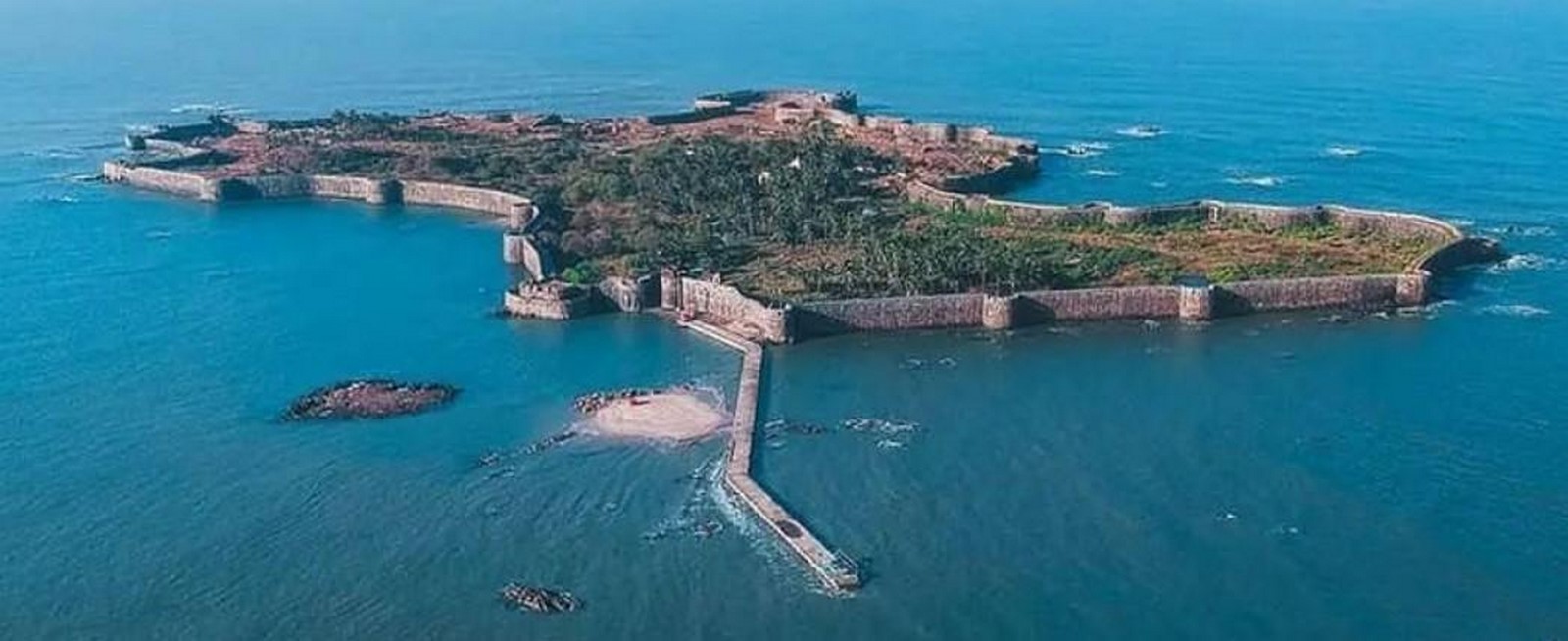
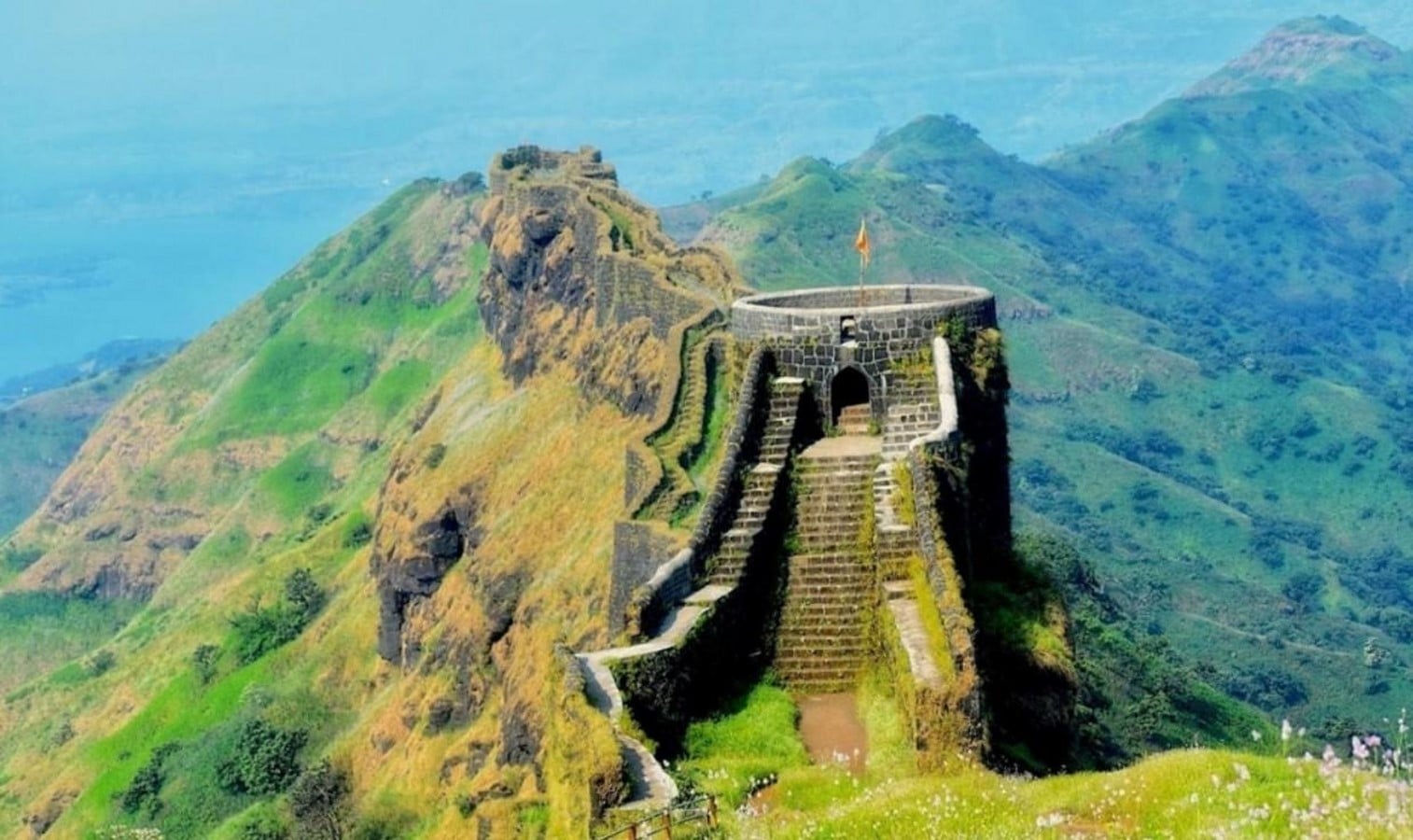
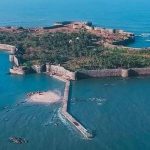
Of the 12 forts forming the Maratha Military Landscape, the forts of Salher, Shivneri, Lohgad, Rajgadh, Gingee, and Raigadh are built on hills, while the forts of Khaderi, Sindhudurg, and Suvarnadurg are coastal island forts. The nomination of the UNESCO World Heritage sites is under two categories: Cultural and Natural. The Maratha Military Landscapes are deemed as India’s 44th World Heritage Site under the cultural category for manifesting living cultural heritage, architectural uniqueness, and historical importance.
Let’s look at the unique architecture of the capital fort of Chhatrapati Shivaji Maharaja.
Raigadh – A Mountain Capital
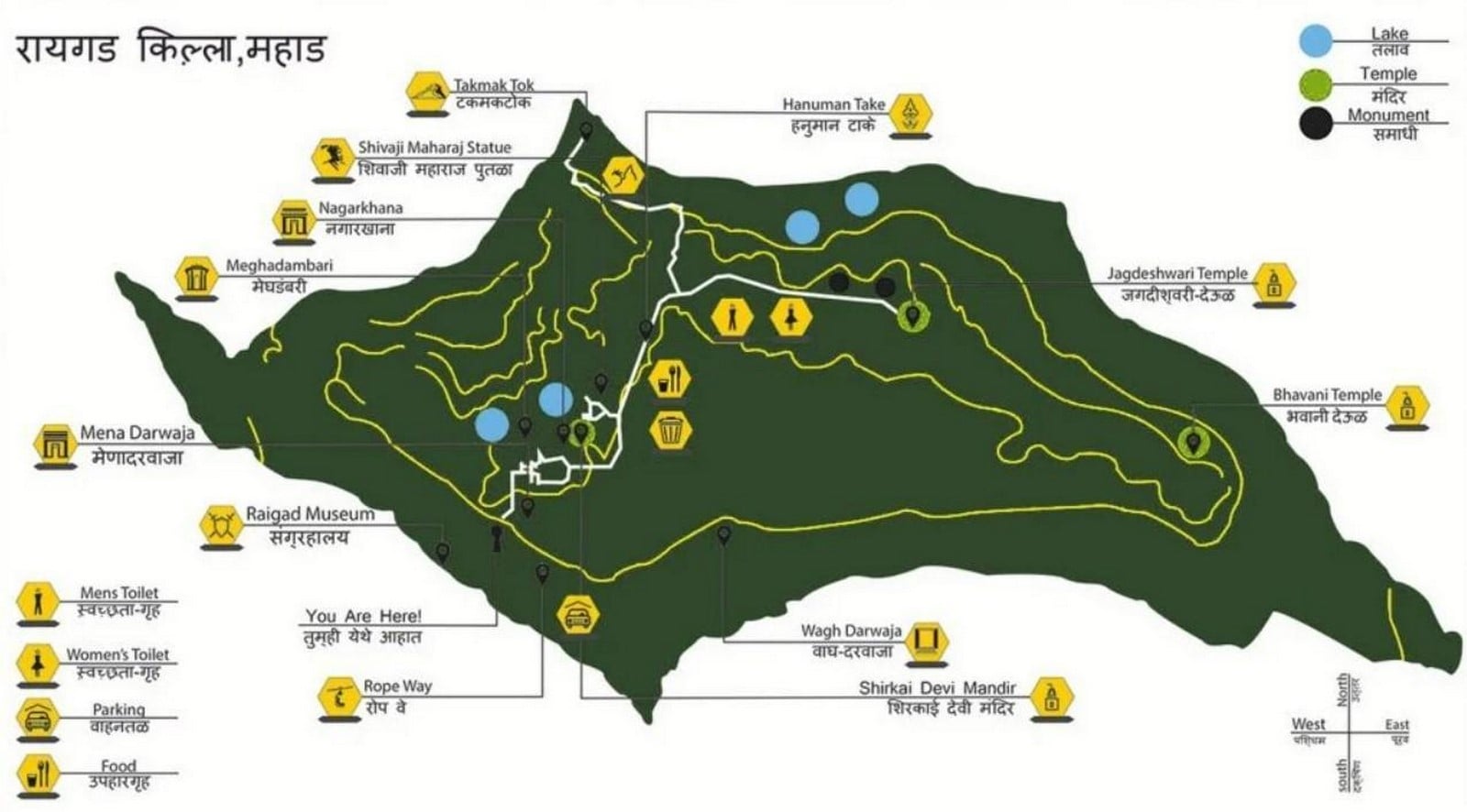
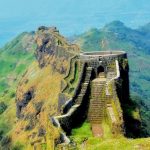
Shivaji Maharaj was crowned the king of the Maratha Samarajya in 1674 in Raigadh. After surveying the forts, Raigadh, a hill fort, was chosen as a capital because of its strategic military location and topography, guiding the design of the fort. Sitting at 1356m above mean sea level, the fort is accessible only from one side of the hill, and so it is strategically significant and provides refuge. There were roughly 1550 occupants of the fort, and around 300 families residing in the fort complex. The fort is accessible by ascending around 1737 steps. The fortification was made of stone, while the main palace was built of wood. Visible also are the three watch towers in front of the palace grounds, providing a strategic lookout during warfare. When not at war, Shivaji used to conduct his public meetings with envoys and the general audience at the Raj Sadar, his Darbar. A rectangular structure, it was accessible through the Nagar Khana. The gateway is an elaborate three-storied structure that faces the royal throne in the Darbar, made of brick and stone. The Darbar is an acoustically sound structure.
As a tale goes, Shivaji constructed the Hirakani Bastion after a milkmaid who was stuck in the fort complex overnight climbed down the steep cliff to be with her child, finding this as a potential loophole in the fort’s security. Rajmata Jijabai’s Samadhi is also located near the village of Pachad. Thus, the mountain fort of Raigadh was significant for the Maratha kingdom due to its role as an administrative and judicial center. Significant also is Rajgadh, as it was the first capital of the Samarajya for almost two and a half decades before the capital was shifted to Raigadh. Shivneri fort is not only the birthplace of Shivaji, but the fort also supervised ancient trade routes, and hence it is special, and thus its inclusion in the Maratha Military Landscapes.
While one may not hear the beats of the drums and cymbals, nor the war cries of the Maratha warriors in these forts today, these forts stand as a testament to the Maratha valour and might. Rightfully so, they are inscribed as a UNESCO World Heritage site.
May the beauty of the Maratha Military Landscapes take us all back to the days when the sun rose and rose and rose for the Maratha Samarajya!