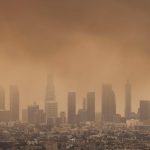
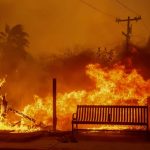
Los Angeles is a city in Southern California that is also known as the entertainment capital of the world. It is also known for its glamorous lifestyle, urban sprawl, and beautiful beaches. Today, devastating wildfires are becoming more frequent in the city. Beginning on 7th January 2025, two large wildfires (the Palisades and Eaton wildfires) erupted in Los Angeles. They expanded throughout the city creating a huge loss of property. These wildfires have intensified in recent days, damaging homes, infrastructure, and natural ecosystems. Scientists and environmentalists have linked this growing wildfire crisis to climate change.
Understanding Wildfires in Los Angeles
Some wildfires are helpful to keep the forest ecosystem healthy whereas some destroy lives and property. They are caused by three main factors; combustible materials like dry fuel (leaves, grass, other organic materials), oxygen in the air, and heat to ignite and burn. Lightning strikes are also the most common ignition source that leads to wildfires. It is also caused due to human activities like vehicle fires, campfires, etc. According to the Wildland Fire Management Information (WFMI) and U.S. Forest Service Research Data Archive, nearly 85% of wildland fires in the US are caused by humans. Additionally, climate change also plays a vital role in escalating wildfires.
The Role of Climate Change in Intensifying Wildfires
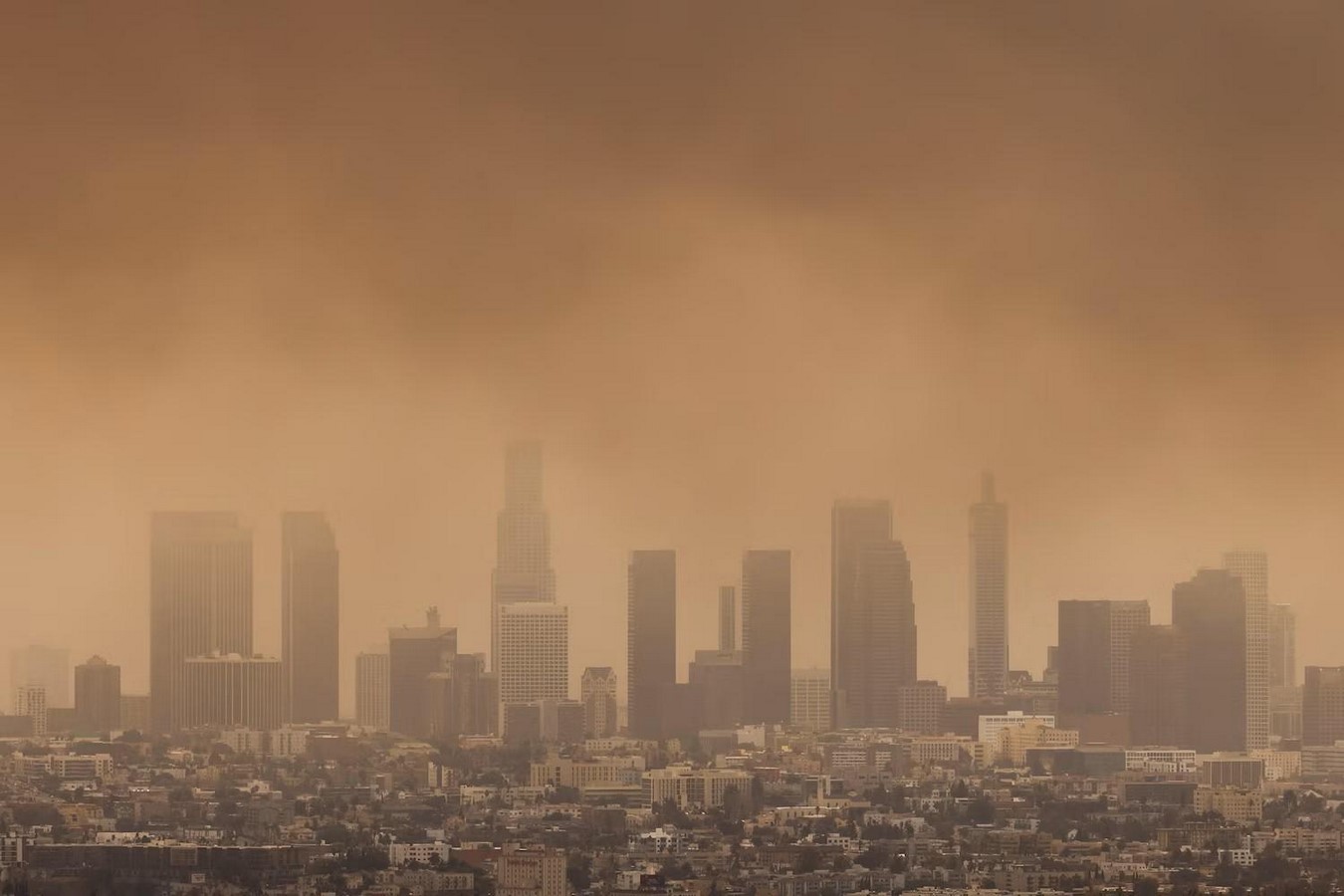
The new study by World Weather Attribution mentions that climate change made the Los Angeles wildfires worse as 35% of the hot, dry conditions were created because of climate change. Over the past few decades, with the global temperature, the temperature of Los Angeles has also risen due to global warming. Hotter temperatures or the long hot summer, dry out vegetation and make it flammable. Moreover, climate change has created prolonged droughts which reduces soil moisture and also dehydrates forests and grassland. This also dries out vegetation and increases the probability of wildfires igniting and spreading rapidly. Los Angeles also has experienced irregular precipitation patterns. There are long dry periods which are followed by intense rainfall. This is also risky from the wildfire’s point of view because this pattern allows rapid growth of plants in the wet season which dries up during long dry periods and acts as a fuel for the fires during the hot months. Santa Ana Winds play a major role in the Los Angeles Wildfire. The Santa Ana Winds blow from the deserts and across coastal South California. They are hot and dry and spread wildfires. Climate change has intensified the speed and reach of these winds.
Impacts of Wildfires
The impacts of wildfires are very wide. They destroy thousands of homes and infrastructures. To rebuild the loss takes lots of time and billions of dollars. This creates a big economic burden for the individuals, community, and country. The UCLA Anderson Forecast shows that the two largest wildfires in Los Angeles have caused total property and capital losses ranging between $95 and $164 billion, with insured losses estimated at $75 billion
It is also a big threat to humans as many people lose their lives. Surviving such a big disaster also affects people mentally. Likewise, the smoke and the particles from the wildfires create respiratory diseases among humans like asthma, bronchitis, and many more. Wildfires lead to deforestation which is associated with loss of biodiversity, soil erosion, and many more. Deforested areas take years and years to recover and this disturbs the balance of the ecosystem. Likewise, the smoke and carbon emissions from wildfires contribute to air pollution which makes global warming even worse. The release of Carbon dioxide (CO2) in the atmosphere intensifies climate change and increases the likelihood of wildfires in the future too.

Solutions and Mitigation Strategies
Both mitigation and adaptation strategies are required to address the Los Angeles Wildfire. Mitigation approach because it focuses on reducing the root cause of climate change whereas adaptation strategies focus on adjusting to the increasing frequency of wildfires and minimizing their impact. The approach should be a combined approach including government action, involvement of community, environmental agencies, and scientific innovation. The reduction of greenhouse gas emissions is very important to fight against climate change and this can be obtained from the use of renewable energy resources, increased energy efficiency, and strict rules and regulations for industries contributing to carbon emissions can help to reduce greenhouse gas emissions in the atmosphere. Government, local bodies, or environmental agencies must also do proper forest management by vegetation thinning, and controlled burns. This helps to reduce the dry plant material which acts as a fuel to the wildfires. There should be efforts to rehabilitate the burned forests to ensure long-term environmental recovery. Technological advancements in satellite monitoring and artificial intelligence can improve early detection of fire-prone areas. Implementing real-time monitoring systems will enable quicker responses to wildfire outbreaks, reducing their impact.
Urban planners and designers also must research and incorporate fire-resistant design guidelines and materials in wildfire-prone areas. The concerned authorities also must make and enforce strict building codes to ensure the resilience of structures to fire hazards. Lastly, it is necessary to educate people about fire safety measures, evacuation plans, and emergency response strategies to save their lives. Moreover, it is essential to make a proper action plan to provide relief to the victims. Also, it is necessary to provide awareness about the impacts of climate change.
Los Angeles wildfires have become an alarming crisis where climate change played a significant role in making it worse by increasing the frequency and intensity. Various factors like rising temperatures, prolonged droughts, and irregular weather patterns caused by climate change have intensified the wildfires. Their consequences are very wide including immediate destruction, impacting human lives and health, wildlife, air quality, and the economy. Addressing this crisis requires a collective effort from governments, environmental agencies, scientists, communities, and individuals. By taking effective mitigation and adaptation strategies, it is possible to decrease the effects of wildfires.
References:
Igini, M. (2023). What Causes Wildfires? [online] Earth.org. Available at: https://earth.org/what-causes-wildfires/.
https://www.bluechili.nl (2025). Climate change made Los Angeles wildfire disaster more likely – Study – Red Cross Red Crescent Climate Centre. [online] Climatecentre.org. Available at: https://www.climatecentre.org/15054/climate-change-made-los-angeles-wildfire-disaster-more-likely-study/ [Accessed 5 Feb. 2025].
UCLA Newsroom (2025). UCLA: L.A. wildfires caused as much as $164 billion in total property and capital losses. [online] UCLA. Available at: https://newsroom.ucla.edu/releases/los-angeles-wildfires-caused-up-to-164-billion-in-property-capital-losses.