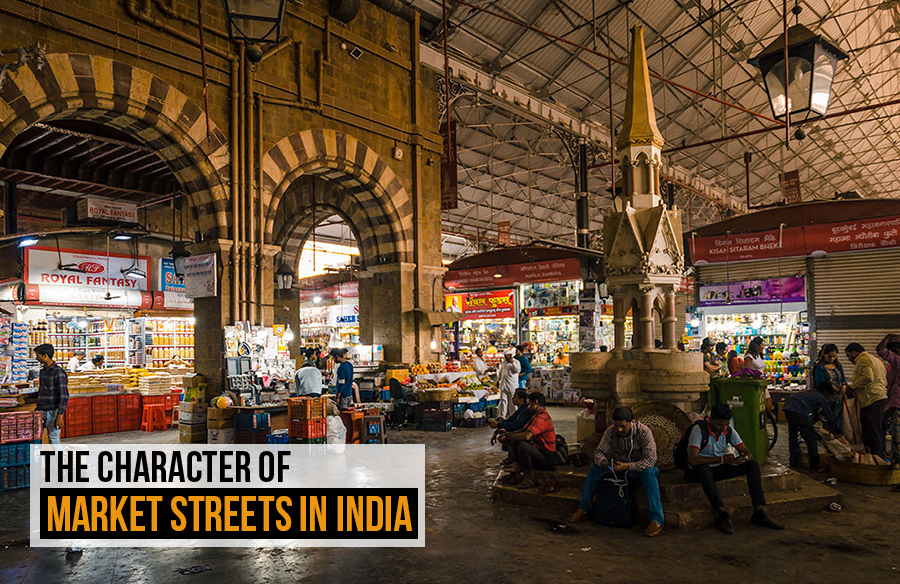
The balancing act between formal and informal, permanence and impermanence, characterises Indian urbanscapes. The centre of city life consists of improvised marketplaces and bazaars situated between planned communities and concrete skyscrapers. These ephemeral commercial centres, which are frequently made of sustainable buildings, display a type of primitive architecture with roots in India’s rich cultural and economic heritage.
India’s informal urbanisation is concentrated in its roadside bazaars and public markets, which date back hundreds of years. It is believed that the origins of these metropolitan regions can be traced back to the era of imperial trade relations and travelling merchants. These places are now knotted labyrinths of makeshift shelters made of leftover tin sheets, tarpaulin canopies, and wooden poles. These bazaars organically turn neighbourhoods into a well-organised tangle of people, goods, and merchants. Weekly markets are usually huge affairs that appear every few days and then disappear again.
Tracing their Temporal Nature
Indian bazaars’ ephemeral character is a reflection of a deeply ingrained cultural mindset that values adaptation and flexibility over precise design. This concept of “jugaad” (a cheap or makeshift solution) goes beyond the realm of actual architecture. These markets also have a flexible social and economic structure that is negotiated through unofficial networks and connections.

Calcutta, Bangalore, and Gurgaon are just a few major cities where the state has created systems of flexible planning by using “informal” territorial practices like deregulation and exceptions. The micro-level manifestation of this idea is found in the bazaars, where rickshaw pullers, garbage collectors, security personnel, and sellers collaborate to facilitate the smooth emergence and dissolution of these hubs.

Large outdoor plazas were incorporated into the architecture of even the most renowned colonial market structures, such as Bombay’s Crawford Market, to support the ever-evolving practice of street selling and transient trade. The British architects appeared to understand that the architecture of Indian businesses needed to be flexible to accommodate both temporary operations and permanent constructions in a seamless manner.
The Informal Sector

The formal and informal sectors make up a city’s economic landscape. The phrase ‘informal sector’ acquired popularity following the International Labour Organization’s (ILO) 1972 push for the concept’s international adoption.
There is mounting evidence to show that India’s official economy is no longer able to create jobs. Conversely, the unofficial sector has grown and now accounts for 50–80% of all newly produced employment. The informal sector serves as a crucial link in the formal industry’s supply chain, which contributes to some of this expansion. As a result, the informal sector is growing at a faster rate than the formal sector in many urban areas. As a result, the impoverished look to the unofficial sector for employment.
There are several appealing aspects to the unorganised industry. Entry barriers are low because there is little starting cash needed and little skill necessary. The majority of entrepreneurs learn through unofficial apprenticeships, while a small percentage do so. One additional draw is the flexibility of participation. Members can easily combine earning opportunities, flexible job schedules, and domestic obligations. Some people might choose to work in this industry because of the lucrative chances. Because of their tiny size, these businesses are able to deliver specialised services that larger ones might not be able to.
The Current Condition

The delicate balance between the transient and the permanent is becoming more and more threatened. The dynamic ecosystems of many ancient bazaars have been uprooted to make room for retail malls, all under the guise of uncontrolled urbanisation. This demonstrates the gap that exists between the informal market system-dependent communities and the urban character that these temporary contexts contribute to.
Informal marketplaces are facing opposition in Indian cities due to gentrification and ideas of a “world-class” urban environment. Land-use zoning often takes precedence over allowing for a variety of economic practices in urban master plans and regulations. The fundamental needs of communities that support themselves through these self-constructed, temporal constructions are met with governmental indifference.
For instance, Urban theorists such as Rajat Kant argue that informal activities that provide “intense variety and contrast,” rather than just formal enterprises, are what give neighbourhoods like Lucknow’s Aminabad a vivid sense of place. These neighbourhoods would lose their vibrancy on the cultural and economic fronts without the street vendors, hawkers, and pop-up bazaars.
The long-standing customs of transient placemaking must be recognized and accommodated in any planning for urbanisation and development. In the end, ideas such as zoning and land tenure will have to change in order to better accommodate the particular intricacies that underpin India’s urban landscapes. India’s cities are growing, and this presents a chance to creatively incorporate the energy of its pop-up bazaars into plans and policies for urban development. Indian cities’ pluralistic nature stems from their ability to coexist well with their ephemeral and dynamic marketplaces.
References:
- Gattupalli, A. (2024, April 29). Temporary architecture in India: marketplaces and bazaars. ArchDaily. https://www.archdaily.com/1014809/temporary-architecture-in-india-marketplaces-and-bazaars