Amidst the panic climate change has brought about, Architecture and the AEC industry have become pivotal in both exacerbating the problem as well as in its influence to bring about tangible change. With the 1.5°C climate change benchmarks officially surpassed, architects are now one of many practitioners bearing the responsibility and the challenge of designing buildings that successfully aim for net-zero emissions and minimal environmental impact construction and maintenance. The 1.5°C threshold has acted as a catalyst in this evolution of sustainability in architecture and design, furthering this paradigm shift with the expectation of innovative and eco-conscious designs in an evolving world.
What is the 1.5C Threshold?
The 1.5°C threshold as stated by the Intergovernmental Panel on Climate Change (IPCC) observes the “impacts of global warming of 1.5 °C above pre-industrial levels and related global greenhouse gas emission pathways, in the context of strengthening the global response to the threat of climate change, sustainable development, and efforts to eradicate poverty”. The key figure ‘1.5’ is representative of “the temperature rise in degrees Celsius compared with pre-industrial levels from 1850 to 1900”, which was estimated to be surpassed between 2030 to 2050. The crossing of this threshold in 2023, declared by the 2015 Paris Climate Agreement, marked a pivotal moment in the ongoing battle against climate change. This was a critical turning point, as it posed the threat of causing irreversible damage to communities, ecosystems, and the environment, calling for a heightened level of caution and energy consciousness among architects, engineers, and designers.

Refining the Design Process
Rethinking design processes and approaches will assist the architectural community in addressing climate change, with its evident growing recognition. With this transformation, gone are the days where sustainability is an optional design approach, it now represents a critical step of the process. Coupled with an intentional effort to create both aesthetic as well as energy-conscious structures, the architectural discourse has broadened significantly over the past half of the decade. The implementation of sustainable materials, and maximizing natural light and ventilation are examples of passive design practices that are becoming increasingly popular. Keeping with advancements in technology, Net-Zero optimizing software, LCA’s and sustainable energy simulations are being increasingly integrated into the design and construction process.

The Significance of Net-Zero Design
With the clock ticking surrounding 1.5°C conversations post-2023, the concept of net zero is now central in architectural discourse. This approach offers a tangible method to address climate change, utilizing energy efficiency techniques and renewable energy production to offset carbon emissions. Essentially, a net-zero building is one where the amount of energy the structure utilizes is offset by the renewable energy it produces, either on or off-site. In addition to technologies such as solar panels, wind turbines, and geothermal systems, software such as Energy Plus, Design Builder and many more have been instrumental to architects in refining their calculations, material selection and construction technologies.

Innovations in Building Materials and Technologies are a crucial aspect of designing net-zero buildings.
These advancements offer feasible methods of reducing carbon emissions in the AEC industry. There exists a myriad of sustainable options available to architects that can effectively reduce the embodied carbon of buildings, ranging from recycled steel and low-carbon concrete to cutting-edge insulation materials and photovoltaic systems. Additionally, new developments in building technologies—such as smart sensors, energy-efficient HVAC systems, and passive design systems, aid architects in designing optimized structures that maximize energy efficiency and improve user experience.
Life Cycle Assessments (LCAs) essentially aid the environmental impact a structure may have across its life cycle, factoring the various stages involved. This includes construction, utilization, maintenance, demolition, etc. By evaluating the quantification of energy use, embodied carbon, and other environmental parameters, architects can make well-informed decisions that prioritize carbon emissions reduction and sustainability. In an intentional attempt to return behind the 1.5C threshold, incorporating life cycle assessment (LCA) as a mandatory component of the design process paves the way for innovative and eco-conscious solutions, setting new benchmarks for architectural practices in the current day and age.

Challenges in The Current Landscape
The architectural landscape, having crossed 1.5°C post-2023, now faces new challenges as well as new standards. This resulting paradigm shift, coupled with a timely advancement in technology and AI has provided innovative opportunities to architects, assisting them with their increasingly critical responsibilities.
Culture and geographically relevant design approaches in the current monotony of architectural practices will hopefully produce resilient designs able to withstand extreme weather events, rise in sea levels, and changing environmental conditions.
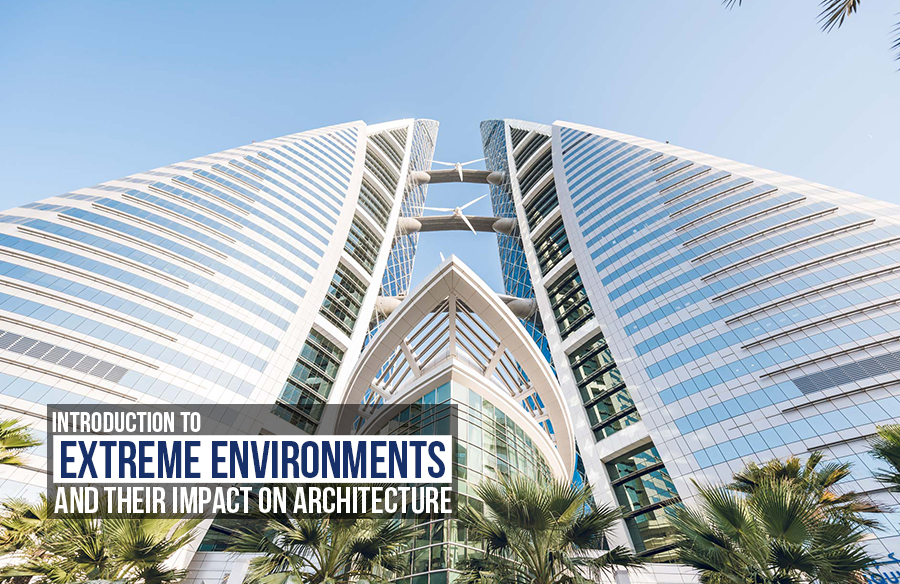
Several architectural practices have become active contributors to this changing architectural scene by emphasizing energy-efficient design and net-zero buildings. These techniques are not only influencing the direction of the design industry but also paving the way for a built environment that is more energy-conscious with pivotal approaches to sustainability. Bahrain World Trade Centre, Japan’s Solar Gate, Zimbabwe’s Eastgate Centre and Villa Verde in Italy are a few notable examples.

As the planet faces the existential threat of climate change, the impact architecture has in mitigating these threats must be recognized. Passing the 1.5°C threshold serves as a sobering reminder that mitigative measures are not sufficient anymore, and architects must be proactive participants in this fight against climate change. From energy-efficient buildings to renewable energy practices, and carbon-neutral architecture, the AEC industry is at the forefront of this progression to a more resilient and sustainable architectural landscape.
References:
- Global warming of 1.5 oc. Available at: https://www.ipcc.ch/sr15/ (Accessed: 13 March 2024).
- Latest thought leadership Architecture 2030. Available at: https://www.architecture2030.org/1-5c-cop26-communique/ (Accessed: 13 March 2024).
- DEI Creative in Seattle, W. (2022) How to be a climate action advocate as a young architect: AIA Yaf Connection, Weber Thompson. Available at: https://www.weberthompson.com/thought/climate-advocate-young-architect/ (Accessed: 13 March 2024).
- (No date) (PDF) climate change and architecture: Mitigation and adaptation … Available at: https://www.researchgate.net/publication/41892454_Climate_Change_and_Architecture_Mitigation_and_Adaptation_Strategies_for_a_Sustainable_Development (Accessed: 13 March 2024).
- Morley, M. (2021) Healthy Materials Building Interiors Life Cycle Assessment, biofilico wellness interiors. Available at: https://biofilico.com/news/healthy-materials-building-interiors-life-cycle (Accessed: 13 March 2024).