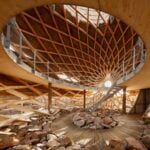
Most people understand architecture as the art and science of designing buildings. That is not untrue; however, it is not the whole story. Architecture and design are meant to erect buildings, but contrary to conventional perception, they are more than technique and expertise. Architecture shapes the built environment around us where we gather, experience, interact, and create memories. Countless examples around the world show how architecture impacts people, spaces and the environment, but what if there were a world where architecture was imagined to never leave a mark?
Building for Legacy
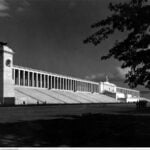
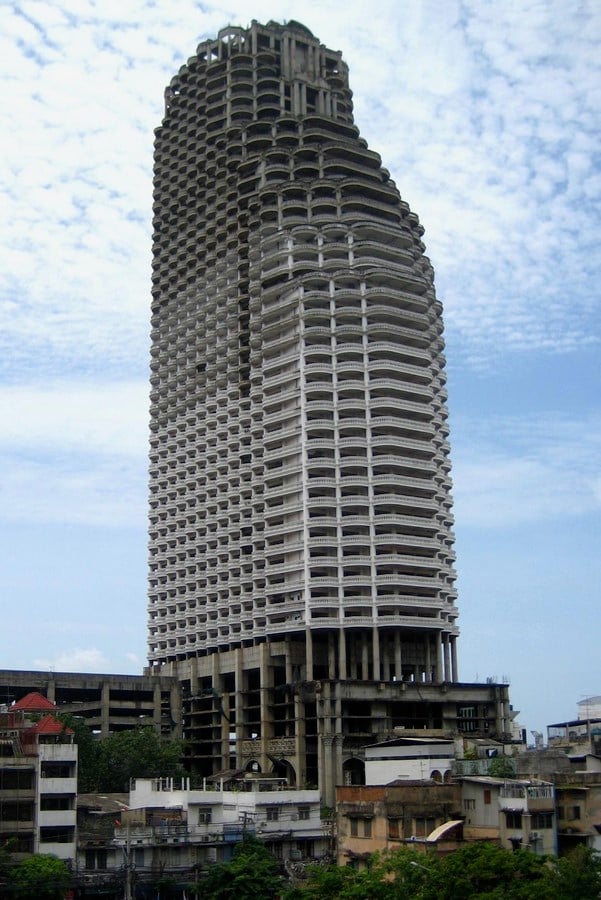
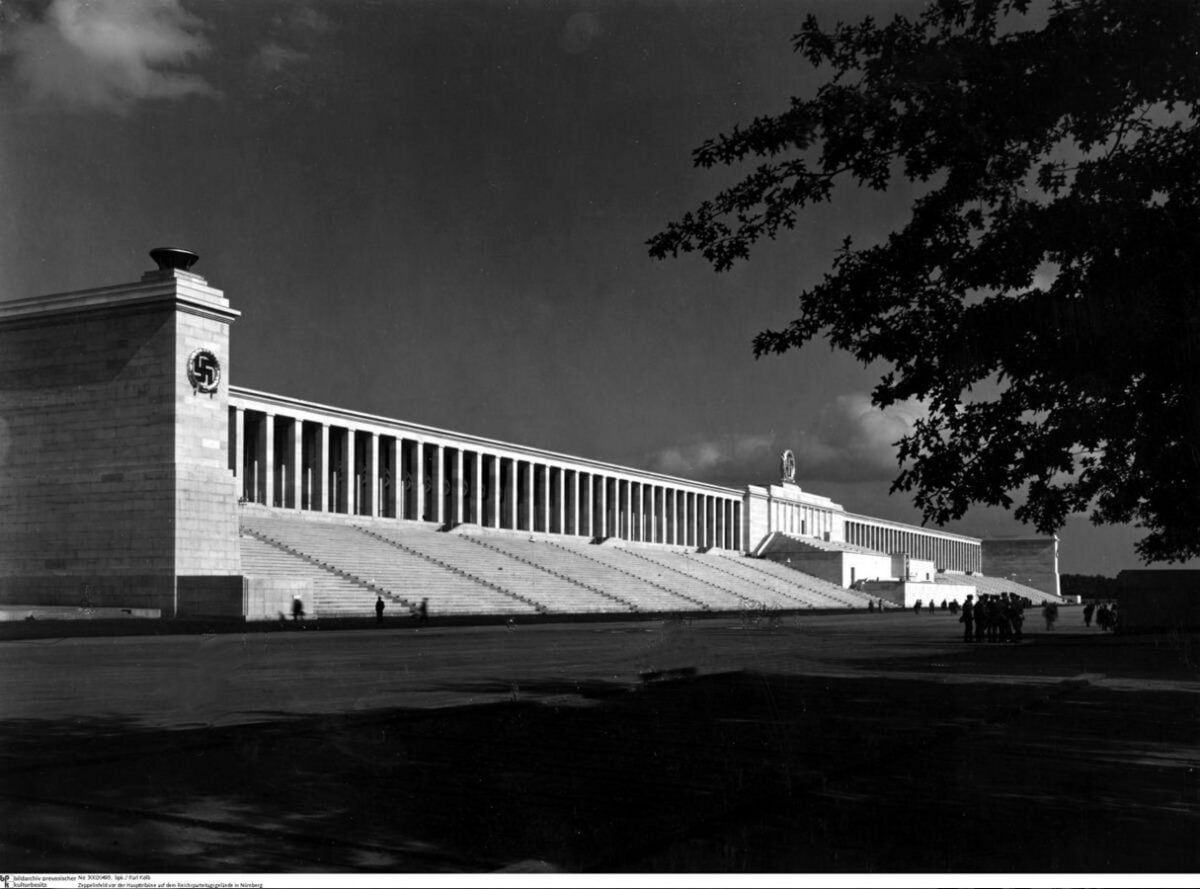
In principle, architecture and design embody the art of creation, and architects, by nature, cherish permanence and longevity in creating- something that stands for years, as a testament to their ideas and ambition. Centuries ago, most ancient civilisations and empires built monumental structures which have outlasted them, and stand today as witnesses to their history, art, culture, intellect and lifestyle. Whether it is the Pyramids of Giza built for a magnificent life after death, or it is the Süleymaniye Complex built as a grand and colossal hub to serve the community, or it is the Zeppelin Grandstand built to host rallies during a tumultuous political era, architecture has proven powerful enough to narrate stories, embolden beliefs and foster connections through moments of war, death, need, happiness, peace and celebration. In today’s era, the strive to forge a legacy continues. Skyscrapers and high-rises soar to new heights day by day, in an attempt to create monuments of awe and aspiration.
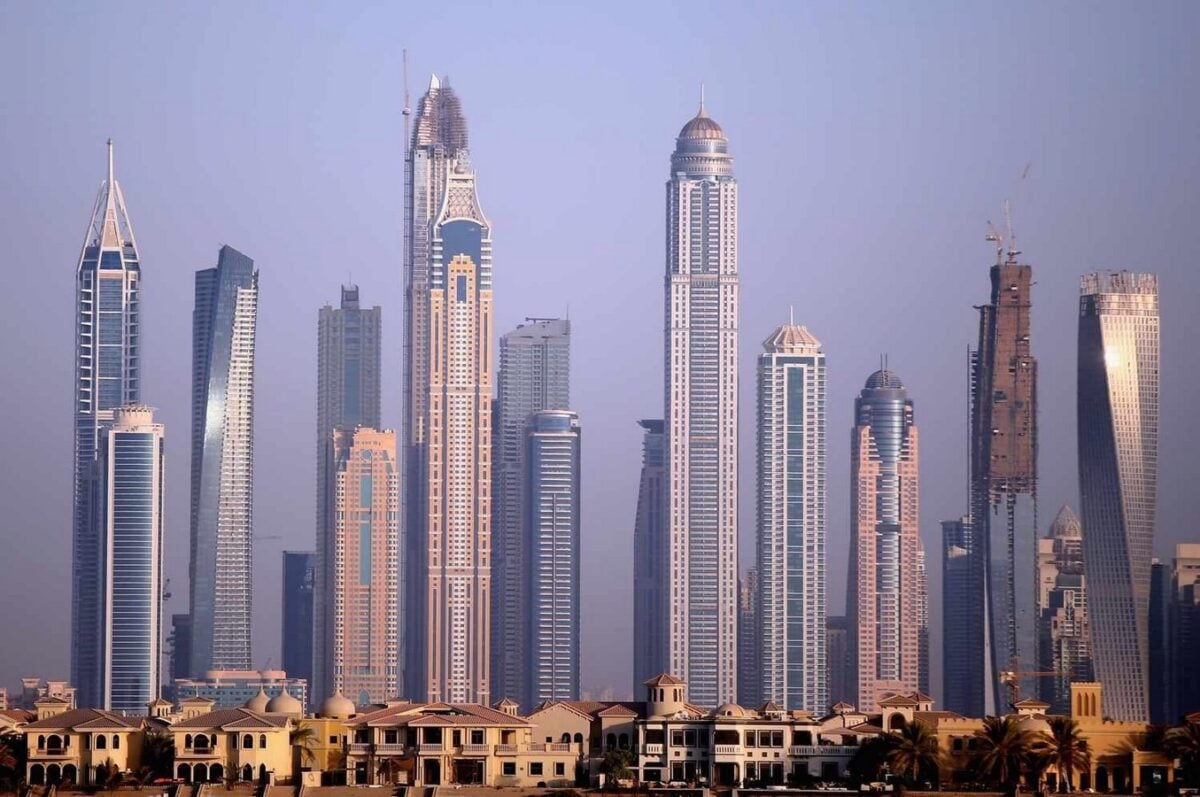
Whatever look architecture may pull off, its traces on the environment and people’s hearts and minds are inevitable. In a world of architecture without trace, the path for leaving a legacy would not be one. The approach would be multi-faceted, and just as much of ancient architecture lies in ruins, beyond archaeological discovery, architecture without a trace would be similar: with no physical impact on the environment but imprints of thought, meaning and belonging on the generations that follow.
Bursting the Bubble
In a world where buildings have inherently been crafted to surpass centuries, the idea of architecture that leaves no trace seems quite unreal. If architecture had to leave no trace, architects would have to abandon the fascination with permanence and accept that architecture cannot resist the consequences of time as choices evolve, lifestyles change and climate patterns shift. They would design consciously for the needs of the time rather than succumbing to the vicious cycle in which buildings endure through timelines, are abandoned and then get demolished. The enormous amounts of energy required for the production of modern building materials and their perennial waste in the environment would become a serious concern for the architects, and they would cease relying on modernity and its perks. Rather, they would conceive reconfigurable, reusable and relocatable structures, so that when the season shifts, events change, or the need transforms, architecture also fades, leaving behind only the memory of those who passed through it and an invisible yet profound trace of its brief existence.
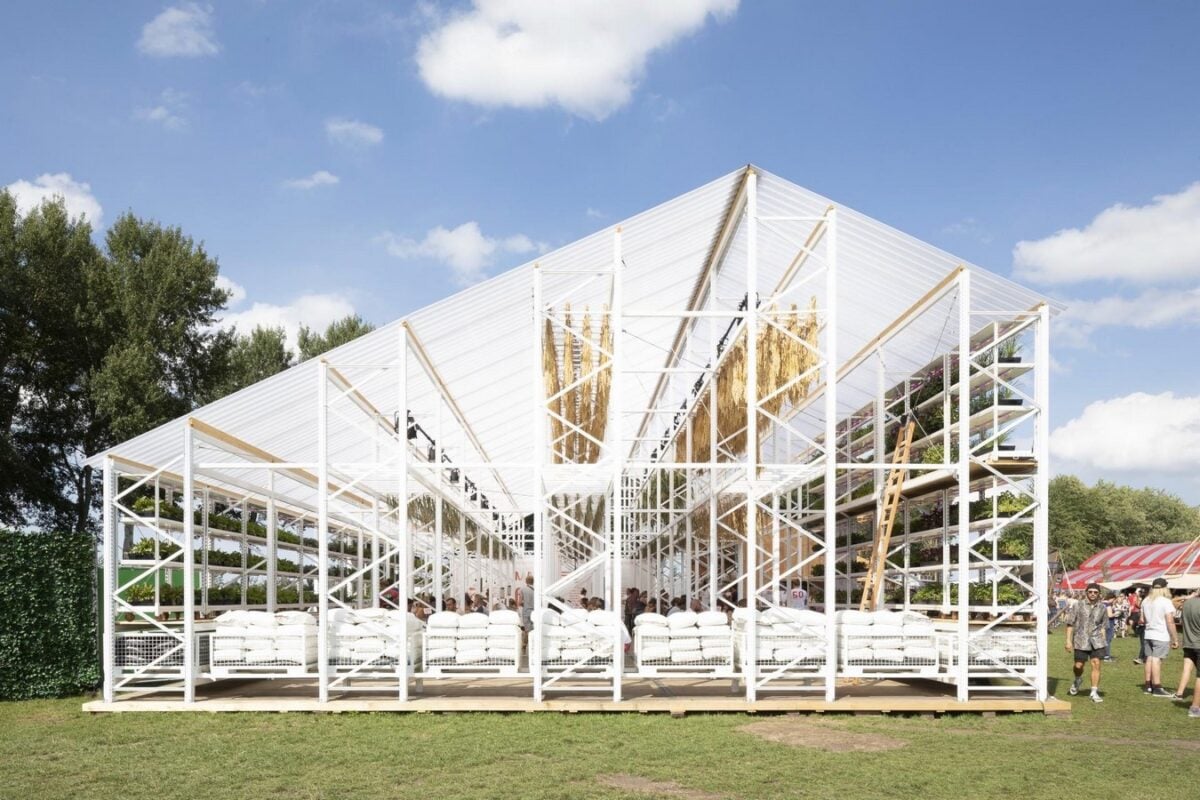
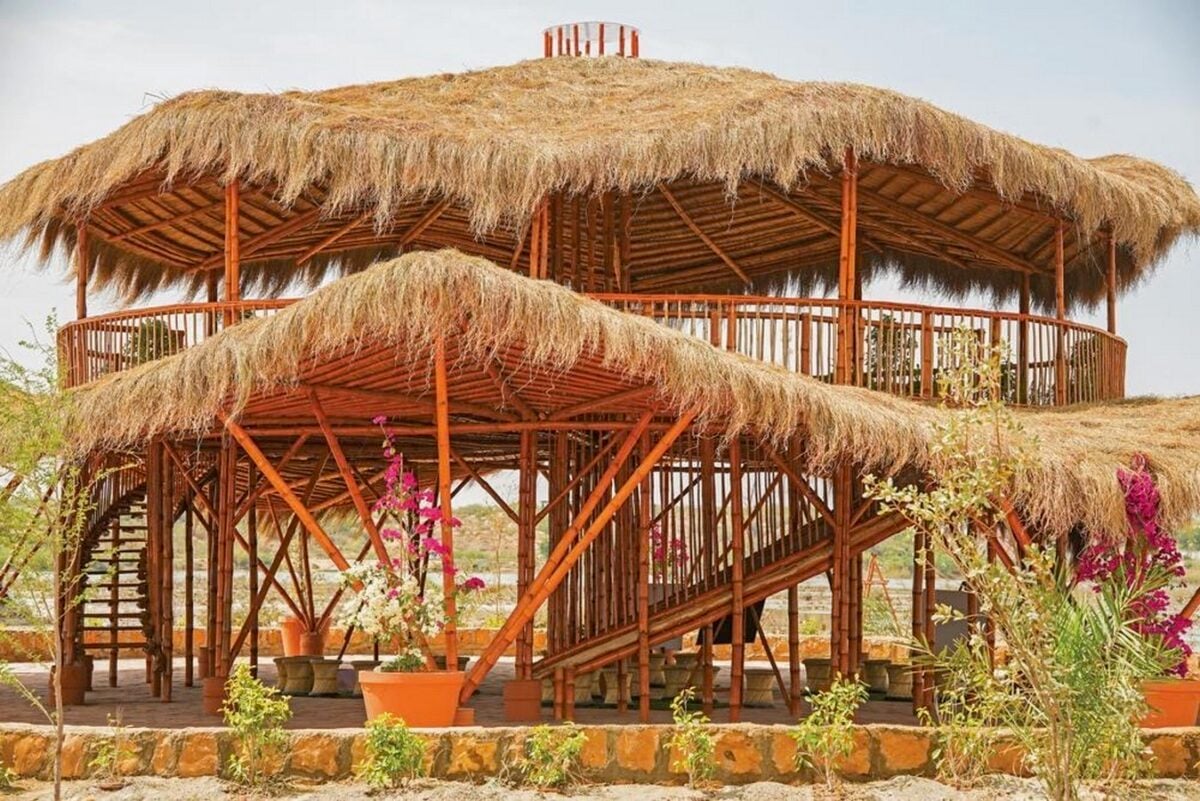
Architecture would embrace ephemerality and would employ materials that biodegrade. It would not seek longevity but harmony with its surroundings, not only taking from it but returning to it as well, and through a careful synthesis of material and technique, architecture and design would become adaptable and resilient.
Has it Already Begun?
Architecture without a trace seems a far-fetched reality and not even close to the bounds of perception, but the experiments and innovations around the world show a completely different picture.
-
Hy-Fi Pavilion Design
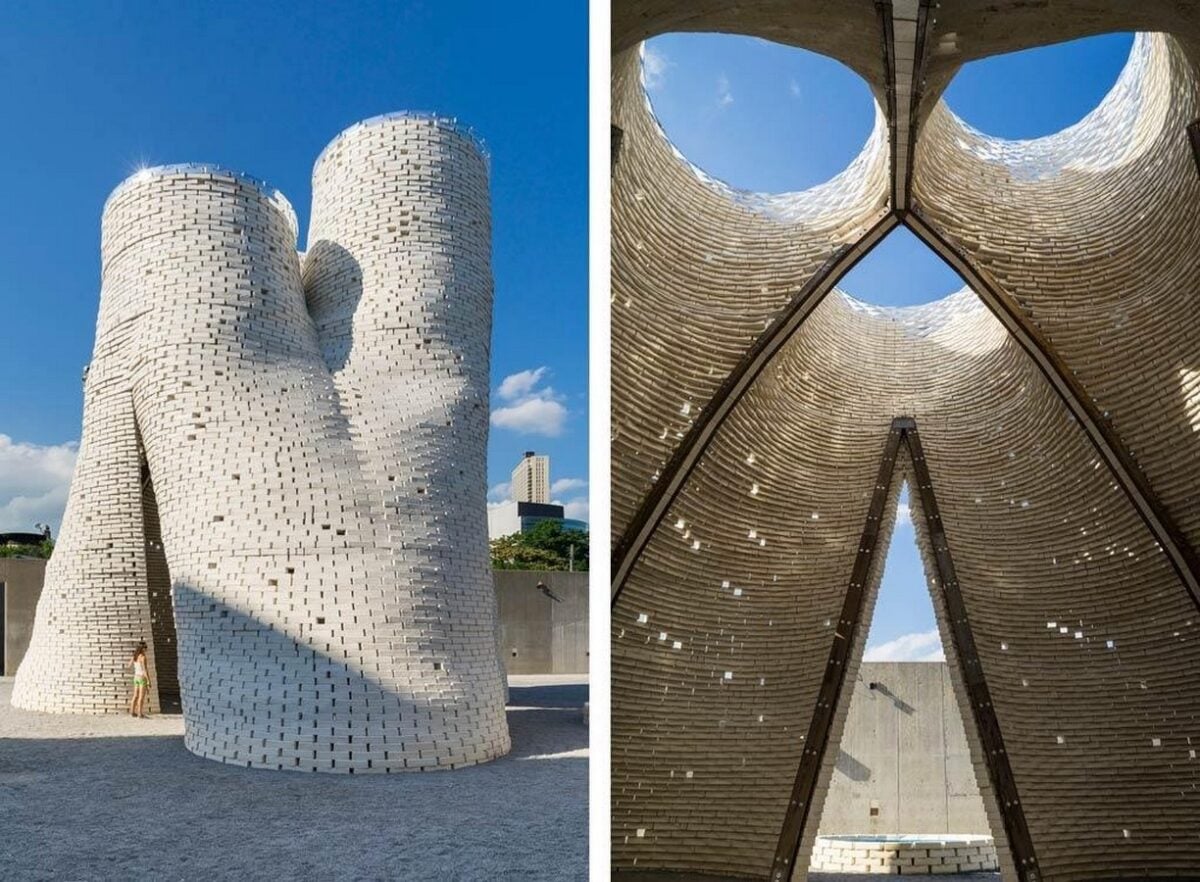
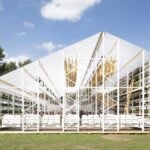
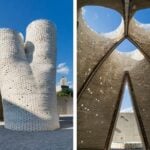
When any other commonplace structure could have conveniently taken its place with conventional materials, Hy-Fi was raised as a zero-waste, compostable structure as an unconventional approach to architecture and design. Standing over 12 metres tall, Hy-Fi was constructed using bricks grown from a mixture of shredded corn stalks and mushroom mycelium, requiring almost no energy in production. In a period of three months, when the structure was dismantled, each of its bricks was composted to nourish the soil of local community gardens, hence creating a sustainable life cycle and leaving no visible trace of its existence. Quite interestingly, the use of unconventional materials did not prevent the architects from experimenting with form, as it was equally striking, integrating curves and a play of light and shadow, creating a refreshing spatial experience.
-
Japan Pavilion EXPO 2000
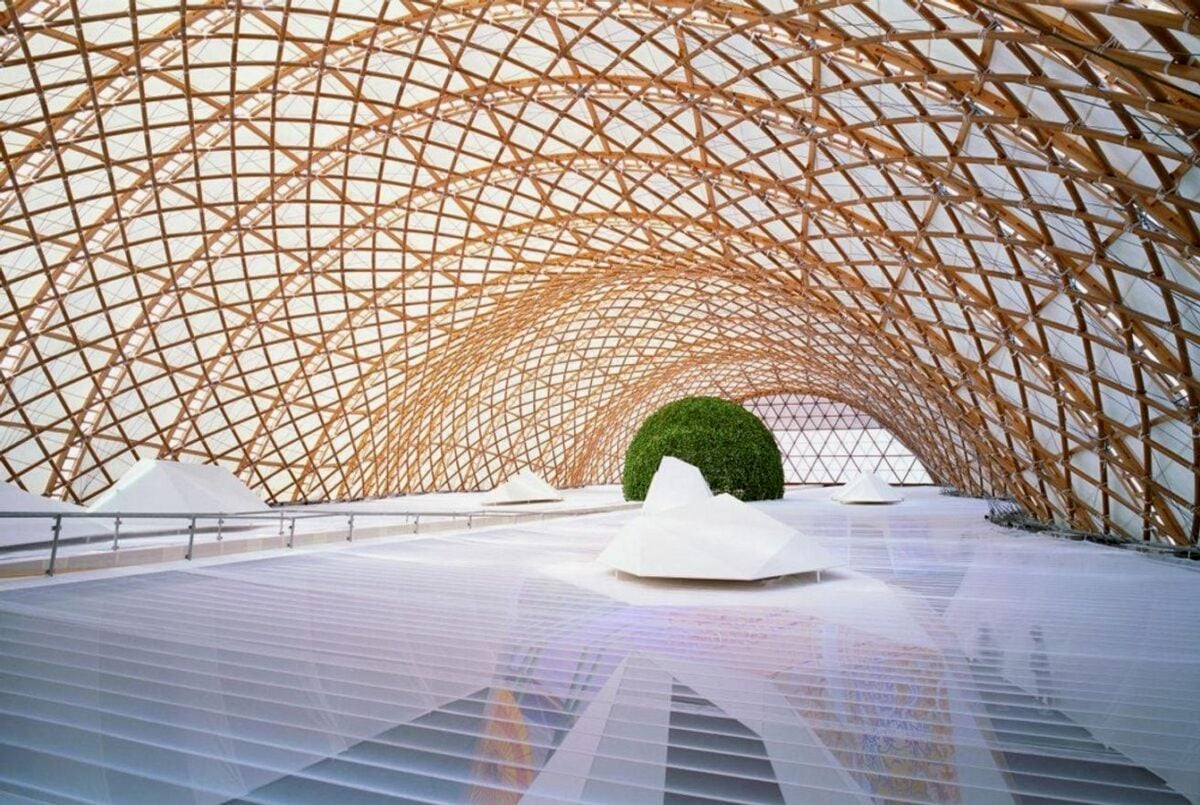
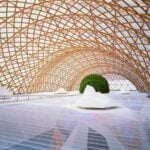
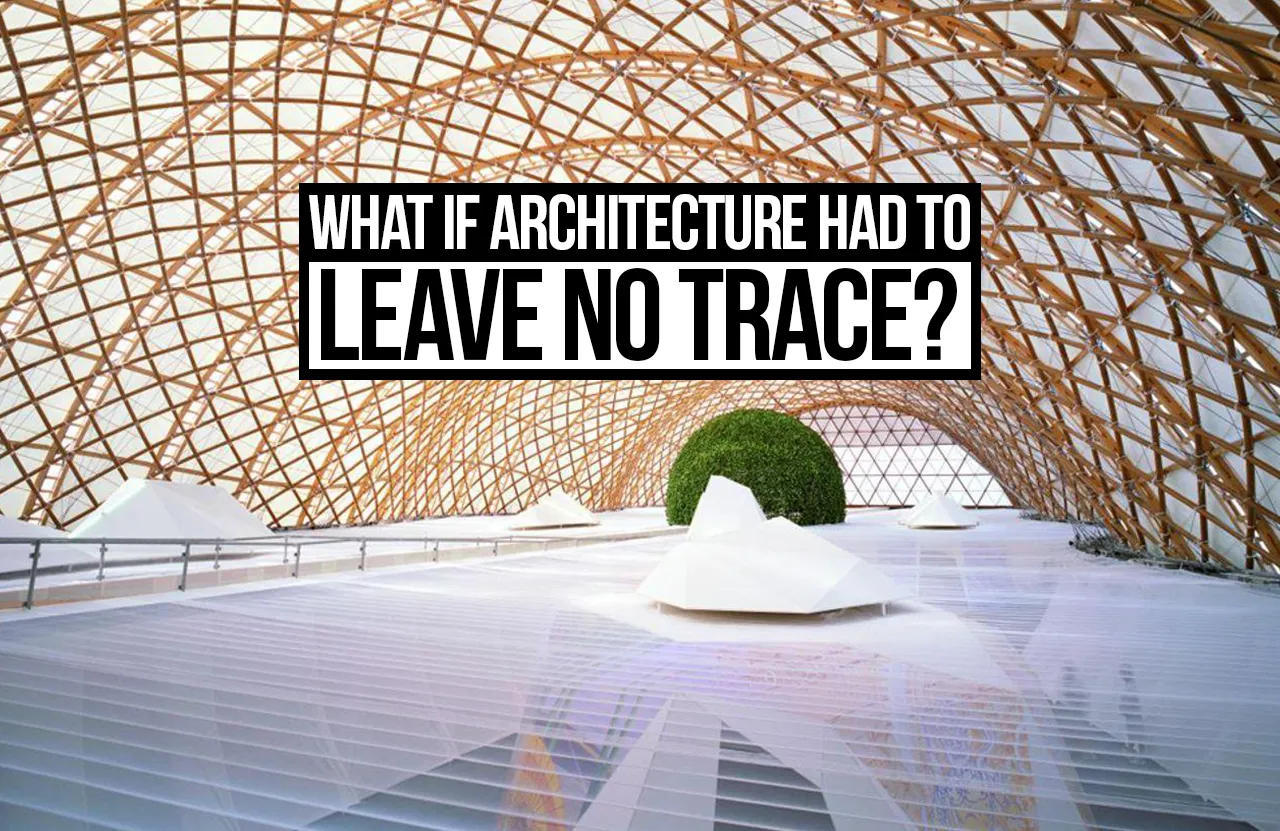
For Japan in EXPO 2000, Shigeru Ban designed the world’s largest paper structure ever built. Aligning with the theme of the exhibition to protect the environment, the focus of the architect was to design a pavilion with materials which could be completely recycled after the exhibition. Thus, a complex multi-layered system of paper tubes and a wooden lattice frame with removable fasteners was deployed to create a highlighted three-dimensional undulating curve. Not only that, but the foundations were also recyclable as they were built with sand and steel instead of cement. The structure was intricately complex, but the ambition of the architect and collaborating teams led to its fruitful completion.
-
Tij Observatory
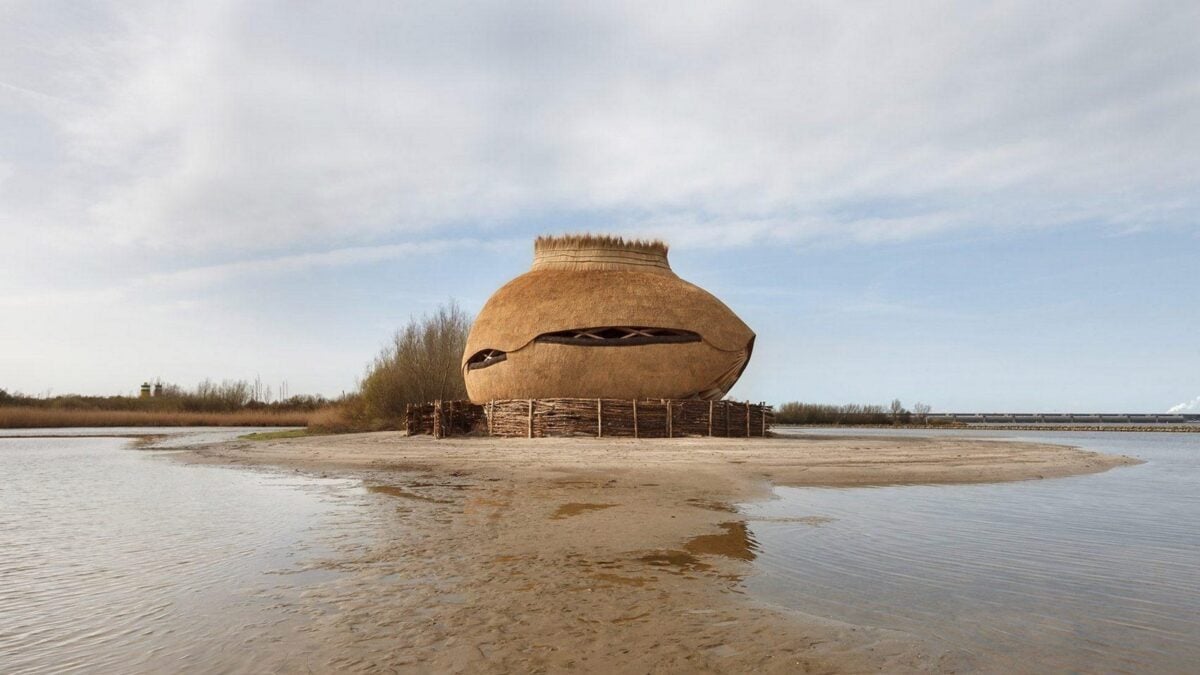
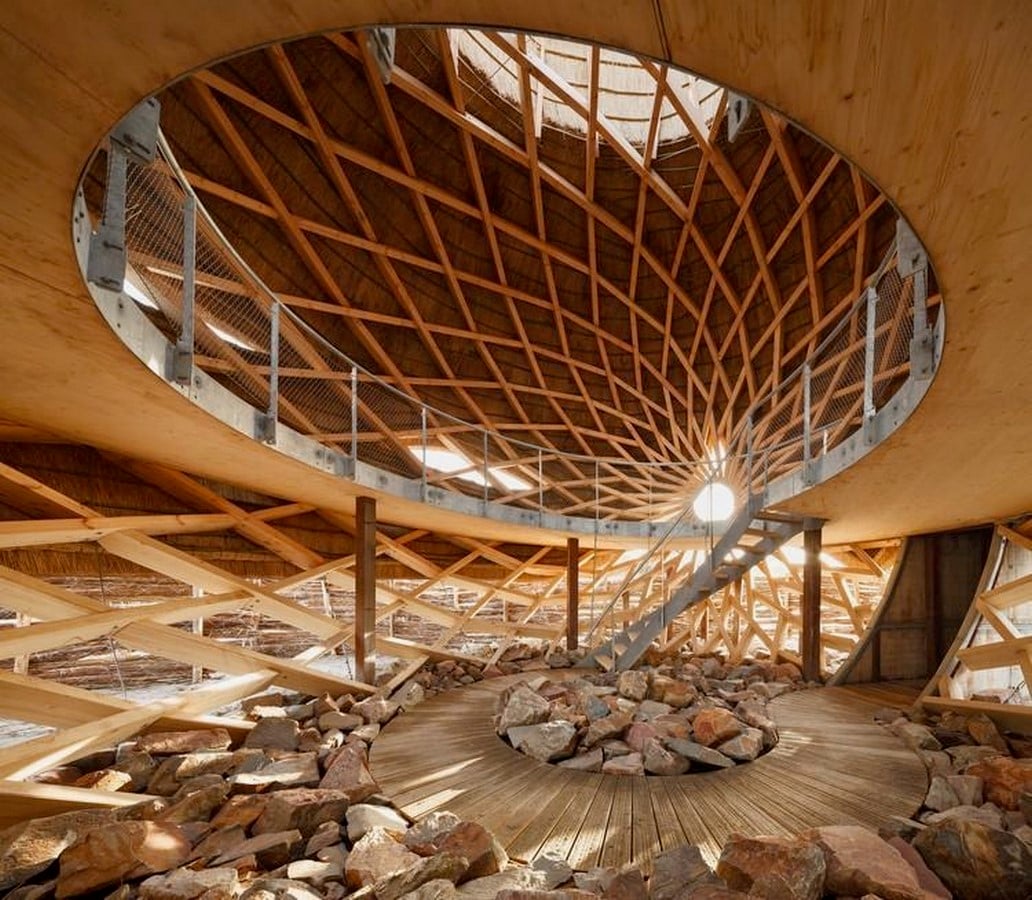
As part of the nature reserve in Scheelhoek, Tij Observatory was envisioned as a fully dismountable structure, in close integration with nature, using ephemerality and natural materials. The architects used thatched reeds from the reserve to clad the timber structure made of pre-cast members assembled on site. The form gracefully blends into the surrounding landscape with its unique shape inspired by a sandwich tern’s egg. The biodegradable materials with the prospect of ephemerality allow the observatory to be disassembled at any time without any loss of value or detrimental impact, with its materials reused, recycled or returned to the earth.
-
Sorrisniva Ice Hotel
A perfect example of architecture without trace, the Sorrisniva Ice Hotel is reconstructed entirely each year purely from ice and snow sourced from the surrounding landscape, only to melt back into it when spring arrives. The hotel spans an area of 2500 square metres with all kinds of services. In contrast to predictability, the impermanence and fragility of ice as a material becomes the driving force behind creating a one-of-a-kind experience while it lasts, and later return it back to its origin to not leave a mark.

The experimentation with no-trace architecture has been small-scale, low-impact, and community-driven, but this is how things begin. A world where architecture truly never leaves a trace would definitely build on innovations like these only, and choices would need to be deliberately made on different levels to achieve such a world.
What would Architecture Without Trace Do?
Today’s era unleashes two extremes of architects: those who pursue iconic, awe-inspiring architecture to leave a legacy, and those who cherish the art of creating humbly for humanity, nurturing experiences and memories. The weight architecture silently carries is immense, and in a world with no-trace architecture, architects would have to make a definitive choice. It would require designing with humility, using less, adapting more and thinking beyond ownership. The use of natural materials would not imply fragility or would not abstain striking forms but they would allow architects to shape a better future and create value for the people and the environment for whatever time period the structure is there for. The limits of what can be built with these materials are definitely worth a discussion, but it still comes down to us to find ways to reinvent rather than succumbing to what looks good. When that happens, skylines would change drastically. Skyscrapers, steel beams, glass facades, iconic and permanent structures would stop being the hallmarks and architecture that endures in thought and memory would begin.
References:
- BIG SEE. (2024). TIJ Bird Observatory, stellendam – big see. [online] Available at: https://bigsee.eu/tij-bird-observatory-stellendam/ [Accessed 22 Oct. 2026].
- Chen, L. (2025). Why architects are designing buildings to rot: The future of sustainable architecture | the environment. [online] Medium. Available at: https://medium.com/the-environment/why-architects-are-designing-buildings-that-rot-sustainable-architecture-ee95ac501bec [Accessed 20 Oct. 2026].
- [email protected], H.F.S.C. (n.d.). Hy-Fi: Zero carbon emissions compostable structure, New York, NY. [online] Holcim Foundation website. Available at: https://www.holcimfoundation.org/projects/hy-fi [Accessed 20 Oct. 2026].
- Lugari, S. (2026). Built to disappear: Architecture inspired by nature. [online] EN – dormakaba Blog. Available at: https://blog.dormakaba.com/built-to-disappear-temporary-architecture-inspired-by-nature [Accessed 20 Oct. 2026].
- R, V. (2026). Reversible architecture: Architecture that leaves no trace. [online] RTF | Rethinking The Future. Available at: https://www.re-thinkingthefuture.com/rtf-fresh-perspectives/a15625-reversible-architecture-architecture-that-leaves-no-trace/ [Accessed 20 Oct. 2026].
- The Future, R. (2025). Legacy in design: How architects build beyond buildings. [online] RTF | Rethinking The Future. Available at: https://www.re-thinkingthefuture.com/technologies/gp6376-legacy-in-design-how-architects-build-beyond-buildings/ [Accessed 20 Oct. 2026].
- Viva, A. (n.d.). Expo 2000 Japan Pavilion, Hannover – Shigeru Ban. [online] Arquitectura Viva. Available at: https://arquitecturaviva.com/works/pabellon-de-japon-en-expo-2000-9 [Accessed 20 Oct. 2026].
- www.sorrisniva.no. (n.d.). The world’s northernmost igloo hotel. [online] Available at: https://www.sorrisniva.no/hotels/igloo-hotel [Accessed 23 Oct. 2026].