Cutting concrete, brick, asphalt, or masonry blocks isn’t the same job every time. Some materials are relatively soft and abrasive, while others are hard, dense, and difficult to cut. Use the wrong blade, and you may end up with slow cutting, premature blade wear, or unnecessary interruptions on the jobsite.
A blade that works well on one material may not be the right choice for another.
Masonry saw blades are designed for different materials, cutting conditions, and types of equipment. Tait Sales & Consulting (TSC) offers diamond blades for applications ranging from brick and block cutting to cured concrete and asphalt.
Let’s look at what matters when choosing a masonry saw blade and how to match it to your next project.
What Should You Look for in a Masonry Saw Blade?
1. Start With the Material You’re Cutting
Before looking at blade size or price, identify the material you’ll be working with. Concrete, brick, asphalt, and masonry blocks have different cutting requirements.
For example, asphalt and green concrete are abrasive materials that can wear down a blade quickly if the bond isn’t suitable. Cured concrete, particularly hard concrete containing aggregate or steel reinforcement, requires a different approach.
TSC offers several options for these applications:
- Green concrete and block blades: Designed for cutting green concrete and suitable block materials.
- Cured concrete blades: Intended for hardened concrete, with options for different aggregate and reinforcement conditions.
- Asphalt blades: Designed to handle the abrasive nature of asphalt.
- General-purpose masonry blades: Suitable for a range of compatible materials, including brick, block, and concrete.
The important part is to match the blade to the actual material rather than assuming one blade will handle every job equally well.
2. Understand Diamond Blade Bond Hardness
Now we are going to get into the technical aspect of selecting a blade; however, this will help you understand what type of blade is best for your application.
The diamond blade is made from an industrial diamond material that is held together by a metallic matrix. When you cut with the blade, the metallic matrix will wear down and allow new diamonds to become available on the surface of the cutting edge.
The bond needs to suit the material.
The harder bond typically works best with the softer and more abrasive material since it doesn’t wear down as quickly. The softer bond is usually the better choice when working with harder materials since it wears down at a rate where you will continue to expose new diamond tips and maintain your cutting performance.
The wrong balance of these factors can result in premature wear of the blade and/or difficulty with cutting effectively.
Contractors who use various types of materials should check what bond grades are recommended for those specific materials prior to purchasing their cutting blades. This will allow them to prevent having to replace blades too frequently and also reduce the amount of time that they spend idle.
3. Choose the Right Blade Design
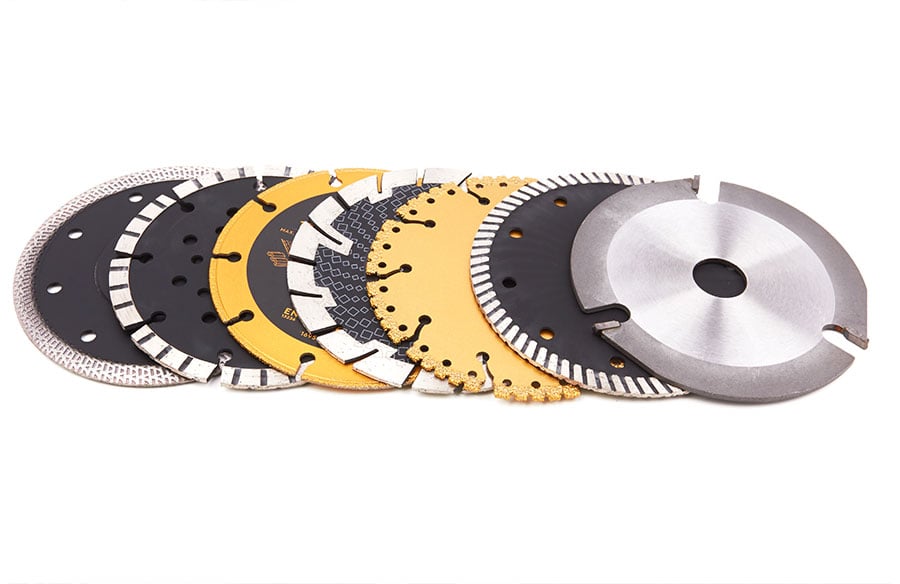
Not every diamond blade has the same segment design. The blade’s construction affects how it cuts, how it handles debris, and the type of finish it produces.
- Segmented blades: These have gaps between the cutting segments. They are commonly used for general-purpose concrete and masonry work. Their design helps with debris clearance, although the cut may be rougher than one produced by some other blade designs.
- Turbo blades: These feature a continuous, ridged cutting rim designed to support efficient cutting across compatible materials. They can be useful when the application calls for a balance of cutting speed and finish.
- Specialized blades: Certain jobs need blades developed for specific materials or cutting conditions. TSC’s selection includes options for reinforced concrete, asphalt, cured concrete, and other demanding applications.
Don’t choose based on appearance alone. Check the blade’s stated application and make sure it suits the material and saw you’re using.
Wet Cutting or Dry Cutting: Which Is Better?
The answer depends on your equipment, the material, and the working conditions.
Wet cutting uses water to help cool the blade and control airborne dust. It’s often useful for sustained cutting operations where the saw and blade are designed for water-fed use.
Dry cutting relies on airflow and the blade’s design to manage heat. It can be more practical for certain mobile jobs or locations without a suitable water supply.
Some TSC blades are rated for both wet and dry cutting, while others have specific operating requirements.
Never assume every blade can be used either way. Follow the manufacturer’s instructions for the particular blade, including its cooling requirements and operating limits.
Check Blade Size and Saw Compatibility
Even the right blade for the material won’t perform properly if it doesn’t match the saw.
Before ordering, check these details:
- Blade diameter: It must match the saw’s approved blade size and provide the cutting depth your project requires.
- Arbor size: The blade’s mounting hole must match the saw spindle or approved adapter.
- Saw type and power: Confirm that the blade is rated for your equipment, whether it’s a handheld high-speed saw, masonry saw, or walk-behind saw.
- Operating speed: Never exceed the blade’s maximum rated RPM or the saw manufacturer’s limits.
For instance, TSC’s Diteq U-22 blade range includes several diameter and arbor configurations for compatible concrete and masonry applications. Always check the specific product variant rather than relying on the series name alone.
Keep Your Blade Performing Properly
Choosing the right blade is only half the job. Proper use and inspection also matter.
Before cutting, inspect the blade for visible damage and confirm that it’s installed correctly. Use the required water supply where applicable, and avoid forcing the blade through the material.
If cutting becomes unusually slow, the blade overheats, or performance changes unexpectedly, stop and investigate the cause rather than continuing to push the equipment.
Use the appropriate protective equipment and follow jobsite procedures for silica dust, noise, and flying debris.
Find the Right Masonry Saw Blade at Tait Sales & Consulting
If your work involves different types of concrete, brick, block, or asphalt, choosing the right blade can make a real difference to cutting performance and blade life.
Tait Sales & Consulting offers diamond blades across several categories, including general-purpose, cured concrete, green concrete and block, asphalt, and masonry applications.
Explore the Concrete and Masonry Blades collection at Tait Sales & Consulting LLC to compare available options. Match the blade to your material, saw, and cutting conditions, and check the product specifications before ordering.
FAQs
- How do I choose the right masonry saw blade?
Start with the material you’re cutting, then check the blade’s bond grade, segment design, diameter, arbor size, and compatibility with your saw.
- What is the difference between wet-cutting and dry-cutting blades?
Wet cutting uses water for cooling and dust control, while dry cutting relies on airflow and blade design. Always follow the manufacturer’s instructions for the specific blade.
- Which diamond blade is best for cured concrete?
Choose a blade specifically rated for cured concrete and suited to its hardness, aggregate, and reinforcement. Bond grade and saw compatibility also matter.
- Can one masonry blade cut concrete, brick, and block?
Some general-purpose blades are designed for several compatible materials. However, cutting performance and blade life depend on the material and the blade’s specifications.
- Why does my masonry saw blade wear out quickly?
Possible causes include an unsuitable bond grade, abrasive material, incorrect operating conditions, or using a blade outside its intended application. Check the manufacturer’s guidance to identify the cause.