A hotel brand can repeat one building across a continent. A collection of private houses cannot. Each house already stands on its own site, built to whatever the local weather demanded. That sets a quiet design problem for anyone who promises guests the same experience in every home.
Browsing Paradiso’s colection of luxury vacation homes shows the tension clearly. Paradiso Homes says it curates ultra-luxury private residences for families and groups. It also says every home upholds the same standards in comfort, service, design and cleanliness. Its destinations run through 16 states, from Truckee in California to Gulf Shores in Alabama and Lake Winnipesaukee in New Hampshire. The promise stays the same everywhere, but the buildings carrying it cannot.
Why Can’t Consistency Mean Identical Buildings?
Hotels usually get consistency through repetition. The same room module, fittings and plant room get rolled out site after site. A portfolio of existing private homes works the other way round. The standard has to be layered onto houses that were never designed as a set.
What travels between regions is the guest-facing layer. Paradiso describes its homes as fully furnished, professionally styled and equipped with hotel-grade amenities. It mentions spa-inspired bathrooms and chef-ready kitchens. Linens, robes and service can be specified once.
The envelope, the roof and the ground around the house cannot. They answer to local weather, and that split is the useful lesson for designers. Interior consistency is a procurement problem. Envelope consistency is a climate problem with several different answers.
What Does the Gulf and Atlantic Coast Ask of a House?
Coastal houses are judged first by their roofs. The FORTIFIED Home program is run by the Insurance Institute for Business & Home Safety (IBHS). IBHS post-storm studies generally show that between 70% and 90% of related insurance claims include roof damage. It points to 2020 as an example. That year brought 30 named tropical systems, more than 1,000 confirmed tornadoes and roughly $100 billion in damage.
FORTIFIED is a voluntary construction and re-roofing standard aimed at high winds, hail, hurricanes and tornadoes. It has three levels, called Roof, Silver and Gold, and more than 100,000 families have chosen it. For a group house near the water, a coastal brief tends to run in this order:
- Treat the roof as the first line of defense, not a finish.
- Plan re-roofing cycles, since IBHS notes roofs may need replacing every 15 to 20 years, or sooner after hard weather.
- Protect the openings, because big glazed walls facing the sea are the costly weak point.
- Lift pool plant and mechanical gear out of the path of storm water.
- Check local help, as IBHS notes programs in North Carolina and Alabama that can help pay for the upgrade.
Paradiso’s list includes Gulf and Atlantic stops such as Port Aransas, Marco Island, Hilton Head and North Myrtle Beach. RTF has covered the structural side of hurricane zone design in more depth.
How Does Wildfire Change Western and Mountain Homes?
Further west, the main threat shifts from wind to embers. Paradiso’s West Coast page lists Truckee, Three Rivers and Perris in California, plus Sisters and Government Camp in Oregon. Its Arizona stops include Scottsdale, Sedona and Tucson. Wildfire shapes the site plan across much of that ground.
The IBHS Wildfire Prepared Home program requires a continuous 0 to 5 foot noncombustible zone around the house. That ring may hold only materials such as gravel, concrete, pavers or bare mineral soil. Its FAQ says homes most often ignite from embers gathering next to the walls. Flames and heat within five feet are the other common cause. No plants are allowed there, even irrigated or fire-resistant ones.
That rule collides with a familiar luxury image. Planting beds hug the terrace, a timber deck runs into the trees, and a hot tub sits under the eaves. Each needs rethinking at the drawing stage. The wider envelope moves for forest fire resilience, such as roofing and vents, belong at that stage too.
The program is now available in 14 states. Seven of them, Arizona, California, Florida, Montana, Oklahoma, Oregon and Texas, also appear on Paradiso’s destination list. Mountain sites add one practical wrinkle, because evaluations cannot happen under snow cover.
How Do the Regional Briefs Compare?
The table sets one guest promise against each region’s weather, using destinations from Paradiso’s own list.
| Region | Example destinations | Main pressure | First design question |
| Gulf and Atlantic coast | Gulf Shores, Marco Island, Hilton Head | Wind, rain, storm water | Is the roof built to a recognized wind standard? |
| Western forest and alpine | Truckee, Sisters, Government Camp | Embers and snow | Is the first 5 feet around the house noncombustible? |
| Desert Southwest | Scottsdale, Sedona, Tucson | Sun and heat gain | How much west-facing glass is shaded? |
| Lakes and southern highlands | Lake Winnipesaukee, Gatlinburg, Ellijay | Damp, slopes, empty weeks | How does the house behave between stays? |
| Northeast shore | Gloucester | Salt air and winter storms | Which exterior finishes survive salt exposure? |
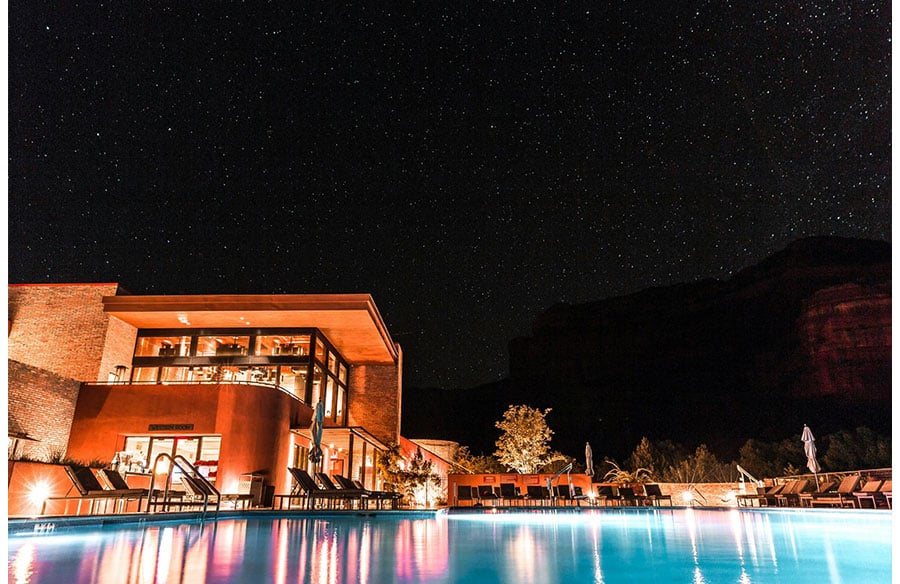
The desert row deserves its own note. Deep overhangs, shaded courtyards and heavy walls do the work that extra cooling would otherwise do. A desert villa that glows at sunset still has to stay cool by mid-afternoon.
What Designers Can Borrow From a Multi-Region Portfolio
The same habits help whether the client owns one house or forty:
- Split the layers. Write one standard for the guest experience and separate ones for each climate’s envelope.
- Draw the outside zones. Put the 5-foot ring, roof edges and storm-water paths on the plans, not only the rooms.
- Price the amenities honestly. Paradiso’s amenity filter runs to 175 options, from heated pools to ski-in access, and each one carries a climate cost.
- Time the works. Paradiso lists booking access up to 120 days before arrival, so roofing and site works need slots planned around booked weeks.
 Designing for the Guest Who Never Sees the Roof
Guests notice linens, light and a kitchen that works. They rarely notice a roof deck fastened to a wind standard or a gravel ring under the windows. Yet those hidden choices are what let a promise of consistency survive a storm season or a dry August.
Frequently Asked Questions
Why Do Coastal Vacation Homes Focus On the Roof?
Roofs take most of the storm damage. IBHS post-storm studies generally find that 70% to 90% of related insurance claims include roof damage. A stronger roof protects everything beneath it.
What Is a Noncombustible Zone Around a House?
It is a continuous ring reaching 5 feet out from the exterior walls. Under the Wildfire Prepared Home program it may hold only materials such as gravel, concrete or pavers. Plants, mulch and wooden fences are not allowed.
Can One Design Standard Work Across Different Climates?
Yes, if the standard covers the guest experience rather than the building fabric. Interiors, service and fittings can repeat. Roofs, glazing and site planning need a regional answer.
How Often Does a Storm-Exposed Roof Need Replacing?
IBHS notes that roofs may need replacing every 15 to 20 years. Harsh weather can shorten that. Owners of rental homes should plan the work around booked stays.