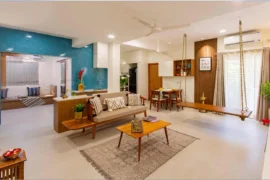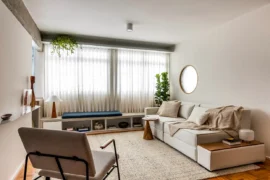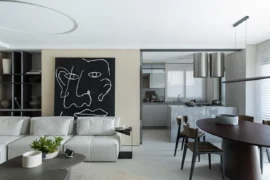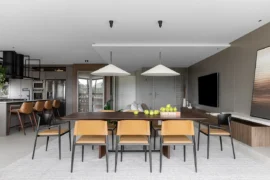
Sukoon unfolds as a deeply introspective residence: one that transcends the visual to engage the senses in a quiet, measured dialogue with space. This home is imagined not merely as a dwelling, but as an emotional sanctuary within the intensity of an urban context.
Project Name: Sukoon
Studio Name: Asummi R Design
Location: Worli, Mumbai
Date of Completion: March 2025
Area: 3,000 sq.ft
Principal Architect/Designer: Asummi Rawat
Photography Credits: PhX India
Stylist: Asummi R Design
Overlooking Mumbai’s expansive skyline and the Arabian Sea, the home responds to its surroundings not by mirroring their dynamism but by offering a deliberate counterpoint, an interior world rooted in stillness, balance, and quietude.
The design narrative is anchored in the idea of “quiet luxury,” interpreted through a lens of calm minimalism and a subtle Wabi-Sabi sensibility. Here, imperfection is not corrected but embraced, and beauty emerges through restraint rather than excess. A palette of warm neutrals and muted tones establishes a soft visual continuity across the home, while off-white flooring, lime-finished walls, and tactile surfaces create a serene, almost meditative canvas. Light is treated as a material in its own right: filtering, diffusing, and settling gently across surfaces, revealing textures that might otherwise remain unnoticed.
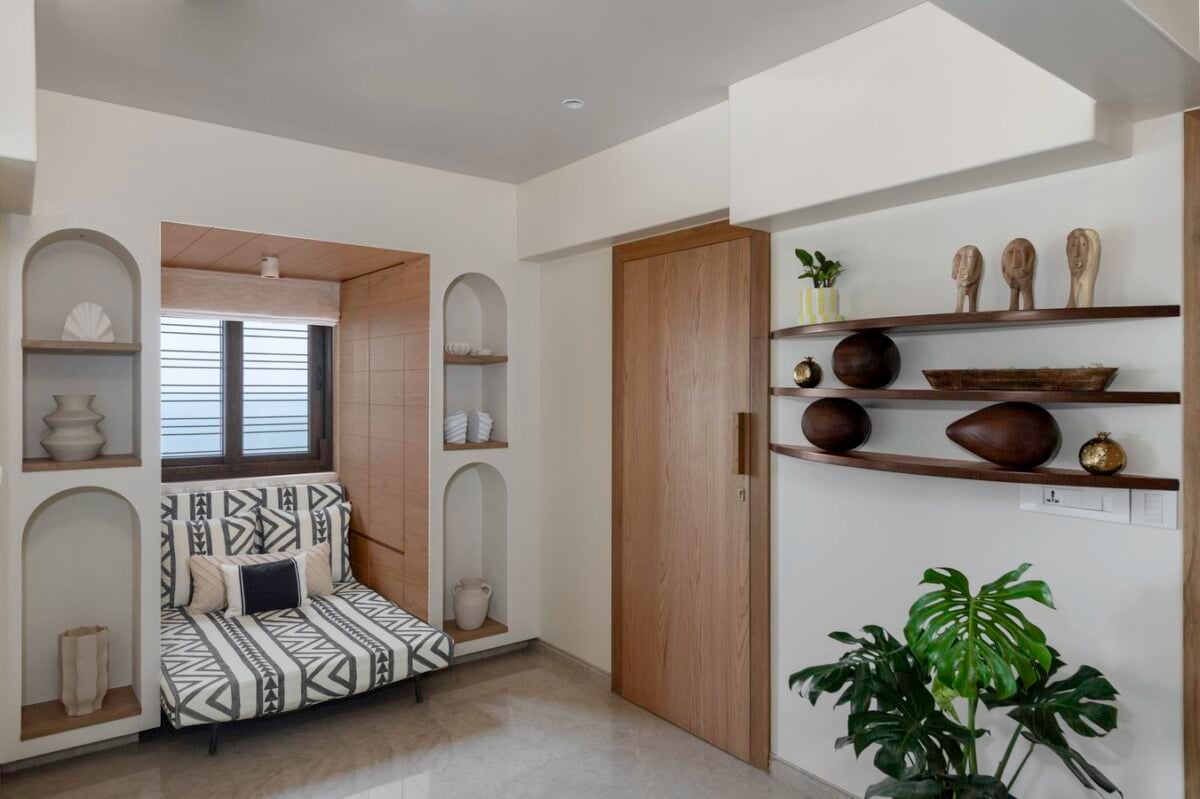
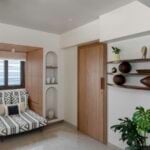
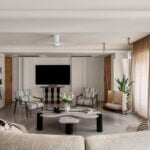
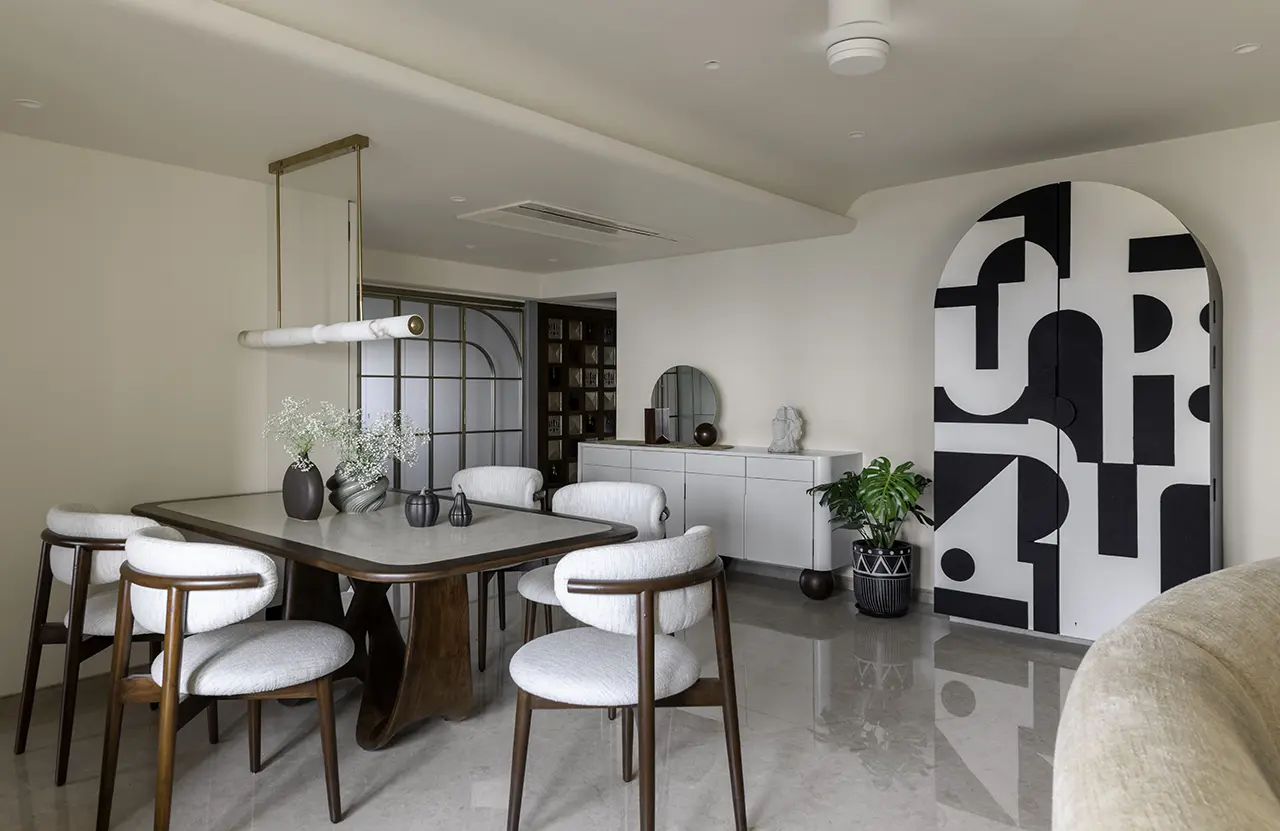
The spatial experience is carefully choreographed to evoke a gradual transition from the outside world into a cocooned interior. The entry acts as a threshold, subtle yet intentional, where the sensory shift becomes immediately perceptible. Beyond this, the living and dining areas unfold in an open-plan configuration that prioritises both fluidity and intimacy. Furniture is deliberately low and inviting, encouraging moments of pause and conversation, while the absence of harsh edges that are replaced instead by softened curves fosters a sense of ease. Textural layering through linen upholstery, woven rugs, and matte finishes introduces depth without disturbing the overarching calm.
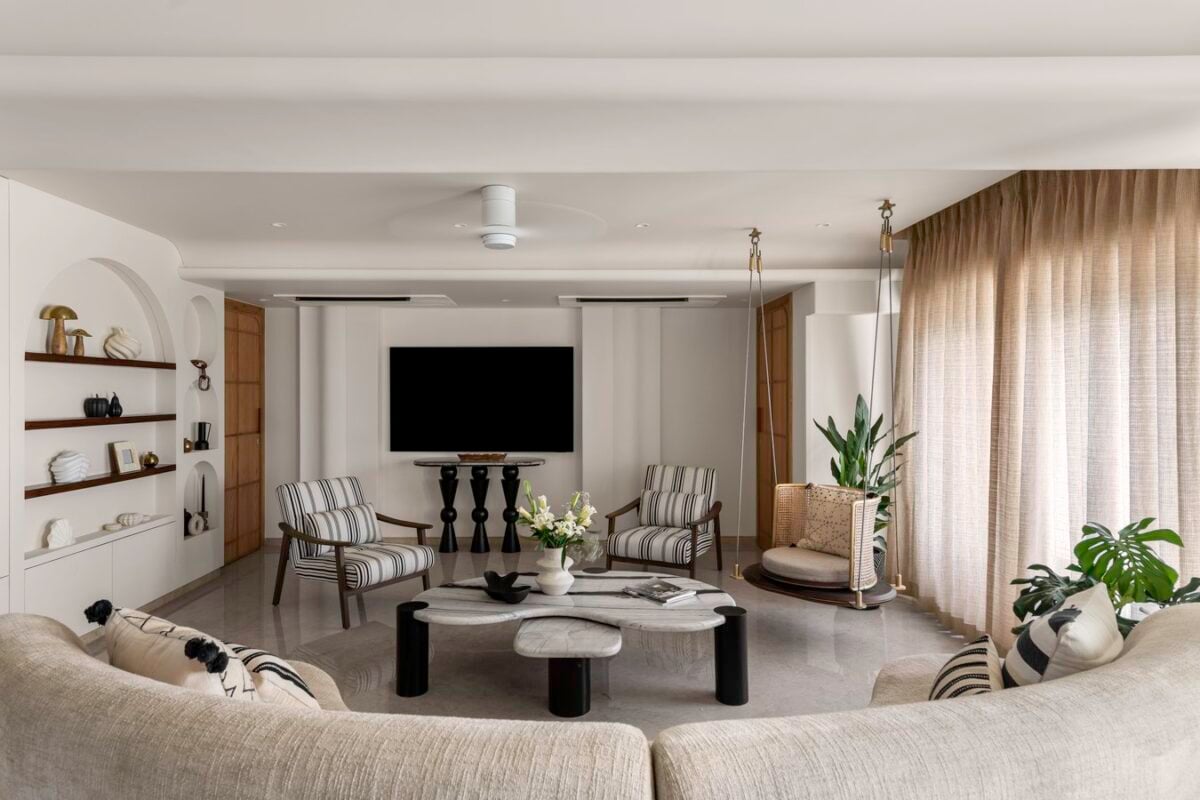
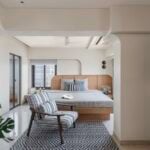
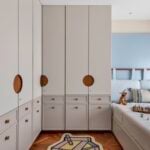
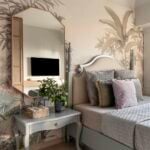
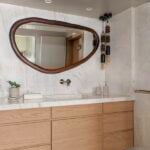
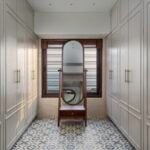
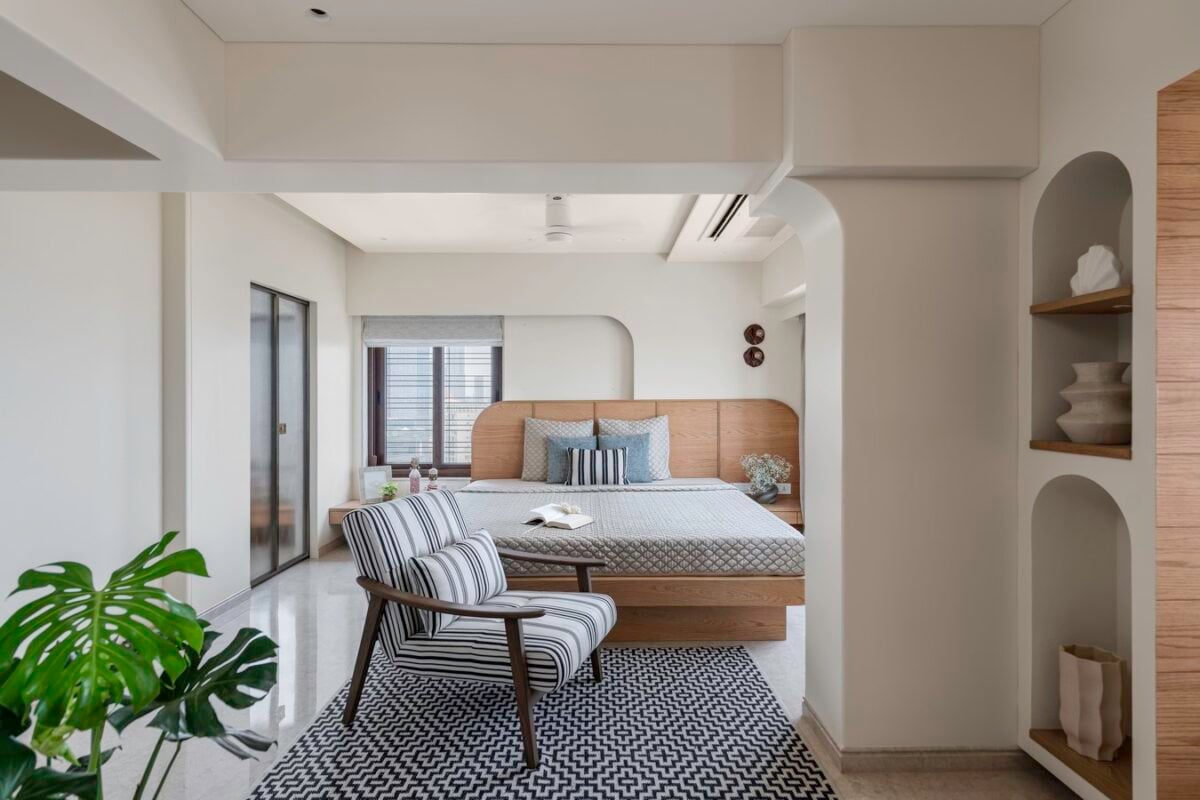
Private spaces adopt an even more restrained language. The master suite is envisioned as a retreat within a retreat, complete with a reading nook that reinforces the home’s contemplative ethos. A seamless material transition, from the distinctive flooring of the walk-in wardrobe to the travertine-clad bathroom, creates a sense of continuity, while simultaneously elevating the everyday ritual of inhabitation. The son’s bedroom introduces a gentle vibrancy through pale blue hues and wooden flooring, while the mother’s room balances tactile richness with subtle ornamentation, incorporating rattan and wood finishes alongside delicate wallpaper. Each room carries its own identity, yet remains firmly anchored within the home’s cohesive narrative.
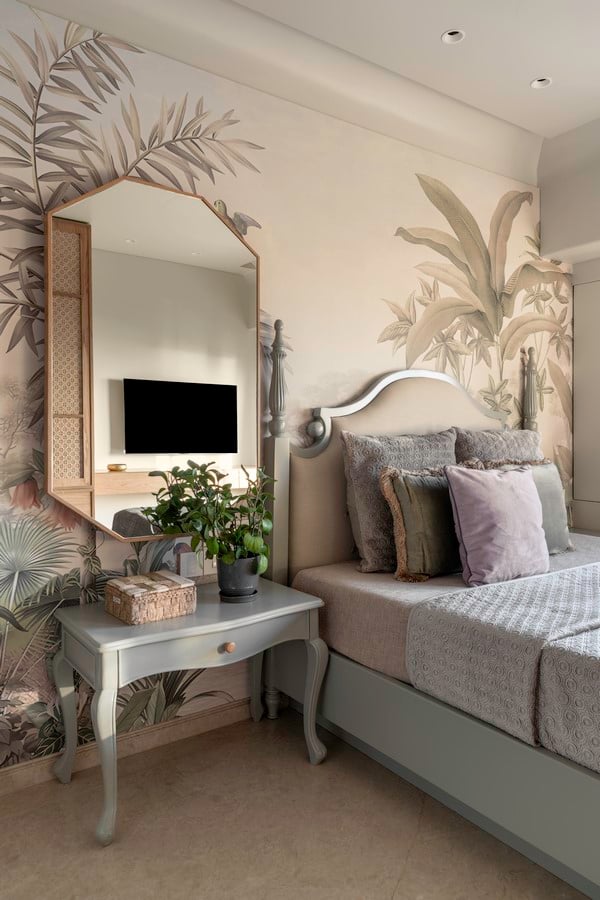
Across the residence, design gestures remain understated yet intentional. A curve replaces a corner where least expected, a soft wash of light takes precedence over focused illumination, and materials are chosen as much for their tactile quality as for their visual presence. Stone surfaces lend a sense of permanence, while natural fabrics such as linen and cotton introduce softness and familiarity. Matte finishes reduce glare, ensuring that the environment remains visually restful, while metallic accents are used sparingly, offering moments of quiet refinement.
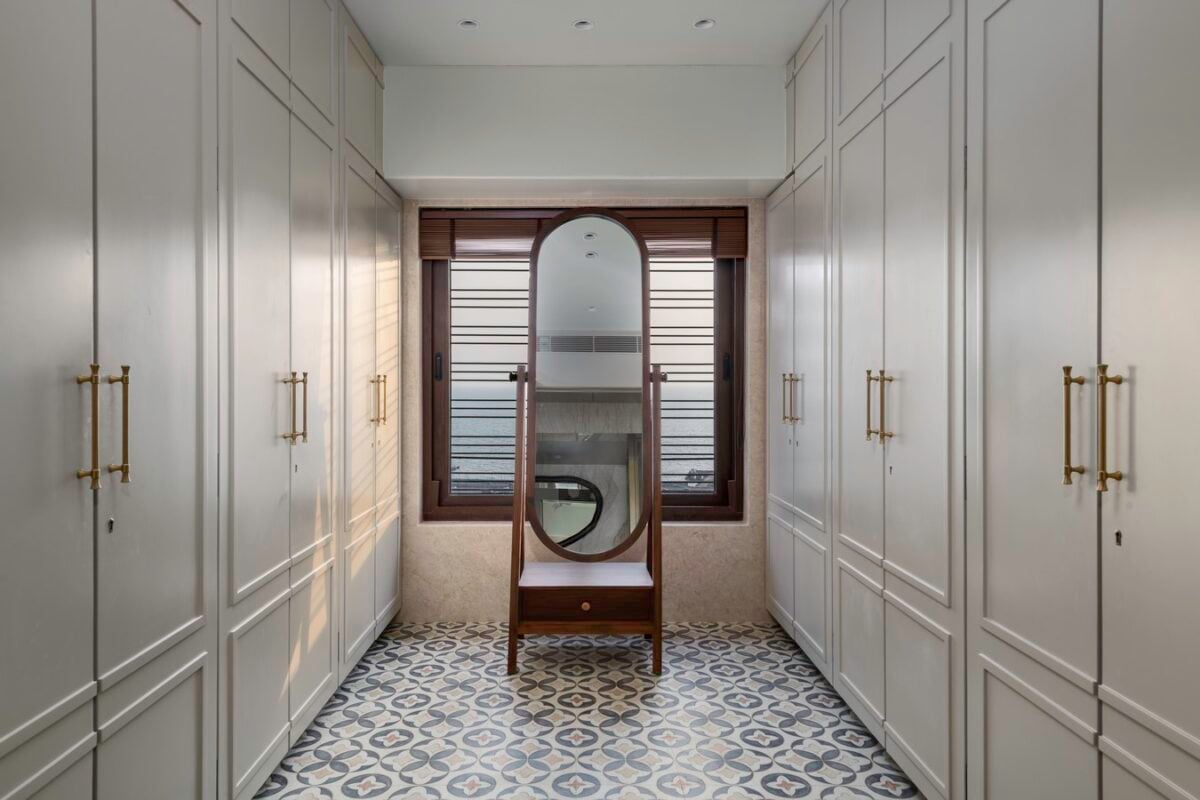
The home’s planning reflects a rigorous approach to spatial efficiency without compromising its serene character. Zones are defined through placement rather than partitions, allowing for openness while maintaining functional clarity. Storage is seamlessly integrated, ensuring that visual clutter is eliminated and the purity of the design language remains intact. This careful orchestration creates a space that feels effortless, even as it is underpinned by meticulous detailing and disciplined decision-making.
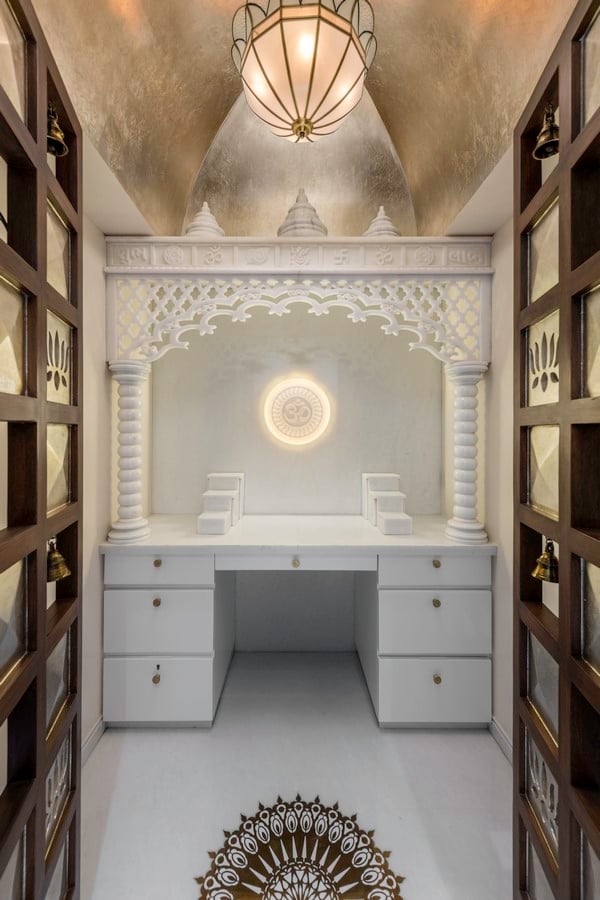
At its core, Sukoon is less about aesthetic spectacle and more about emotional resonance. It challenges the conventional perception of luxury by demonstrating that true opulence can lie in simplicity, in stillness, and in the ability of a space to regulate one’s state of being. Through its nuanced material palette, softened geometry, and deeply considered spatial flow, the home becomes an immersive experience: one that invites its inhabitants to slow down, disengage, and rediscover a sense of calm within the rhythms of everyday life.