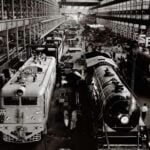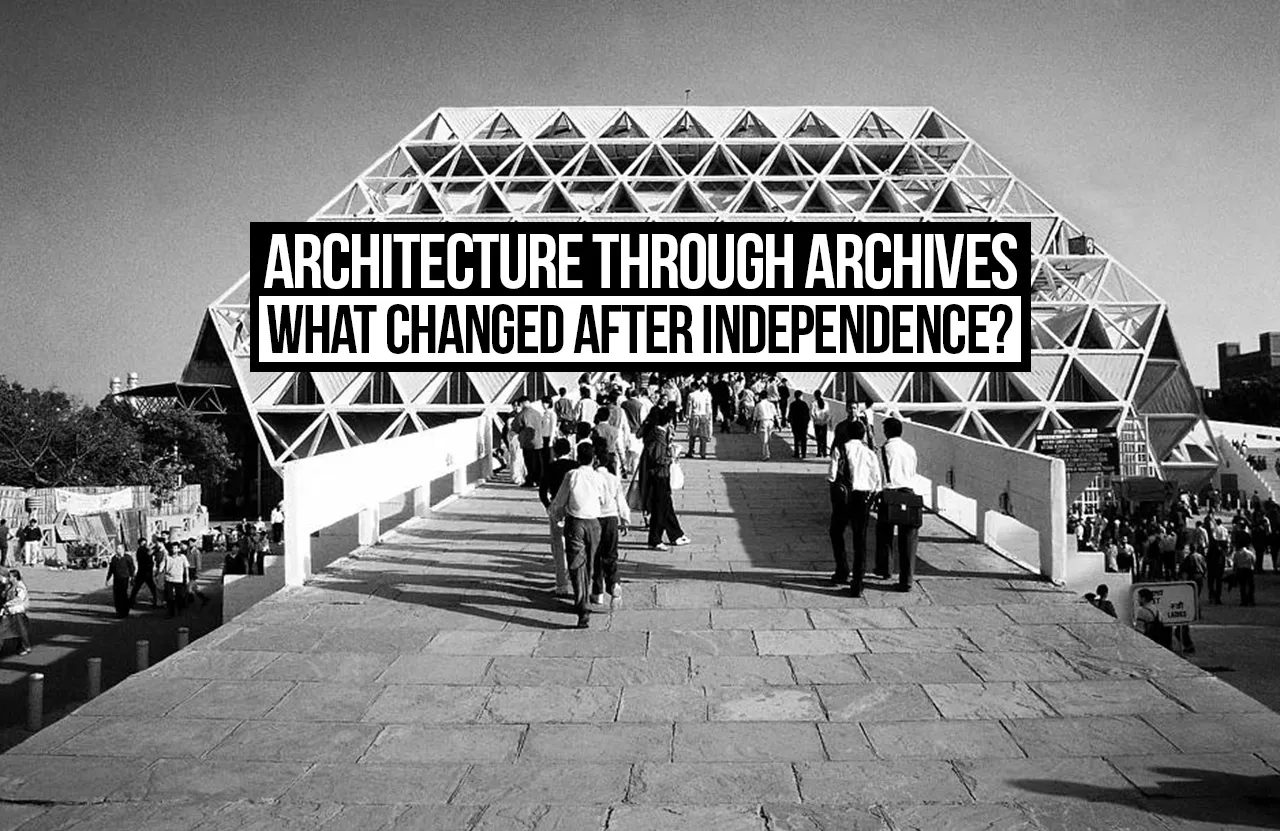
A familiar street can look entirely different in an old photograph. Set beside a present-day view, it becomes more than a mere trace of the past; it offers clues to what has endured, disappeared or changed. Photographs, maps, architectural drawings, official records and personal recollections preserve fragments of places that memory alone cannot fully reconstruct. Read together, these archival records help us trace architectural changes post-Independence more substantially, not as a clean break from the past, but as a layered transformation shaped by new national aspirations, inherited urban forms and changing lifestyles. Through these fragments, we begin to uncover the India we built, and the past that continues to live within it.
A Closer Look
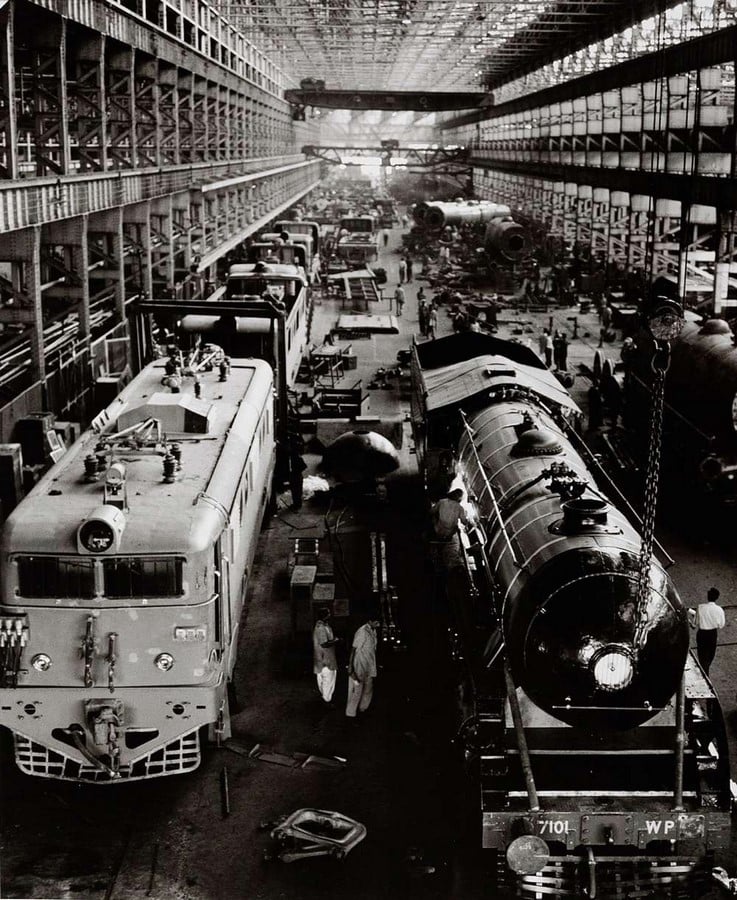
Reconstructing a place through archives requires reading these records against one another. An architectural drawing may document a proposal, while a photograph can establish what was built at a particular moment. Historical maps can reveal changes in street networks, settlement boundaries or land use; government files and correspondence may help explain the decisions behind them. Comparing these records with present-day conditions can expose differences between what was planned, what materialised and what subsequently changed.
This process also has limits. A drawing does not establish that a project was completed, and a photograph cannot, by itself, explain why a building was altered or who was affected. Personal accounts may recover experiences missing from official records, but they too need to be considered alongside other evidence.
Architectural changes become more legible when these different sources corroborate, complicate or contradict one another. The gaps between them matter as well: what was never documented, or whose experiences were excluded, can shape the history that an archive allows us to tell.
A Map of What’s Missing
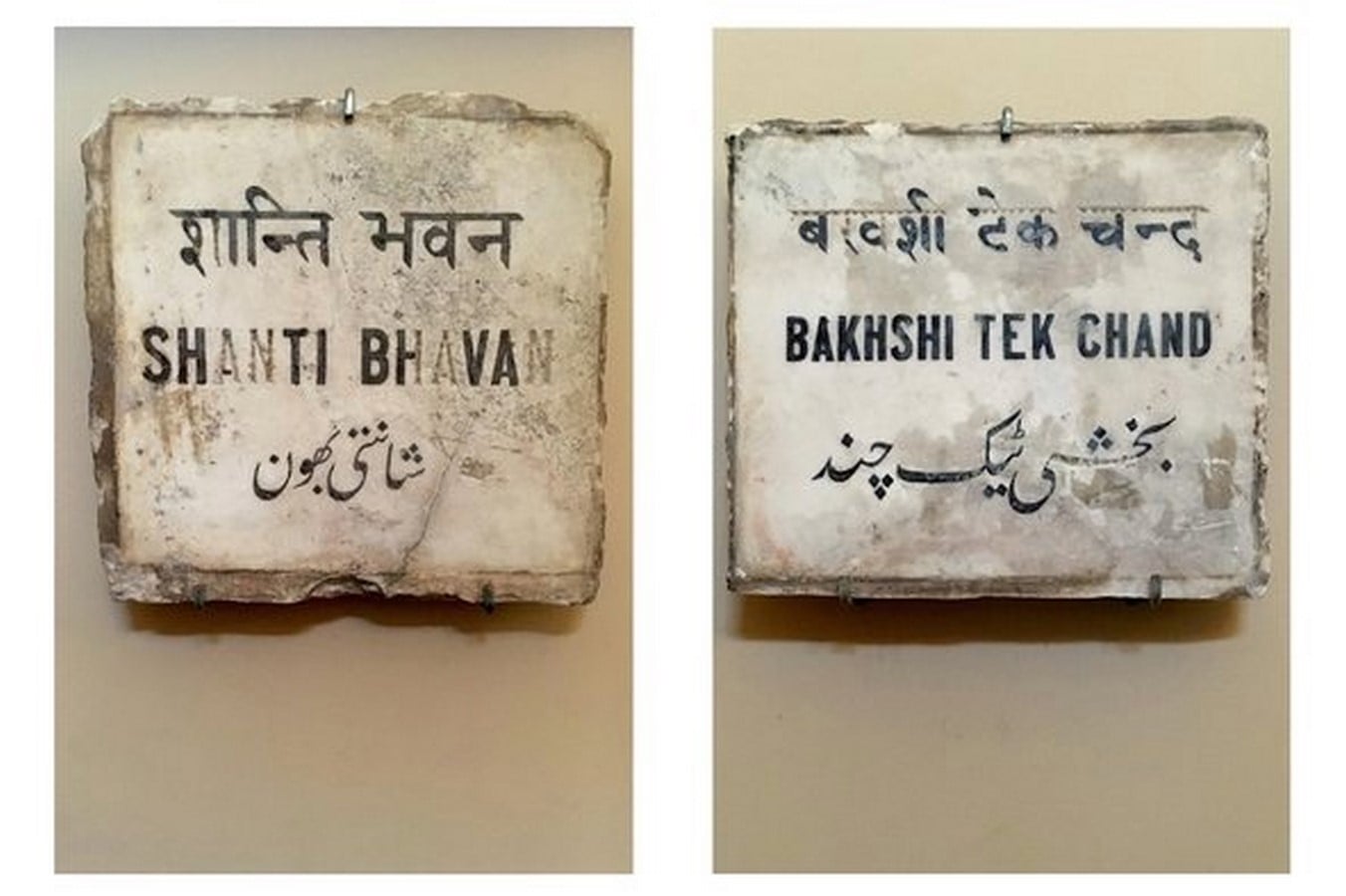
Partition offers a significant historical context for examining how political upheaval can transform the relationship between architecture and the people connected to it. In 1947, the division of India disrupted established communities and displaced millions, changing not only where people lived but also who occupied, owned and identified with particular places.
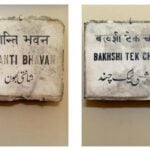
Tariq Khalil’s 2007 India & Pakistan Expedition: Places were Home traces some of these disrupted connections through field photography, family histories, conversations with residents and local historical material. Its approach demonstrates how investigating a former home involves more than locating a surviving structure. A photograph may record a building’s condition or altered use, but cannot independently establish who lived there, why its function changed or what it meant to those who left. These questions require visual evidence to be read alongside personal recollections, maps and historical records, each contributing details the others may not preserve.
In this context, architectural changes extend beyond physical alterations to encompass shifts in occupation, use and collective memory. When such transformations are traced at the scale of individual homes, they also raise a wider question: what might the records of an entire neighbourhood or city reveal about the places reshaped by Independence and Partition?
An Idea Takes Hold
The transformation of individual homes formed part of a broader architectural project: imagining what newly independent nations could become. Across South Asia, architecture became a way to express political autonomy and ambitions for social progress through new institutions, housing, infrastructure, and public spaces.
But how did these ambitions shape the cities people inherited and continued to inhabit?
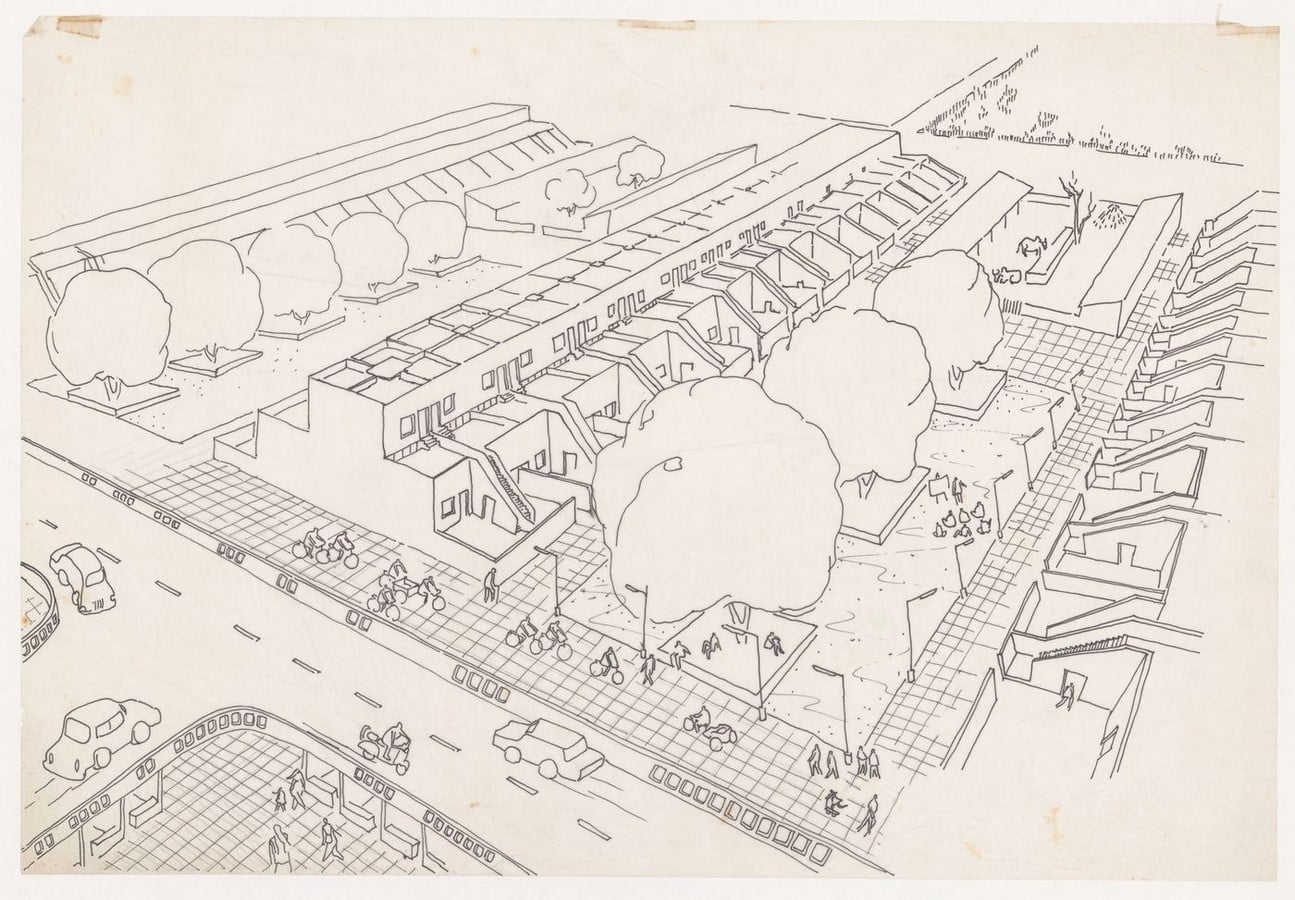
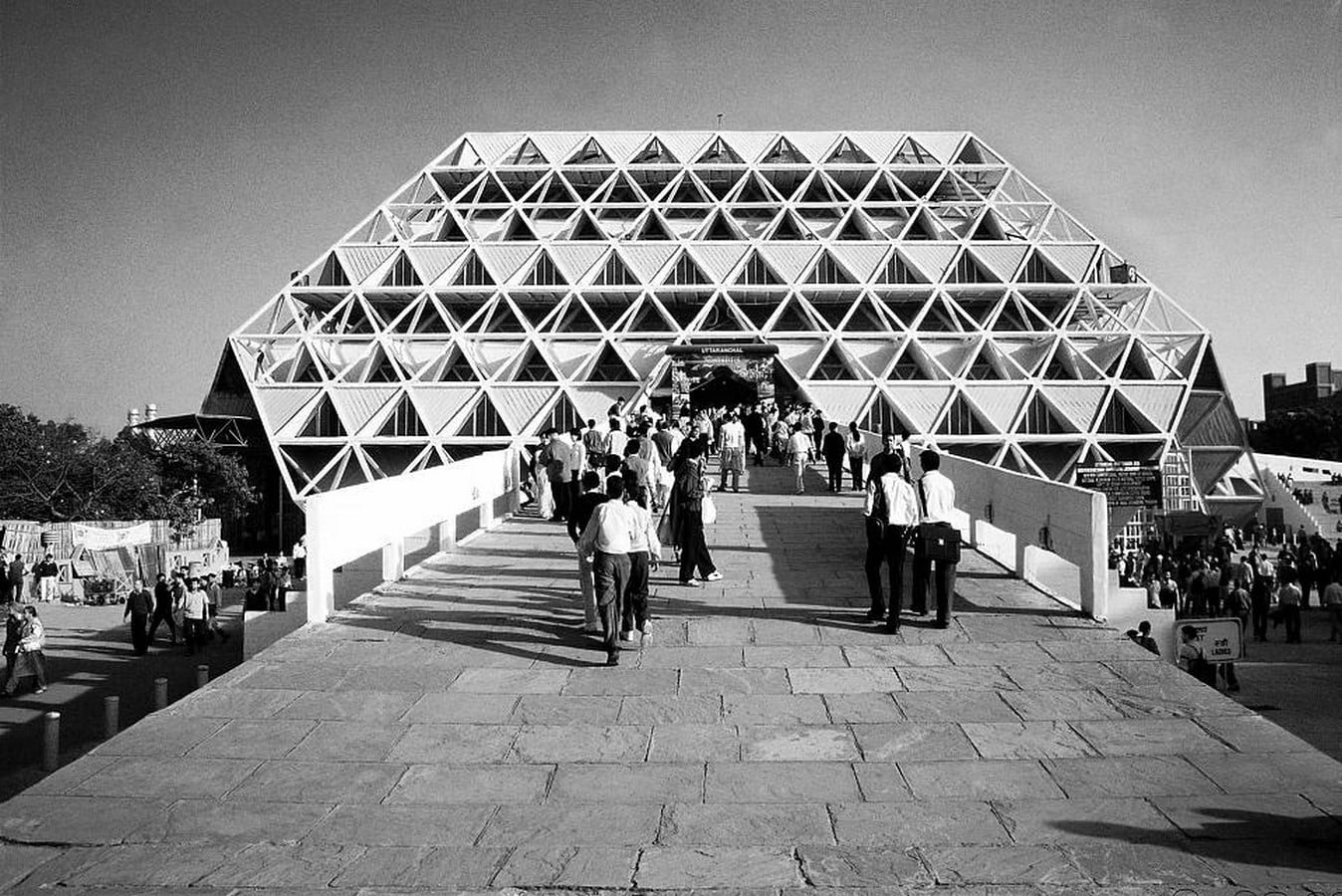
MoMA’s exhibition The Project of Independence: Architectures of Decolonisation in South Asia, 1947–1985 brings together drawings, photographs, films and other material that situate architecture within the political and economic conditions of nation-building. These records encourage us to examine not only the forms architects proposed, but also the priorities and constraints behind them.
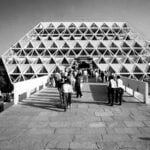
Pilar Maria Guerrieri’s Negotiating Cultures offers a closer study of Delhi, tracing its planning, residential typologies and public buildings between 1912 and 1962. The extended timeframe reveals a city shaped by overlapping architectural ambitions rather than a straightforward shift from colonial forms to an entirely new identity, culminating in a unique interaction of existing urban patterns with new institutions and planning ideas.
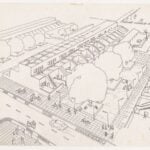
Architectural changes in this period thus involved negotiating inherited structures, modernist aspirations and the practical demands of a changing society. Comparing historical plans and drawings with photographs of the resulting city helps us identify where these ambitions took shape, how they adapted to every region’s unique conditions, and what remained unrealised.
The Fine Print
These histories matter not because the past offers a model to copy, but because it gives us evidence against which to examine the present.
A redevelopment proposal, a restoration, or the disappearance of an ordinary building can seem inevitable when viewed only from today. Older plans, photographs and accounts may reveal alternatives that were considered, uses that have since vanished, or communities whose relationships with a place are missing from official narratives.
They do not settle every question, but they effectively help us ask better ones.
Access to such evidence is changing, too. Digitised collections and historical-map tools, including Google Maps’ historical imagery where available, allow more people to compare places across time.
And yet, a dated image is only a starting point.
Its framing, gaps and context still need scrutiny. Looking closely means asking not only what has changed, but who made the decisions, whose needs they served, and whose experiences remain difficult to find.
Archives are therefore not invitations to return to an imagined past.
Their purpose is to make present choices more accountable to the histories they inherit.
Before we decide what a place should become, have we looked closely enough at what it has already been?
References:
Rayner, J. (2022). The city (as) archive: are your memories in place? Landscape Research, 47(7), pp.829–839. doi:10.1080/01426397.2022.2077923.
Canadian Centre for Architecture (CCA (n.d.). Canadian Centre for Architecture. [online] ccawire. Available at: https://www.cca.qc.ca/en/archives/ [Accessed 5 Oct. 2026].
Brown, R.M. (2009). REVIVING THE PAST. Interventions, 11(3), pp.293–315. doi:10.1080/13698010903255536.
Baweja, V. (2018). Otto Koenigsberger’s Architectural Photographic Archive in India (1939–1951). Visual Resources, 34(3–4), pp.315–346. doi:10.1080/01973762.2018.1407132.
Google Arts & Culture. (n.d.). Collection Highlights from the Partition Museum, Town Hall, Amritsar. [online] Available at: https://artsandculture.google.com/story/cgUh2ibKuTf7Ig [Accessed 5 Oct. 2026].
The Partition Museum. (2018). 1947 Partition Archives, Archival Materials, India Partition Archives Documents. [online] Available at: https://www.partitionmuseum.org/museum/archival-material [Accessed 5 Oct. 2026].
The 1947 partition archive. (2024). Collections – The 1947 partition archive. [online] Available at: https://1947partitionarchive.org.in/collections/ [Accessed 5 Oct. 2026].
1947partitionarchive.org. (2024). www.1947partitionarchive.org |. [online] Available at: https://in.1947partitionarchive.org/ [Accessed 5 Oct. 2026].
The 1947 partition archive. (2024). The 1947 partition archive – Your Heritage Is Calling. [online] Available at: https://1947partitionarchive.org.in/ [Accessed 5 Oct. 2026].
Imperial College London. (2020). 2007 India and Pakistan Photography. [online] Available at: https://www.imperial.ac.uk/be-inspired/exploration-board/previous-expeditions/2000s/2007-india-and-pakistan-photography/ [Accessed 5 Oct. 2026].
Martino Stierli and Anoma Pieris (2022). The Project of Independence: Architectures of Decolonization in South Asia, 1947–1985. [online] The Museum of Modern Art. Available at: https://www.moma.org/calendar/exhibitions/5439 [Accessed 5 Oct. 2026].
Canadian Centre for Architecture (CCA (n.d.). Canadian Centre for Architecture. [online] ccawire. Available at: https://www.cca.qc.ca/en/archives/502372/aditya-prakash-fonds/507618/architectural-projects?utm_source=chatgpt.com [Accessed 5 Oct. 2026].
Guerrieri, P.M. (2018). Negotiating Cultures: Delhi’s Architecture and Planning from 1912 to 1962. [online] Oxford University Press. doi:10.1093/oso/9780199479580.001.0001.
Canadian Centre for Architecture (CCA (2019). Canadian Centre for Architecture. [online] ccawire. Available at: https://www.cca.qc.ca/en/archives/502372/aditya-prakash-fonds/507618/architectural-projects/507628/linear-city-chandigarh-india-circa-1975-1987?utm_source=chatgpt.com [Accessed 5 Oct. 2026].
Nationalarchives.nic.in. (2026). Cartographic Records | Official website of National Archives of India, Government of India. [online] Available at: https://www.nationalarchives.nic.in/en/public-records-holdings/cartographic-records [Accessed 5 Oct. 2026].
Nationalarchives.nic.in. (2026). Public Records | Official website of National Archives of India, Government of India. [online] Available at: https://www.nationalarchives.nic.in/en/public-records-holdings/public-records [Accessed 5 Oct. 2026].
Canadian Centre for Architecture (CCA (2019). Canadian Centre for Architecture. [online] ccawire. Available at: https://www.cca.qc.ca/en/archives/502372/aditya-prakash-fondsfa-ls-509433?utm_source=chatgpt.com [Accessed 5 Oct. 2026].
Guerrieri, P.M. (2018). Two Conceptions of the City: Pre- and Post-Independence. [online] Negotiating Cultures, Oxford University Press, pp.19–46. doi:10.1093/oso/9780199479580.003.0002.
Martino Stierli Philip Johnson Chief Curator of Architecture and Design (2022). An Introduction to The Project of Independence: Architectures of Decolonization in South Asia, 1947–1985 | Magazine | MoMA. [online] The Museum of Modern Art. Available at: https://www.moma.org/magazine/articles/698 [Accessed 5 Oct. 2026].