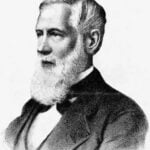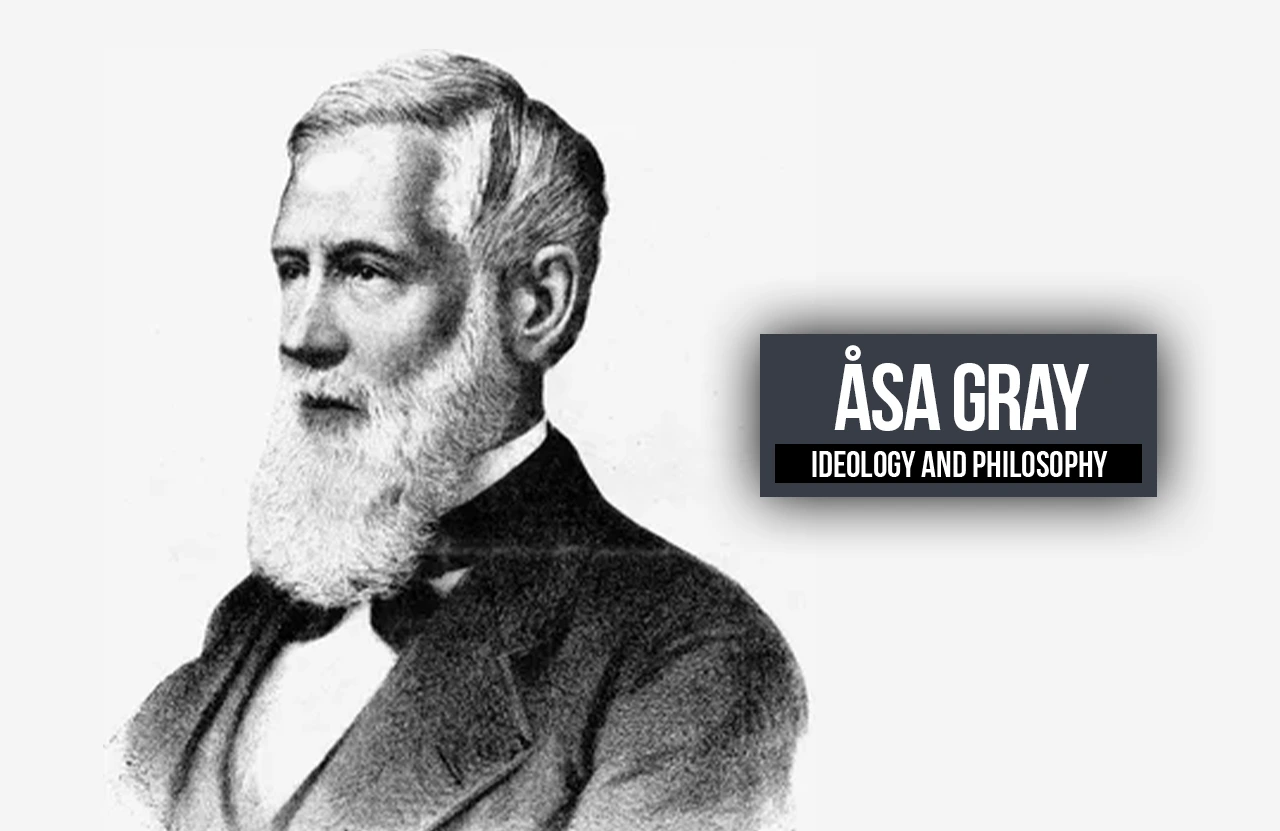
Asa Gray (1810-1888) was the most prominent American botanist of the nineteenth century. But what Gray is remembered for has little to do with the plants he discovered and named and more to do with the ideological bridge he built connecting science and religion. At a time when Darwin’s revolutionary ideas are as popular as ever, Gray’s life is simultaneously bizarre and instructive because as the pioneer American believer in Darwinian ideas, he was a strange combination of uncompromising scientific materialist and devout Christian who believed divine design could be seen everywhere in nature. In reality, Gray’s whole professional life was spent trying to unify two seemingly incompatible ideas, evolution and divine design.
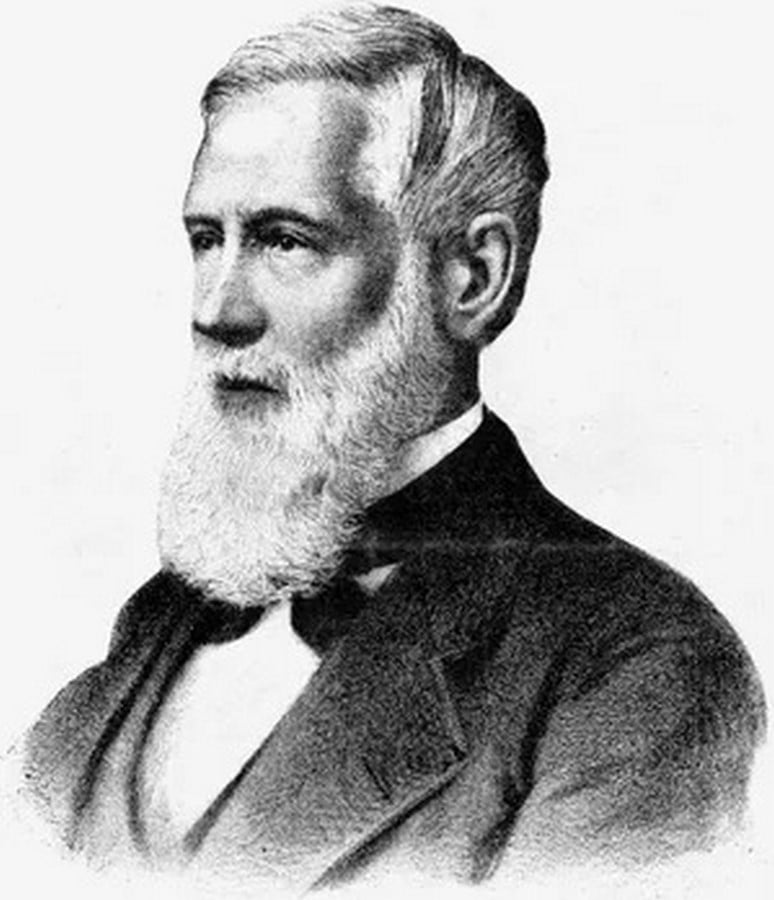
Get to know Gray, and you will understand how an upstate New York farm boy became not just Darwin’s most loyal American supporter but one of the sharpest promoters of theistic evolution.
Early Life and Formative Influences
Born in 1810 in the Sauquoit Valley, Oneida County, New York, Gray was the son of a tanner. As a boy working on the farm and in the tannery, he was one of the earliest to have direct knowledge of nature as a teacher, rather than via an abstract and bookish notion of her. While educated in medicine at the Medical College of the Western District of Fairfield (where he also took his M.D.), Gray’s interest in botany was rapid. His training in medicine would prove to be instrumental, for it gave him a habit of careful observation and an attitude of classification and evidenced reasoning, characteristic of all of his scientific pursuits.
Rather than adopting natural history on poetic or aesthetic grounds, Gray’s interest was scientific, driven by a scientific, methodological curiosity that surely shaped the heart of his dogged concern with precise empirical accuracy even in times when he debated his religious opinions.
Building American Botany
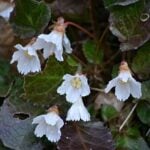
He helped to establish botany as a serious discipline in America and took the first university chair of the subject in the country before moving to Harvard, where he would remain until his death. His Manual of the Botany of the Northern United States (1848) was a standard reference work, published in many editions, and he maintained an extensive network of plant collectors throughout North America, communicating regularly with them and overseeing the millions of specimens gathered on the American surveys west of the Mississippi. This is an example of one of Gray’s profound convictions that real science was centred on close study of local variation but was also, when we had enough of the relevant data, comparative.
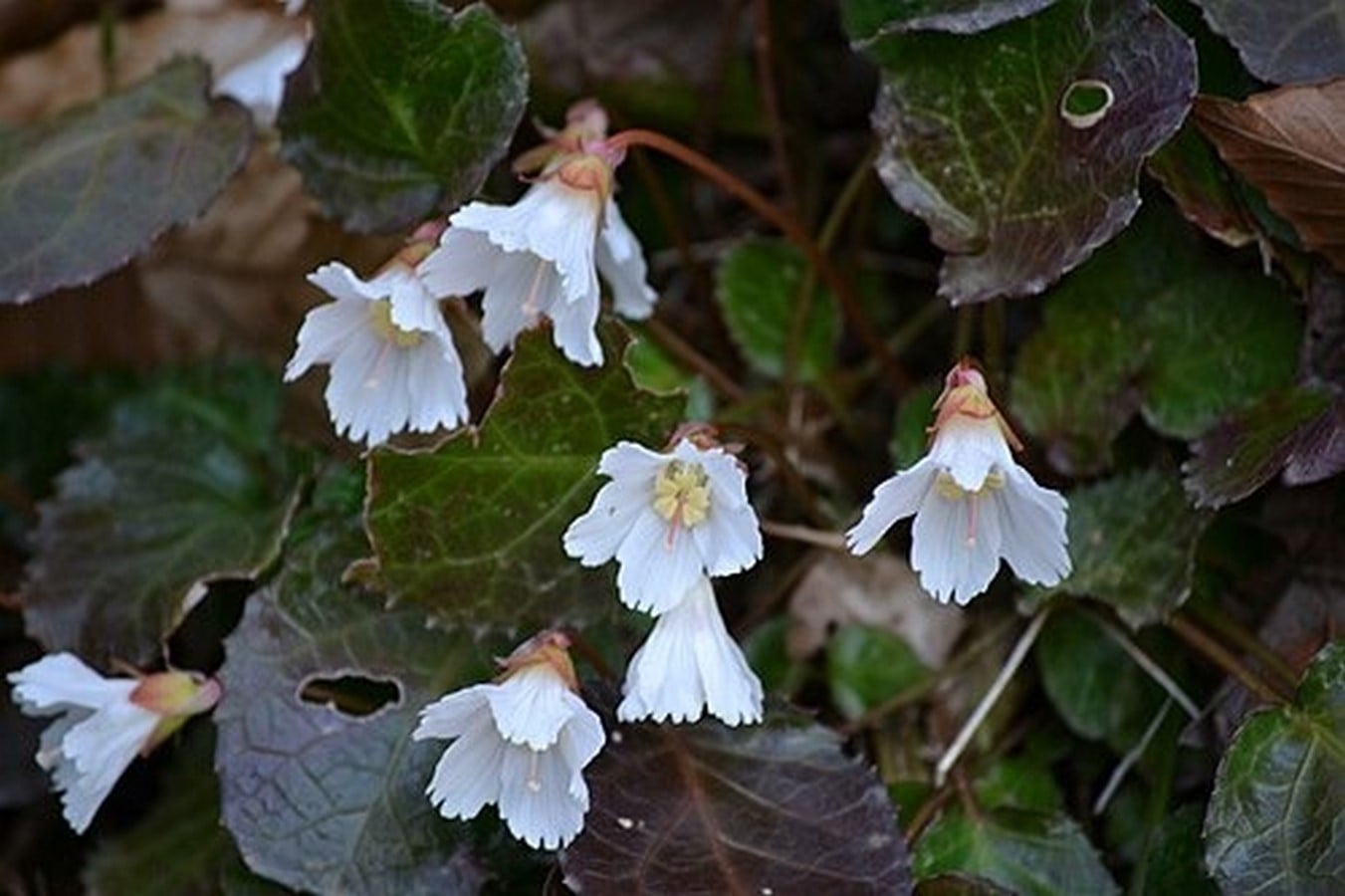
This was to go further than listing the species; why, for instance, did the distribution of them appear to be identical in East Asia and the eastern United States? The question was to constitute the core of his most inventive scientific and philosophical thinking
Encountering Darwin and the Turn Toward Evolution
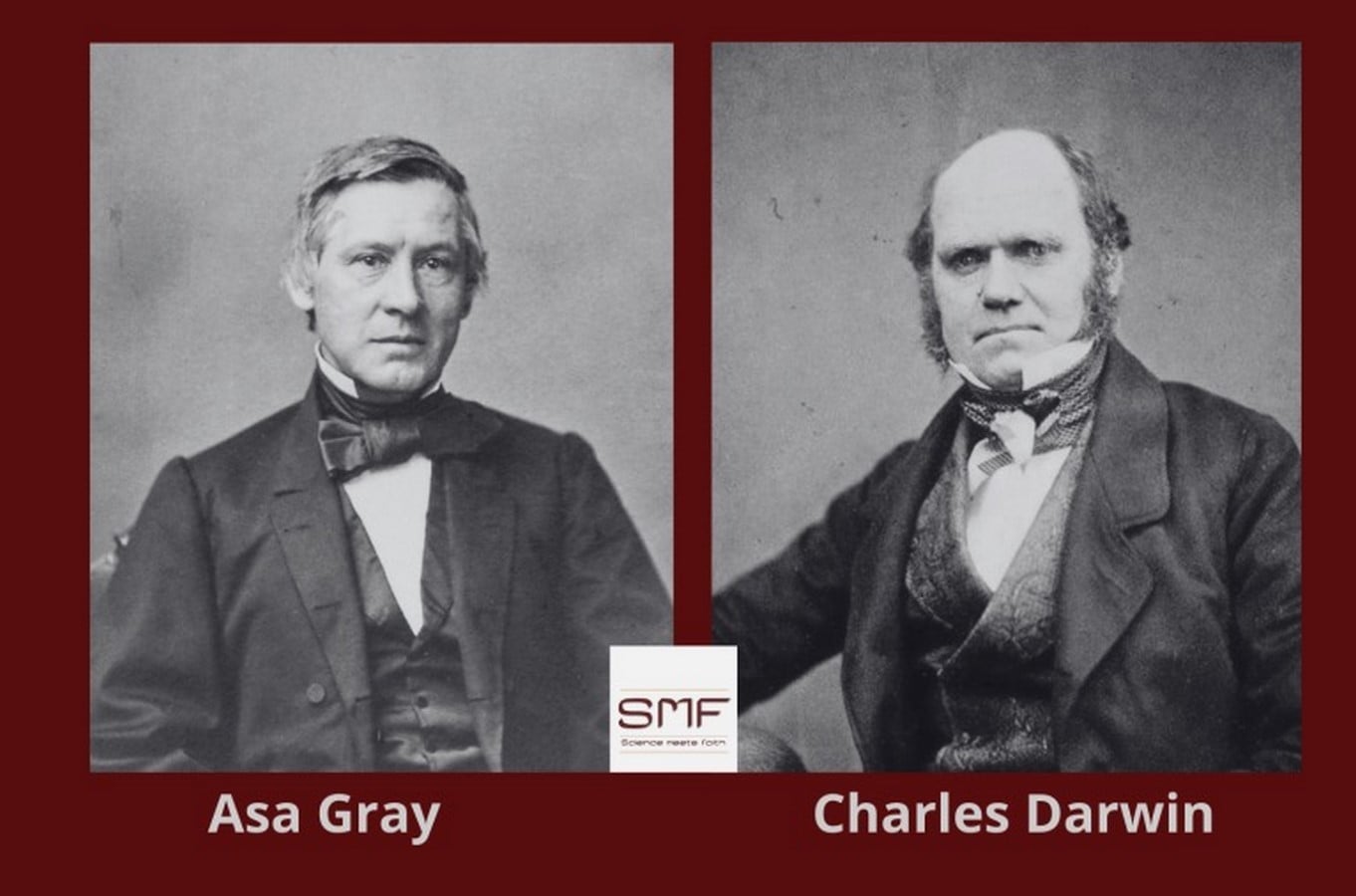
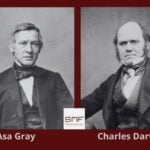
The finding of the close resemblances of the plant settlements of Japan to those of North America had perplexed Gray, and, from the evolutionist’s point of view, he had hit upon the solution of it before most of his generation and, like Darwin, on an evolutionary basis of thought. He had postulated that they had not been specially created but descended from an ancestral flora, which had been distributed during the Pleistocene glaciations and subsequently shunted south. This was very much at the same evolutionary wavelength as Darwin’s thoughts, even before he set forth in the Origin, for he was aware that Gray thought along these lines and in 1857 had shared with him the lines of his theory, which later gained for him the precedence of position over Wallace in the evolution of man. When the Origin finally appeared (1859), Gray accepted it readily on its merits, and for the next 20 years he was one of the most effective American proselytisers of the new gospel, ardently praising Darwin in America as well as in Britain and even acting as his American publisher.
Reconciling Design and Natural Selection
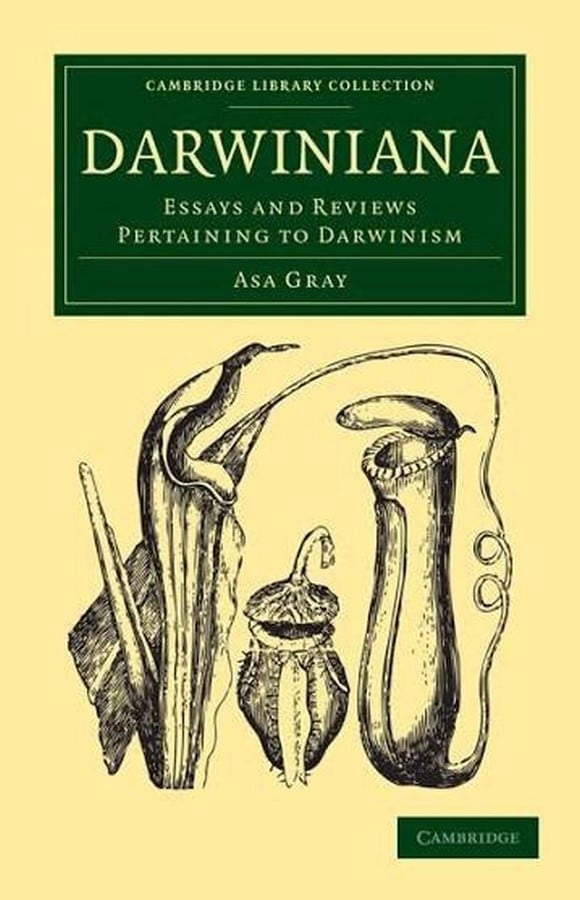
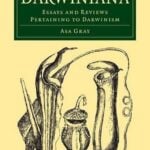
Much of Gray’s publication history was on the question of how he managed to harmonise the Christian religion with Darwinism. For Gray, this was because he had a Christian faith in God, so that he was willing to accept natural selection as an actual “agency” making new species, but he was not willing to accept it as the only “explanation” for variation on which a selection might be based. Instead, he argued that the starting matter of variation might be directed or “channelled” by “some inherent power given at the beginning by divine action” – which would permit Gray to be both a warm supporter of natural selection as a scientific explanation and also to believe that the first cause is still in control of creation and still working behind the scenes making the pattern of creation that we see. This is why Gray is seen as a pioneer, astute advocate of theistic evolution – which sees natural selection as a tool of creation, not the only one – by publishing his essays on this issue in his Darwiniana (1876), a volume that in effect made the case that the doctrine of “Natural Selection Not Inconsistent with Natural Theology” – a phrase that Darwin felt powerful enough to imprint on the front of a pamphlet even though he was secretly sceptical of that theological interpretation.
Intellectual Combat and Public Advocacy
But because of his support for the theory of evolution, Gray was often in conflict with his own colleague, the talented and prolific naturalist Louis Agassiz, a visionary naturalist who rejected evolution and held to the positivist faith in the essential fixed types of God. In 20 years of a very public and bitter argument, the two engaged in what was then one of the great scientific debates in the States, with Gray held to defend that he could interpret his species solely on the empirical facts of the biogeographical evidence he was utilising and Agassiz as a static essentialist. His willingness to enter the debate from a wealth of material and correspondence demonstrates his fundamental belief that the ‘truth’ can be followed to whatever conclusions they may lead, whatever this might, in no way subordinate to the assumptions of the current era and can alter with the evidence.
Legacy
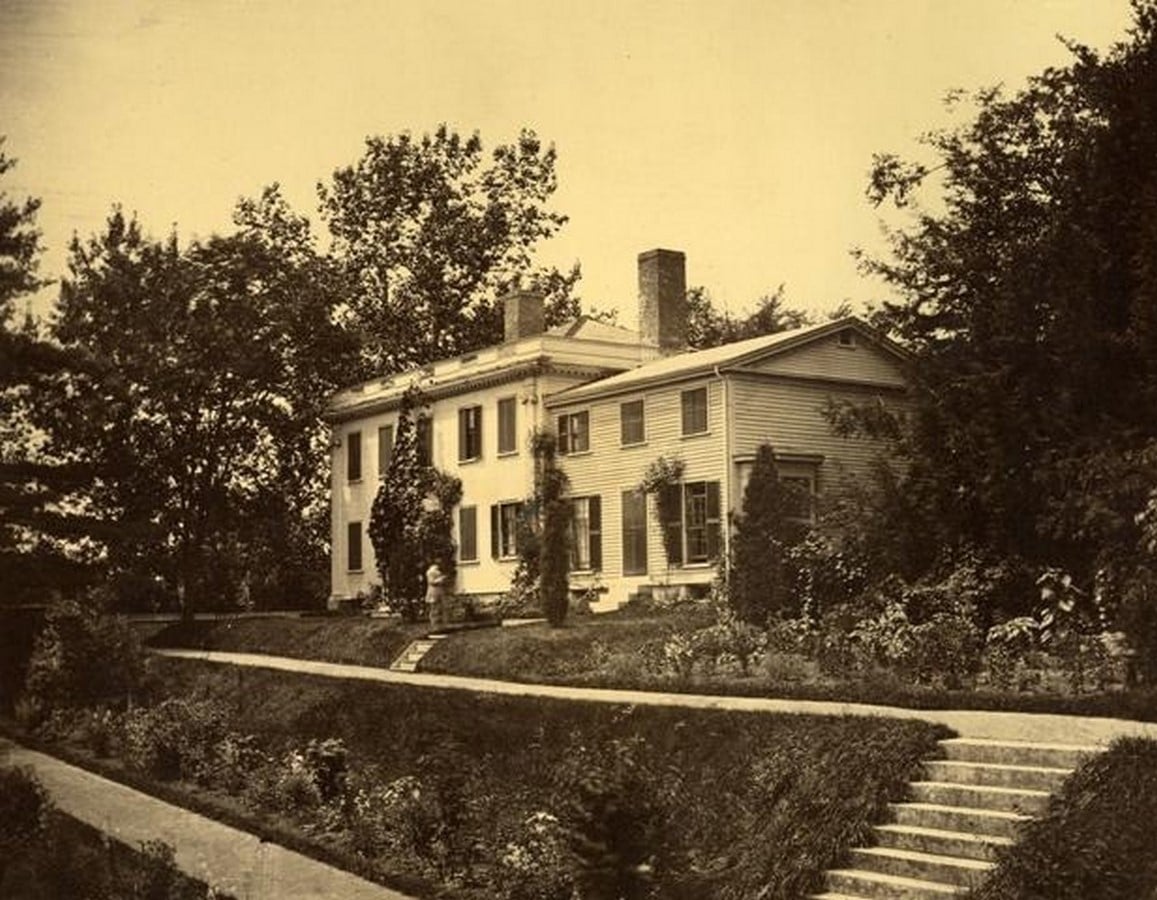
When Gray died in 1888, he had described hundreds of new species, championed American plant biogeography, and founded the Harvard Gray Herbarium, which continues to influence the discipline. His most enduring contribution, however, was philosophical. He proved that scientific rigour and religious piety were compatible; that one did not negate the other. At a time when Darwinism seemed to threaten people’s faith, he provided a more measured, scientific method – one that looked carefully at the natural world without necessarily undermining religious belief.
References:
- Petruzzello, Melissa. “Asa Gray.” Encyclopaedia Britannica, Encyclopaedia Britannica, Inc. Asa Gray | Biography, Facts, Contributions, & Works | Britannica [Accessed: 25 September 2026].
- “Asa Gray.” Encyclopedia.com, Dictionary of Scientific Biography. Asa Gray | Encyclopedia.com [Accessed: 25 September 2026].
- Gray, Asa. Darwiniana: Essays and Reviews Pertaining to Darwinism. New York: D. Appleton and Company, 1876. (Reissued by Cambridge University Press, 2009.)[Accessed: 25 September 2026].
- Miles, Sara Joan. “Charles Darwin and Asa Gray Discuss Teleology and Design.” Perspectives on Science and Christian Faith, vol. 53, 2001, pp. 196–201.[Accessed: 25 September 2026].