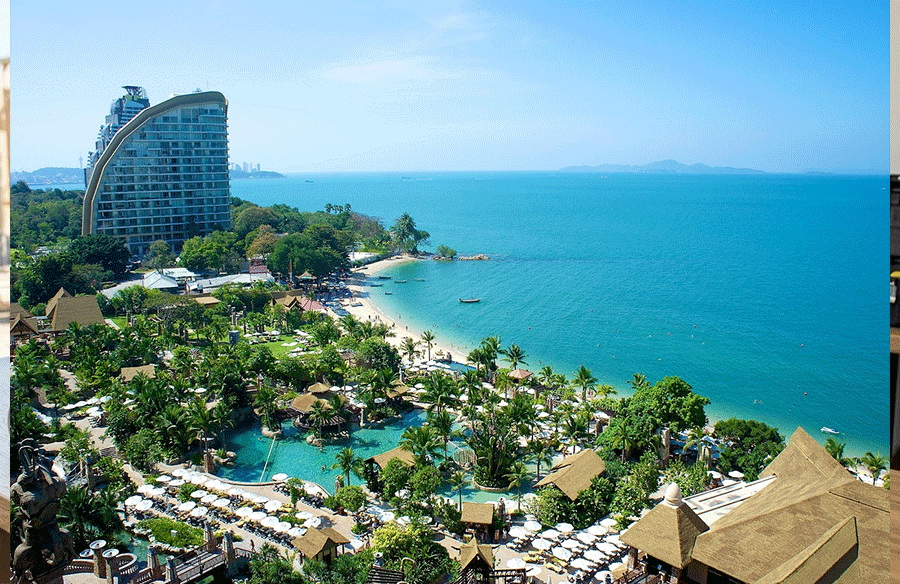
Scroll through the listings for any condo for sale in Pattaya and you’ll soon notice that the city builds homes in two very different ways. On Pratamnak Hill and in North Pattaya, you’ll find towers of thirty storeys and more, built to look out over the bay. A few streets back, and across much of Jomtien, there are smaller blocks of a handful of floors arranged around pools and gardens. The difference is only partly about taste. It also comes from Thai building law, from the plots developers can get, and from what different buyers want from a home by the sea.
Where the 23-metre line comes from
Thai building law separates low-rise from high-rise by height in metres, not by number of floors. Under the Building Control Act, any building 23 metres or taller counts as a high-rise. For apartments, that works out at roughly seven or eight storeys. Above that line, the building has to meet a much heavier set of fire-safety requirements, and the design changes with it: more stairs and protected escape routes, more plant, and a higher cost per square metre.
Often, though, the plot decides before the architect does. A residential high-rise needs access from a road at least 10 metres wide and has to leave 30% of its land open. A plot on a narrower soi can only take a low-rise building. That’s a large part of why compact blocks sit a street or two back from the main roads, while the towers cluster where the frontage allows them.
Size brings its own review regardless of height. A condominium with 80 or more units, or 4,000 square metres or more of usable area, needs a full Environmental Impact Assessment, as the Office of Natural Resources and Environmental Policy and Planning explains. Many larger low-rise projects go through it as well, so the height you see on the street usually comes down to land and access rather than environmental rules.
What the towers do well
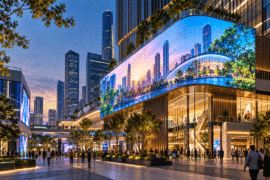
On a coast, height buys views, and in Pattaya the view accounts for much of what an upper-floor unit is worth. The Panora Pattaya on Pratamnak Hill rises 38 storeys with 342 units, positioned so the upper floors look straight across Pattaya Bay. ONCE Pattaya, a 32-storey tower on Pattaya Sai 3 in North Pattaya, takes the same approach from the middle of the city.
Scale also pays for things a small building struggles to afford: long lap pools, proper gyms, co-working rooms and a staffed lobby around the clock. For owners who spend a few months a year in Pattaya and lock up the rest of the time, that level of service counts for a lot.
The trade-offs are architectural as much as financial. Towers depend on their lifts, and balconies on the upper floors take the full force of the wind in the rainy season. Exposed metalwork and air-conditioning units have a harder life the higher and closer to the water a building stands. A tower with hundreds of similar units also means that, when you come to sell, you may be competing with several of your own neighbours.
The case for building low
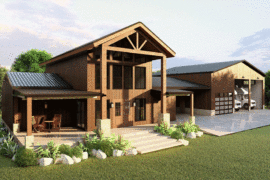
A low building gives the architect more room to work with the climate rather than against it. Zensiri Residences in Jomtien, about 2.5 kilometres from the beach, and Secret Garden Condominium near Wongamat are both deliberately small. The Coral Pattaya, due for completion in the second quarter of 2027, goes the resort route, with low blocks spread around shared gardens and water.
With fewer floors, cross-ventilation, deep roof overhangs, shaded walkways and ground-floor units that open onto a garden all become realistic again. A study in a Thai academic journal, which reviewed condominium EIA reports, found that low-rise buildings had a higher share of green space on average than high-rise ones. That matches what you notice walking through them. With fewer neighbours sharing each lift and corridor, a low-rise building often feels closer to a house than a hotel.
What you give up is the long view and, usually, a beachfront address. Facilities tend to be simpler too: a good pool and a small gym rather than a full clubhouse.
Reading a condo as a building, not a brochure
Whichever type appeals, it pays to look at a Pattaya condo the way an architect would. Start with orientation. Pattaya Bay faces west, so the units that look at the sea also take the hardest afternoon sun. Ask what glazing was used and check how deep the balcony is, because a shallow balcony on a west façade gives very little shade.
Look at the corridors next. Single-loaded corridors, open to the air on one side, let breezes through and keep neighbours’ doors away from your bedroom wall. The double-loaded corridors common in towers are more efficient to build but tend to be darker and rely on air conditioning.
If the building is already finished, use that. Look at the railings, the window frames and the air-conditioning condensers on a block that has been through a few rainy seasons, because salt air shows up early and tells you a lot about the materials chosen. For a project still under construction, visit something the same developer completed several years ago and judge the materials there.
Foreign buyers have one more practical check that has nothing to do with design. A foreigner can own a unit freehold only while foreign ownership in the building stays within its quota of 49% of the floor area, so ask how much quota is left before you get attached to a particular floor plan.
Which building suits which buyer
There isn’t a right answer, only a better fit. Holiday owners who want the bay from the balcony and full service while they’re away tend to be happiest in a tower on Pratamnak Hill or in North Pattaya. People settling in the city for longer, especially those who work from home, often find that a well-designed low-rise in Jomtien or near Wongamat is simply easier to live in day to day: quieter, greener and cheaper to keep cool. In a city that builds both, the useful question isn’t which is better, but which way of living you’re buying into.