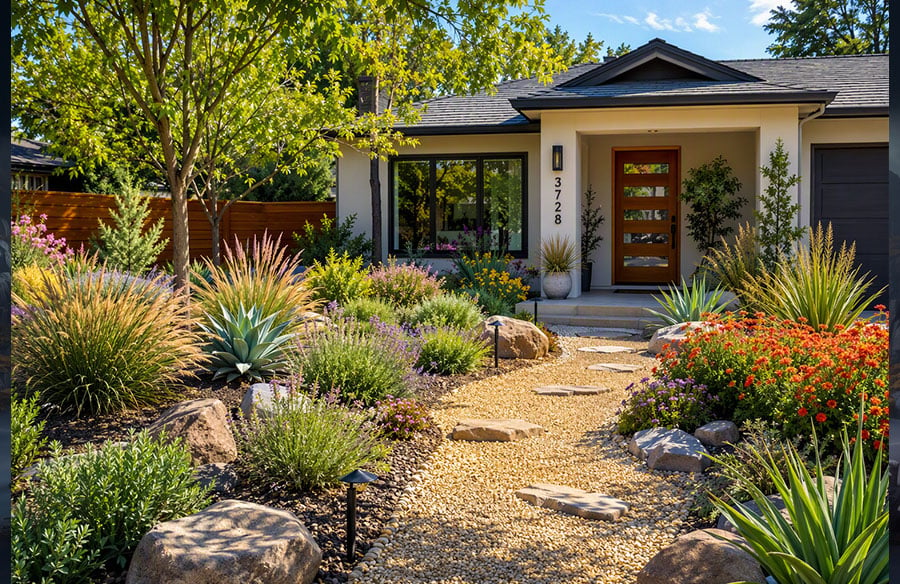
Water-wise landscaping helps keep your home safe by guiding water away from the house. It moves both rain and sprinkler water away from the foundation, walls, or doors. This helps soil moisture remain in balance and uses less water because it uses the right plants and the right irrigation. The yard looks good, costs less to water, and helps stop things like cracked foundations, rotting wood outside, and wet garages.
Thoughtful landscape design, therefore, becomes an extension of architectural planning, safeguarding the building envelope and foundation from environmental stressors.
Many people see landscaping as simply adding beauty to their home. But the truth is, your yard also helps protect your house. The way the ground is shaped, where your flowers grow, and how sprinklers are placed can help send water away from your home or end up bringing it closer.
In North Texas towns like Colleyville, this is important. There can be heavy storms in spring, then hot, dry summers. The clay soil under a lot of homes gets bigger when it is wet and smaller when it is dry. This can cause big problems.
This guide will show you how water in the yard can hurt your home. It also talks about ways to design your yard so your home is safe.
How Yard Water Damages a Home
Water is one of the main reasons people get slow, unseen damage in their home. A lot of the time, these problems start in the yard, and you may not see any cracks or stains inside until much later.
Pooling Near the Foundation
- Puddles next to the house after rain show that water is going into the ground near the part that keeps the foundation steady.
- After some time, this can cause the house to sink, cracks to form, and wet spots to come up in concrete floors or under the home.
- Flower beds with hard edges can hold water by the house, like bathtubs, keeping it close to the walls.
Splashback and Wet Siding
- When rain falls on bare ground or rock close to the house, it can splash mud and water up onto the lower edge of the siding.
- Sprinklers that spray water against your house can make wood, stucco, and brick mortar stay wet for a long time.
- When there is always moisture, it can bring in rot, mildew, paint that peels, and bugs like termites.
Clay Soil Movement in North Texas
- A large part of Dallas-Fort Worth is on clay. This clay gets bigger when it is wet and gets smaller when dry.
- When the ground keeps going from wet to dry, it can move the slab foundations in the area.
- The main goal is to keep soil moisture even around your house. You want it to stay steady, not have lots of water in spring or cracks in August.
Grading and Drainage Basics
Good drainage depends on the shape of the land. When the ground slopes in the right direction, gravity helps move water away from your home. This will help keep your house dry and safe.
Sloping Soil Away From the House
- The International Residential Code that many local codes use says the ground should drop at least 6 inches in the first 10 feet from the house.
- Over time, the ground can settle, and people build up flower beds. A slope that was right when you moved in can get flat as years go by.
- Watch how the water runs when there is a big rain. Water needs to flow away from the house, not next to it.
Gutters, Downspouts and Extensions
- Gutters take in a lot of water from the roof, so it is important where the downspouts send the water.
- Extensions or pipes under the ground should move the water several feet away from the base of the house.
- Splash blocks that tilt back toward the house can make things worse for your home.
Swales, French Drains and Dry Creek Beds
- A swale is a wide, grassy trench. It helps guide water slowly across the yard.
- French drains use gravel and pipes with holes. They move water that builds up under the ground.
- Dry creek beds use river rocks. They carry water when it rains and look like part of the garden when dry.
Smarter Irrigation
Sprinkler systems often cause water to hit a home where it is not wanted. Smarter irrigation helps plants grow well. At the same time, it keeps your walls, doors, and foundation dry.
Drip Irrigation for Beds
- Drip lines give water slowly right to the roots, with almost no water running off or spraying around.
- They work well for flower beds and shrubs close to the house.
- Because less water will go up into the air, drip systems often use less water than spray heads.
Sprinkler Placement and Overspray
- Spray heads need to water the lawn. They should not spray the siding, windows, driveway, or garage door.
- A broken or tilted head can send water the wrong way for many months. Most people do not notice this right away.
- Watch your system run through a full cycle a few times each year. This helps you see any problems early.
Timers, Rain Sensors and Smart Controllers
- Water your yard early in the morning. This is the best time because there is less loss of water to heat and wind.
- Rain sensors and freeze sensors will keep the system from turning on when there are storms or when it gets too cold.
- Smart controllers change how much you water based on the weather. A smart controller can also help you follow the rules, as many North Texas cities only let you water on certain days.
Choosing the Right Plants and Ground Covers
The plants you pick change how much water your yard will need. They also change how the yard acts close to the house. If you choose the right plants and place them in the right spot, you can stop many problems before they happen.
Native and Drought-Tolerant Plants for North Texas
- Native and well-adapted plants such as Texas sage, salvias, lantana, and buffalograss do well in the heat and dry times. These plants need much less watering.
- If you group plants that have the same water needs together, each irrigation zone can give the right amount of water.
- For big spaces or hard-to-water slopes, Expert Custom Landscape Design will help plan grading, plant zones, and irrigation, making sure all parts work well together as one system.
Mulch Done Right
- A 2 to 3 inch layer of mulch will help keep soil moisture and let the roots stay cooler.
- Make sure mulch and soil do not go above the top ledge of the foundation. This will keep the siding dry and stop termites from finding a hidden way in.
- Add new mulch one or two times each year as the old mulch goes away.
Spacing Plants From the House
- Leave at least a foot of space between shrubs and the wall. This lets the air move and helps dry out the area.
- Plant big trees far from the house. This keeps roots and branches from becoming a problem as they grow.
- Do not put plants that need a lot of water close to the foundation. They need to be watered often and that can cause issues in that area.
Protecting Driveways, Walkways and the Garage
Hard surfaces do not take in water. Instead, they move the water somewhere else. Many times, this can be right toward the house. This is why it is good to plan well when you set up paved areas. A water-wise yard needs this so water goes the right way.
Managing Runoff Across Hard Surfaces
- Driveways and patios need to slope a bit away from your home.
- A small planting strip or gravel edge next to the paving can help catch and slow down water runoff.
- Cracks and low spots in concrete let water get to the dirt under it, which can cause more sinking.
Permeable Pavers and Gravel
- Permeable pavers have spaces with gravel. These spaces let rainwater go into the ground instead of running off.
- They are good for walkways, patios, and parking pads.
- Decomposed granite paths give a natural look and also let water go through.
Such material choices are increasingly vital in contemporary design, contributing to sustainable urban drainage systems and resilient infrastructure.
Keeping Water Away From Doors and the Garage
- Sprinklers that spray water on the garage door or entry doors can, over time, make them rust or warp. The seals can also get worn out if this keeps happening.
- A driveway that slopes down toward your garage can make water from storms flow right up to the door. A trench drain at the opening can help keep water out.
- Keep plant beds and mulch away from door frames and thresholds. This helps them stay dry.
Seasonal Checks and When to Call a Pro
A yard that saves water only needs a bit of care every season to stay in good shape. Most checks will take just a few minutes. Still, they help you find problems before they spread to your foundation.
Seasonal Yard Water Checklist
- Spring: Clear the gutters, check that downspout extensions are working, and walk the yard when it rains. This helps you see where water goes.
- Summer: Watch the sprinklers while they run. Fix any broken sprinkler heads and try to keep the soil moisture steady near the foundation during dry times.
- Fall: Add fresh mulch, change how often you water, and clear leaves from drains and creek beds.
- Winter: Turn on the freeze sensors. Protect any pipes and backflow devices that are out in the open.
- Regular maintenance helps keep these jobs on time. It gets us through the hot summers and the stormy springs in this area.
DIY Tasks vs. Jobs for a Professional
- Good DIY tasks: cleaning gutters, adding downspout extensions, fixing spray heads, and putting down mulch.
- Call a pro for: fixing the slope of your yard, putting in French drains, setting up new irrigation systems, and handling water issues near the foundation. In Texas, a licensed irrigator must set up new irrigation systems.
- A skilled Landscaping Company in Colleyville, TX can check your yard’s slope, the plants, and the water systems together. That’s often the main way to solve these problems.
Average Costs and Value
- Most people spend about $2,600 on a standard landscaping job, but big redesigns can be much more expensive.
- Fixing drainage or irrigation problems usually costs much less than having to repair a home’s foundation if you have bad water control.
- A thoughtful landscaping plan can raise the value of your home. Some people say it could go up by 5 to 15 percent.
A Yard That Works With the Weather
The best landscapes are about more than looks. They help guide every bit of rain and every sprinkle of water to places where it is good, and away from spots where it may cause harm. When you use the right slope, smart watering, and plants that fit the climate, your yard will be one of the best ways to protect your home.
If you are not sure about the way water goes around your property, the first thing you can do is ask a professional for a walk-through. People who live in Colleyville and the other towns close by in Northeast Tarrant County can get help from Taylor Made Outdoors. The team can give you advice about drainage, irrigation, and a plan for your landscape that will help protect your home.