A home keeps people safe by using more than one way to protect them. Strong doors and good locks slow down someone who tries to break in. Bright lights and clear views outside help the people who live there see what is going on, so trouble is less likely to happen. Smart tech lets you get alerts and control the house even when you are not at home. You also need fire alarms and carbon monoxide detectors to warn about things like smoke and gas, not just someone breaking in. Taking care of your home’s equipment is important too. A house can’t be safe with just one thing, but having all these ways to protect it makes it much harder for someone or something to harm.
The best thing is that most of this safety comes from how you design things, not from costly alarms. The place where you put a light, how you cut a bush, and how the door sits in its frame can matter as much as any new device.
This guide explains how the different security layers work. It shows you how to make the most common entry points stronger. You can also find out easy ways to check things, so everything is working when you need it the most.
Security Starts With Layers
Good home security is like an onion. There are several layers that someone must pass to get in. Each layer takes time. Most burglars do not want to take the time to go through these layers.
What Is Layered Home Security?
- The outer layer is your yard and where your land ends. This includes fences, gates, lights, and making sure there are clear views.
- The middle layer is the outside part of your house. It has doors, windows, locks, and the garage.
- The inner layer is what is inside your house. This can be alarms, cameras, a safe, and little things like locking inside doors.
Crime Prevention Through Environmental Design
- Architects and city planners use a plan called Crime Prevention Through Environmental Design. People often call it CPTED.
This approach highlights how thoughtful spatial arrangements and material choices can inherently deter crime, integrating security seamlessly into the built environment rather than relying solely on add-on devices. It’s a testament to how foundational design principles contribute to safety.
- The key idea is simple. People are not as likely to commit crimes in places where they feel that others can see them.
- Things like open front yards, windows that look out at the street, and clear ways to the door help with this.
Why Visibility Matters More Than Walls
- Tall solid fences can help someone trying to get in because the fences stop neighbors from seeing them.
- If neighbors can see the front door and driveway, people are less likely to pick that home.
- A house that looks like people live there and take care of it shows others that someone is watching.
Strengthening Every Entry Point
Most break-ins happen at a door or window. People do not usually come in through walls or roofs. If you make each entry point harder to open, you can help keep your place safe. This step is simple and works well for security.
Front and Back Door Security
- Solid-core wood, steel, or fiberglass doors are much stronger than hollow doors. They stand up better if someone tries kicking them in.
The selection of robust materials for entry points is a critical design decision, balancing aesthetics with structural integrity and long-term resilience. This choice impacts not only immediate security but also the overall durability and perceived value of a property.
- A deadbolt needs a solid strike plate and a strong frame behind it to work well. Long screws that go deep into the wall framing can make a big difference.
- Back doors often get ignored, but these are out of sight from the street. This makes them easier targets for break-ins.
Windows and Sliding Glass Doors
- Make sure every window latch is tight and shuts all the way for any window near the ground.
- A security bar, or another lock, helps keep sliding doors in place. It stops people from lifting them out.
- Security film on glass stops others from breaking in fast.
The Garage: An Often-Overlooked Entry
- An attached garage lets people enter the house right away. You should treat the door from the garage to the house like a front door by putting a deadbolt on it.
- If the door is left a little open, bent, or stuck, it lets in trouble. These are signs it’s time for Expert Garage Door Repair. Don’t wait until it stops working.
- Older openers may use old New openers use codes that change every time. Ask about this when getting a new garage door or upgrading your opener.
- Don’t leave the garage remote in a car parked outside. A thief can spot it and grab it.
Lighting, Landscaping and Sightlines
The outside of your home tells people a lot before they even walk to the door. Good light and open space make it hard for someone to get near without you or others seeing them.
Exterior Security Lighting
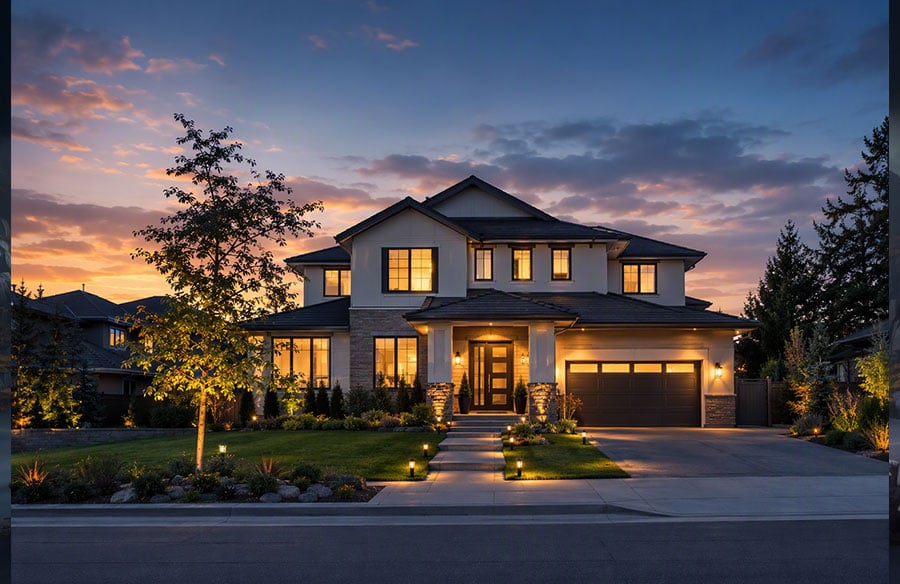
- Motion-sensor lights near the doors, driveway, and side yards will surprise anyone who moves around after it gets dark.
- Dusk-to-dawn lights at the front door help guests find the way. They also make it easier for neighbors to see if something strange is happening.
- Point the lights down and away from the windows, so they light up the ground but do not shine in your eyes or your neighbors’ eyes.
Landscaping That Does Not Hide Intruders
- Keep shrubs under your windows cut down low. Try to make sure they are around three feet tall or less.
- Cut back tree branches so people can not use them to climb up to a second-story window or the roof.
- Plant things like roses or holly under ground-floor windows. These thorny plants give a natural way to stop people from coming in.
House Numbers and Emergency Access
- Large house numbers that are easy to see help police, firefighters, and paramedics get to you quickly.
- Check that the numbers are easy to see from the street, from both sides, during the day and at night.
- Keep driveways and walkways open and free of stuff so emergency workers can get to your door fast.
Smart Technology That Actually Helps
Smart devices can give your home more safety if you set them up in the right way. The best tip is to pick things that fix problems you really have. Be sure to keep them up to date.
Video Doorbells and Security Cameras
- A video doorbell lets you see who is at the door and talk to them. You do not need to open the door to do this.
- When you add cameras to the driveway, garage, and back door, you get to see more areas than with just a camera at the front.
- You should put cameras up high. This makes them hard for people to reach or take down.
Smart Locks and Access Codes
- Smart locks help you give out temporary codes to your guests, pet sitters, or contractors. You can delete these codes after they no longer need them.
- Many of the smart locks will show a list of who entered and when they did.
- Pick smart locks that come with a real key or backup power. This helps if the battery stops working.
Smart Garage Door Openers
- Smart openers will send a phone alert if the door is open. You can close it from any place you are.
- Some of them can be set to close by themselves at a set time each night.
- You should use a strong password for any device that is connected. Always turn on automatic updates too.
Safety Beyond Break-Ins
A secure home keeps people safe from more than just thieves. A good home with the right safety features can help protect people from fire, gas problems, heavy equipment, and bad weather. Good design and working safety features lower these everyday risks.
Fire and Carbon Monoxide Protection
- Put smoke alarms in every bedroom, outside sleeping areas, and on each floor of the home.
- Set up carbon monoxide alarms close to bedrooms and near the door from any attached garage.
- Keep a fire extinguisher in both the kitchen and garage, and make sure everyone knows how to use it.
Garage Door Safety Features
- Since 1993, the federal rules say that an opener in your home must have safety features that make it go back up if there is a problem.
- You need to test this every month. The door should go back up if it touches something, or if anything blocks the sensor beam close to the floor.
- If your opener is from before that year, or if the sensors do not work anymore, then you should speak to a professional about getting new safety features or an upgrade.
Staying Safe During Storms and Power Outages
- In places on the Texas Gulf Coast, hurricanes and big storms often hit. Power can be gone for days.
- An opener with battery backup will still run when the power is out.
- Find out where the manual release for your door is before trouble comes. Ask a technician to show you how to use it in a safe way.
Maintenance Is a Security Step
A lock that will not open or a door that does not shut all the way can be more than a small bother. It makes the place less safe. Checking on the locks and doors often helps the parts work like they should. This is needed to keep all levels of safety for us.
Monthly Home Security Walk-Through
- Lock and unlock every outside door to see if the deadbolts move just right and fully open.
- Walk around the house when it is dark to find any lights that do not work or dark corners.
- Test smoke alarms, carbon monoxide alarms, and see if the door auto-reverse feature works.
- Check camera views and make sure smart devices are online and up to date.
Signs a Door or Lock Is Failing
- Doors can stick. Some might sag. You may need to slam them to make them latch.
- Keys may be hard to turn. Locks might feel loose in the door.
- The door may move in an uneven way. It can make grinding noises or not close all the way. Routine Garage Door Maintenance helps find worn rollers, springs, and sensors before they make the house unsafe.
DIY Fixes vs. Jobs for a Professional
- Good DIY tasks: The jobs you can do yourself include changing bulbs, trimming shrubs, replacing alarm batteries, and tightening loose screws on hinges.
- Call a pro for: You should get help from a professional for new locks or stronger frames, wiring for lights or cameras, and any work on springs, cables, or openers.
- Upgrading parts and entries can boost your home’s price. The data for 2025 says a steel entry door change costs about $2,435. A door swap costs about $4,672. Both can bring back more money than you have spent when you sell your home.
Peace of Mind, Built Right In
The safest homes are not like castles. They are just normal houses with strong doors, good lights, smart tools, and working safety features. These things do their jobs every day without you thinking about them much. Look for the weakest part of your home. Fix it first and then fix the next one. If you do this over time, these small changes will give you real peace of mind.
For a lot of families, the garage is where they come in, but it often gets ignored. If your door is slow, makes too much noise, or does not close right, get it looked at before it turns into a spot that is easy to get into. Owners of houses in Richmond and near Fort Bend County can contact First Call Garage Doors to get a full checkup and clear advice.