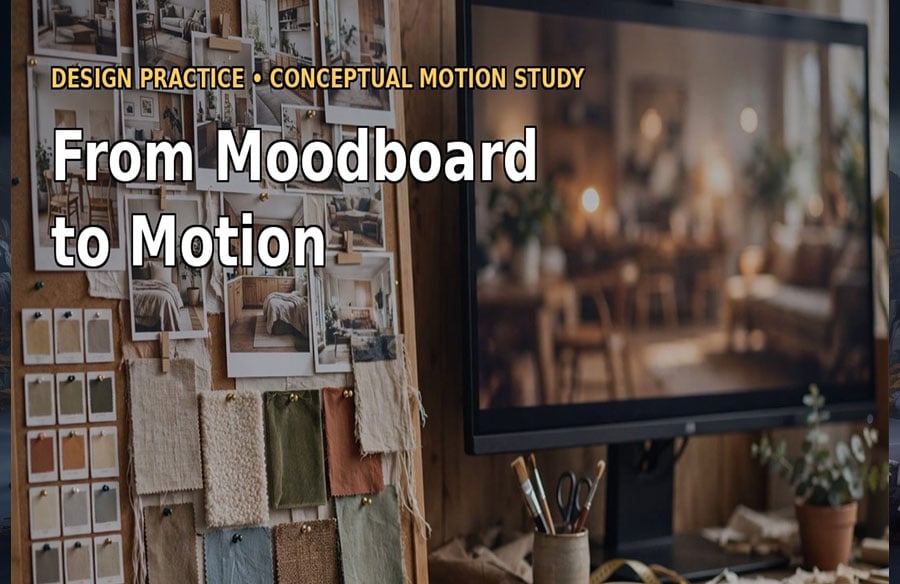
A board can show look, but not feel. You arrange swatches of colors, textures, and lights. But the space remains static, and vacant. Clients give a polite nod to the board and ask the question all designers fear. How will this space feel? The answer rests in good design. The space in between a 2D board and a lived in space is the gap where good design falls flat, or soars.
Good design falls flat when the gap is not closed. A moving image can show what a designer is imagining, and what clients fear committing to. This guide shows how to close that gap, step by step. Each step is taken from a working designer’s toolkit and is not theory.
What a Conceptual Motion Study Actually Is
Conceptual motion studies are rough drafts that are moving sketches. They are a form of pre-production. Mood boards capture the feeling of a concept. A motion study is a short film or video that adds movement to a concept. YouArt turns a quiet board of pinned images into a living preview the whole team can sit with and react to.
The purpose is to explore ideas and visualize concepts, not to produce a finished project. You should use a motion study when ideas are still cheap. It helps an entire team build a concept around a shared moving image.
State One Spatial Intention First
Every good motion study starts with a clear sentence that captures the feeling and space of the concept. An example of this is “calm gallery.” One spatial intention keeps all the choices in a study on target and intentional.
Two intentions pull a study in two different directions. In a study, features should be communicated using drawings and illustrations. Feeling and emotions should dictate lighting, camera movement, and pacing.
How to Write a Strong Spatial Intention
Name the space in plain words first, the way you would describe it to a friend. Then add the feeling you want visitors to carry away with them. Test it aloud, and if it sounds vague, tighten it until it clicks. Pin the sentence above your moodboard while you work. Borrow words from the people who will actually use the space.
Select References With a Job to Do
When creating a motion moodboard, all references must serve a purpose to demonstrate something and can not be purely decorative. When creating a motion board, each element must teach something, whether it be rhythm, camera, or something else. Eliminate what serves no purpose.
- One example is reference to time of day and the way it changes material (ex. the sun warms it and casts shadows on it).
- One example is showing the way materials move (textures) and behave (ex. whether it’s rigid or floppy).
- One example is the way the eye must move (or travel) throughout the space.
- One example is showing the way the camera moves (tilts, tracks, drifts, zooms).
- One example is the wild card reference that serves no other purpose but to demonstrate something out of the ordinary, even if it challenges the direction.
Test One Movement or Lighting Choice
This discipline is centered around making only a single change at a time, whether it be in movement or with lighting. Picking one change and sticking with it will eventually highlight the changes that occur within a scene, almost as if providing a soundstage. Lighting can dramatically affect the mood within a scene. Testing lighting and movement changes at the same time will conceal which actually affected the scene.
Hold all other elements constant during the test. The comparison is between two elements, and only the element under consideration can vary, thus the comparison is truly between cause and effect. Tests need to be honest in order to build trust with the client.
Outline a Basic Testing Process
- Brief the study with your one-sentence intention.
- Attach references that each carry a clear job.
- Generate a short moving study, then watch it twice.
- Write down what changed and what didn’t.
Present the Result as a Discussion Aid
A motion study, by its very nature, is exploratory. Label it as such. Tell the client what the intention was before playing the motion study. The purpose of labeling it as such is to provide a starting point for the meeting. During the test, ask the clients:
- What feeling did the movement create?
- What was the most true to the intention?
- What should change in order to achieve the next test?
What a Motion Study Is Not
This is a motion study; it proves nothing technical. Keep the delineation between the two clearly visible.
| What It Is | What It Shows | What It Cannot Do |
| Conceptual motion study | Mood, movement, light | Prove dimensions, specs, or buildability |
| Measured drawing | Exact dimensions and layout | Show how a space feels |
| Technical specification | Materials, tolerances, performance | Replace a motion study |
| Architectural accuracy check | Code, structure, precision | Judge atmosphere or mood |
| Buildability evidence | Cost, sequencing, feasibility | Come from an exploratory visual |
Where This Fits in Real Practice
Different teams use motion studies for different conversations. E-commerce brands test how a product world should move before a campaign goes live. Marketing agencies show clients a direction before shooting anything, which saves awkward reshoots. AI studios and filmmakers explore mood before committing crew and budget. B2B production teams align on tone before the build starts.
The method stays the same across all these teams. Motion studies support design practice; they never replace drawings. That honesty builds trust with every kind of client.
Conclusion
Moodboards collect ideas; motion studies test them honestly. State one intention, pick honest references, and test a single change. Show the result as a question, not a final answer. Let the room react before you defend the concept, because their first response is the most honest data you will get. The answers you hear will shape the next iteration. Your next meeting will feel sharper for it. Start small, stay curious, and let movement speak. The best next step is one honest test.