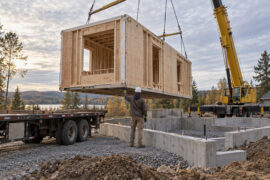
A glossy walkthrough animation of a hotel lobby can end up in a jury binder next to the ambulance report, not as marketing but as an exhibit. When someone slips on a step that isn’t where the rendering promised it would be, that pretty flythrough starts looking less like a sales tool and more like a written admission of what the property was supposed to be.
Premises-liability lawyers have caught on. So have defense firms. If you own, design, or operate a building, the visualizations you produced years ago are now discoverable, and the distance between the render and the as-built condition is where the fight happens.
Here’s what people keep asking about how that plays out.
Why Would a Marketing Render End Up in a Slip-and-Fall Case?
A rendering shows what the owner and design team said the space would be. When a plaintiff argues that a stair riser, a ramp slope, or a lighting condition caused an injury, the render becomes evidence of the intended condition. If the built condition drifted from that intent and nobody documented why, the visualization starts doing work the marketing team never imagined.
That drift is common. Value engineering swaps a specified handrail for a cheaper one. A contractor field-adjusts a landing to fit an existing beam, or a finish gets substituted because the original was on backorder.
None of that is unusual. What has changed is that the pre-construction imagery lives forever on a website, a leasing brochure, or an attorney’s screen, ready to be compared against a phone photo of the actual step someone tripped on.
What Actually Has to Happen for a 3D Model to Get Into Evidence?
A rendering doesn’t walk into court because it looks convincing. It gets in because someone lays a foundation for it under the rules of evidence, and that foundation has four moving parts that defense and plaintiff counsel have been arguing about for years. The admissibility framework for computer-generated visuals is usually distilled into a handful of gates the proponent has to clear.
- Someone with knowledge, usually the person who built the model, has to testify that it is what it claims to be, based on the inputs it claims to use.
- The visualization has to make a fact in dispute more or less likely. A flythrough of a lobby that isn’t the injury location doesn’t clear this bar.
- Fair and accurate representation. An expert has to vouch that the model fairly depicts what their testimony describes, and not a dramatized version of it.
- Prejudice balancing. Even a technically sound animation can be excluded if the judge thinks its persuasive power outstrips its evidentiary value.
That last piece is where photorealistic renderings draw the most scrutiny. A cartoonish diagram is easy to weigh. A cinematic reconstruction with soft shadows and volumetric light can do more work on a juror than the underlying data supports.
Does the Render or the Built Condition Win?
Neither, automatically. The design intent shown in a rendering matters, and so does what was actually constructed. As-built drawings, punch lists, change orders, and inspection records are the paper trail that either explains the difference or exposes it.
A well-documented deviation that was approved, signed off, and code-compliant is usually defensible. An undocumented one is where liability tends to live.
Forensic architects and engineers are the experts who sit in the middle of this. They read the rendering, the specs, and the field conditions together and tell the jury what changed, when, and whether it mattered to the incident. Their opinions turn a visual contradiction into a causation argument.
What Should Owners and Design Teams Do Now?
The safest posture is to treat every visualization as a future exhibit and every deviation as something worth documenting. That doesn’t mean fewer renderings. It means better records around them.
- Version the visuals. Date-stamp renderings and keep the model files, not only the exported images. If a design assumption changes, the version history explains why.
- Close the loop with as-builts. When the field condition differs from the drawing, capture the change in writing before the punch list closes. A change order beats a memory every time.
- Retire outdated marketing. A leasing site still showing a lobby configuration that was value-engineered out three years ago is a discovery gift to the other side.
- Bring the right expert early. If a claim is coming, a forensic architect or reconstructionist should see the site before repairs, cleanings, or renovations rearrange the evidence.
Renderings aren’t going anywhere. They sell buildings, they win approvals, and now they end up in exhibit binders. The teams that come out of a lawsuit clean are the ones whose paper trail explains the picture, rather than the ones hoping nobody pulls it up