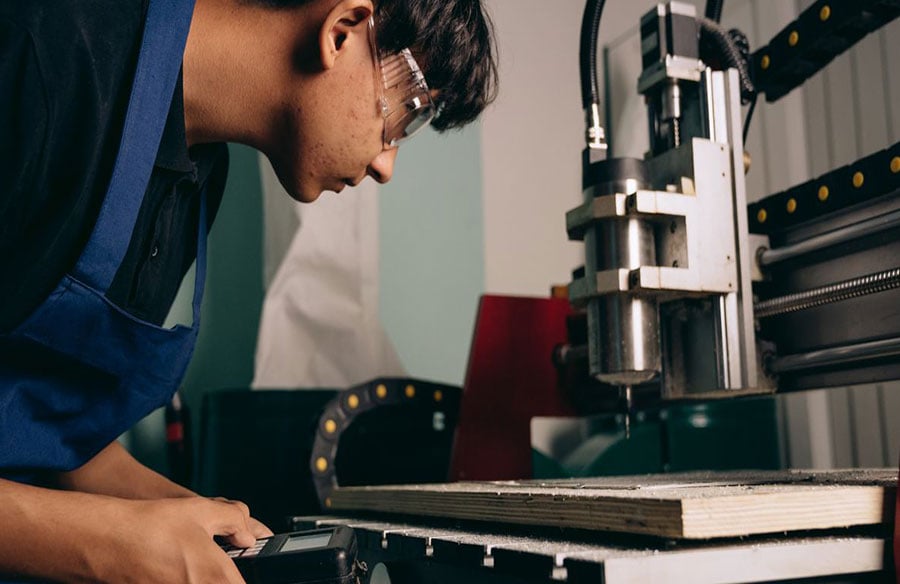
In bespoke interior projects, the visible quality of a finished room depends heavily on technical decisions made long before installation. Precision machining determines the three qualities that define made-to-measure interior work: consistency across every component, durability under daily use, and the fit accuracy that keeps shadow gaps and reveals tight. Achieving tight junctions, calm material transitions and repeatable parts relies on machining accuracy rather than design intent alone – a point reflected in how experts approach precision in cabinet design. Increasingly, workshops are shifting cutting, edging and drilling to specialised, machine-led production – a development that is increasingly presented as an important factor for high-end residential and commercial interiors.
Why Has the Standard for Cabinetry Finishing Evolved?
Expectations around fitted furniture have risen noticeably. Where a wardrobe run or kitchen carcass once allowed for small on-site adjustments, contemporary interiors often call for flush junctions, consistent reveals and seamless decorative surfaces across entire walls. Depending on the project, architects and designers may specify continuous grain patterns, handleless fronts and tightly aligned modules, leaving little room for dimensional error. Guidance on specifying high-end custom finishes for kitchen and bath cabinetry underlines how much of the outcome is decided at the specification stage.
Material combinations have also become more demanding. Melamine-faced boards, real wood veneers, matt lacquered surfaces and compact laminates all behave differently when cut and edged, and a hand-held trimmer may not consistently deliver the finish expected in a visible living space. Precision finishing has therefore moved from a workshop detail to a design-critical factor, with panel layout, edge treatment and drilling patterns best resolved before components are ordered.
How Does Professional Machining Impact Project Timelines?
Every hour a joiner spends dimensioning sheets, applying edges or setting up drilling jigs is an hour not spent on surveying, assembly and fitting. Outsourcing these stages to a dedicated board processing service changes how a workshop allocates its capacity, with machining handled off-site while the trade professional concentrates on work that requires presence on the project.
The benefits are clearest on jobs with repeated components, such as a run of wardrobe carcasses or matching cabinet doors, where machine repeatability removes a potential source of on-site correction. Cutwrights, a UK-based cut-to-size board and furniture component service, states on its website that it offers instant online quotes and that its automated machinery handles everything from a single panel to a volume run – useful for carpenters and cabinet makers working to tight schedules, though lead times and suitability should always be confirmed for the specific job.
The make-or-buy question is rarely absolute: many workshops keep simple cutting in-house and outsource only the components where finish quality or repetition justifies outsourcing.
What Are the Structural Benefits of High-Grade Edge Treatments?
An exposed board edge can be among the more vulnerable parts of a panel. Left unfinished, the open core of MDF or chipboard can absorb moisture and swell, while remaining vulnerable to impact damage. A correctly applied edge band covers the exposed area and can support a cleaner, more durable finish, though the degree of protection depends on the board core, adhesive and surface finish involved rather than the edging alone.
Aesthetically, the edge is where craftsmanship becomes visible. On natural wood finishes, continuity between face and edge determines whether a cabinet front reads as a coherent surface. Trade services that offer veneer edge banding alongside melamine and other edging options make it possible to pair a veneered panel with a matching real-wood edge, supporting a consistent architectural appearance. Applied by machine, such edges can help produce a flush, uniform result when the material and specification are appropriate.
How Can Small-Scale Craftspeople Compete with Large Manufacturers?
Industrial panel processing has traditionally required access to specialised equipment such as beam saws, edge banders and CNC drilling lines. Outsourced machining changes that equation: an independent joiner can access specialised production equipment on a per-order basis, without capital investment or floor space. This does not erase every advantage of scale, but it can help small workshops deliver accurately machined bespoke cabinetry components for projects that would otherwise need significant in-house tooling.
Cutwrights illustrates this model. According to its website, the company serves carpenters, builders, cabinet makers, other trade professionals and commercial customers, as well as DIY buyers, combining automated cutting, edging and drilling with personal advice, material samples, a showroom and its own delivery service. For a small firm quoting on a fitted study or a boutique retail interior, that combination of digital quoting and human support can make it easier to specify machined components even on a single project.
What Role Does Material Consistency Play in High-End Projects?
In premium interiors, consistency often separates a good result from an exceptional one. Decorative boards and veneers can show differences in grain, tone or texture. A run of wardrobe doors cut from mismatched sheets may reveal the discrepancy under raking light, regardless of how accurately each door was machined. Good practice starts with procurement: ordering panels for a visible run from the same batch, planning the cutting layout so grain flows across adjacent fronts, and labelling components before machining so orientation survives edging and drilling.
Requesting samples before committing to a full order—an option offered by suppliers including Cutwrights—helps confirm that decor, texture and edge material match the design intent. Precision finishing and material discipline reinforce each other: accurate machining cannot rescue mismatched materials, and consistent materials still need controlled cutting and edging to show their value.
Frequently Asked Questions
The following questions address common points raised by tradespeople and specifiers considering outsourced board processing.
How do modern edging techniques improve furniture durability?
A machine-applied edge band covers the open core of a panel, helping reduce damage from knocks and moisture at the edge. The durability gain depends on the board core, edge material and adhesive, so edging should be matched to the intended use rather than treated as a universal guarantee.
Why should cabinet makers outsource board finishing?
Outsourcing cutting, edging and drilling frees workshop capacity for surveying, design and installation. It is particularly worthwhile for repeated components and visible finishes where machine consistency matters, though the case should be assessed per project.
What is the difference between manual and automated edge banding?
Manual edging uses hand-applied tape and trimming and may suit repairs or one-off adjustments. Automated edge banding applies the band through a controlled process designed to produce repeatable results across a series of identical components.
How does precision cutting reduce waste in interior fit-outs?
Accurately dimensioned panels arrive ready for assembly, which can reduce on-site trimming, miscuts and rejected parts. Optimised cutting layouts can also make better use of each sheet, though the result depends on the design and board schedule.
Can bespoke furniture components be ordered with instant quotes?
Some UK suppliers offer online quoting for made-to-measure parts. Cutwrights, for example, promotes instant online quotes and states it can handle everything from a single panel to a volume run.
How can grain matching be planned across multiple furniture panels?
Order boards from the same batch, plan the cutting layout so grain flows continuously across adjacent fronts, and label components before machining. Approving physical samples of the decor and edge material in advance provides an additional safeguard.
Precision in cutting, edging and drilling is not a substitute for good design; it is what allows good design to survive contact with reality. For bespoke interior projects, choosing a machining partner by material range, repeatability, advice and delivery arrangements, rather than price alone, is usually the decision that shows in the finished room.