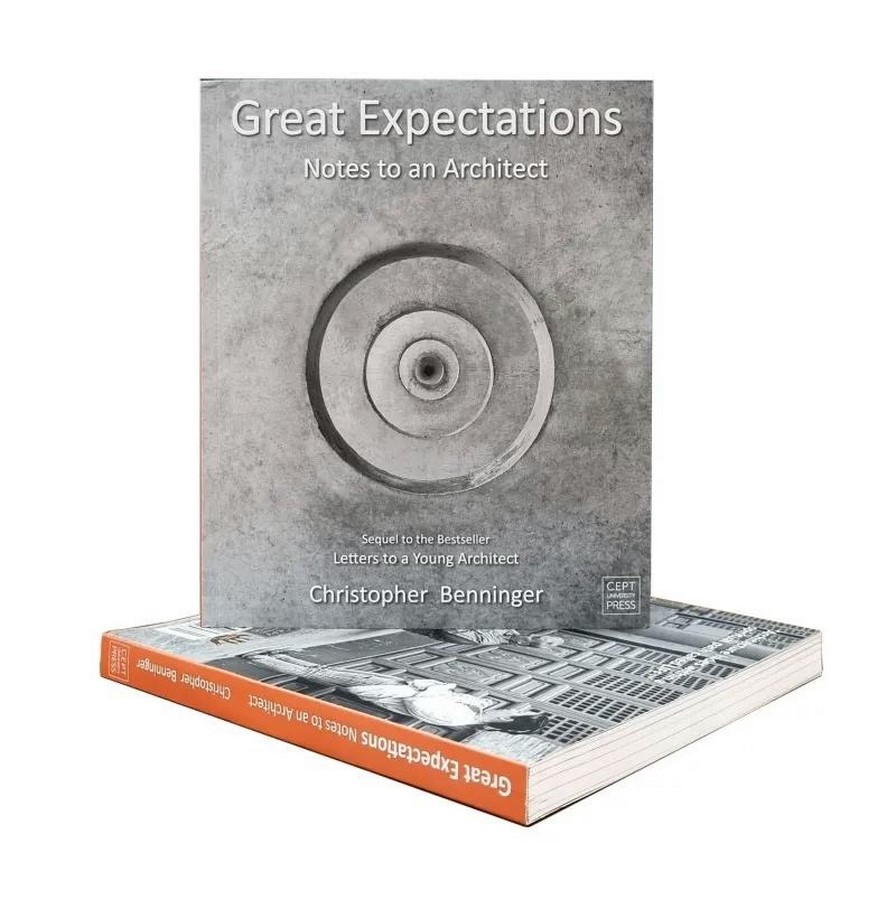
“We seem to have forgotten that architecture is a practice. Let me repeat, architecture is a practice. It is not theory, it is not talking, and it is not meetings! We need to teach people how to work, and how to do a professional job, not how to be phantasmagorical creators, or famous pretentious little Michelangelos! Teaching is not a profession isolated from architectural practice.”
— Prof. Christopher Benninger, Great Expectations: Notes to an Architect
Few statements about architectural education are as arresting as Christopher Benninger’s reminder that “architecture is a practice.” In Great Expectations, he cautions against an education that privileges spectacle over substance. He argues that schools must prepare students not only to imagine architecture, but also to practice it. His concern was not that architectural education had become too theoretical. Rather, he was concerned that it had begun to overlook the professional systems through which architecture is conceived, delivered, and sustained.
Architecture schools today do many things exceptionally well. They cultivate design thinking, creativity and technical competence. They also attempt to introduce students to construction management and estimation. Some are even successful in developing an appreciation for the social, cultural, and environmental responsibilities of design. Yet some of the skills that determine whether an architect can build and sustain a successful profession are scarcely addressed within the curriculum.
Behind every successful project lies an architectural studio that must win commissions, build client relationships, negotiate fees, manage teams, coordinate consultants, administer contracts, and remain financially sustainable. An architectural studio is much more than a place where buildings are designed. It is an institution that must continually balance creative ambition with professional responsibility and economic sustainability.
Architectural education scarcely deals with the business of the profession. Discussions around fees, financial management, business development, entrepreneurship, organisational leadership, and the long-term sustainability of a practice are often limited to brief professional practice courses or acquired informally during internships and early employment. The assumption seems to be that these are skills one will simply learn later. But should they be? The result is paradoxical. Many young architects are prepared to design, yet are not prepared to create the conditions under which they can actually design.
If architecture is indeed a practice, then an uncomfortable question follows: are we preparing students not only to design architecture, but also to practice it?
Beyond the Studio: What Does It Mean to Practice Architecture?
When architects speak of “practice,” they often mean two different things. The first is the act of practicing architecture: the process of designing buildings, coordinating consultants, administering contracts, and seeing projects through to completion. The second is the architectural practice itself: the office, studio, or the firm that makes this work possible.
It is this second meaning that often receives the least attention in architectural education.
Every architectural office, regardless of its size or design philosophy, is also an enterprise. Someone must win commissions, negotiate fees, manage cash flow, hire and mentor staff, invest in technology, comply with regulations, pay salaries, resolve disputes, and ensure that the practice remains financially sustainable. These responsibilities are not separate from architecture; they are what enable architecture to be practiced over the long term.
Many of the decisions that shape the built environment are made long before the first drawing is produced. Which projects does a practice pursue? How are fees structured? How much time can be devoted to design exploration? Can the office afford specialist consultants? Is there enough financial stability to invest in research or take on socially meaningful but less profitable work? These may appear to be business decisions, but they profoundly shape architectural outcomes.
Do Graduates Feel Prepared?
The question is not whether business matters to architecture. Every architect who has attempted to establish or lead a practice already knows the answer. The more interesting question is whether architectural education is preparing graduates for this reality.
A survey was undertaken among recent graduates of architecture and design schools across India to better understand this question. It explored graduates’ perceptions of how well their education had prepared them for the organisational, financial, and managerial realities of professional practice. It enquired which areas of practice they felt most prepared upon entering the profession, and which area the least.
The responses offer an opportunity to move the discussion beyond anecdote. They do not claim to be definitive, nor do they represent every architecture school in the country. They do, however, provide a valuable snapshot of how a generation of young architects understands the relationship between education and practice.
The survey received responses from over two hundred participants. Over half of the respondents were recent graduates in the first few years of practice. Professionally, a third of the respondents were working in design firms, while an equal number were engaged in independent practices. The last third were engaged in research, and academics. This offered a broad snapshot of how different members of the profession perceive the transition from architectural education to practice.
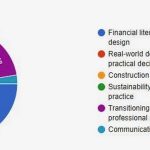
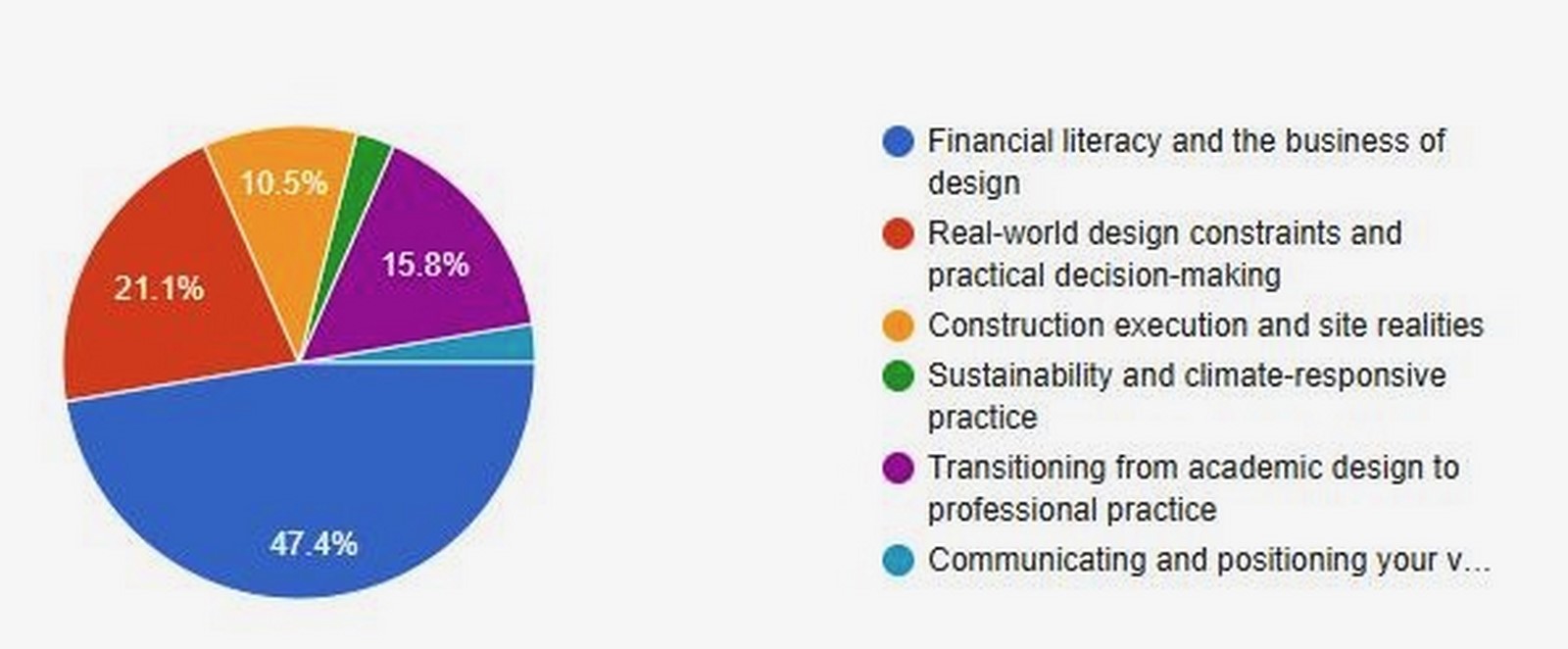
The responses suggest that the perceived gap between architectural education and professional practice extends beyond technical knowledge. When asked to identify the single biggest gap between architectural education and professional practice, respondents most frequently pointed to financial literacy and the business of practice. Other commonly identified gaps included the realities of professional constraints and project execution. Comparatively fewer respondents considered sustainability, construction execution, or traditional drafting skills to be the principal shortcomings of architectural education.
“In your opinion, what is the biggest gap between architectural/design education and professional practice?”
This perception was reinforced when respondents were asked whether architecture schools should explicitly teach the business aspects of practice alongside design. A clear majority responded in the affirmative, indicating that the business of architecture is increasingly viewed not as an optional addition to the curriculum, but as an essential component of professional education.
Along with design, do you believe that design/architecture schools should teach students about the business aspects of practice?

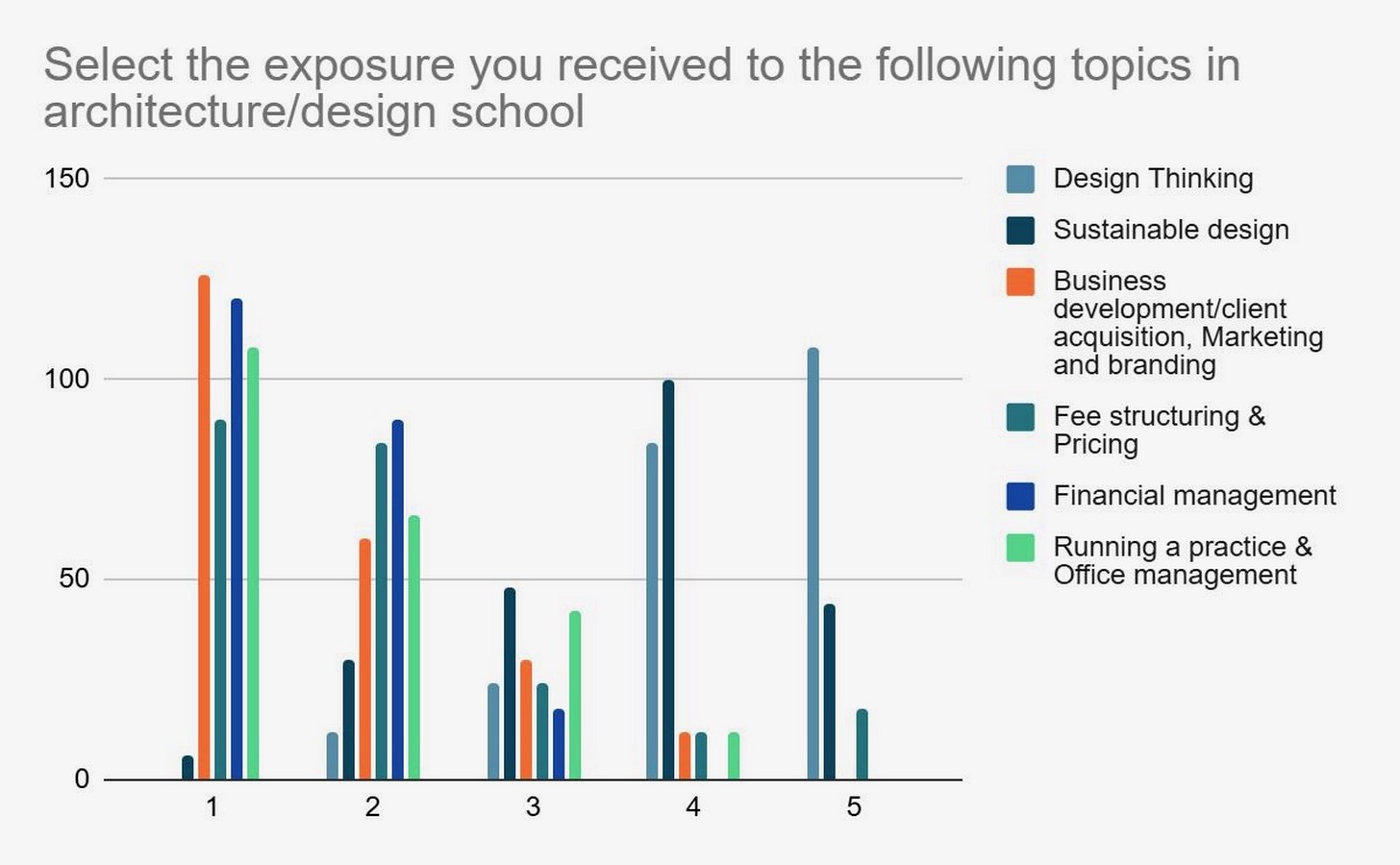
This distinction became even more apparent when respondents reflected on the emphasis placed on different subjects during their education. Design thinking and creative problem-solving were consistently perceived as areas in which architectural schools performed exceptionally well. In contrast, topics such as fee structuring, financial management, business development, and office management received considerably lower ratings, suggesting that these aspects of practice receive comparatively little attention within the curriculum.
The responses relating to financial discussions within architecture schools echoed this pattern. Most respondents indicated that conversations around money, professional fees, pricing, and the financial sustainability of practice were rarely discussed openly during their education. While professional practice courses often introduce contractual and regulatory aspects of the profession, the economics of running an architectural office appear to remain largely outside the everyday discourse of the design studio.
How often were topics related to money, fees, or financial sustainability openly discussed in your school?

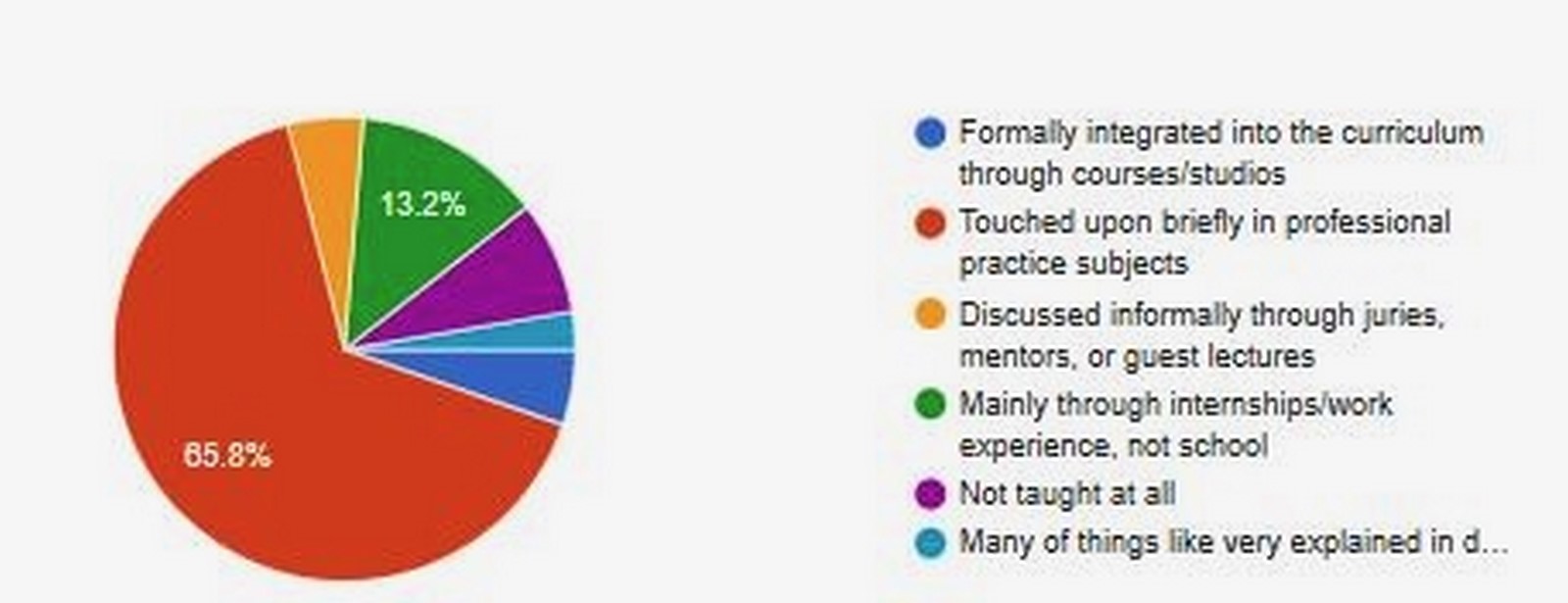
If these aspects of practice are not being learnt in school, where are graduates acquiring them? The responses suggest that the transition into professional life itself remains the primary classroom. Most respondents identified internships and full-time employment as the places where they developed an understanding of the business and organisational realities of architectural practice, while only a small minority attributed this learning to their formal education. This suggests that architectural education continues to treat the business of practice as knowledge that can be acquired later, rather than as a competency that ought to be developed alongside design.
How were business & practice related skills taught to you in design/architectural school?
While professional practice courses often introduce contractual and regulatory aspects of the profession, the economics of running an architectural office appear to remain largely outside the everyday discourse of the design studio. This is reflected not only in graduates’ perceptions of their education, but also in their confidence as they enter professional life.
Nearly three in four respondents believed that stronger exposure to the business aspects of practice during architecture school would have made them more confident upon entering the profession.
When asked what they wished had been taught more seriously during their education, the responses converged around a remarkably consistent set of themes. Respondents called for greater emphasis on:
- Running an architectural practice: how to establish, manage, and sustain an office.
- Contracts, fee structures, budgeting, and financial management as essential professional competencies rather than peripheral topics.
- Project management, including negotiation, timelines, coordination, and client management, taught in greater depth.
- Understanding and communicating professional value, including how to quantify, justify, and price architectural services.
Collectively, these responses suggest that graduates are not asking architecture schools to reduce their emphasis on design. Rather, they are asking for a more complete education, one that prepares them not only to conceive good architecture, but also to build practices capable of delivering it.
Lack of Exposure to Existing Resources
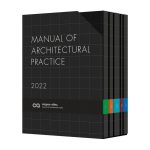
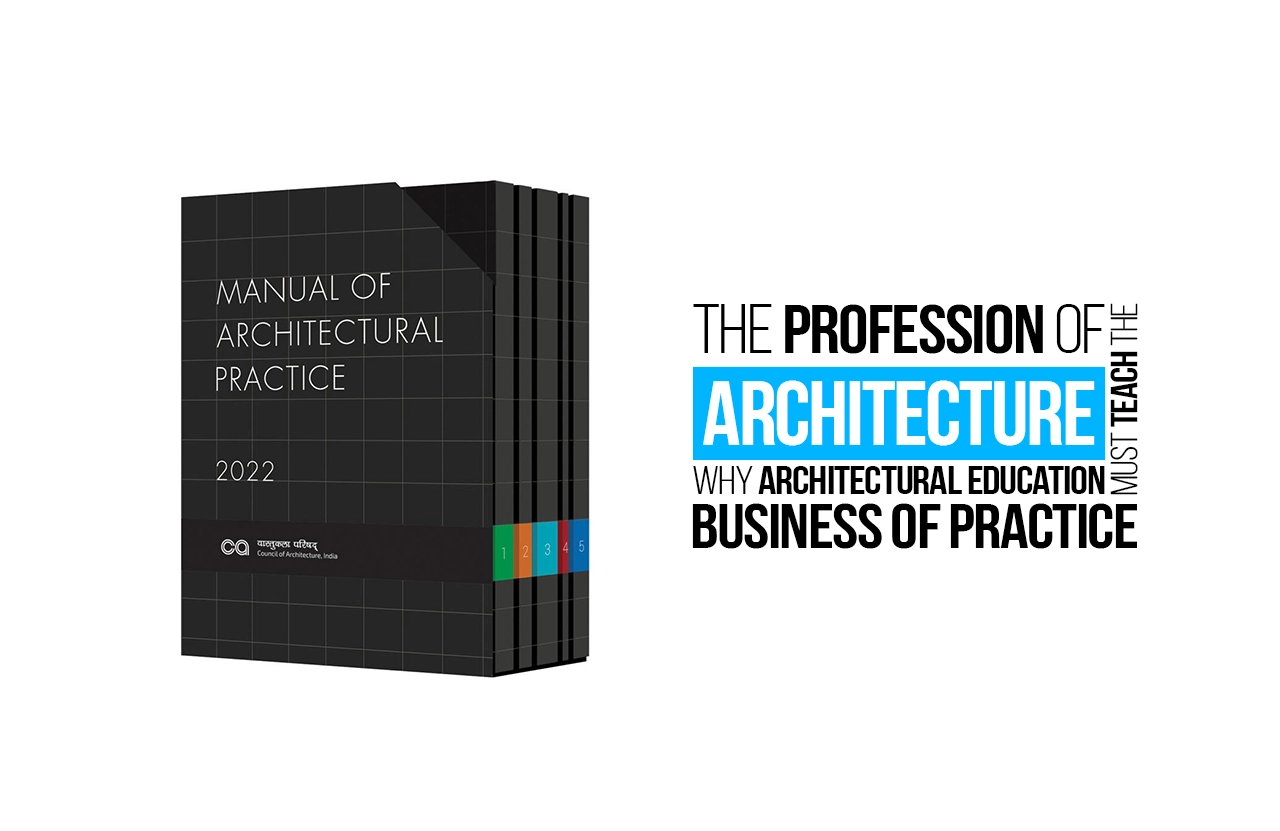
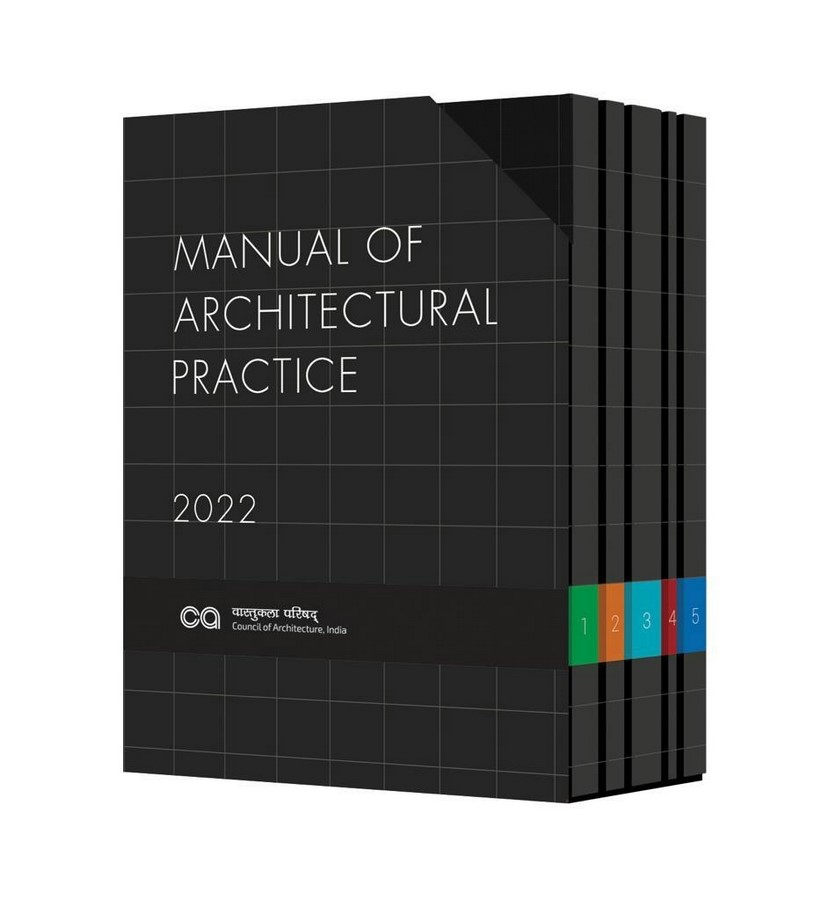
One finding from the survey stood out for a different reason. While three in four respondents consistently identified the business of practice as an area in which they felt underprepared, the same number had not come across the Council of Architecture’s Manual of Architectural Practice (MAP). Only a minority reported having read the document, while many were either aware of it but had never referred to it, or were unaware of its existence altogether.
The Manual of Architectural Practice was developed precisely to guide architects through many of the professional responsibilities that accompany practice. It addresses issues such as the establishment of an architectural office, professional ethics, fee structures, contracts, office administration, project management, and relationships with clients and consultants. In many ways, it attempts to answer the very questions that respondents identified as being insufficiently addressed during their education.
Yet the survey suggests that the manual remains largely peripheral to the educational experience of many architecture students. If one of the profession’s principal reference documents on practice is unfamiliar to a significant proportion of young architects, the challenge may not lie solely in curriculum design, but also in how professional knowledge is introduced, discussed, and integrated within architectural education
Similarly, the Council of Architecture is by no means alone in recognising the importance of the business of practice. Across the world, a substantial body of literature has emerged to help architects understand the organisational, financial, and managerial dimensions of professional life. From The Architect’s Handbook of Professional Practice published by the American Institute of Architects to Ben Vickery’s Architect’s Pocket Book of Modern Management and Practice, these works treat the management of an architectural office not as an incidental skill, but as an essential professional competency. They discuss subjects ranging from establishing a practice, staffing, and financial planning to contracts, risk management, marketing, and business development, topics that rarely occupy the same prominence within architectural curricula as design studios or construction technologies.
Among these, Keith Granet’s The Business of Design offers perhaps the most compelling perspective. Rather than viewing business as something external to design, Granet argues that successful creative practices are built upon deliberate organisational systems, financial discipline, leadership, and client relationships. Design excellence alone, he suggests, is rarely sufficient to sustain a practice. Instead, enduring design firms emerge where creative ambition is supported by sound business decisions.
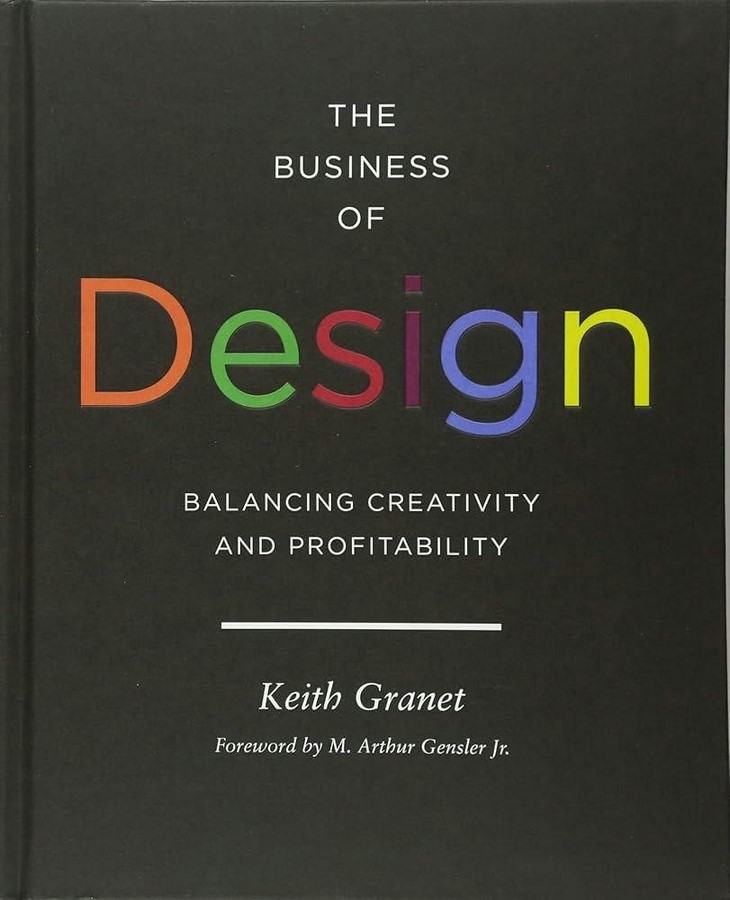
All these books have a core central thesis: they argue that stronger business systems enable better design. A practice that understands its finances can invest in research. A practice that prices its services appropriately can devote greater time to design exploration. A practice that develops long-term client relationships gains the opportunity to undertake more meaningful work. In this sense, business is not the opposite of design; it is one of the conditions that allows good design to flourish.
Taken together, the Council of Architecture’s Manual of Architectural Practice and this growing international body of literature point towards the same conclusion. The question is no longer whether architects should understand the business of practice. The question is how architectural education can integrate this knowledge into the formation of future professionals.
Teaching the Business of Practice: A Small Pedagogical Experiment
If the business of practice deserves a greater place within architectural education, the obvious question follows: can it actually be taught within a design school?
While many of these lessons are traditionally assumed to come only through years of professional experience, there is little reason to believe that students cannot be introduced to them much earlier. Topics such as fee proposals, client acquisition, branding, business development, financial planning, contracts, project management, leadership, and office administration are no less teachable than construction technology or professional ethics. The challenge lies not in the absence of knowledge, but in creating spaces within architectural education where these conversations can occur.
One small experiment explored this possibility through two week-long summer schools conducted at the CEPT University Faculty of Architecture, The Business of Design and Architect’s Prescription. Taught with Rahul Sathe, Director at CCBA Design, these programmes brought together around thirty architecture students to discuss subjects that rarely feature prominently within the design studio. The sessions examined how architectural practices are established, how offices win work, how professional fees are determined, how client relationships are built, and how architects can develop practices that are both financially sustainable and professionally meaningful.
The objective was not to transform architecture students into entrepreneurs or management professionals overnight. It was to familiarise them with the realities of professional life that await them after graduation. Discussions repeatedly demonstrated that students were not intimidated by these subjects; they were curious about them. Many expressed that these were questions they had long wanted to ask but had rarely found space to discuss within the curriculum.
Importantly, this is not an isolated effort. Courses such as The Practice studio at CEPT University similarly recognise that architectural education must engage more seriously with the realities of professional life. Such initiatives suggest that the conversation has already begun. The challenge now is to move these discussions from isolated electives and workshops towards a more systematic place within architectural education.
Architecture has always been both a creative discipline and a profession. Design will, and should, remain at the heart of architectural education. But if architects are expected to lead practices, employ people, negotiate with clients, manage risk, and sustain organisations over decades, then these responsibilities deserve to be treated not as lessons to be discovered accidentally after graduation, but as competencies to be cultivated during it.
Prof. Benninger’s words remain a timely reminder: architecture is a practice. Preparing students for that practice means preparing them not only to design exceptional buildings, but also to build exceptional practices. Perhaps the next evolution of architectural education is not to teach less design, but to complete the education of the architect by teaching the profession that makes design possible.