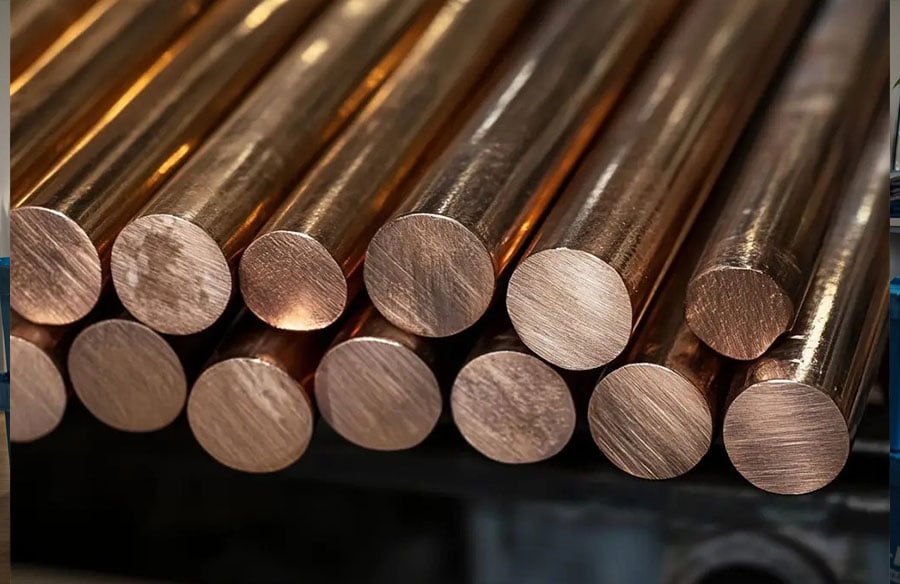
Salt water, heat and flow are hard on marine hardware. That makes copper nickel 70/30 vs 90/10 a practical design choice. Because marine piping, condenser tubing and offshore cooling systems need materials that combine corrosion resistance, useful strength, reliable fabrication and long service in seawater, copper-nickel alloys have become a well-established option for these demanding operating conditions. Both grades are copper-rich and contain nickel, iron and manganese.
A copper nickel 90/10 vs 70/30 decision depends on seawater velocity, pressure, temperature, load and cost.
Copper Nickel 70 30 vs 90 10 — Key Properties
Chemical Composition and Alloying Elements
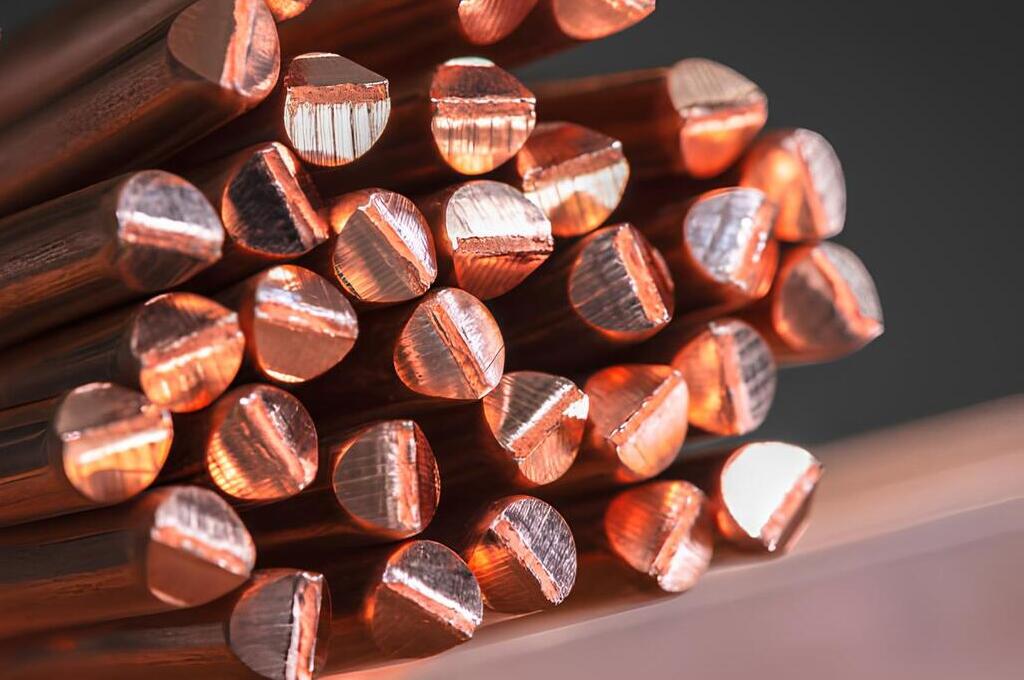 Nickel is the main difference. CuNi 70/30 vs 90/10 also means different iron levels: 90/10 usually has 9-11% nickel and 1.0-1.8% iron; 70/30 has 29-33% nickel and 0.4-1.0% iron.
Cupronickel 70 30 has higher strength than 90/10, which makes it suitable for more demanding service. Exact chemistry varies slightly by standard and specification.
Corrosion Resistance
Both develop a protective film in seawater. The film becomes more protective over time, reducing the corrosion rate.
For ordinary piping, 90/10 is widely used in marine cooling and condenser systems.
In aggressive flow conditions, 70/30 generally offers better resistance to impingement attack than 90/10. High-velocity service still depends on geometry, turbulence, pipe diameter, entrained sand and protective-film condition.
Mechanical Properties: Strength, Hardness, Ductility
CuNi 70/30 has higher tensile and yield strength than 90/10. That helps in offshore piping and higher-pressure service.
Both remain ductile and practical to form. Properties vary with temper and product form.
Thermal and Electrical
Adding nickel lowers thermal conductivity. The 70/30 grade therefore transfers heat less efficiently than 90/10.
In offshore systems, service life can matter more than peak heat transfer.
Conductivity
At about 20°C, 90/10 has electrical conductivity of about 9% IACS and 70/30 about 4.6% IACS; both are well below pure copper.
For a condenser application, engineers also check fouling, water condition, wall thickness and temperature.
Fabrication and Weldability
Both alloys can be formed and welded with established procedures.
That is one reason they are practical for piping, condenser tubing and other marine components rather than just technically suitable on paper.
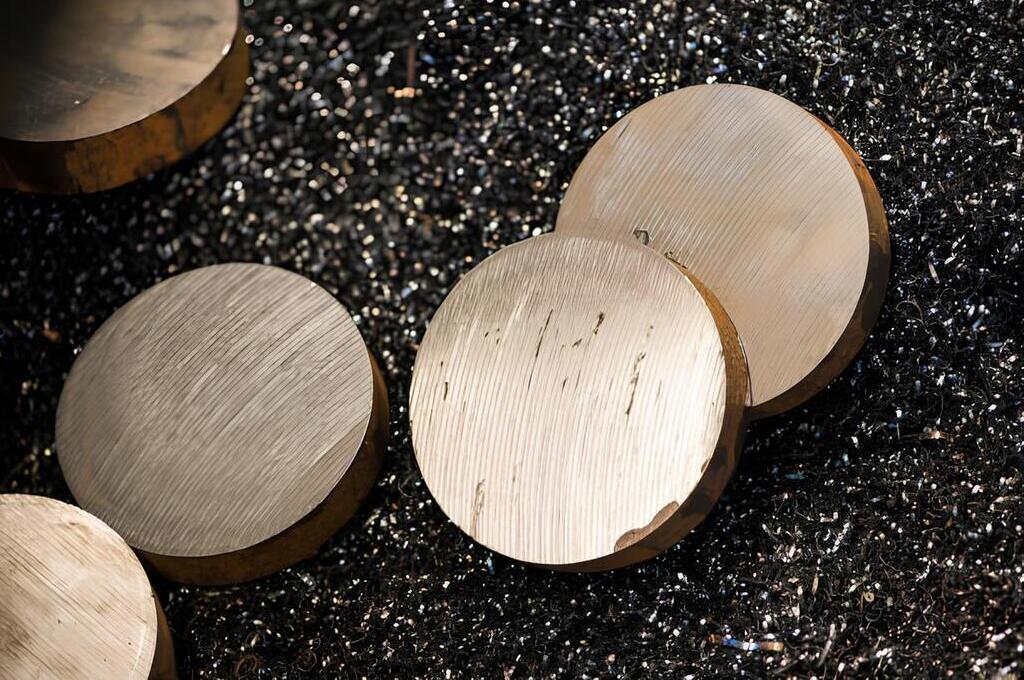 Copper Nickel 70 30 vs 90 10 — Comparison Table
The cheaper metal is not always the cheaper system. Copper nickel 90/10 is often right where its mechanical and flow limits meet the design requirements.
| Property / Parameter | 90/10 CuNi (UNS C70600) | 70/30 CuNi (UNS C71500) |
| Nickel Content | 9.0-11.0% | 29.0-33.0% |
| Iron Content | 1.0-1.8% | 0.4-1.0% |
| Manganese Content | Up to 1.0% | Up to 1.0% |
| Yield Strength* | 105 MPa | 110 MPa |
| Tensile Strength* | 275 MPa | 310 MPa |
| Typical Maximum Flow Velocity** | Up to 3.5 m/s | Up to 4.0 m/s |
| Thermal Conductivity*** | About 45 W/m·K | About 29 W/m·K |
| Electrical Conductivity*** | About 9% IACS | About 4.6% IACS |
| Seawater Corrosion Resistance | Excellent | Excellent |
| Macrofouling Resistance | High | High |
| Relative Material Cost | Typically lower | Typically higher |
*Representative annealed values; properties vary with temper, product form and material standard.
**The 3.5 and 4.0 m/s figures are typical maximum design values for seawater piping, particularly at diameters of 100 mm and above, not universal limits. Below 25 mm, guidance is about 2.5/3.0 m/s for 90/10 and 70/30 in clean seawater, or about 2.0/2.4 m/s with entrained sand.
***Approximate values at room temperature.
The higher nickel content generally makes copper nickel 70/30 more expensive. Actual project cost also depends on metal prices, product form and specification. That can make 90/10 more cost-effective when extra strength is unnecessary.
Applications of 90/10 Copper Nickel
For shipboard cooling, heat exchangers and seawater piping, cupronickel 90/10 is widely used. It is also found in offshore seawater systems, power-station condensers and equipment that must cool with seawater.
Typical uses include fire mains, cooling-water circuits, desalination piping and condenser service.
90/10 is widely used where seawater flow and operating conditions are well defined.
 Applications of 70/30 Copper Nickel
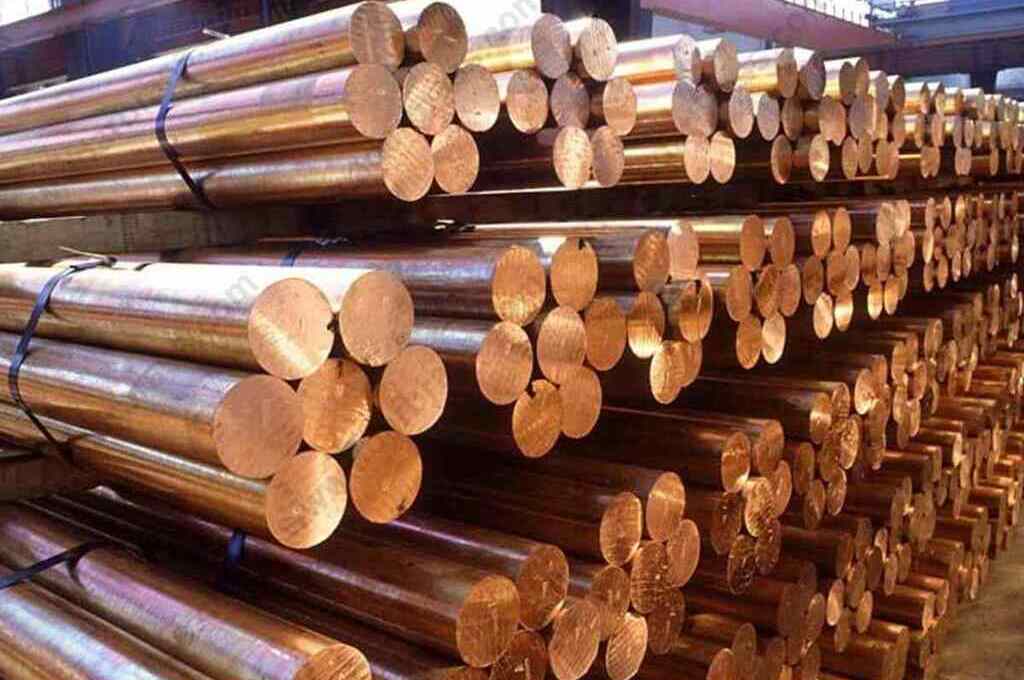
More demanding service is where cupro-nickel 70/30 is often selected. It suits marine and offshore equipment where greater strength or improved resistance to impingement is needed.
The alloy is also used in submarines, where its higher strength suits the higher pressures encountered.
CuNi 70 30 vs 90 10 — How to Choose the Right Material
A CuNi 90/10 choice should start with service data. Check seawater velocity, temperature, pressure, wall thickness, fabrication and expected life.
More nickel is not automatically better. The right grade must meet the system requirements with a suitable design margin and cost.
When to Use 90/10
For general seawater piping and cooling circuits, Cu-Ni 90/10 is widely used because it combines corrosion resistance, useful thermal conductivity and good fabrication at a typically lower material cost than 70/30.
It is a common choice for surface ships, seawater piping and condenser systems.
When to Use 70/30
Choose Cu-Ni 70/30 where higher strength, demanding flow conditions or impingement concerns justify the extra nickel. The extra cost can make sense when those properties are required.