Uneven floors can cause commercial kitchen equipment to rock, create frame distortion, affect door alignment, and interfere with drainage. For equipment buyers, OEM manufacturers, and distributors, selecting adjustable equipment feet requires more than choosing a height-adjustable component. The correct specification should include load capacity, thread size, usable adjustment range, mounting interface, base design, material grade, and operating environment.
This guide explains the key RFQ information, supplier documents, sample inspection points, and installation requirements buyers should confirm before approving adjustable equipment feet for commercial kitchen applications.
Adjustable Equipment Feet RFQ Checklist
| RFQ field | Buyer should provide |
|---|---|
| Equipment | Equipment type/application |
| Loaded weight | Total operating/load condition |
| Foot quantity | Number of support points |
| Leg interface | Round tube / square tube / plate / threaded insert |
| Mounting dimensions | Tube size / mounting plate / insert details |
| Thread | Diameter + pitch |
| Adjustment | Required usable adjustment range |
| Height | Minimum + maximum installed height |
| Base | Required base diameter / floor-contact requirement |
| Environment | Water / grease / detergent / salt |
| Temperature | Heat / cold exposure |
| Dynamic conditions | Vibration / door movement / operator force / moving parts |
| Floor | Floor material and unevenness |
| Locking | Locknut or other locking method |
| Cleaning | Cleaning/washdown method |
Why Does Floor Unevenness Create Equipment Problems?
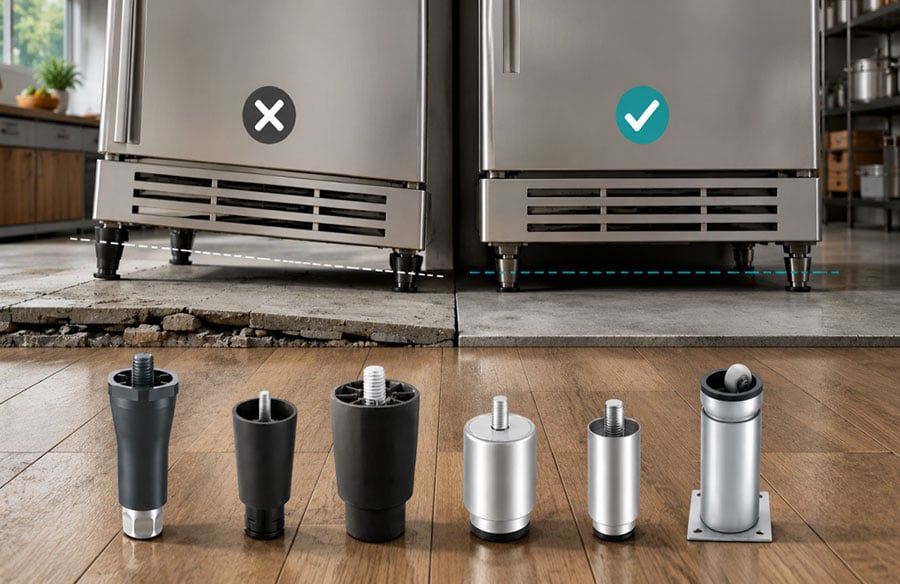
Floor height differences can affect equipment stability and service performance. The actual impact depends on equipment footprint, weight distribution, frame stiffness, support point quantity, and operating conditions.
How does an uneven floor affect stability?
When one leg does not contact the floor, equipment may rock under loading, door movement, or vibration.Operators sometimes use temporary solutions such as cardboard, metal scraps, or loose shims. However, these methods may move during vibration, cleaning, or repeated equipment use, creating unstable support conditions. Adjustable commercial kitchen legs let each support point be set independently so the frame rests firmly.
How can poor leveling affect equipment operation?
A twisted frame may affect doors, drawers, drain pans, and connected services. Refrigeration doors may not close consistently, while sinks may drain toward the wrong side. Leveling cannot correct a weak frame or damaged floor, but it can reduce distortion when equipment and feet match.
How Do Adjustable Equipment Feet Improve Stability?
Adjustable feet change each leg’s effective length, allowing installers to compensate for floor variation without cutting legs or using packing.
How does threaded adjustment work?
Most adjustable equipment feet use a threaded stem installed through an insert, welded boss, mounting plate, or threaded receiver. The final performance depends on thread diameter, pitch, engagement length, adjustment range, and locking method.Turning the foot changes support height. Thread diameter, engagement length, pitch, and locking method affect security. Buyers should confirm usable adjustment range, not only total stem length.
Why does the foot base matter?
The base spreads equipment weight and provides contact against sliding or rocking. A wider base can improve stability by increasing floor contact area and reducing rocking risk. However, buyers should also consider toe clearance, cleaning access, equipment layout, and whether the floor surface requires additional grip or protection.Metal bases suit some heavy installations, while polymer or rubber pads may reduce floor marking and vibration.
Which Specifications Should Buyers Include in an RFQ?
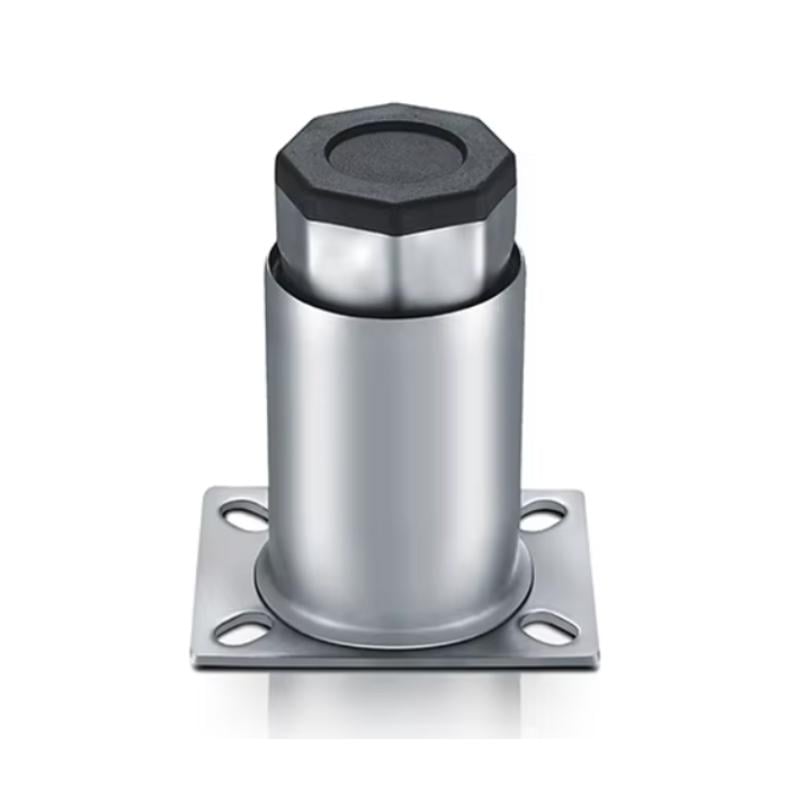 An RFQ should describe the foot and supported equipment, giving suppliers information to assess fit, load transfer, and installation.
Which mechanical dimensions define compatibility?
Specify equipment weight, foot quantity, leg tube size, mounting method, thread diameter, pitch, stem length, adjustment range, base diameter, minimum height, and maximum height. Identify clearances and whether the foot fits a round tube, square tube, plate, or threaded insert. Drawings should show critical interfaces and tolerances.
Which operating conditions affect service life?
State whether feet will face water, grease, detergent, salt, heat, cold, vibration, impact, or movement. Include cleaning method and floor type. Static weight alone is not sufficient because loaded shelves, opening doors, operator force, moving parts, vibration, and repeated cleaning can change the actual loading condition. Suppliers should confirm capacity for the installation.
How Should Buyers Define Load Requirements?
Load capacity should be evaluated based on the complete equipment condition rather than empty equipment weight only. Buyers should consider operating weight, stored contents, door movement, vibration, operator force, and uneven load distribution.
When requesting supplier confirmation, buyers should clarify whether the load rating applies per foot or for the complete set of feet. The test method, mounting condition, adjustment height, and safety margin should also be confirmed.
Which Materials Suit Commercial Kitchen Legs?
Material selection affects corrosion resistance, cleanability, capacity, appearance, and cost. Compare the whole assembly because stems, bases, inserts, and locks may use different materials.
When are stainless steel components appropriate?
Stainless steel is often considered where washdown, moisture, food residue, and cleaning chemicals are expected.Buyers should request the specific stainless steel grade instead of accepting a general “stainless steel” description. Material selection should consider corrosion exposure, cleaning chemicals, temperature conditions, and contact with food-processing environments. Surface condition, exposed threads, and dissimilar-metal contact require review. Stainless parts still need suitable cleaning.
When can polymer components be suitable?
Engineering polymers may suit bases, inserts, or pads when loads and temperatures remain within limits. They can reduce floor marking, noise, and metal contact. Buyers should check chemical resistance, sustained-load creep, impact behavior, and heat exposure. A part used under a light table may not suit a heavy heated appliance.Suppliers should provide chemical resistance information when polymer components are used in commercial kitchen environments.
How Should Leveling Feet Be Installed and Adjusted?
Even a suitable product can perform poorly when installation varies. A repeatable procedure helps teams achieve stable support without overstressing frames.
What installation sequence should technicians follow?
Place equipment near its final position, inspect the floor, and confirm every foot is attached. Lower all feet until they contact the floor, then adjust gradually while checking both directions. Distribute weight across all supports. After leveling, tighten locknuts and recheck utilities, doors, and drains.
After installation, buyers or technicians should verify that all support points carry stable contact, locknuts are tightened correctly, and equipment functions such as doors, drains, and connected services operate normally.
What mistakes should installers avoid?
Do not extend a threaded stem beyond permitted engagement. Excessive extension can increase bending stress and reduce stability. Installers should not force one foot downward to correct a twisted frame or leave another unloaded. Replace improvised spacers, damaged threads, and loose inserts before service.Excessive adjustment height should be avoided because extended threaded stems may reduce lateral stability and increase bending stress.
What Quality Checks Reduce Purchasing Risk?
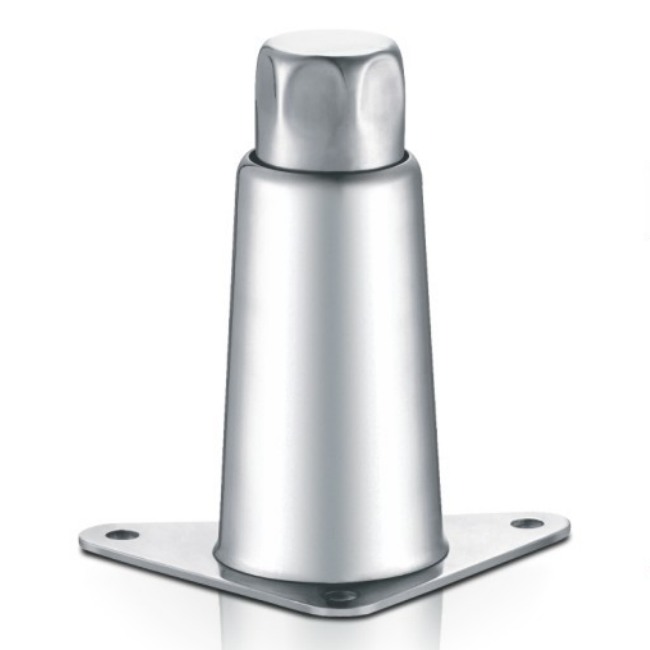 Buyers can reduce disputes by approving measurable requirements before production. Appearance alone does not confirm load performance or compatibility.
What should be checked on samples?
Measure the thread, stem, base, minimum height, maximum height, and adjustment travel. Test the sample in the actual leg or a verified fixture. Check rotation, thread smoothness, insert retention, locknut operation, base flatness, and finish. Apply a realistic load and observe rocking, deformation, thread damage, and movement.Sample approval should include dimensional verification, functional testing, and load confirmation before mass production. Buyers should record acceptance criteria for thread size, adjustment range, base dimensions, finish quality, and load performance.
What supplier documents are useful?
Buyers should request dimensioned drawings, material specifications, finish requirements, tolerance information, installation instructions, packaging details, and inspection criteria.
For customized projects, suppliers should also confirm sample approval procedures, production controls, and traceability requirements before bulk manufacturing.
How Can Foshan Simple Technology Support Adjustable Foot Sourcing?
Foshan Simple Technology Co., Ltd. supports adjustable equipment foot sourcing for commercial kitchen equipment manufacturers, distributors, and project contractors. Buyers can provide equipment drawings, leg dimensions, required adjustment range, load conditions, material requirements, and packaging specifications for technical review.
The review process can help confirm product compatibility, sample requirements, inspection points, and production expectations before bulk orders.
Conclusion
Adjustable equipment feet can improve commercial kitchen equipment stability when the correct specification matches the equipment structure and installation environment. Buyers should evaluate thread design, adjustment range, load capacity, mounting method, material suitability, and supplier verification requirements before approval. Performance depends on thread engagement, adjustment range, base design, material, mounting method, and equipment structure. Buyers should specify loads, floor conditions, cleaning exposure, and dimensions rather than select commercial kitchen legs by appearance alone. Sample fitting and inspection requirements can reduce installation and purchasing risk. Proper installation, locking, and periodic checks help leveling feet remain effective.
Need help specifying adjustable equipment feet for your commercial kitchen equipment project? Send your equipment drawings, mounting dimensions, load requirements, and installation conditions for a technical specification review.
FAQs
How much adjustment range should commercial kitchen leveling feet provide?
The required range depends on measured floor variation, equipment clearance, and safe thread engagement. Avoid specifying more travel than the mounting design can support securely.
2. Can adjustable feet fix a bent equipment frame?
No. They can compensate for floor variation, but they should not force a damaged or twisted frame into alignment.
3. Are rubber pads necessary on commercial kitchen legs?
Not always. Pads may reduce slipping, noise, or floor marking, but suitability depends on load, temperature, chemicals, and sanitation requirements.
4. How should buyers compare load ratings?
Confirm whether the rating applies per foot or per set. Review the test setup, mounting method, adjustment height, and exact model.
5. What causes adjustable equipment feet to loosen?
Possible causes include vibration, inadequate locking, damaged threads, insufficient engagement, repeated movement, uneven loading, or incorrect installation. Locknuts and regular inspection may help.
6. What information should buyers include in an adjustable equipment feet RFQ?
Buyers should provide equipment type, operating weight, number of support points, mounting dimensions, thread requirements, adjustment range, environment conditions, and documentation requirements.
7. Should buyers compare load ratings per foot or per set?
Buyers should confirm the supplier’s rating method because some ratings apply to individual feet while others apply to a complete support system.