Something is shifting in how landscape architects approach planting specifications. The default for residential and institutional projects has long favored ornamental varieties: hybridized plants bred for visual consistency, container-ready form, and immediate curb appeal. That default is changing.
A growing number of designers are specifying native plants, and the reasons extend beyond environmental preference. Native specifications reduce long-term maintenance costs, perform better across variable climate conditions, and align with sustainability frameworks that increasingly influence project approvals.
The shift is rewriting some of the basic assumptions about what landscape design looks like and how designers source plant material.
Why the Specification Is Changing
Ornamental plants are bred for appearance. They look uniform on the truck, perform predictably in the first season, and photograph well for project portfolios. But they carry a dependency profile that creates problems over the life of a landscape.
Most ornamentals require supplemental irrigation, fertilization, and pesticide application to survive beyond the first few years. In regions with water restrictions, chemical-use scrutiny, or extreme weather exposure, that dependency translates into maintenance costs that clients and property managers absorb for decades.
Native plants eliminate most of that dependency. Because they evolved alongside local soil biology, climate patterns, and insect populations, they require no supplemental fertilizer, no pesticide, and dramatically less water once established. For projects designed to perform over 20 to 50 years, that long-term resilience is a specification advantage ornamentals cannot match.
Green building frameworks have accelerated the trend. Programs like LEED and SITES include landscape sustainability criteria that can favor native plant specifications as part of their scoring, giving designers a compliance incentive on top of the performance case.
What It Means for Design Language
Specifying native plants changes the visual vocabulary of a landscape. Ornamental design is built on uniformity: matched heights, consistent color, symmetrical placement. Native design works differently.
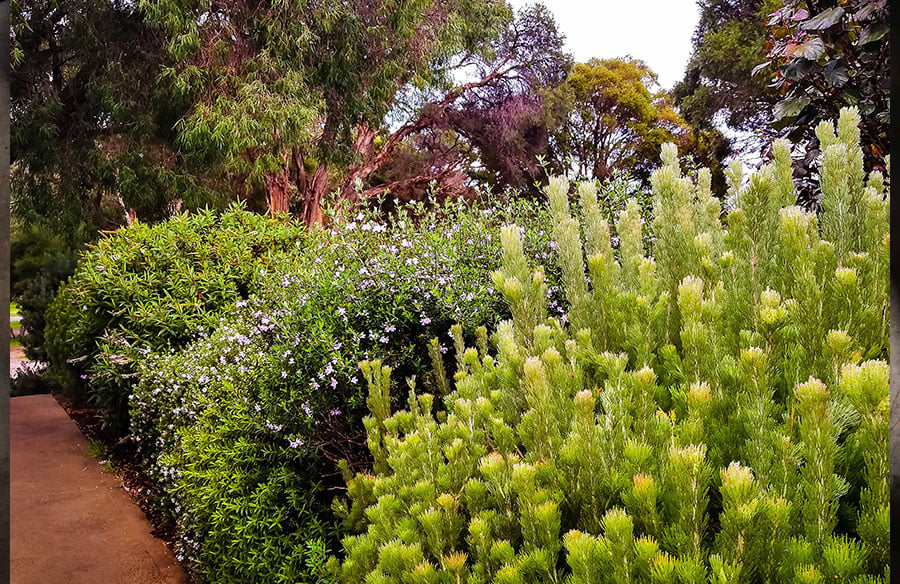
A well-designed native planting creates visual interest through seasonal progression rather than static composition. Spring perennials like wild geranium offer early color. Summer layers in coneflowers, black-eyed Susans, and butterfly milkweed with its vivid orange blooms. As blooms fade in fall, the seed structures of spent pollinator plants provide visual interest through winter while feeding songbirds like goldfinches.
The result is a landscape that evolves through the year. For designers accustomed to specifying static compositions, this requires a different planning approach. But the trade-off is a landscape that gains character as it matures rather than degrading without constant input.
The Supply Chain Gap
The shift toward native specification has exposed a structural problem in how plant material moves from grower to project site.
Many of the largest nursery brands operate primarily as brokers. They purchase stock from independent growers and resell it to contractors and landscape companies. The broker knows inventory. They may not know the plant.
Tammy Sons, a native plant expert and founder of TN Nursery, a third-generation grower that has supplied native plants to projects including Arlington National Cemetery and the White House grounds, draws a clear line. “If you’re a broker, you just pot it up and sell it,” she says. A grower can advise on which species establish well in specific soil conditions, which cultivars show reliable disease resistance across seasons, and how root stock will perform on a given site.
For architects developing native specifications, that distinction matters. Native plant quality depends on provenance, root health, and growing conditions in ways that container-grown ornamentals do not. Sourcing from growers with field-level expertise produces more reliable project outcomes than sourcing through a supply chain where that knowledge is lost.
Where This Is Heading
Native specification will not replace all ornamental planting. Formal gardens, entry installations, and commercial contexts where visual uniformity is the primary objective will continue to use hybridized varieties.
But the assumption that ornamentals are the default is weakening. Native plants require no fertilizer, no pesticide, and significantly less irrigation than their ornamental counterparts once established. For clients evaluating total cost of ownership across the life of a project, that performance gap is becoming difficult to overlook.
As water restrictions tighten, sustainability criteria expand, and clients ask harder questions about long-term maintenance costs, designers who can work fluently with native plant palettes will hold an advantage the profession is still building toward.