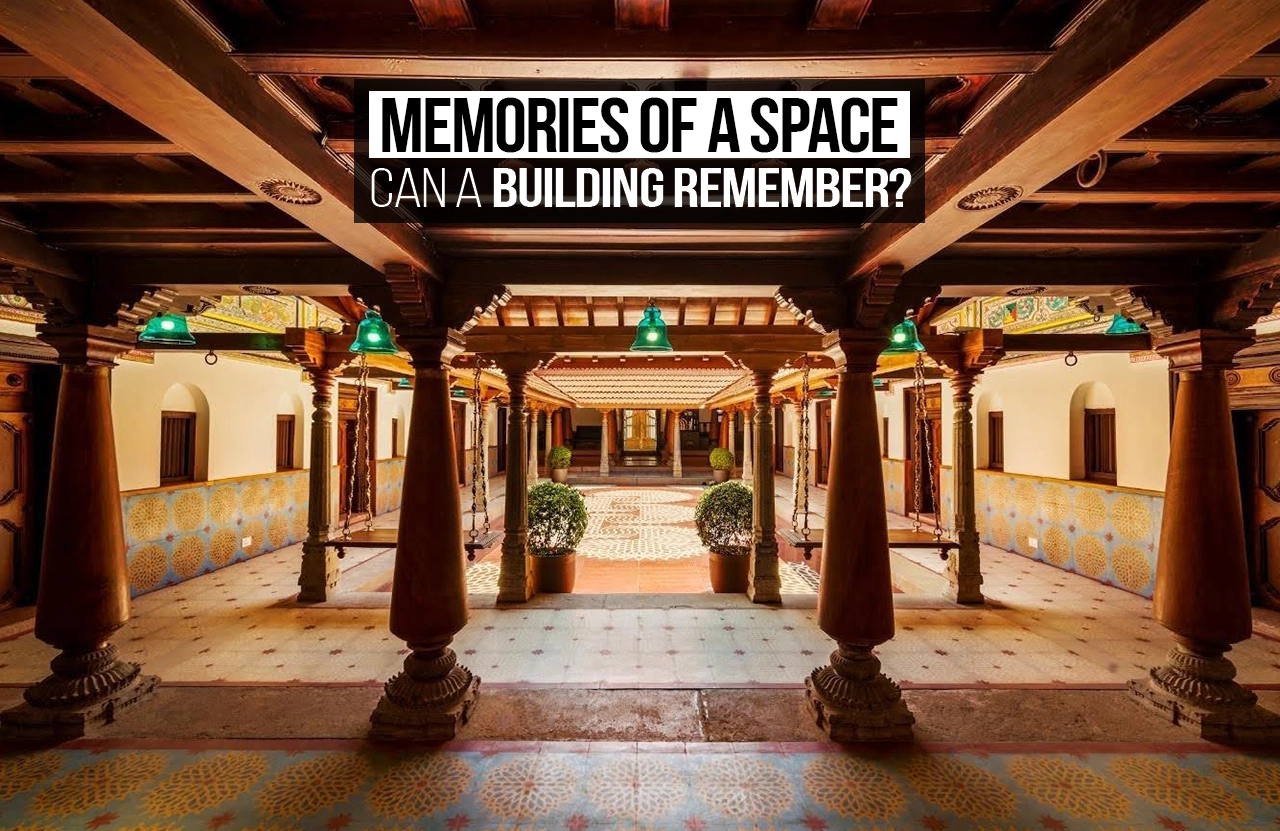
There is a popular saying that walls have ears. If that is true, perhaps they also have a soul. That is why every old house feels as though it is listening. Within its walls linger whispered conversations, muffled laughter, and countless memories. A building remembers, not through words, but through the lives it has sheltered. Over time, brick and stone become more than mere materials; they become storytellers, carrying the soul of every moment they have witnessed. Architecture is often described as the art of making space. Yet a truer description is that it is the art of crystallising time. An architect may design a building, but it is sculpted by time.
If the technology to interview a building ever existed, people would be enthralled. They would gather to hear accounts no history book could ever capture. Every crack, every worn step would have a version of a sentence in a story written not with ink, but with time.
The question that remains: If places are vessels for memory, what remains when the vessel is broken?
The Mnemonic Body of a City
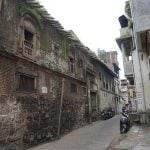
There is a particular kind of grief that belongs only to cities. The grief of watching a building come down. It is not the grief of losing a person. It is more abstract, and therefore, easy to dismiss. Urban planners talk about it as “heritage loss.” Property developers don’t talk about it at all. But those who grieve it know exactly what is leaving with the rubble. Architecture operates at the intersection of both. A functioning market, a neighbourhood temple, a chai stall wedged into a colonial arcade. These are milieux, living memory. But the moment they are threatened, they become Lieux: suddenly precious, suddenly symbolic, suddenly capable of catalysing protest, poetry, and political action. (Nora, P. ,1989)
In his essay Lieux de Mémoire, French historian Pierre Nora distinguished between milieux de mémoire, living environments where memory is inseparable from daily life, and lieux de mémoire, or “sites of memory,” places where memory has remained because the living environment itself is already gone. His melancholy observation concluded that we build monuments precisely when memory has ceased to be organic and must be preserved because it no longer breathes on its own.
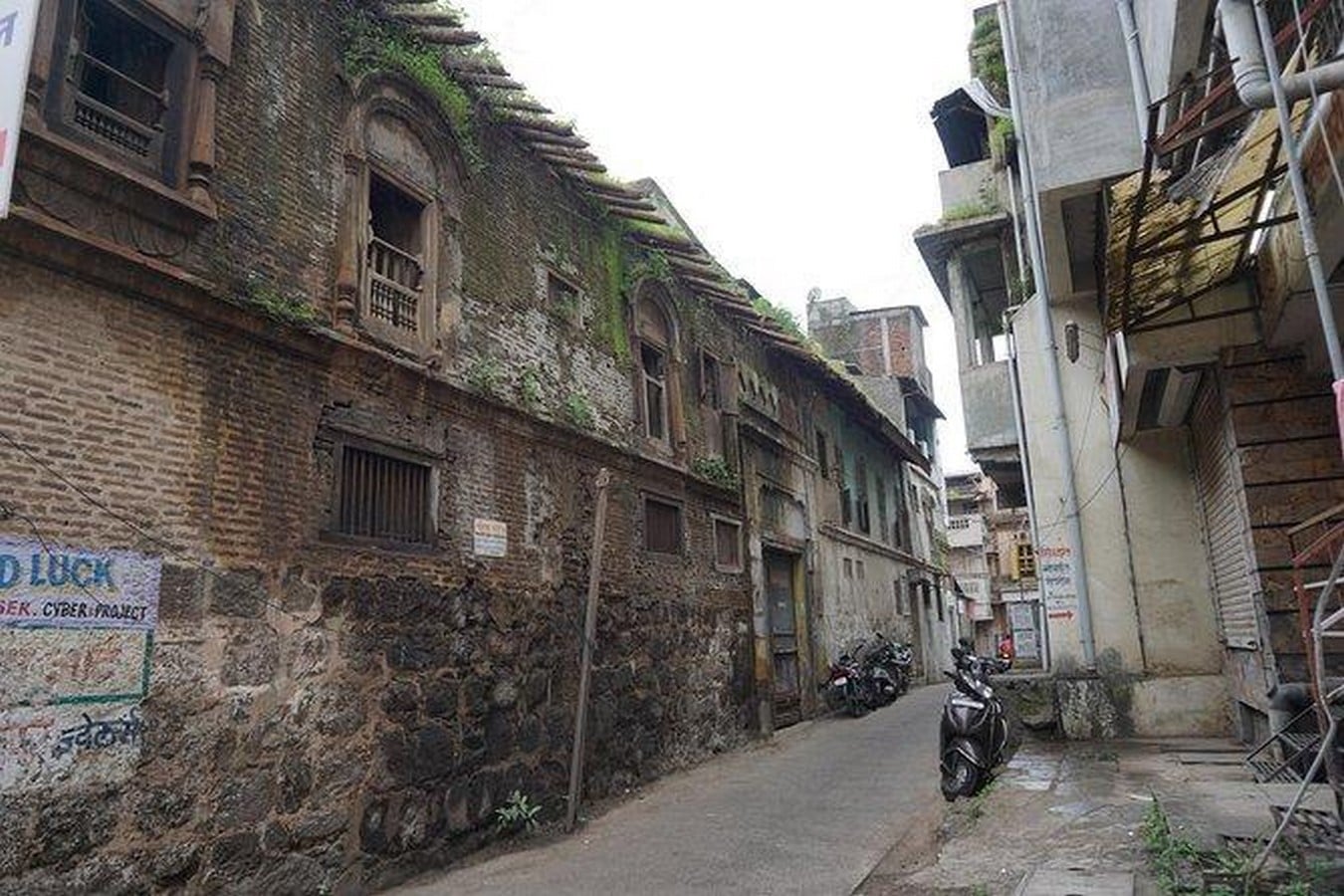
This shift from background to foreground is what urbanists and architects often overlook when they assess buildings purely in terms of structural integrity or land-use efficiency. Architecture’s most important function may not be spatial at all. It may be mnemonic; it holds the shape of a world that would otherwise dissolve into abstraction. The answers may lie within the stories of these buildings.
Echoes within Pink Walls
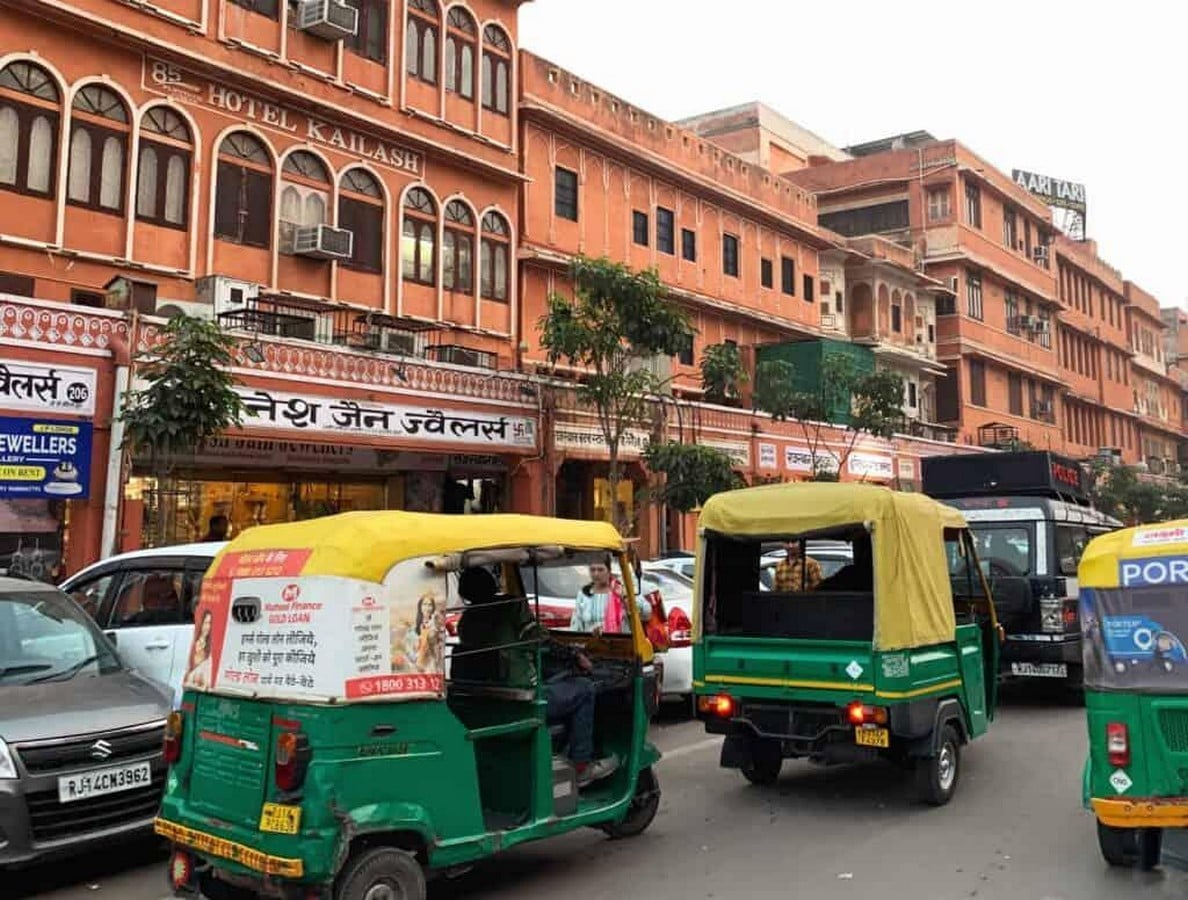
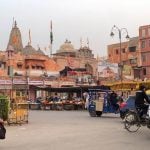
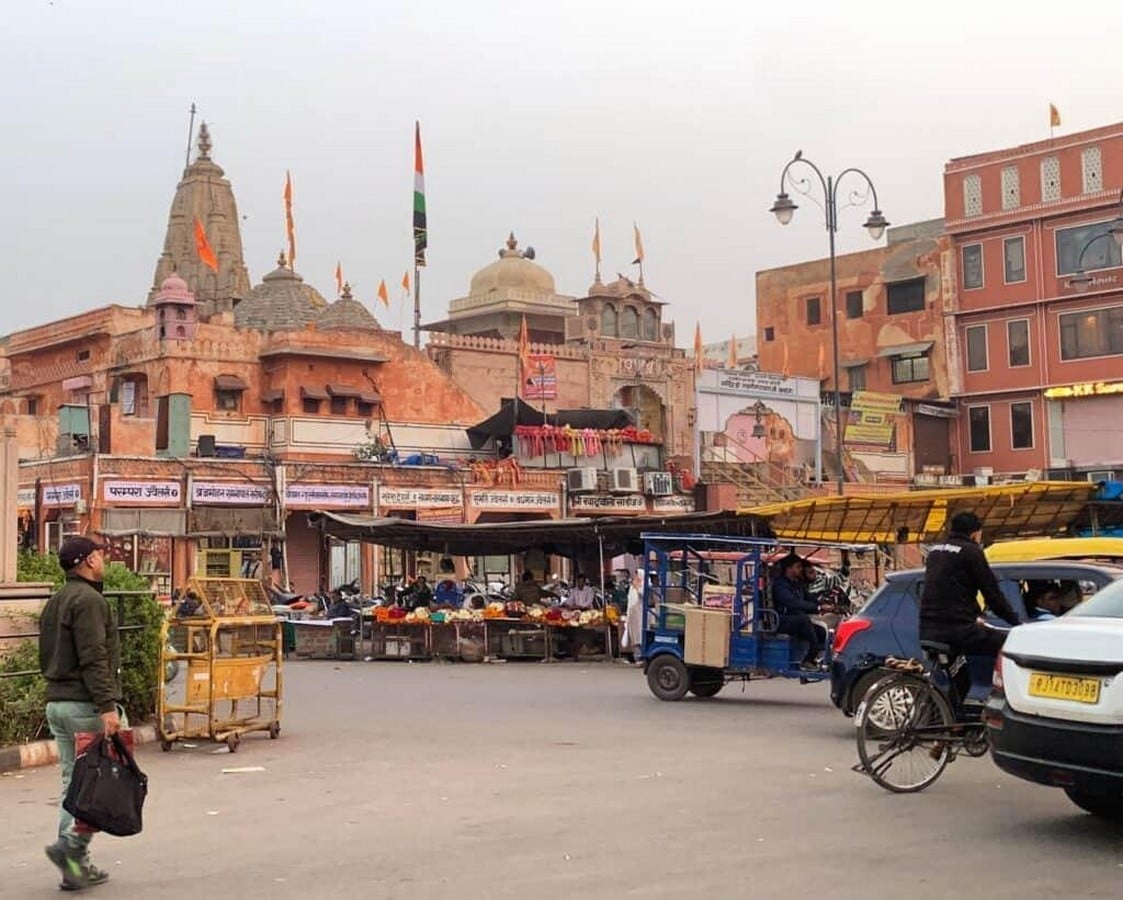
Designated as a UNESCO World Heritage Site in 2019, Jaipur is an urban ensemble that accurately poses the question of memory versus modernity. Sawai Jai Singh II laid out the city in 1727 according to the principles of the Shilpa Shastra and Vastu Vidya, dividing it into nine rectangular sectors. What makes Jaipur’s architecture interesting is that it is not a ruin. People live in it. Businesses occupy the havelis. The heritage listing creates lived tension. Residents cannot easily renovate their homes or modernise their shopfronts. Yet the UNESCO designation brings tourism revenue that makes economic survival more possible. The building is not a museum. It is also not free to change. It exists in a condition of enforced suspension held between the memory it carries and the present it is asked to accommodate.
This is where the theory of architectural memory becomes genuinely complicated. Memory,
in lived buildings, is dynamic. It is rewritten every time a family repaints a facade, every time a new electrical line is run through a nineteenth-century wall and every time a chai stall sets up in an arched niche that once framed a merchant’s private entrance. To freeze a building is to preserve its form while evacuating its life. To let it change freely is to lose the form. Neither is a full answer.
The House as Historical Argument-Savarkar Wada, Nashik
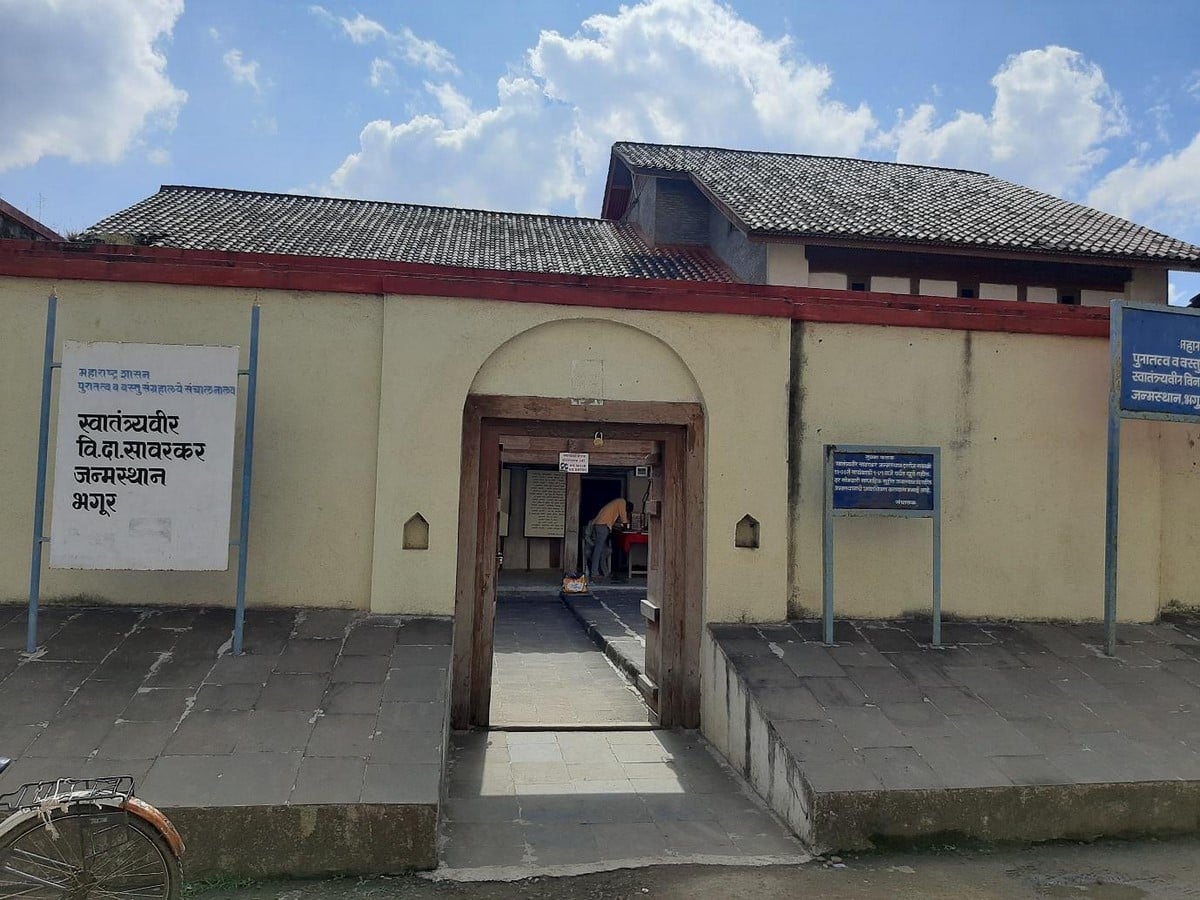
In the town of Bhagur, near Nashik, there stands a modest structure of lime plaster and old timber known as Savarkar Wada. It was the ancestral home of freedom fighter Vinayak Damodar Savarkar. By the standards of architectural grandeur, it is an unremarkable building. A traditional Maharashtra Wada with a central courtyard, narrow corridors, and the spatial logic of a family dwelling that preceded the age of individual rooms. It stands quietly amongst the hustle and bustle of the town.
What makes Savarkar Wada significant is not its form but its function as a site of contested remembrance. The house is now maintained as a memorial, and it draws visitors whose relationship to what it represents is far from uniform. For some, it is the boyhood home of a revolutionary thinker. For others, the same walls hold a more complicated legacy. The house, in other words, does not offer a single story. It holds the outline of a life and asks each visitor to determine what that life meant. This is perhaps the most difficult truth that architecture forces upon culture. The building cannot be made to mean only one thing. It records without editorialising. A colonial administrator’s bungalow and a freedom fighter’s ancestral home are both honest in the same way. They show exactly what was built, for whom, and in what spirit. The work of interpretation belongs not to the structure but to the generation viewing it. Savarkar Wada survives as a reminder that some arguments cannot be resolved, only inhabited.
Dwaraka and Mahabalipuram-Ruins Beneath the Water
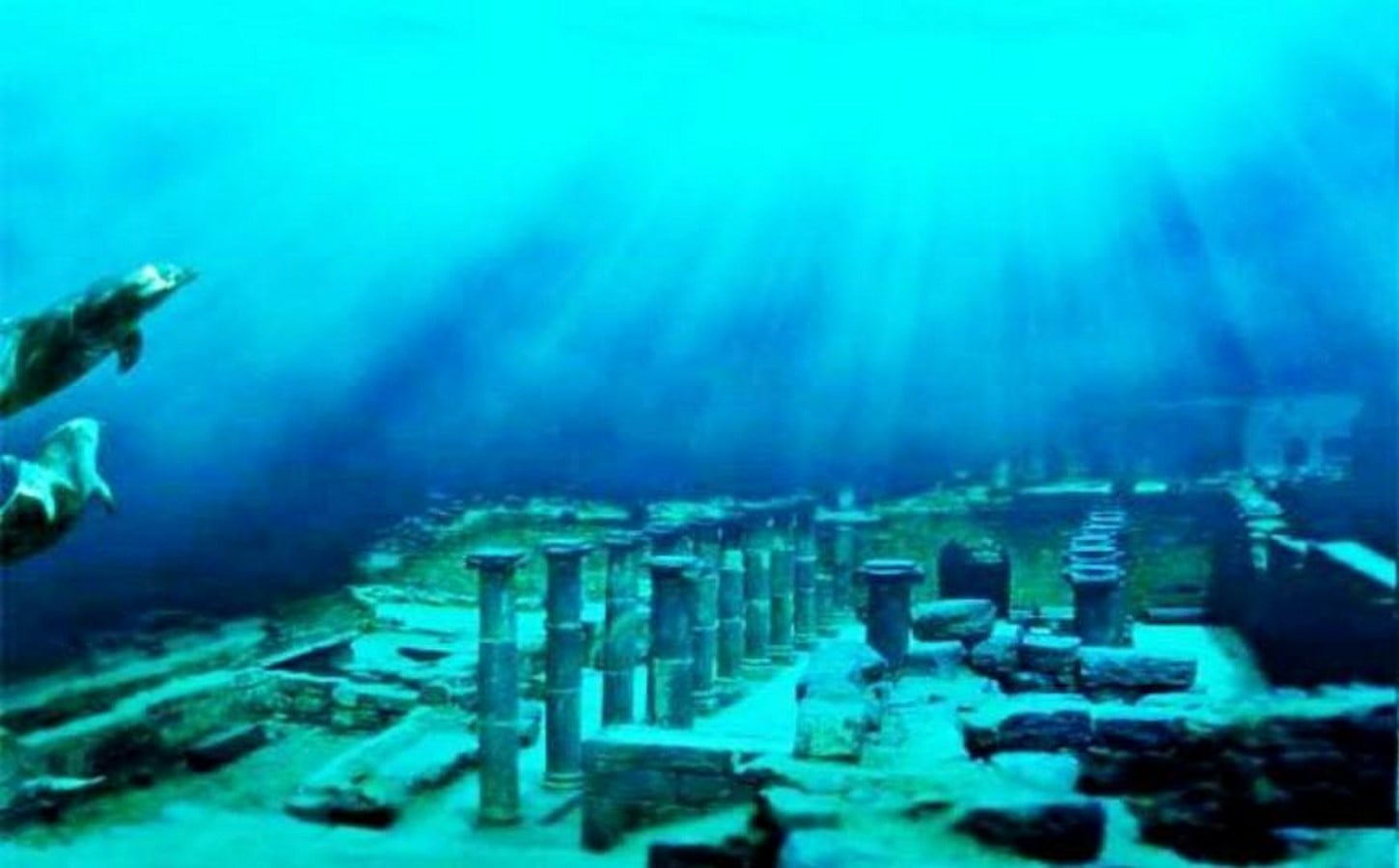
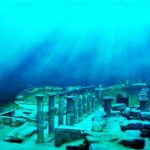
There are two sites in India where architecture has been preserved from below the sea. The submerged ruins off the coast of Dwarka in Gujarat have been the subject of marine archaeological surveys since the 1980s. Investigations carried out by the National Institute of Oceanography have uncovered structural remains at depths that suggest habitation of the coastline before the accounts of historical records. Whether the site corresponds to the Dwaraka of the Mahabharata remains, appropriately, a matter on which archaeology and mythology have not agreed. What is certain is that the sea has claimed a substantial settlement, and that its submersion represents one of the most complete forms of architectural erasure possible, not demolition or neglect, but inundation. The memory is there. It simply requires extraordinary effort to access.
At Mahabalipuram in Tamil Nadu, the situation is different in character but not in kind. The Shore Temple, built by the Pallava dynasty in the seventh and eighth centuries, is the sole surviving structure of what was, by multiple accounts, a much larger complex. Tamil literary sources speak of a city of seven pagodas, the majority of which have been swallowed by the sea. When the tsunami of December 2004 temporarily drew back the waters of the Bay of Bengal before making landfall, it revealed, for a brief and extraordinary period, the stone facades of structures that had not been seen in centuries. Archaeologists scrambled. The water returned. The ruins went under again.
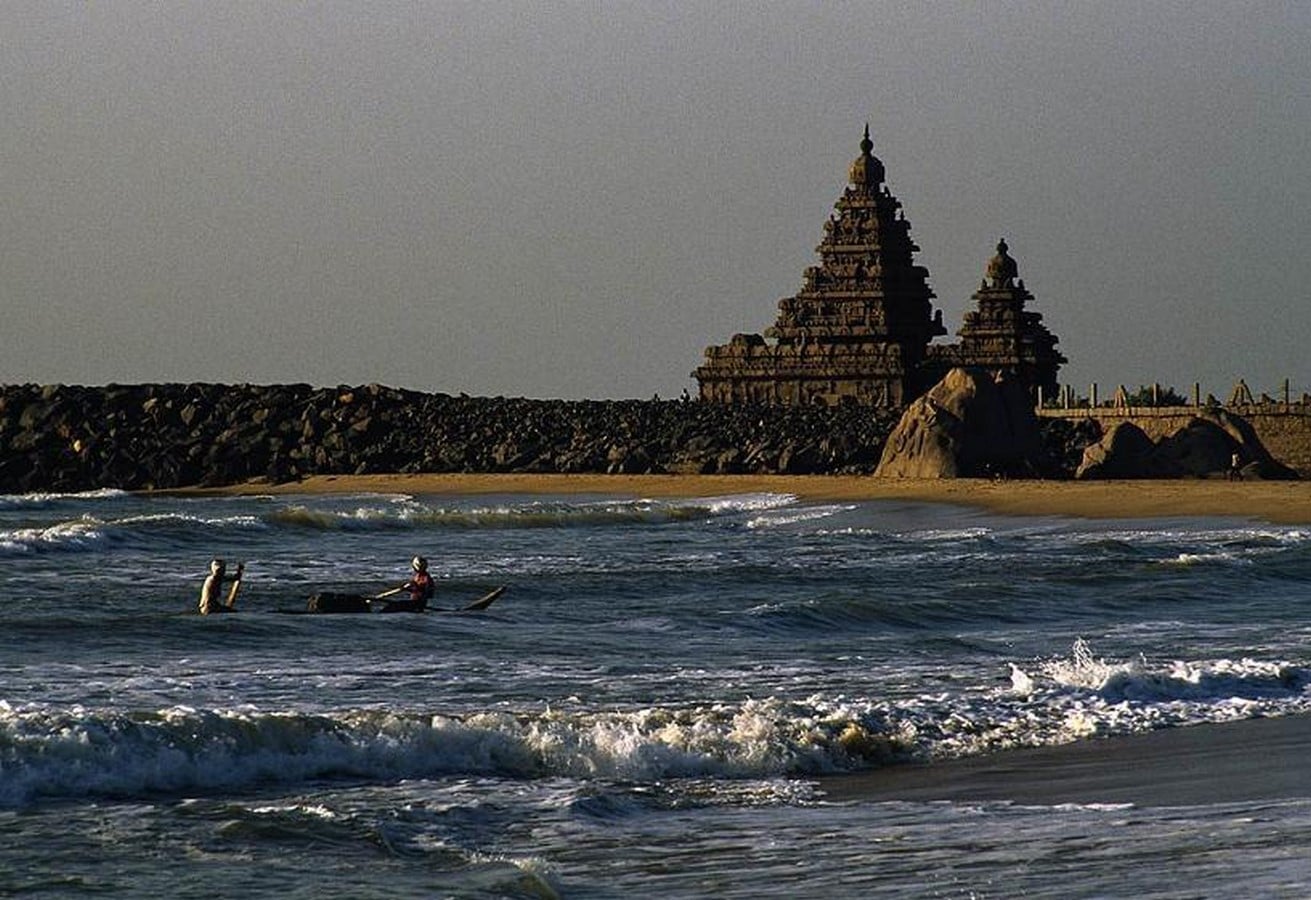
What Dwaraka and Mahabalipuram share is the condition of inaccessible memory, architecture whose physical existence is confirmed but whose full extent and meaning remain beyond reach. They remind the observer that the built record is always incomplete, that the buildings that survive into the present are a fraction of what was made, and that the history one reads in standing structures is, by necessity, a history of the fortunate and the durable rather than a complete account of what existed.
The Architecture of an Absent Community-Chettinad Houses
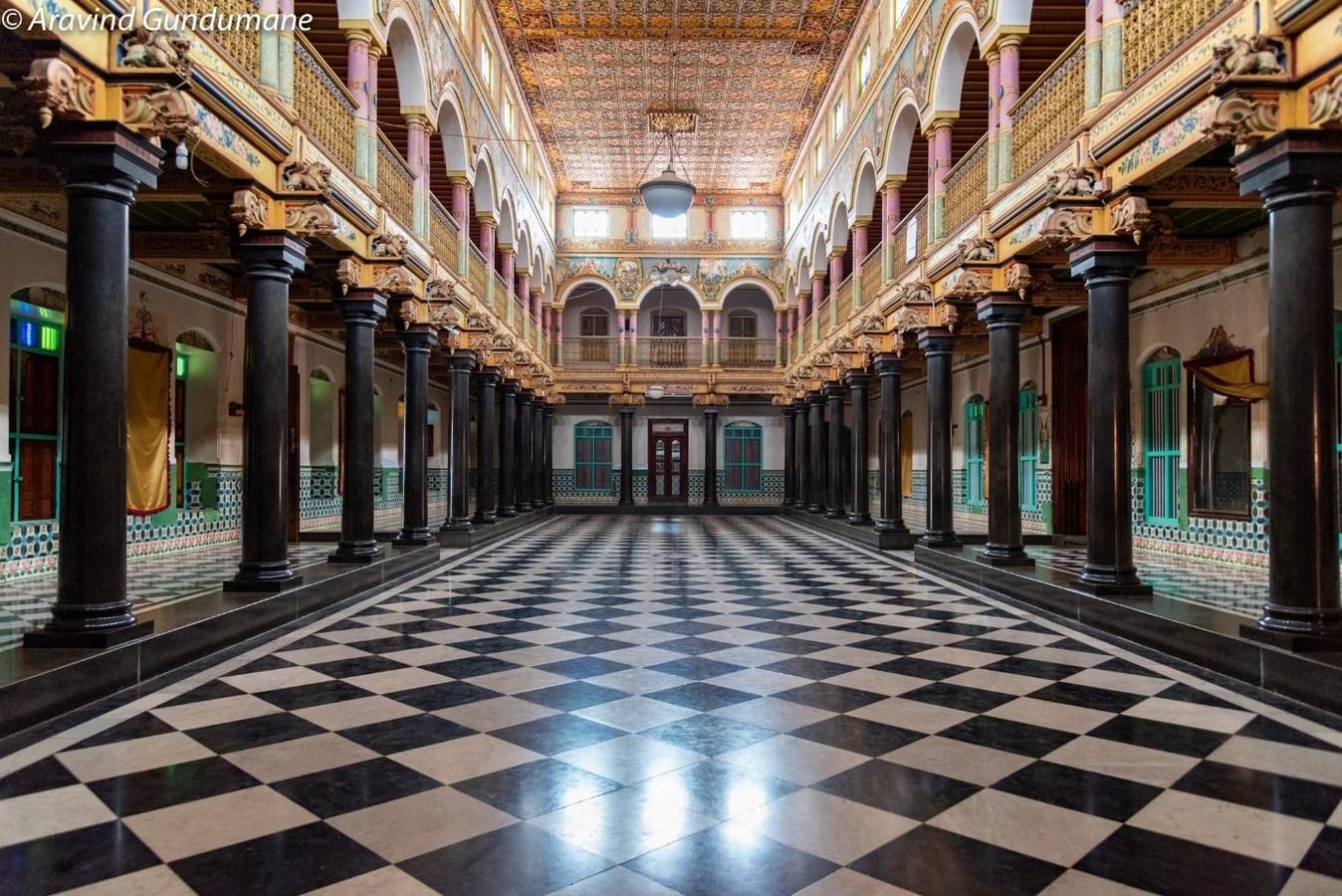
In the arid plains of Tamil Nadu, in a cluster of villages that once housed the wealthiest mercantile settlements in South Asia, stand hundreds of houses that present one of the melancholiest spectacles in Indian architectural heritage.
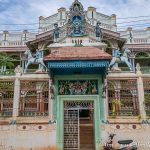
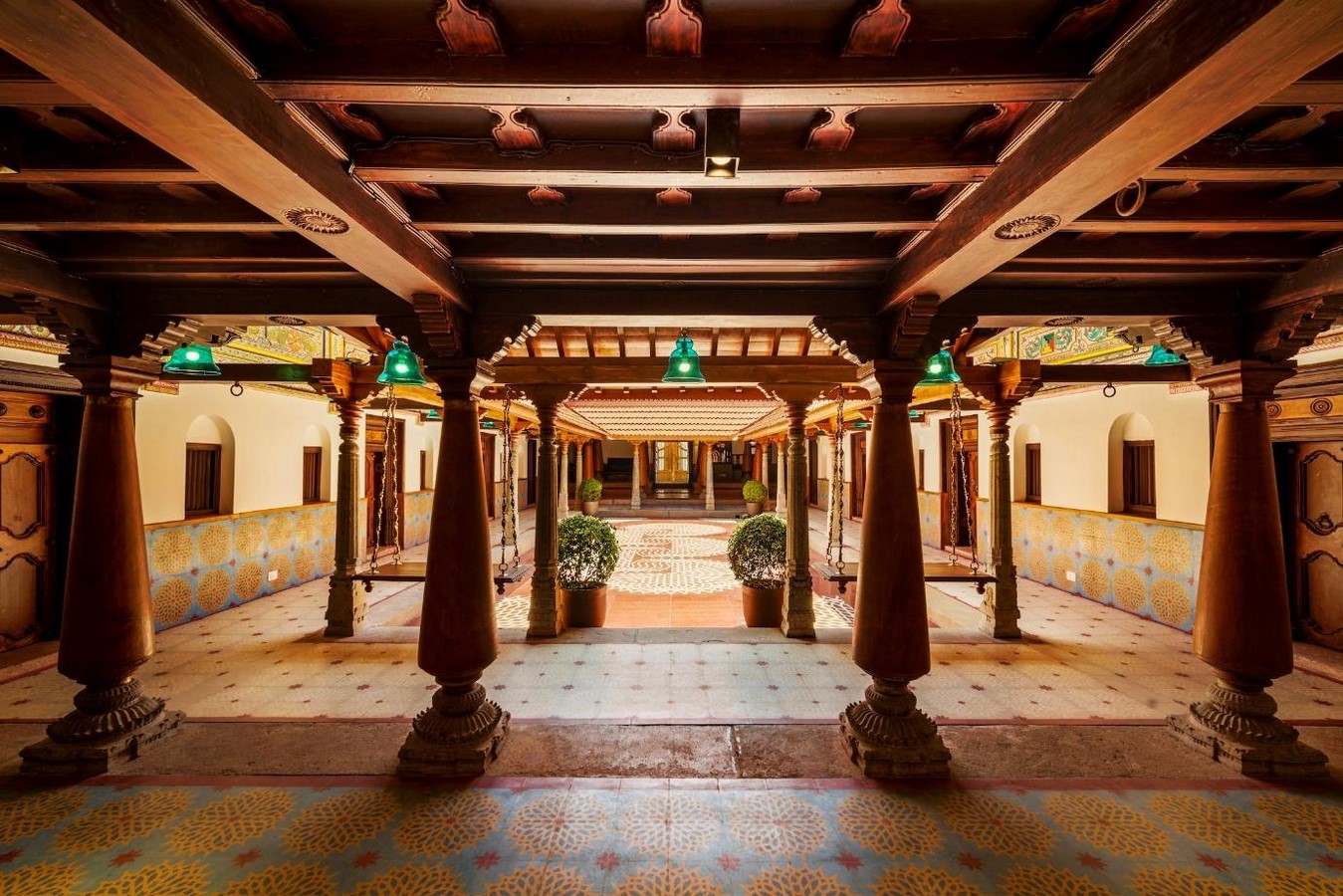
The mansions of the Nattukotai Chettiar community were built between the mid-nineteenth century and the early twentieth, at the height of the community’s commercial dominance across Southeast Asia. They are structures of startling material ambition: teak columns shipped from Burma, floor tiles manufactured in Athangudi by a technique still practised today, Italian marble inlaid into thresholds. Many of these houses stand empty. Belgian crystal chandeliers that once caught the light of lamps now hang unlit for decades.
The fortunes that built the mansions were made abroad; over time, the community itself followed them. What remains in Chettinad is architecture waiting for inhabitants who will not return. Buildings so specific to the culture that produced them, in their spatial hierarchies, that they resist adaptation to other uses without losing the logic that makes them coherent.
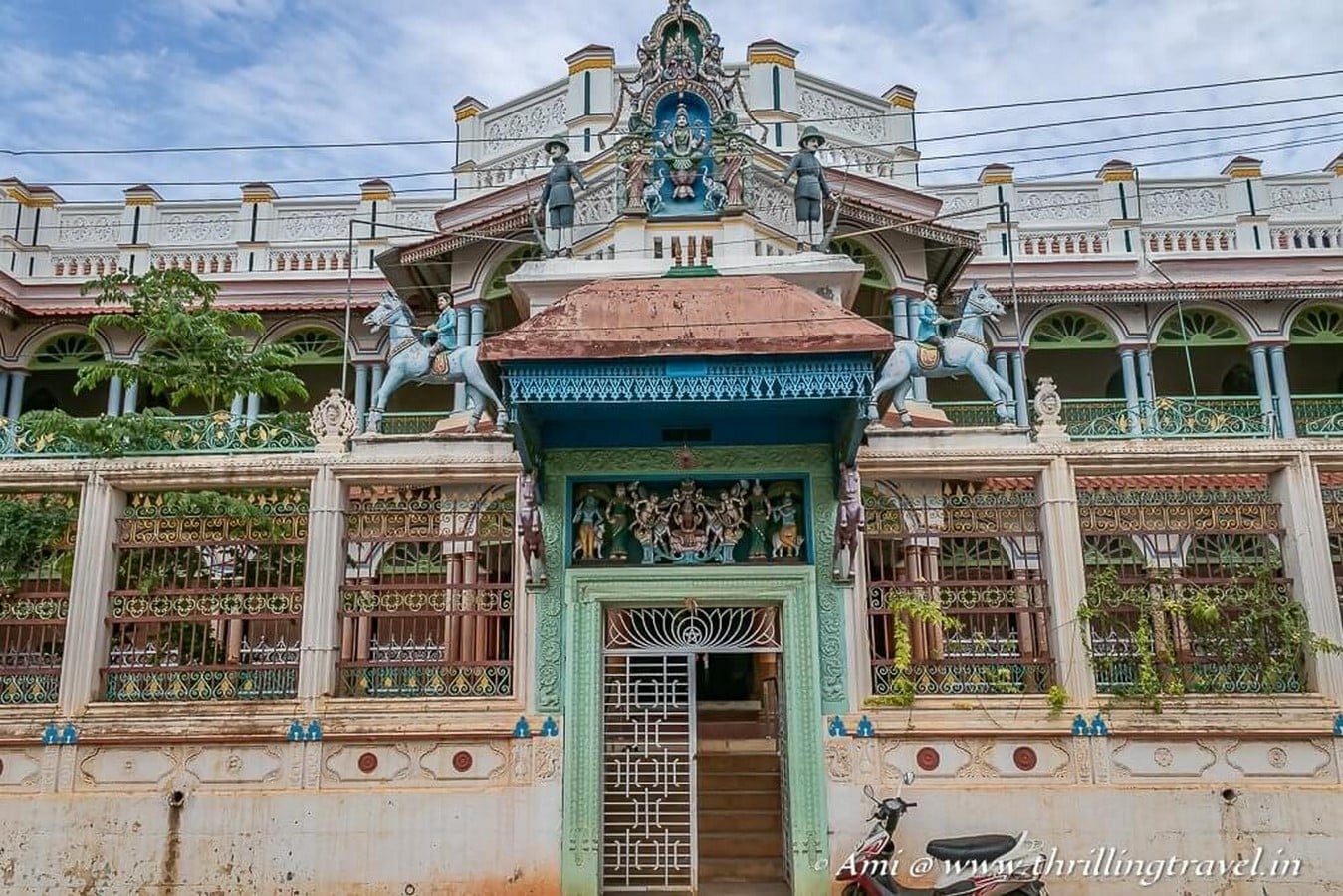
A Chettinad house is not merely large. It is organised around a precise social grammar. The public thinnai, the semi-public outer courtyard, and the inner courtyard with its tulsi platform are arranged in a sequence that tracks the depth of intimacy permitted to different categories of a visitor. To convert such a house into a hotel as several have been, is to retain the surface while emptying the structure. The walls stand. The memory leaks out.
The Chettinad houses are the most complete illustration of what it means when architecture outlives its community. The buildings remember everything. The community that would have understood the memory has largely gone. What persists is form without context and language without the speakers who knew what the sentences meant.
The Building as Witness
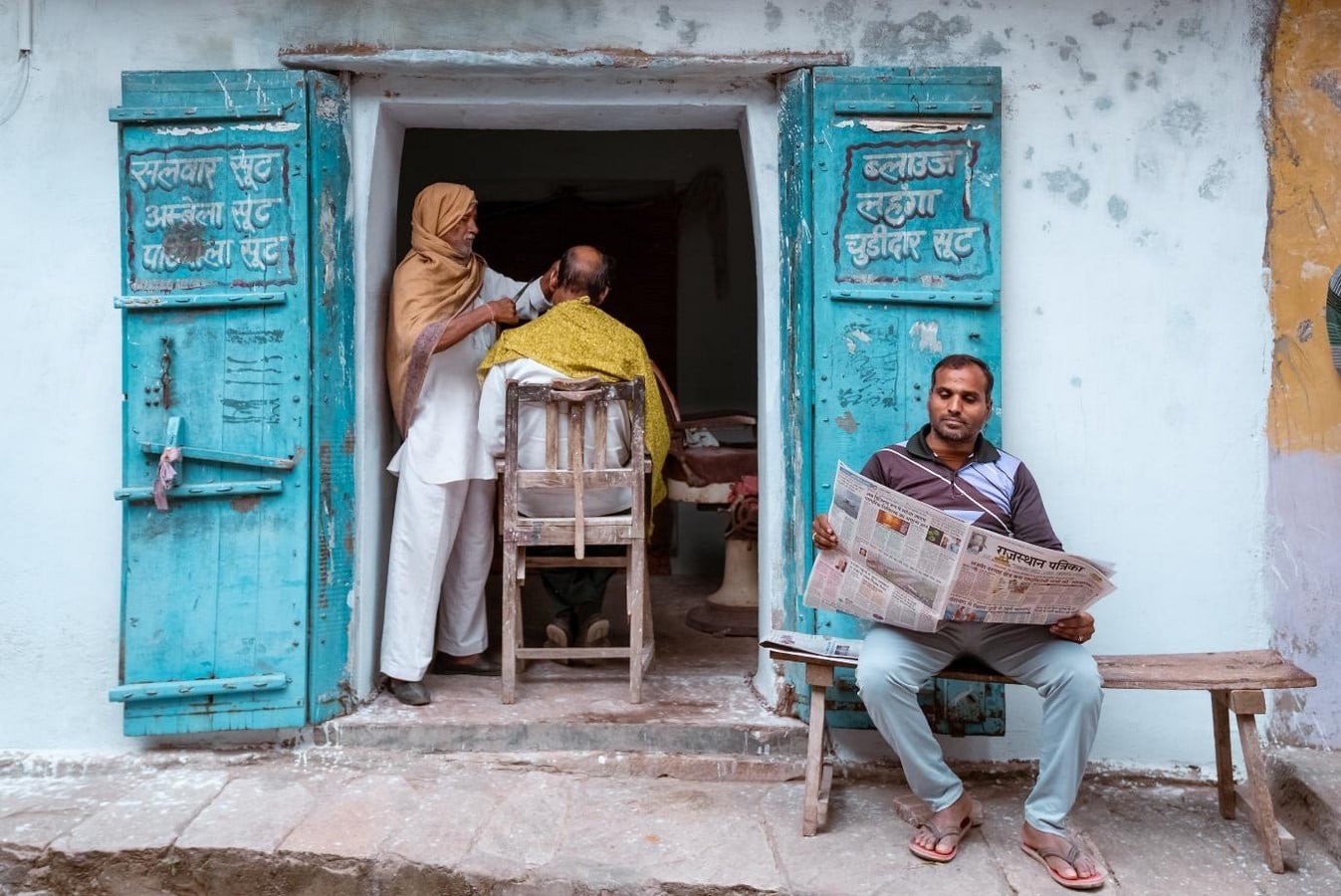
Not every old building can be preserved. Time asks difficult questions of every generation, and so does architecture. The communities of Jaipur were never meant to become museum exhibits; the caretakers of Chettinad mansions cannot bear the weight of preservation alone. The ethics of memory are rarely straightforward.
Yet every decision to preserve, adapt, or demolish is also a decision about what a society chooses to remember. Buildings carry more than stone, timber, or brick. They hold knowledge that cannot be fully written down, histories that cannot be retold with the same conviction, and ways of living that quietly challenge the assumption that the present is the only possible reality.
A building that has endured long enough becomes a witness that remembers the hands that built it, the footsteps that wore its floors smooth, the celebrations that filled its courtyards, and the silences that settled after people had gone. It speaks not through words but through weathered walls, worn thresholds, and the patient accumulation of time. To erase such a building is not merely to remove a structure; it is to silence a witness. Across the Walled City of Jaipur, the Shore Temple, Savarkar Wada and the mansions of Chettinad, one truth quietly emerges- these places endured because generations before chose to carry them forward, believing that what they held was worth remembering.
Perhaps that is why walls are said to have ears. They have spent centuries listening. The real question is whether future generations will still have the chance to listen back before the stories etched into stone, wood, and earth disappear forever.
Citations:
Nora, P. (1989). Between memory and history: Les Lieux de Memoire.