
How Amish Furniture Supports American Forest Management
Most people look at furniture after it’s finished. They notice the wood tone, the grain, the shape, and how well it fits the room. But the more important story starts before that. It starts with the tree, the forest it came from, and the choices made after the wood was cut.
This is where Amish wood sourcing matters when talking about the popular Amish Furniture. When hardwood is taken from American forests with care, then used in furniture that can last for years, the wood isn’t treated like a throwaway material. It becomes part of a longer cycle: one that connects forest management, skilled work, and the pieces you bring into your home.
So how can one furniture choice say something about the way American forests are valued?
How Does Amish Wood Sourcing Connect to American Forest Management?
Furniture is part of a larger forest product chain. Before wood becomes a table, chair, dresser, or bed frame, it has already passed through decisions about harvesting, milling, drying, and use. This is where Amish wood sourcing can matter. When domestic hardwood is responsibly harvested and built into furniture with a long life, the wood is given a higher-value purpose instead of being treated as a short-term material.
However, it would be too much to say “Amish furniture saves forests” on its own. The connection is more practical than that. The USDA Forest Service tracks things like forest growth, timber removals, tree volume, mortality, and wood product output. Those figures help show whether forests are being managed with replacement, supply, and long-term use in mind. For furniture buyers, that matters because the source of the wood is part of the piece, even if they only see the finished product.
Why Are Domestic Hardwoods a Better Fit for Ethical Furniture?
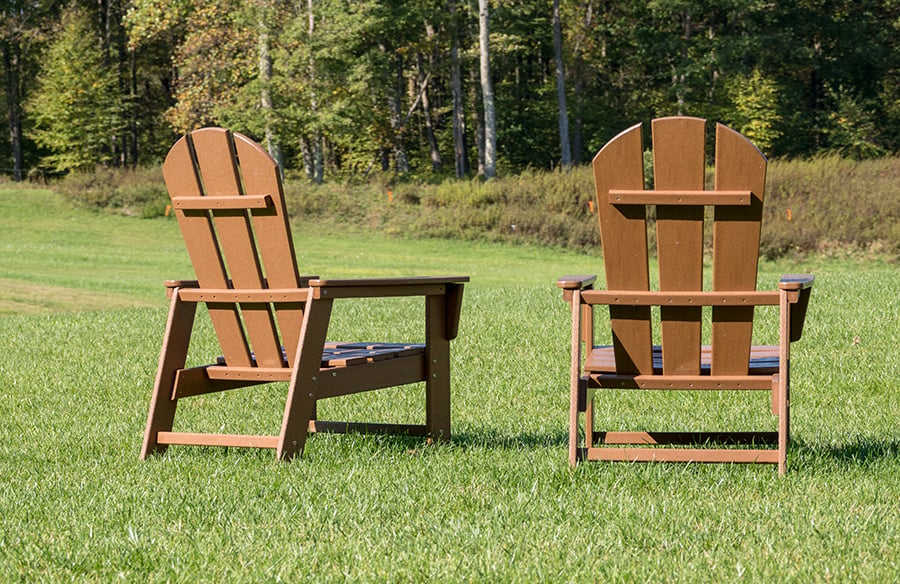
A solid oak table or maple rocker does its job quietly for years. So does a well-made Amish glider when the wood, joinery, and finish are chosen for daily use. Domestic hardwoods such as oak, maple, cherry, walnut, hickory, and quarter-sawn white oak are strong enough for regular wear, but they can still be shaped, joined, repaired, and refinished. For ethical furniture, that mix matters. You’re not only asking where the wood came from. You’re asking whether it was used for something worth keeping.
There’s also a waste issue that’s easy to miss. In 2018, the EPA counted 12.1 million tons of furniture and furnishings in municipal solid waste, and about 4 out of 5 tons went to landfills. Wood was the biggest material in that group. So a hardwood chair that can be tightened, sanded, or refinished is not just “better quality.” It stays out of the waste pile longer, which is where solid domestic hardwood earns its value.
How Do Amish Makers Use Wood More Carefully?
In a solid hardwood piece, the wood has to do real work. It’s not only there to make the outside look nice. An Amish woodworker looks at how each board can be used before it becomes part of the furniture. Some boards are better for wide surfaces like tabletops. Others make more sense for drawer fronts, arms, rails, or legs because of their grain, weight, or strength. Since many pieces are made to order, the builder has more room to choose the right board for the right part. Good joints and a durable finish also help the piece hold up, and they make repairs, sanding, tightening, or refinishing easier later on.
The wood sourcing part should be just as clear. Many Amish furniture shops now work with domestic hardwood from regional sawmills or lumber suppliers. However, buyers still need direct answers. The shop should be able to name the wood species, explain where the lumber came from, and say whether the piece is solid wood or not. It should also be clear how the joints are built, what supplier practices are followed, and whether the furniture can be repaired over time.
How Is Factory-Made Furniture Sourcing Different?
Factory-made furniture is built for quick buying and easy delivery. That’s why a desk or a bed frame can be boxed, shipped, and assembled in a few hours. To make that work, factories rely on repeat sizes, flat panels, fast assembly, and lower-cost materials. It keeps prices down, but it also means the wood is often chosen around the production system, not around repair, refinishing, or a clear source.
That is why you see MDF, particleboard, veneer, laminate, and mixed panels in many store-bought pieces. They help control cost and weight, but they also blur the path from forest to finished furniture. Solid wood gives you more room to work with when it gets scratched or worn. Thin veneer doesn’t. And once particleboard swells at the edge or breaks around a screw, you’re usually left hiding the damage or replacing the part.
| Factor | Amish Hardwood Furniture | Factory-Made Furniture |
| Main goal | Long-term use and craftsmanship | Fast production and lower price |
| Common materials | Solid domestic hardwood | MDF, particleboard, veneer, laminate, or mixed materials |
| Sourcing | Easier to ask about wood species and lumber source | Often harder to trace through large supply chains |
| Production style | Small-batch or made to order | High-volume and standardized |
| Repair options | Often easier to repair or refinish | Often harder to repair cleanly |
How Can Furniture Buyers Support Responsible Forest Management?
A large share of U.S. forestland is privately owned, so forest care isn’t only shaped by policy. It’s also shaped by what landowners, sawmills, builders, and buyers keep valuing. If good domestic hardwood keeps going into furniture that stays in use for many years, that wood has a stronger place in the market. It gives the tree a better use than something temporary.
When you search for “Amish woodworkers near me” online, don’t hesitate to hit the contact button first. Ask what wood they use, where the lumber came from, whether the piece is solid wood or veneer, and how the joints are built. Also ask what happens ten years from now if a drawer sticks, a finish wears down, or a leg needs repair. The answers will tell you whether the furniture was built with the wood’s long-term use in mind.
Better Forest Support Starts With Better Furniture Choices
One furniture choice can say a lot when you look past the finished piece. It can support a system where domestic hardwood is valued, used carefully, and kept in service for years instead of being treated as a short-term material. That’s where Amish wood sourcing plays a practical role in American forest management.
Before buying, look beyond the finish and delivery date. A good furniture choice should have a clear lumber source, solid construction, and repair options that keep it useful long after the first few years at home.