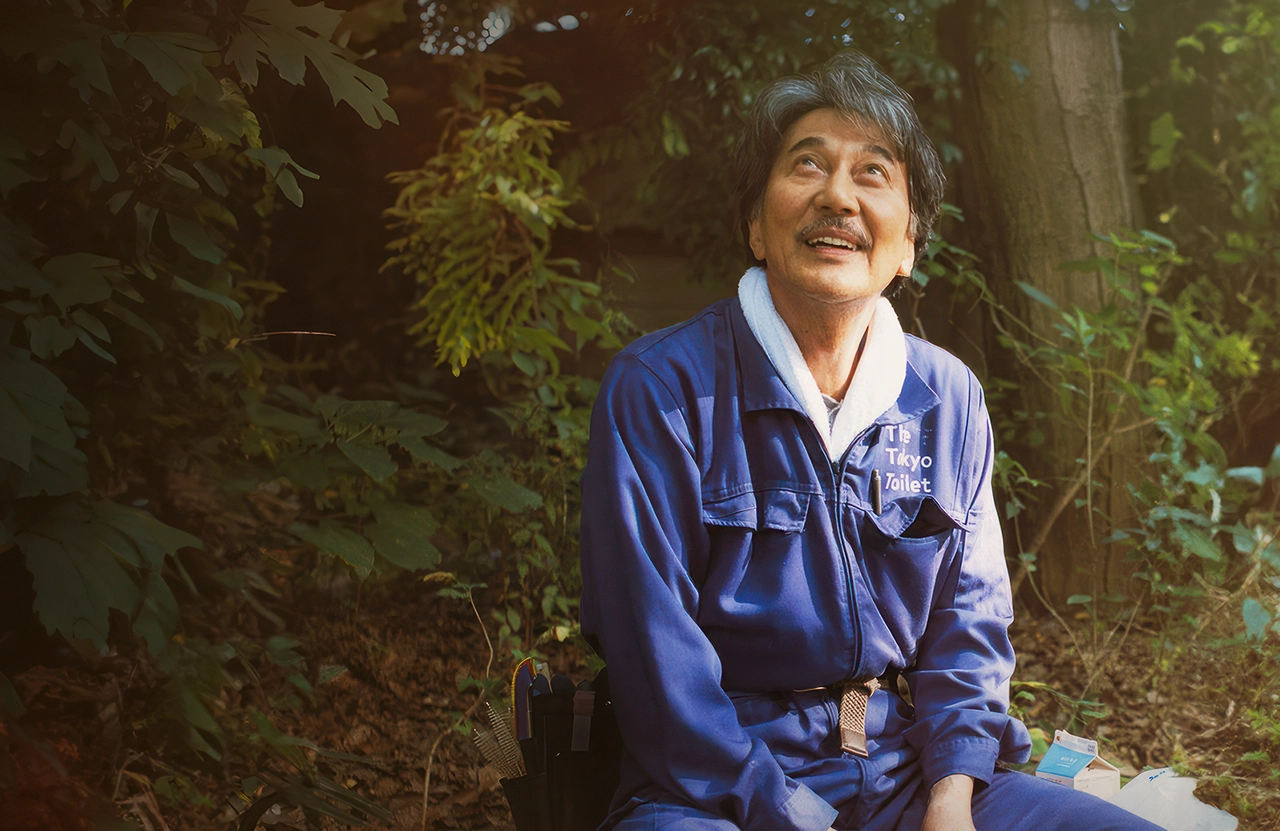
In a world that moves at an unforgiving pace—where time often slips by unnoticed—Wim Wenders’ Perfect Days offers a gentle interruption. It invites the viewer to slow down and rediscover the quiet, often overlooked beauty embedded in everyday routines. Set in Tokyo, the film follows Hirayama (played by the brilliant Yakusho Kōji), a middle-aged man working as a toilet cleaner for the Tokyo Toilet Project—an initiative that reimagined public restrooms across Shibuya with the help of architectural icons such as Toyo Ito, Kengo Kuma, and Tadao Ando.
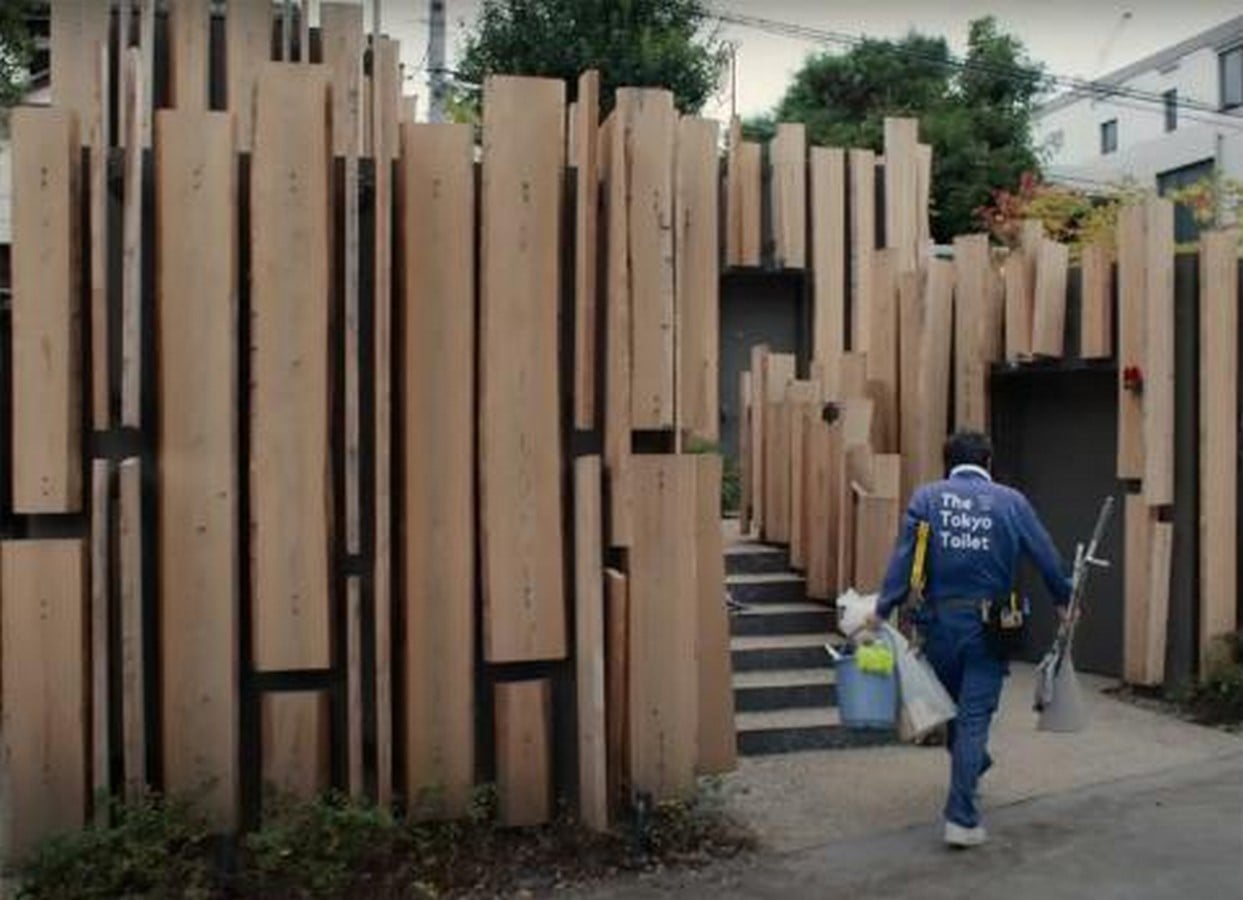
What began as a commissioned project to produce short promotional clips for the Tokyo 2020 Olympics evolved into something far more poetic. Once in Japan, Wenders found unexpected inspiration—not in flashy visuals or dramatic narratives, but in the stillness of daily life. The result is a quietly powerful story told through the character of Hirayama, a man who sees what others miss. From powerful imagery to music and colours, the team manages to capture the essence of a city of contrasts through a carefully curated main character, from the quietness of the bathing rooms where the main character takes his showers everyday to the chaos of the city.
Hirayama’s life is one of ritual and simplicity, yet Perfect Days never feels repetitive. Instead, the film becomes a meditative journey, rich with visual poetry. From the filtered light through leaves in
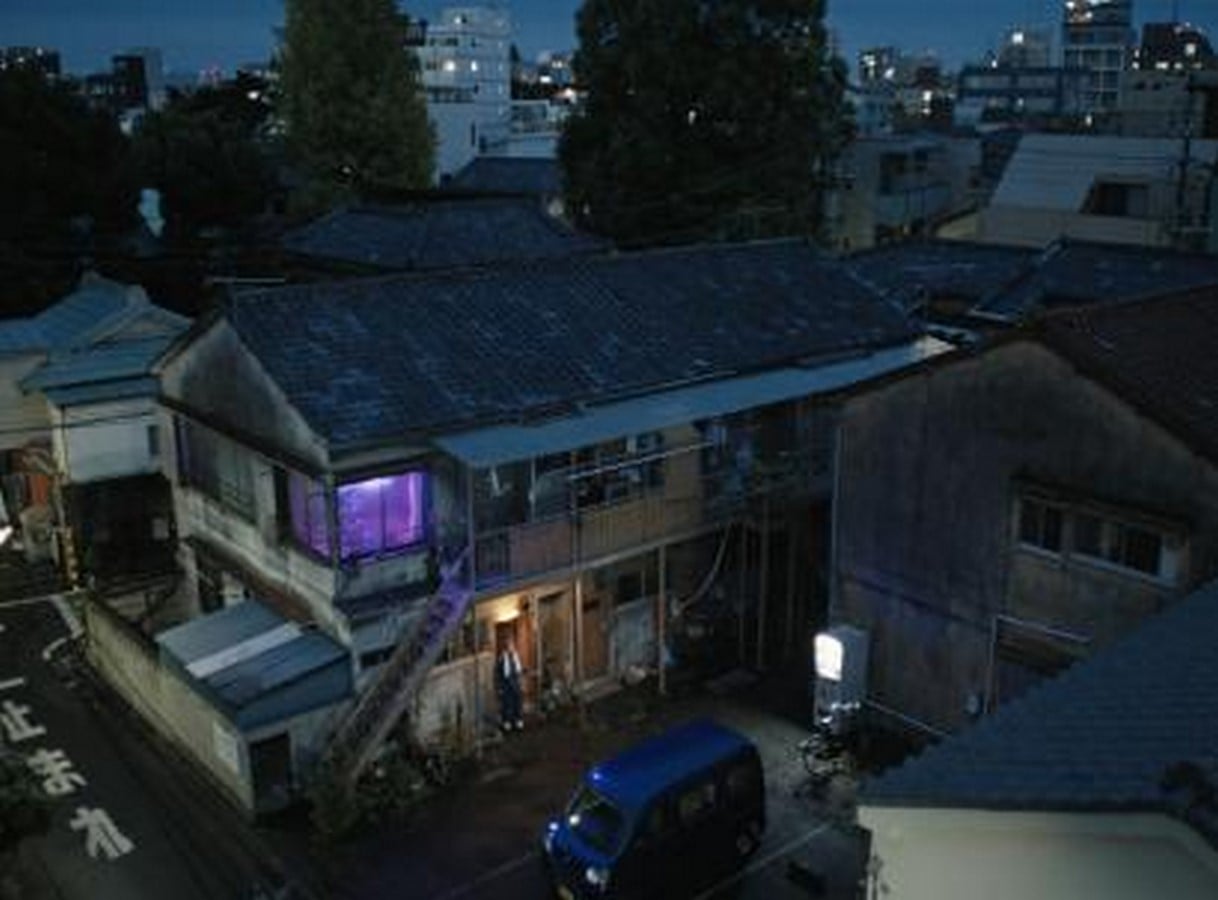
a city park to the ambient rhythms of Tokyo, every frame invites the viewer to pay attention. Hirayama lives alone in a modest flat in Sumida, a working-class district of the city, and commutes daily to the chic, fast-paced streets of Shibuya. His morning routine—caring for his small plant nursery under soft purple grow lights before heading to work—serves as a quiet act of devotion. Wide aerial shots place his small home against the sprawl of Tokyo, gently evoking themes of humility and human scale.
At the heart of the film lies a subtle but powerful contrast. On one side, the sleek, award-winning restrooms designed by internationally renowned architects. On the other, a solitary man who tends to them with care and respect. The film never romanticises his job, but instead highlights a deep cultural reverence: in Japan, the toilet is not merely functional, but sacred—a place of cleansing and renewal. Most of these toilets are set in leafy corners of Tokyo’s dense urban fabric, offering brief moments of calm for those who choose to notice. Yet, Wenders also suggests that many don’t. These beautifully crafted spaces are often reduced to their function, becoming background noise in the rush of daily life.
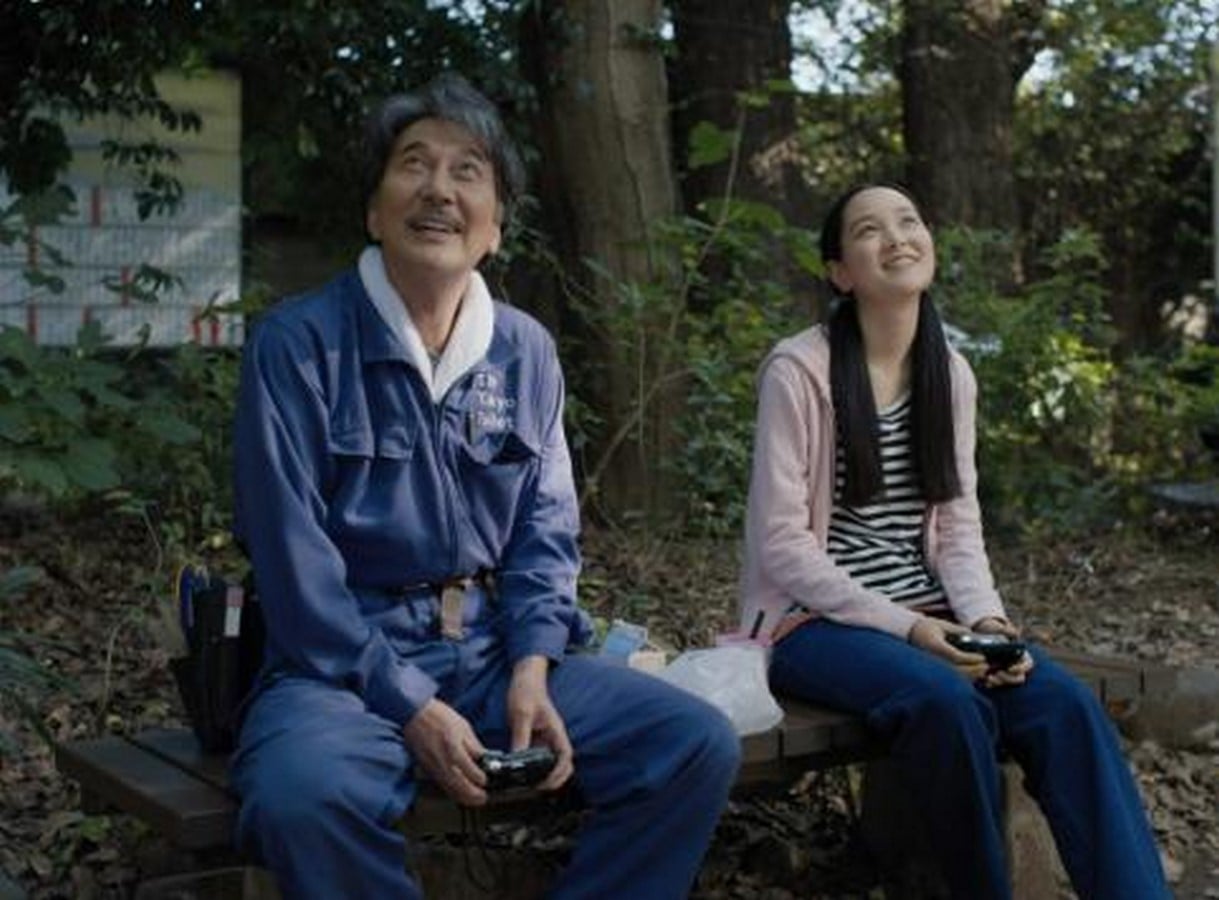
Through Hirayama’s observant eyes, however, their meaning shifts. A man of few words, his way of engaging with the world is deeply visual and intuitive. He meets one young girl, a friend of his junior colleague, Woo Aya whom he shows great songs and later on he meets his niece that follows him on his daily routine. He then shows her how to admire the trees in the park where he spends his everyday lunch breaks and capture the light through a retro film camera and offers silent lessons in how to notice light, shadow, and stillness. Like a modern-day silent film, Perfect Days leans on architecture, composition, and atmosphere to communicate emotion and meaning. It’s a story told not through dialogue, but through the act of looking.
There is beauty in the way Wenders has showcased the slow life in a buzzing city like Tokyo. The contrasting images of the chaotic traffic and the quite local bookshops, restaurants and cassette shops are what makes the film feel real. It reminds of the powerless struggle against the pursuit for happiness in a capitalist society, and yet it finds fragility and elegance in this. The details of the movie don’t fail to impress and remind of nurturing just as Harayama does by collecting samplings of plants from the park that he brings to his little nursery.
For those in the fields of architecture and design, this film carries special resonance. It poses a quiet but profound question: is our work noticed? Does the beauty we build endure beyond the drawing board, beyond the glossy photographs? Wenders offers a hopeful answer. Through Hirayama, he shows that design can speak, even to those without the language to interpret it—and that someone, somewhere, is paying attention.
Wenders has admitted that his own acute awareness of detail borders on obsessive—his wife often marvels at how much he notices. In a way, Hirayama becomes more than a character; he is a cinematic extension of the filmmaker himself. An alter ego who, instead of commenting on the world, simply observes it—with reverence and grace.
Though entirely fictional, Perfect Days feels deeply real. It doesn’t instruct or preach. It simply offers a way of seeing—a gentle reminder that beauty is always present, waiting for those who choose to look.
References:
Galofaro, L. (2024) Almost Perfect Days: Hirayama and Moriyama, a Double Vision of Architecture. ArchDaily, 31 May. Available at: https://www.archdaily.com/1016980/almost-perfect days-hirayama-and-moriyama-a-double-vision-of-architecture (Accessed: 9 June 2025).
Academy (2024) ‘Perfect Days’ Director Wim Wenders and Kōji Yakusho on Toilets and Tranquility (Exclusive). Available at: https://newsletter.oscars.org/news/post/wim-wenders-koji-yakusho perfect-days
interview#:~:text=’Perfect%20Days’%20began%20as%20a,for%20the%202020%20Summer%20Ol ympics.
James, N. (2024) Perfect Days: Wim Wenders captures the beauty of the everyday in his best fiction film since Wings of Desire. Sight and Sound, 22 February. Available at: https://www.bfi.org.uk/sight and-sound/reviews/perfect-days-wim-wenders-captures-beauty-everyday-his-best-fiction-film since-wings-desire
The Architect’s Newspaper (2024) Perfect Days elevates the everyday – not unlike Bêka &Lemoine’s Moriyama-San, The Architect’s Newspaper, April. Available at: https:// www.archpaper.com/2024/04/perfect-days-film-moriyama-san/
Ide, W. (2024) Perfect Days review – Wim Wenders’s zen Japanese drama is his best feature film in years. The Guardian, 25 February. Available at: https://www.theguardian.com/film/2024/feb/25/ perfect-days-review-wim-wenders-koji-yakusho-tokyo-toilet-cleaner