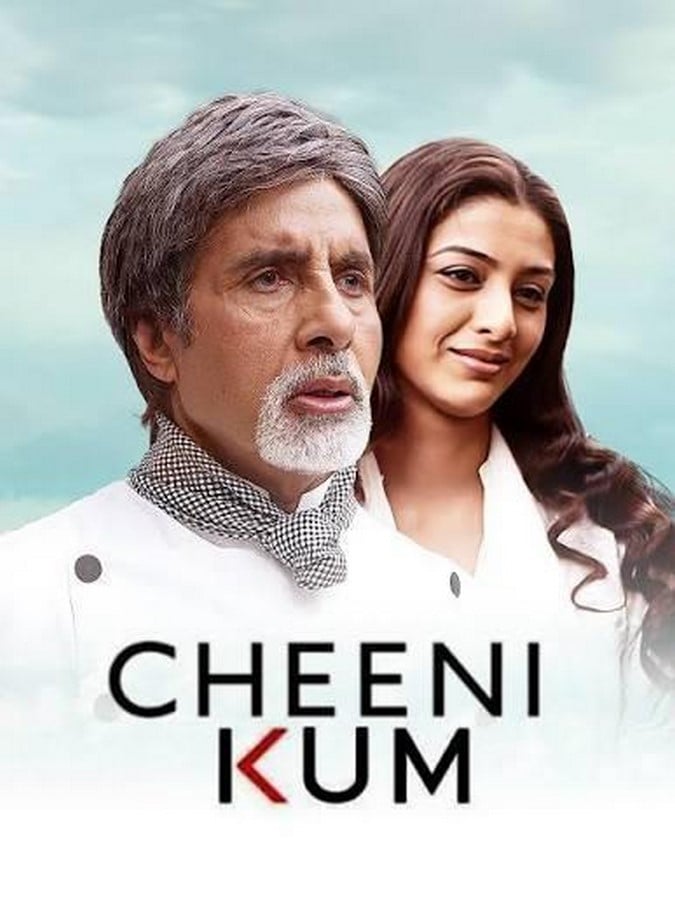
Featuring Big Ben, in the background of the Houses of Parliament, lies a quiet and vacant street of London. Situated there is London’s most authentic Indian restaurant, Spice 6. Owned by a stern and disciplined chef (Amitabh Bachchan), the scene showcases a stressful, busy and fully occupied commercial kitchen, with chefs completely engrossed in cooking under strict supervision. The kitchen mirrors the aristocratic and monarchical culture of Britain. The design and interiors of the restaurant seem to have an Indian flavour, but seamlessly integrate the chic and polite nature of the British. The chef (Amitabh Bachchan), too, embodies a classic British temperament, mastering humour and dry sarcasm. 2
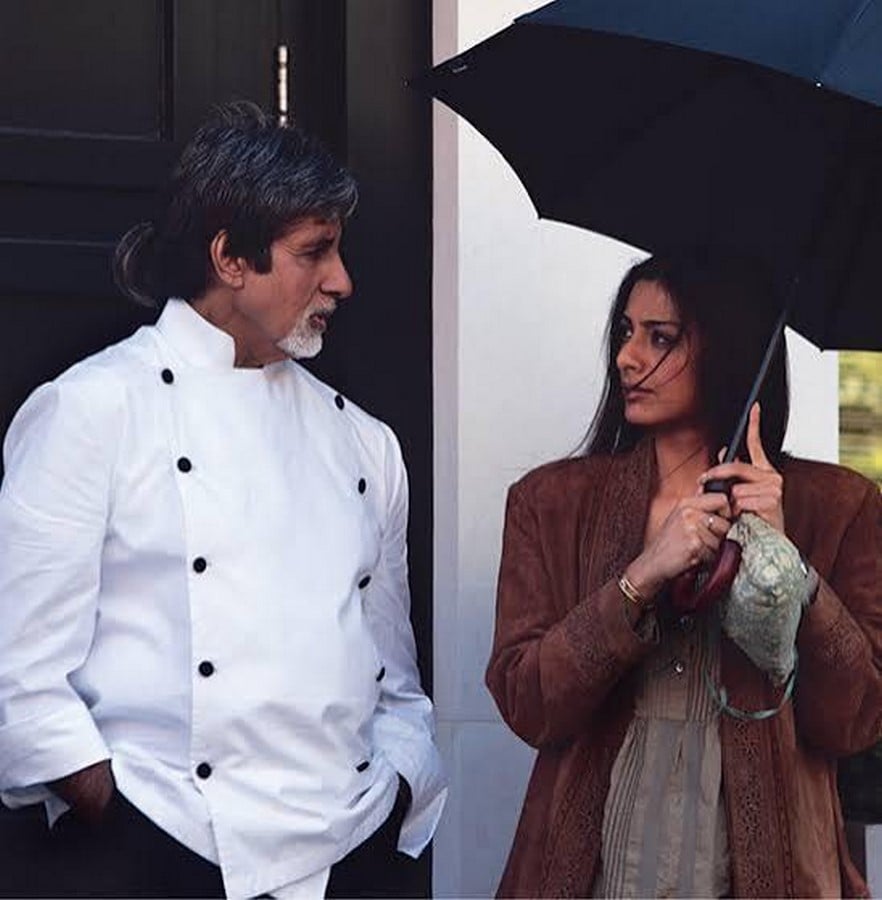
Amidst the grey backdrop of London’s finest restaurant, the story ignites when a customer returns a dish and prepares a flawless version of the same dish. This culinary faceoff brings together two fiercely independent souls from entirely different worlds. The customer (Tabu) is a typical Delhiite, showcasing a strong, independent woman character, representing the generosity of India. Her entry in the restaurant reveals her contrasting character and attitude in the bustling streets of London. Her grounded warmth contrasts sharply with the cold, cynical world of the chef. Impressed by her response and deeply moved by her unapologetic performance, Amitabh offers her an umbrella as a token of friendship, just to initiate the love story. Lending an umbrella anchors a deep connection between the two and promotes a sense of comfort, protection and companionship. This offer brings out the pivotal emotion of the film, surfacing the long-lost feelings of an armoured and isolated man, shielded behind the sterile culinary skills.
The Plot
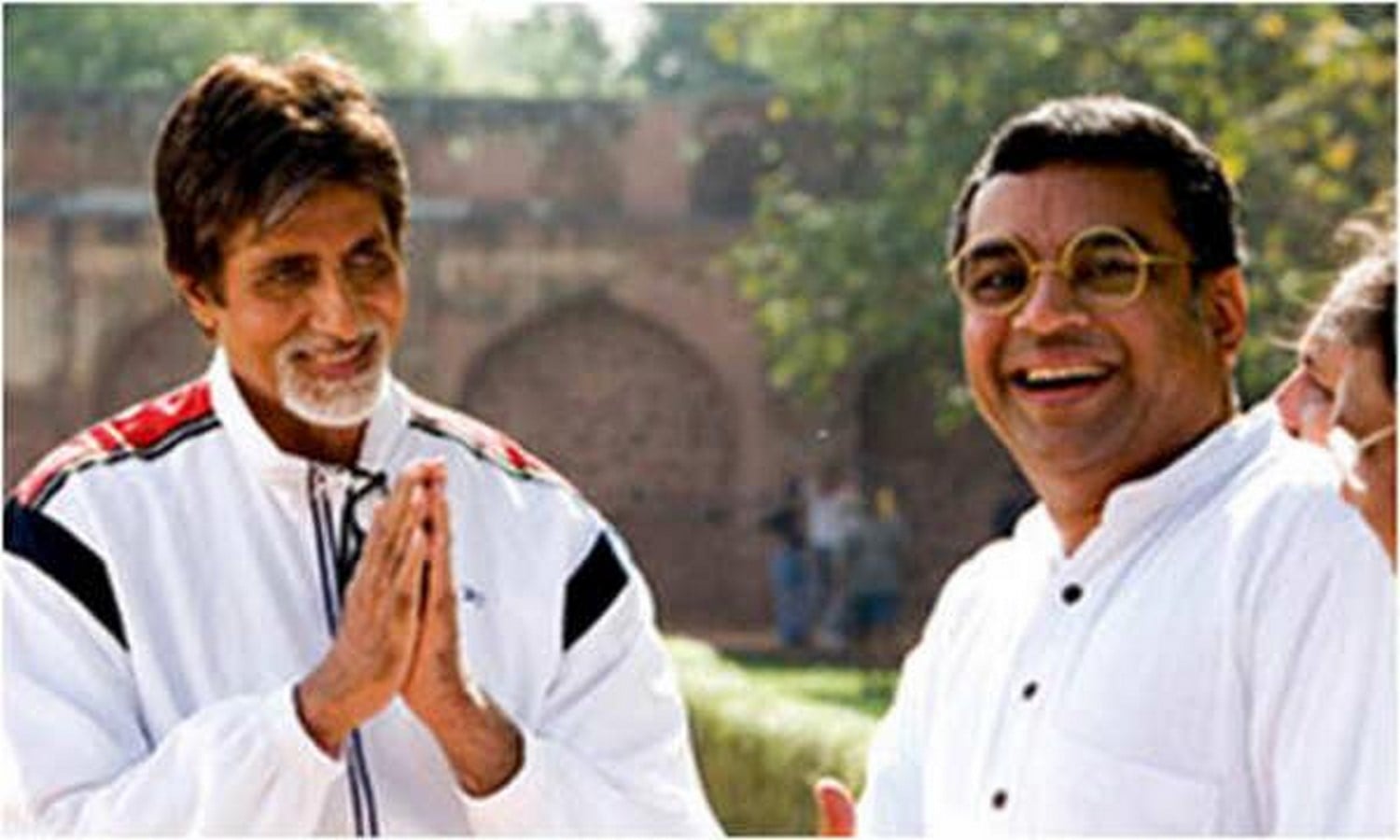
Buddhadev (AB), aged 64, is a fiercely arrogant and flamboyant chef who encounters a cool, calm and charming Nina Verma (Tabu),34, when his life takes a U-turn. Eventually, their chemistry rebels against logic, turning his structured life upside down into a highly unconventional romance. The story unfolds with their witty love, a sardonic mother-son relationship and a spicy bond with his young neighbour. The plot casts the chef’s widowed mother (Zohra Sehgal), a fan of movies and wrestling, his neighbour, a 9-year-old cancer patient, his best friend Sexy (Swini Khara) and Nina’s father (Paresh Rawal), 6 years younger than the groom.
The versatility of Amitabh is strikingly visible in all the relationships. He has proved that ‘Age is no bar’ in each of his communications. Director R. Balki has successfully woven all the emotions by casting the veteran crew in the film. Each character has shown their own benevolence through phenomenal and deeply moving acting skills.
As every love story has obstacles, this unconventional love story is obviously hindered by a predictable refusal from Nina’s father. As a respectful man, Buddhadev tries to convince his would-be father-in-law to marry the love of his life. The narrative explores the protagonist’s personal journey, highlighting his ability to deeply empathise with others while maintaining his signature humour and sarcasm.
The Setup
The film’s greatest triumph lies in its visual storytelling. The film explores the brutalist concrete blocks blended with the glazed skyscrapers of London, full of order, discipline and harmony. The Houses of Parliament, Buckingham Palace and Big Ben showcased the city’s urban fabric and historical context, exemplifying the romantic era. The locales of London with lush green gardens were well captured in the scenes, giving a glimpse of a London tour.
A contrast is created by Tabu’s entry, adding vibrancy to the film. Her turning-around gesture adds a sense of style and grace to her character. Each character’s emotional state is clearly backed by the lighting effects, viz., dark and hazy background when shooting Sexy’s scenes with Amitabh, while yellow tones during his conversations with his mother.

The second half of the film is shot in Delhi, showcasing the bureaucratic locales, the hustle and bustle of the streets and the Qutb Complex. The cinematography suddenly turns to sunlit backgrounds, crowded gardens and the street vibrancy of the hawkers. It displays the hospitality and neighbourhood landscape of Indian culture. Since the first half captures the staunch British, the second half observes pure Gandhian philosophy played by Paresh Rawal (Nina’s father). The spaces and interiors clearly define the Swadeshi movement.
The Verdict
Overall, the romantic comedy captures the essence of both places, ensuring a non-stereotypical narrative, great dialogues, picturesque locations and hilarious situations. A realistic approach could have been set by showing the reality of Delhi locals in the background of the Qutb Minar. It’s odd to see a non-crowded sight of Delhi for a typical Indian viewer. Nina’s father, despite being a Gandhi follower, plays an immature father who protests through satyagraha against his daughter‘s marriage, over her happiness. The tragic loss of Sexy is definitely intense, but the director fails to juxtapose the mixed emotions of the marriage approval and death. The end of the film fails to capture the emotions of each of the characters. To portray the superiority of Amitabh, the director subdued other characters’ performances.
Undoubtedly, the film has a mature theme; it is a must-watch for the storyline, music and visuals. The film captures the attention of the viewers, and a subtle smile and satisfaction are evident while leaving the theatre.
References:
- Cheeni Kum. (2007). [Hindi].
- Iddon, C. (2026). British Culture Facts & Customs. [online] Study.com. Available at: https://study.com/academy/lesson/video/british-culture-facts-customs.html [Accessed 25 Jun. 2026].
- Sen, R. (2007). BigB-ittersweet Symphony. Available at: https://www.rediff.com/movies/review/cheeni/20070525.htm#:~:text=Cheeni%20Kum%20is%20a%20very,%2D%2D%20leaves%20a%20peculiar%20aftertaste. [Accessed 28 Jun. 2026].