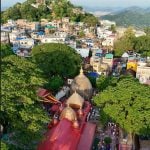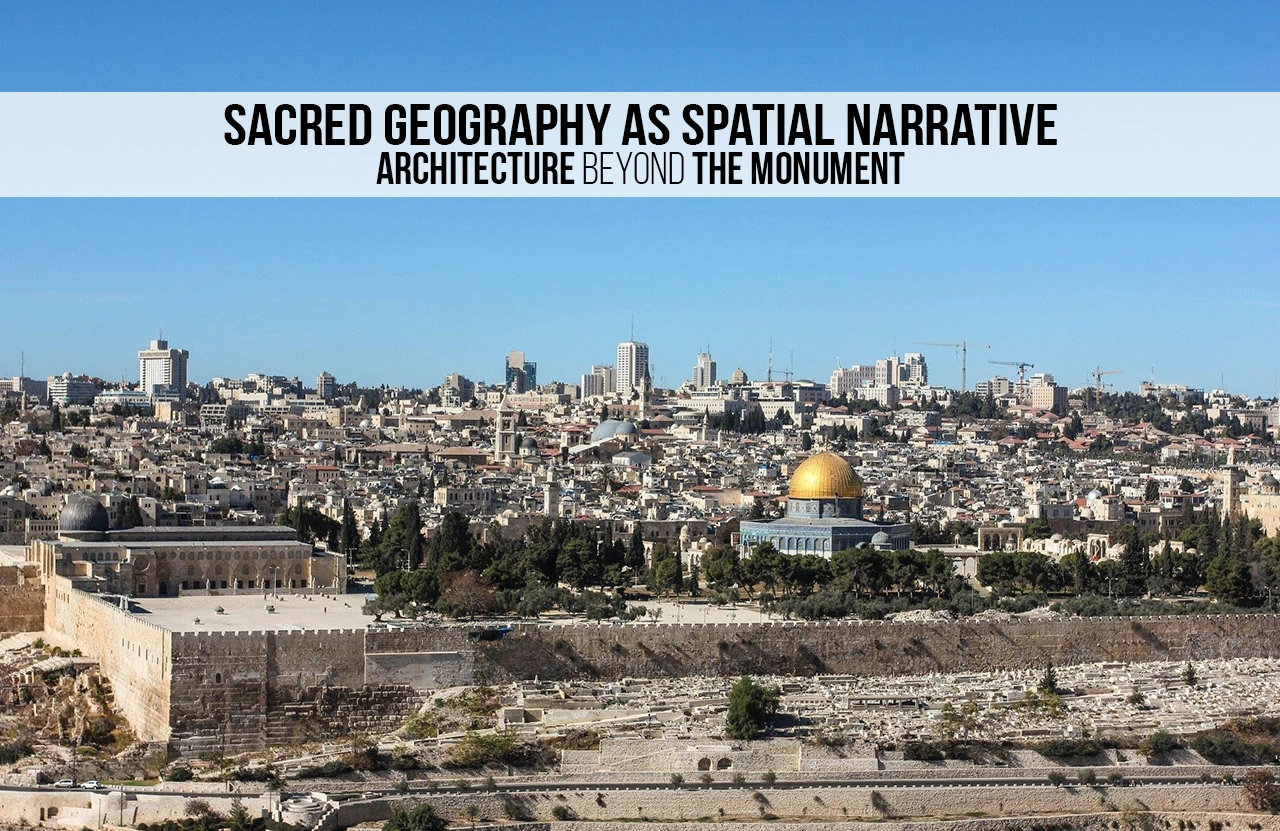
When we hear the term sacred geography, a single image often comes to mind. Maybe it’s a temple on a hill, a mosque at the heart of a community, steps leading to a river, or a pilgrimage site filled with people moving toward their goal.
But have we ever thought about whether sacred geography is only about the monuments themselves?
Because the fact is that a temple is not built alone. Rivers are travelled before ghats come into existence beside them. A hill does not become a landmark without there being something constructed on it first. And even pilgrimage sites are not singular locations; they are travel routes that extend well beyond the last place.
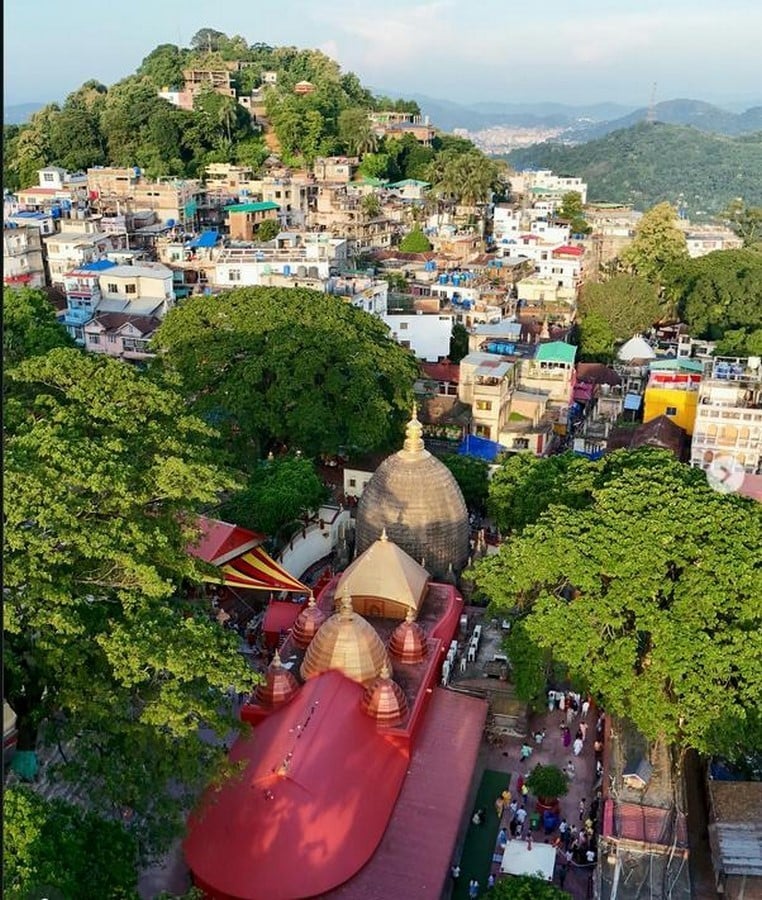
This leaves us with a fascinating question: what makes a geography sacred?
Is it its architecture? Is it its history? Is it its communities? Is it the continuous occupation of that space over time?
Maybe the answer lies somewhere in between all of this.
Sacred geography is often confused with a collection of sacred buildings. It is, in fact, a spatial narrative told through monuments, paths, landscapes, and territories over time. It is a situation created by the way in which architecture arranges movement, strengthens common practices and rituals, and makes repeated inhabitation possible.
It also moves the discussion beyond just religion. Sacred geography isn’t all about faith. It is an architectural and urban condition. It’s a tale that is continually being written through the relationships among landscapes, people, and the spaces they inhabit collectively.
Architecture does something quite remarkable. It gives form to existing relationships.
Monuments as Architectural Anchors, Not Origins
Monuments undeniably have an important place in sacred geographies. In many cases, temples, mosques, stepwells, and shrines are the landmarks which immediately come to mind when thinking about the character of the city. They form the skyline, appear on postcards, and sometimes act as a symbol of the entire region.
Nevertheless, one might find it more productive to consider these buildings as anchors rather than points of origin.
Architecture rarely generates sacredness out of thin air. Instead, it formalises practices that have already begun to take shape.
Take mosques, for instance. Throughout history, many mosques have served not only the purpose of a worship space but have also played an important role as civic anchors, around which markets, neighbourhoods, and social lives have developed. It is both their architectural design and the possibility of structuring the urban space that make them significant.
The same story goes with the stepwells.
Famous for their stunning geometries, the stepwells have always been much more than engineering solutions. They were places of gathering, communication, and relaxation. The sequence of going down the steps into the ground made the process of taking water a collective experience.
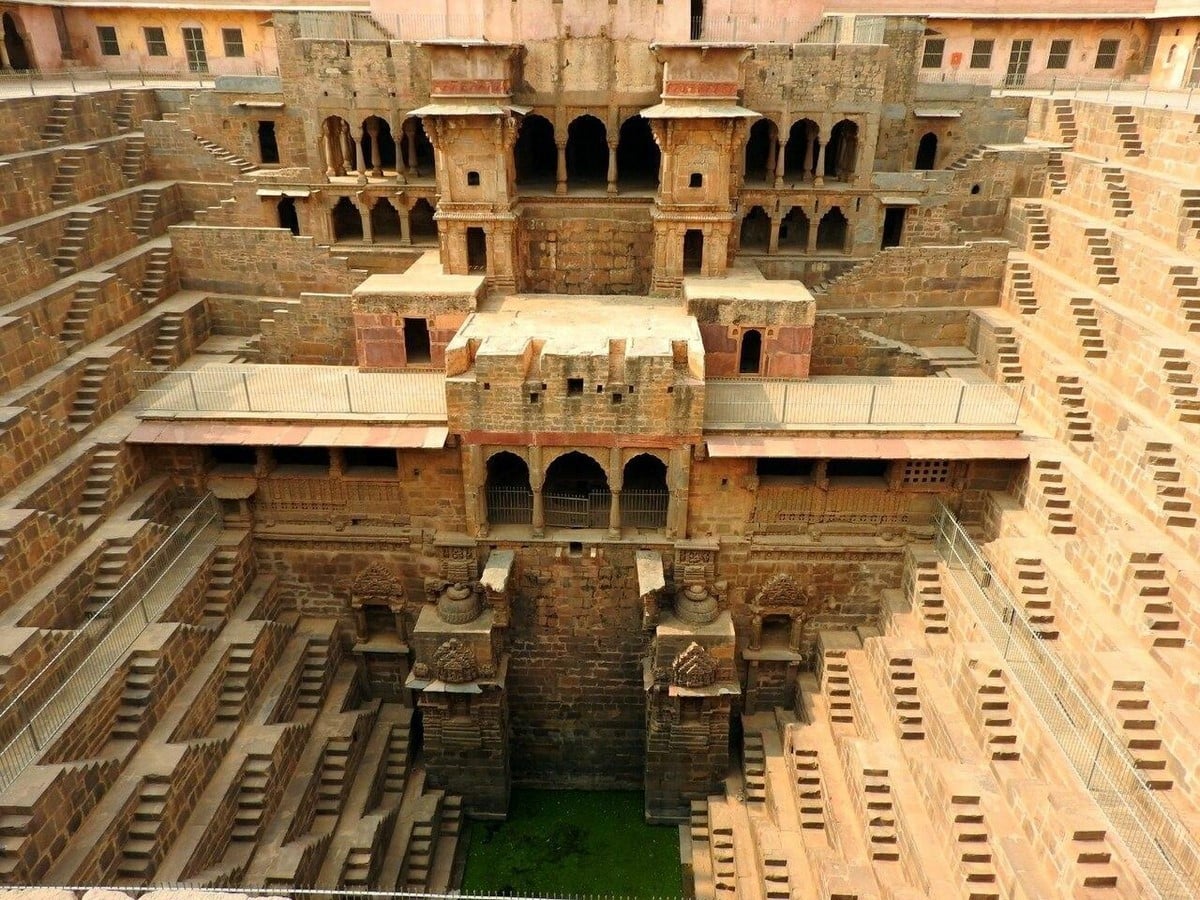
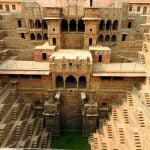
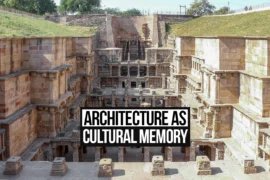
The case of Chand Baori in Rajasthan is a good illustration of the same.
Dating back to the 8th and 9th centuries, the structure comprises 3,500 steps that form a striking spatial hierarchy, which serves several purposes at once; from addressing climatic conditions and water management to providing for the social occupation. In other words, what might seem like architecture is rather an intricately designed civic infrastructure.
The reason why this difference is significant is that sacred geography is not created solely through objects.
Movement as Architecture
What characterises sacred geographies is not permanence but repetition.
Perhaps one of the least recognised architectural elements is that of movement.
Movement has always been talked about by architects in terms of its functionality, but movement takes on much greater meaning in the case of sacred geographies. In sacred geographies, movement becomes storytelling.
A ghat is a great illustration of this idea.
At first sight, it looks like steps leading down to a river. But the architectural significance of a ghat goes beyond that simple definition. They choreograph interactions between land and water, organise gatherings, and create a rhythm that structures everyday life.
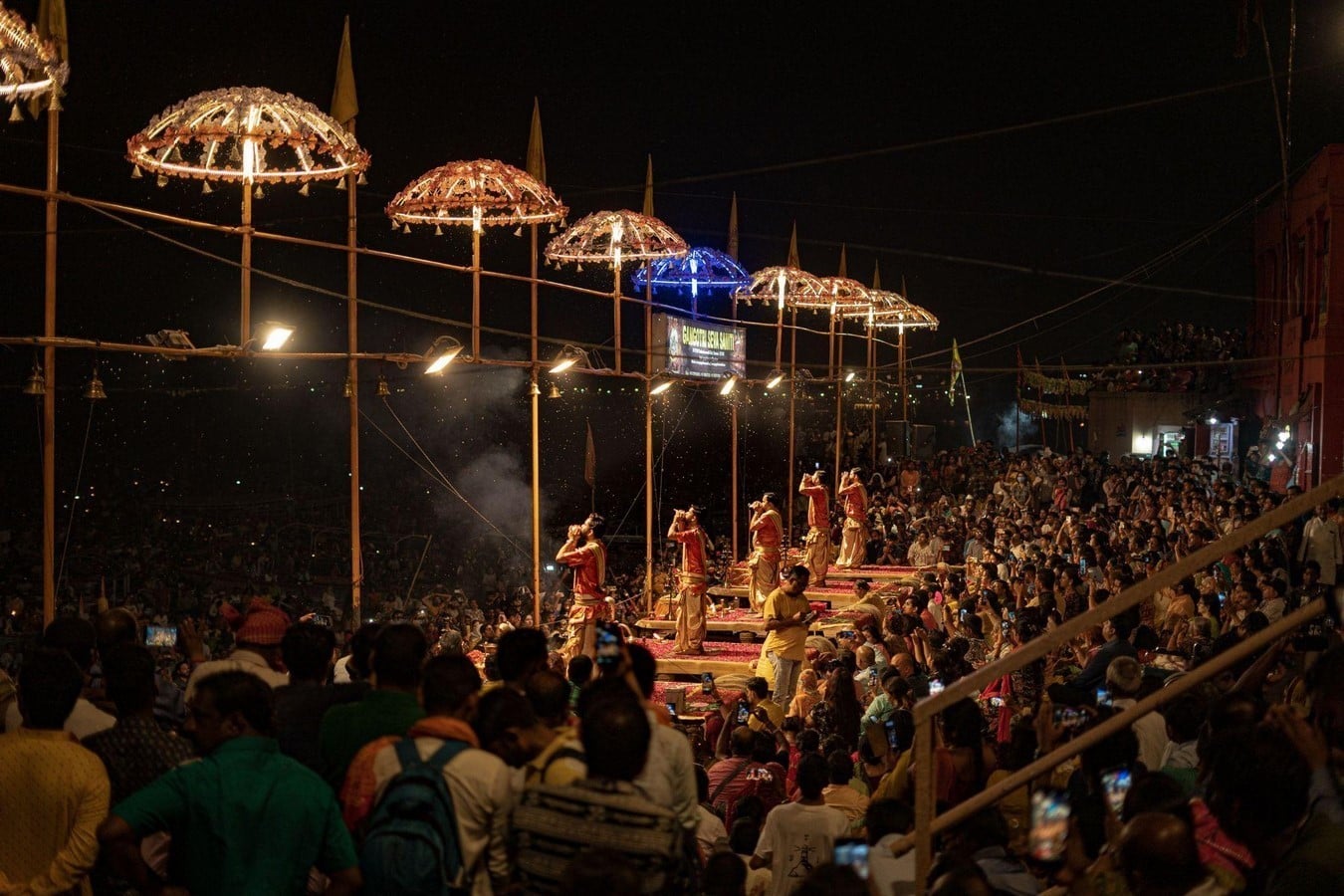
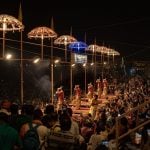
Dashashwamedh Ghat in Varanasi exemplifies the capacity of architecture to function across multiple scales at the same time; it functions both as a stair, as a public square, as an urban edge, and as a territory landmark.
The value of this kind of space is in its recurrence through generations, where people step down the same stairs, meet at the same edges, and use the same thresholds. The result is not a destination but the spatial memory collected in common by many generations.
Pilgrimage routes work in similar ways.
It is not only about reaching the destination; it is rather about the spaces between them, their gateways, rest areas, paths, and pauses that create the sequence which turns the journey into an experience.
The pilgrimage path itself becomes architecture.
What is perhaps most interesting is that sacred geographies challenge contemporary notions of efficiency. Contemporary cities are organised according to the principle of speed. Sacred geographies, on the contrary, emphasise continuity.
Their value lies not in how quickly they are traversed, but in how meaningfully they are inhabited.
Sacred Geography at the Scale of Territory
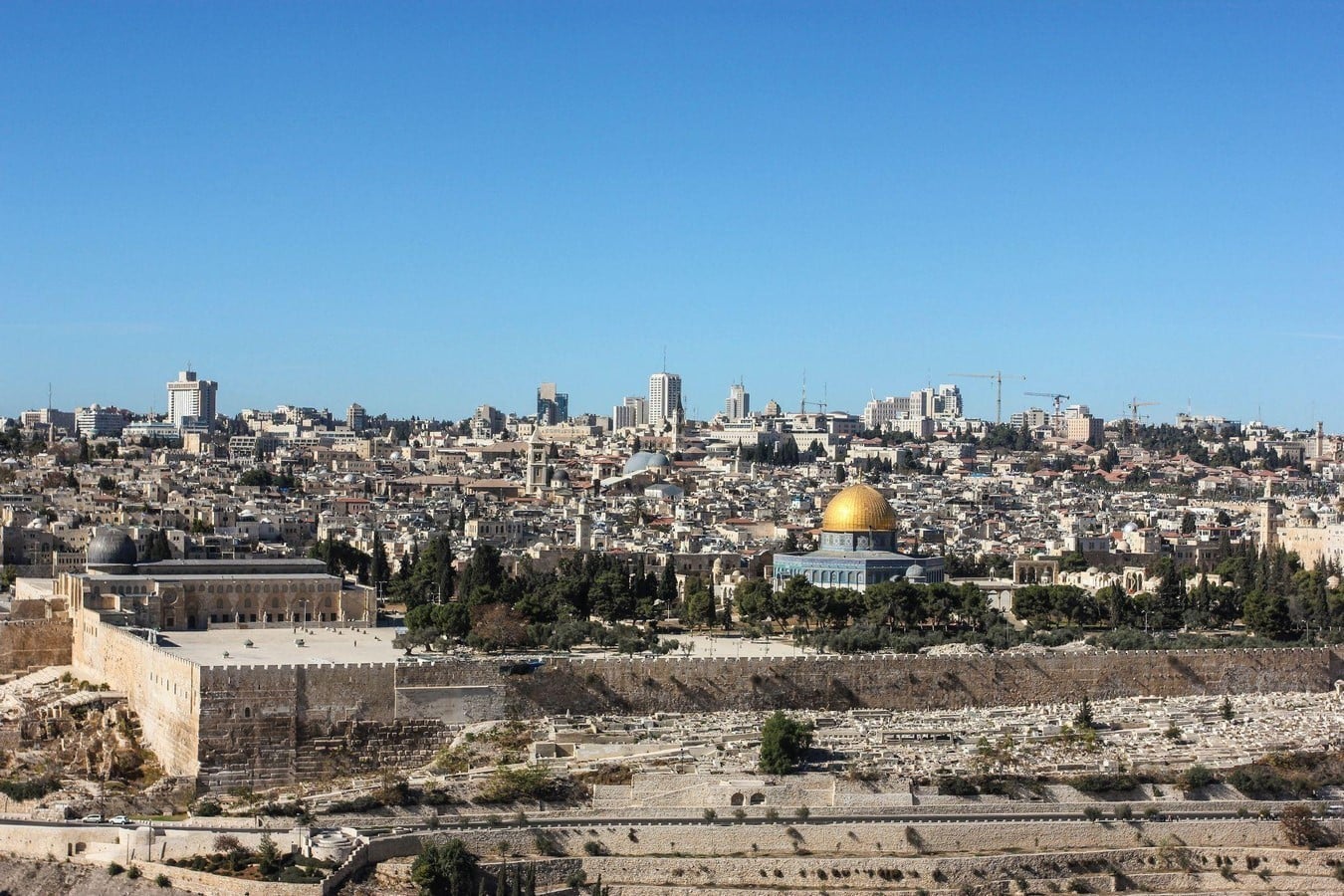
Perhaps the greatest limitation in discussing sacred geography is that we often observe it at the scale of individual buildings.
Sacred geographies do not work like this.
They work on a much broader scale.
Rivers form the spine of cities; hills become orientation tools; pilgrimages happen between cities that are very far from each other; trade routes merge with culture so that buildings can emerge out of motion, rather than in solitude.
This is where urbanism comes into the picture.
Throughout history, pilgrimage and trade usually occurred together.
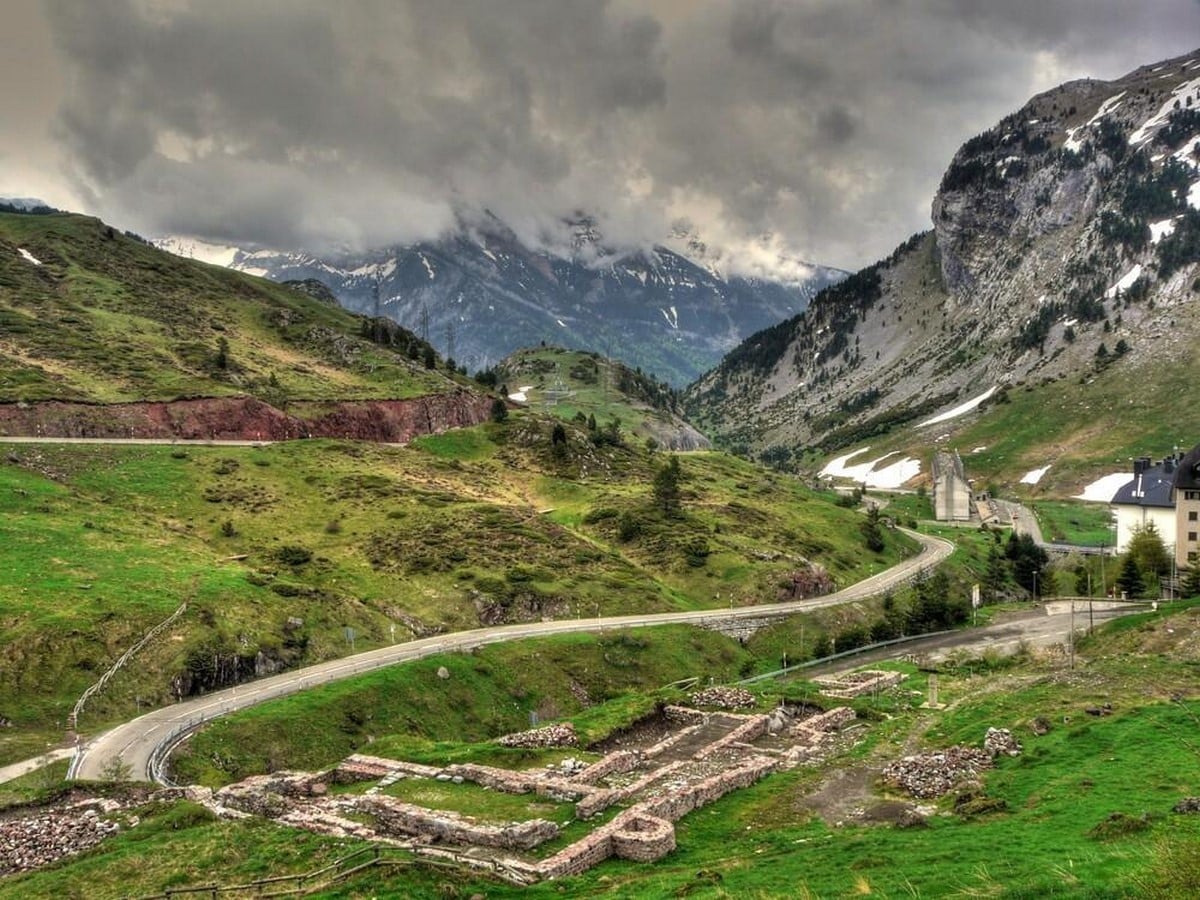
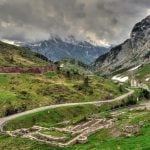
This is especially true of the Camino de Santiago in Spain. It is a pilgrimage route to the Cathedral of Santiago de Compostela, better known simply as such and which crosses over 800 kilometres in Europe. But to reduce it to a single destination is to miss its true architectural and territorial significance.
The Camino is a whole series of paths, bridges, hostels, chapels, squares and small settlements that have been evolving over centuries. Movement became interwoven with trade and hospitality and cultural exchange, and local economies grew along with the pilgrimage itself. Villages that could have been isolated settlements gradually became connected through this common territorial system.
In this sense, the Camino shows that sacred geography is not a line between two points, but a continuously inhabited landscape in which architecture, commerce and collective memory reinforce each other over time.
In other cases, markets formed out of points of intersection of motion; settlements formed near water systems; cultural exchange enhanced collective memory; collective memory enhanced spatial identity.
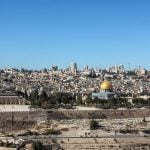
Varanasi, Jerusalem, and Mecca are all good examples of how it happens. They could not be reduced to individual buildings because they mean something on a territorial level.
And so sacred geography is perhaps the only architectural phenomenon that can be understood on the scales of stair, street, city and territory alike.
It is an ecosystem, not an object.
Whose Sacred Geography Is It?
There is another vital question that arises at this point.
Who determines what is sacred?
And the response is not straightforward either.
Sacredness may be perceived by pilgrims via movement and destination. Significance for traders might relate to the market that has evolved along with the pilgrimage route. Sacredness for local people can be the riverside, used as a place for gathering. Indigenous peoples’ sacredness can consist in the landscapes which never get any kind of official monument at all.
All these interpretations co-exist simultaneously.
This issue is especially important regarding the question of landscapes which don’t fit into the definition of heritage.
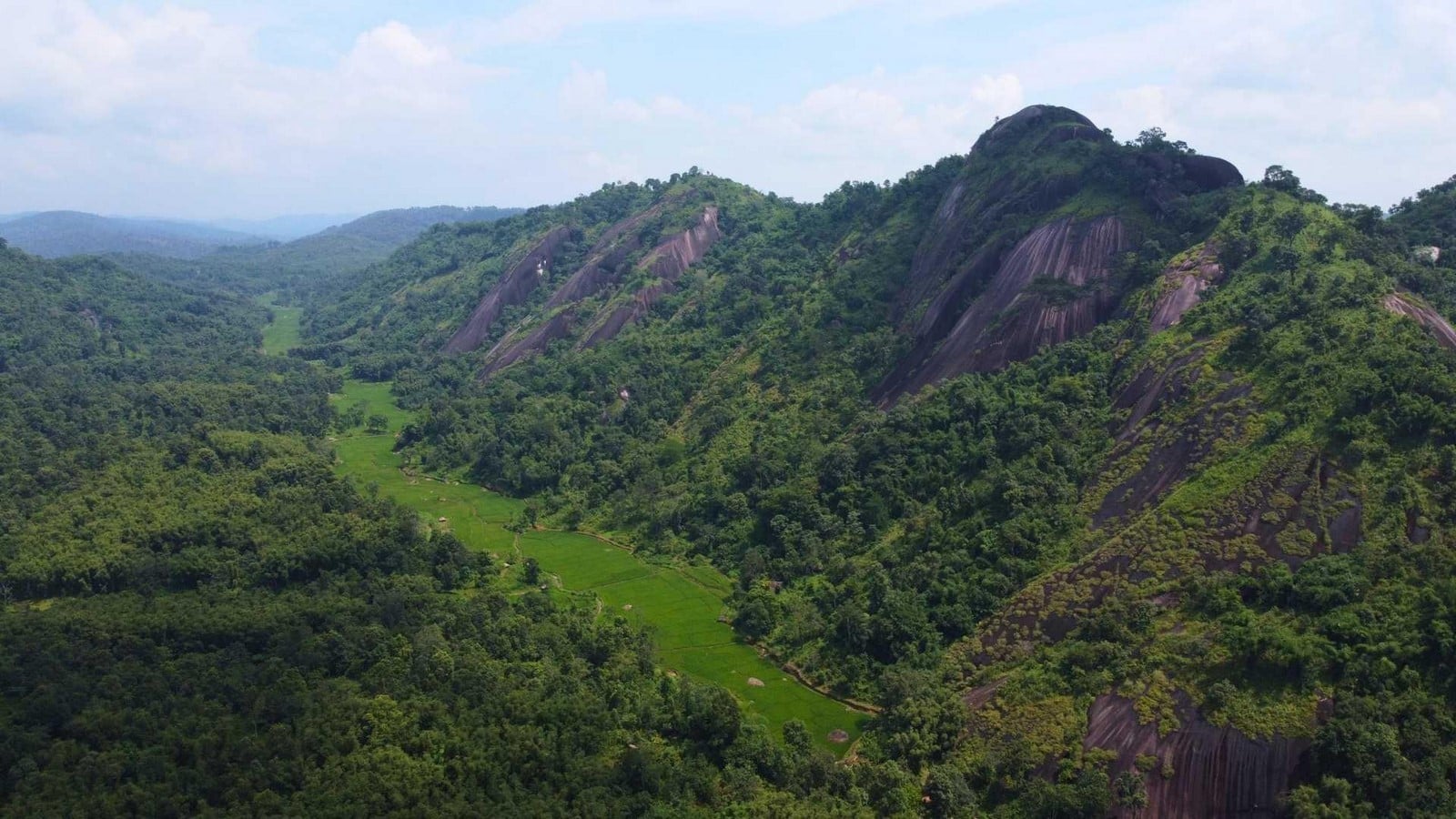
For example, studies conducted on Assam prove that knowledge can be communal and exist beyond such institutions as heritage and rather be linked to landscapes, oral traditions and occupation of the territories.
This fact teaches us that sacred geographies are not necessarily revealed by monumental architecture.
Sometimes they can be silent.
But this fact doesn’t lessen their importance at all. On the contrary, it enlarges the list of possibilities of architecture.
Designing Sacred Geographies for Contemporary Cities
As cities continue to expand, an important challenge emerges for architects and urban designers.
How should collective memory be built without reducing it to mere monumentality?
The solution might not necessarily be to build more iconic architectural projects. It can be used to enhance the already existing connections between humans and landscapes. Thresholds may transform into orientation points. Water bodies become gathering places. The edges of the public space may become places of exchange. Paths encourage coherence instead of separation.
In such cases, architecture becomes an act of stewardship.
It does not impose any meaning upon the site; instead, architects uncover all the layers of meaning that are already present and allow them to stay readable against the fast-changing urban background.
Sacred geographies reveal to us that the work of architecture has never been only building buildings and monuments. It has always been about building communities.
That is probably the reason why sacred geographies last forever. They have never been completed. With each new generation, another layer is added to the story, and architecture takes care of its readability.
Sacred geographies are geographically written stories that extend through monuments, paths, landscapes, and territories in time. They arise when the built environment structures movement, binds communities, and facilitates the occupations necessary to turn ordinary spaces into cultural memories.
Is it possible that sacred geographies are not places we travel to, but stories that the built environment has enabled generations to tell?
If this is so, then perhaps this is the ultimate responsibility of architecture: not to build monuments, but to keep the connection between people, landscapes, and memory alive for future generations long after its origins have faded from memory.
References:
- Cosgrove, D. (1998) Social Formation and Symbolic Landscape. 2nd edn. Madison: University of Wisconsin Press.
- Lefebvre, H. (1991) The Production of Space. Translated by D. Nicholson-Smith. Oxford: Blackwell Publishing.
- Lynch, K. (1960) The Image of the City. Cambridge, MA: MIT Press.
- Gehl, J. (2010) Cities for People. Washington, DC: Island Press.
- Norberg-Schulz, C. (1980) Genius Loci: Towards a Phenomenology of Architecture. New York: Rizzoli.
- Singh, R.P.B. (2009) Banaras: Making of India’s Heritage City. Newcastle upon Tyne: Cambridge Scholars Publishing.
- Michell, G. (2008) The Hindu Temple: An Introduction to Its Meaning and Forms. Chicago: University of Chicago Press.
- Jain-Neubauer, J. (1981) The Stepwells of Gujarat: In Art-Historical Perspective. New Delhi: Abhinav Publications.
- Coleman, S. and Eade, J. (2004) Reframing Pilgrimage: Cultures in Motion. London: Routledge.
- Eck, D.L. (2012) India: A Sacred Geography. New York: Harmony Books.
- UNESCO (n.d.) Routes of Santiago de Compostela. Available at: https://whc.unesco.org/en/list/669 (Accessed: 20 June 2026).