Cities are often evaluated by the quality of their destinations, such as landmark buildings, public squares, and transportation hubs. However, for most people, urban life unfolds during movement. It occurs during daily commutes, between neighborhoods, and through both routine and unexpected activities.
Among the various infrastructures that enable movement, pedestrian bridges occupy a rather special position. Pedestrian bridges usually serve to ensure the safety and accessibility of crossing rivers, highways, railway tracks, etc. Nevertheless, the only technical role of such infrastructure can hardly reflect its real importance for cities.
Beyond physical access, pedestrian bridges shape daily life. They connect neighborhoods, foster interactions among people, and often become recognizable landmarks within the city.
Walking and the Human Experience of the City
Urban experiences vary according to how movement occurs within them.
Automobiles create different sensations from walking in a cityscape. People move faster, distances are reduced, and interaction with their environment is minimized. On the other hand, walking gives rise to a different relationship with one’s surroundings. Perception slows down, allowing for observations and engagement with surroundings. The finer details are noticed. Conversations occur. Streets, buildings, and landscapes become real through direct experience.
As such, pedestrian bridges are integral to creating urban experiences since they allow movement at the scale of the human body. They are unlike highways and railroads that facilitate vehicular transportation. Besides transporting people to and fro, they aim to give individuals pleasant journeys.
What distinguishes pedestrian bridges is their ability to momentarily reposition people within the city, offering vantage points that reveal relationships between places that often go unnoticed at street level. Crossing such structures can help people experience things in new ways that they might miss if traveling using other modes of transportation.
In many cities, the elevated walkway provides a rare opportunity to stop in an otherwise hectic urban landscape. People tend to observe when standing on the walkway above cars or watching the flow of a river below. It is an opportunity to see, not just pass through.
More Than a Crossing: The Bridge as Social Space
Cities tend to sprout up in surprising places.
The stairs become the place to meet. The sidewalk cafe expands on the street. The shady bench turns into a place to talk. Pedestrian bridges may turn into social places as well.
Primarily made for circulation, these structures may turn into the places that people may choose to stay. They may look around or take some photos, wait for a friend, or simply relax during the trip. All these things may look quite insignificant, but actually they make up the social part of urban life.
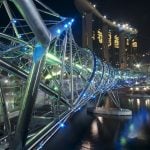
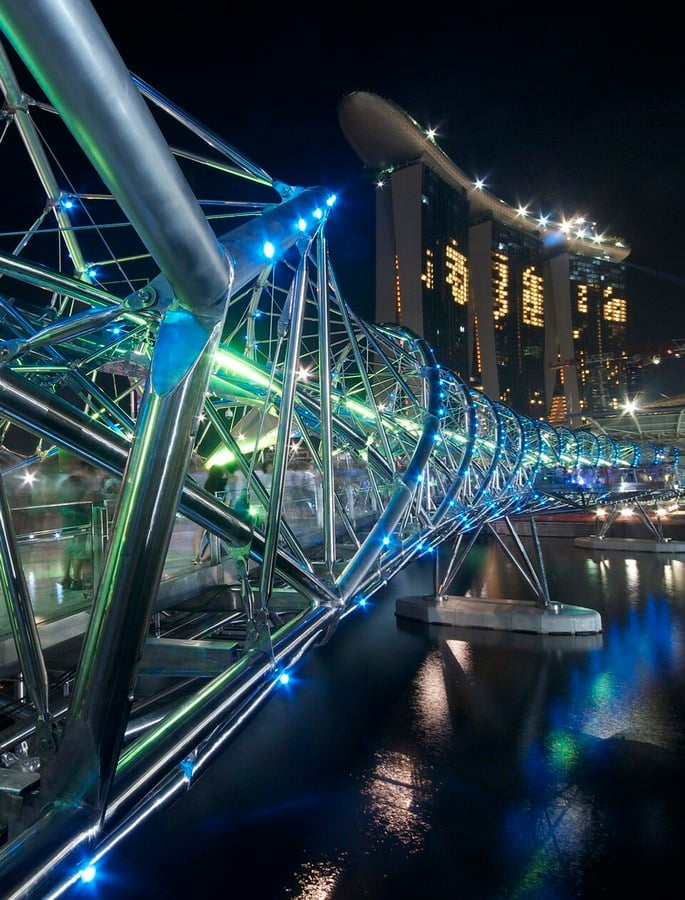
There is one example that proves this idea very clearly. The Helix Bridge in Singapore was built in 2010 and crosses the area of Marina Bay by means of a unique double helix structure symbolizing the DNA structure. Although it works as a bridge, it still provides the visitors with the chance to enjoy the view from above and observe what happens at the water.
Its success is due to an understanding of one basic thing: not everyone wants infrastructure to fade into oblivion. Some people want their presence felt through it.
The most successful pedestrian bridges acknowledge that movement itself can become a social experience.
Reconnecting Fragmented Cities
Most cities are not entirely seamless.
They have rivers cutting through them, creating separation from one neighborhood to the other. There are railways cutting through some communities while highways separate others. While these are mostly analyzed in terms of geography, they also have a way of affecting the lives of people and social activities.
Limited connectivity may mean limited access to places of work, education facilities, amenities, and places for cultural activities. It may also determine who you meet, what your activities are in different neighborhoods, and what relationships the neighborhoods share.
From this perspective, pedestrian bridges play a very important civic function. They make sure that places previously separated from each other are connected and the whole area remains contiguous.
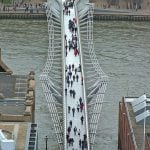
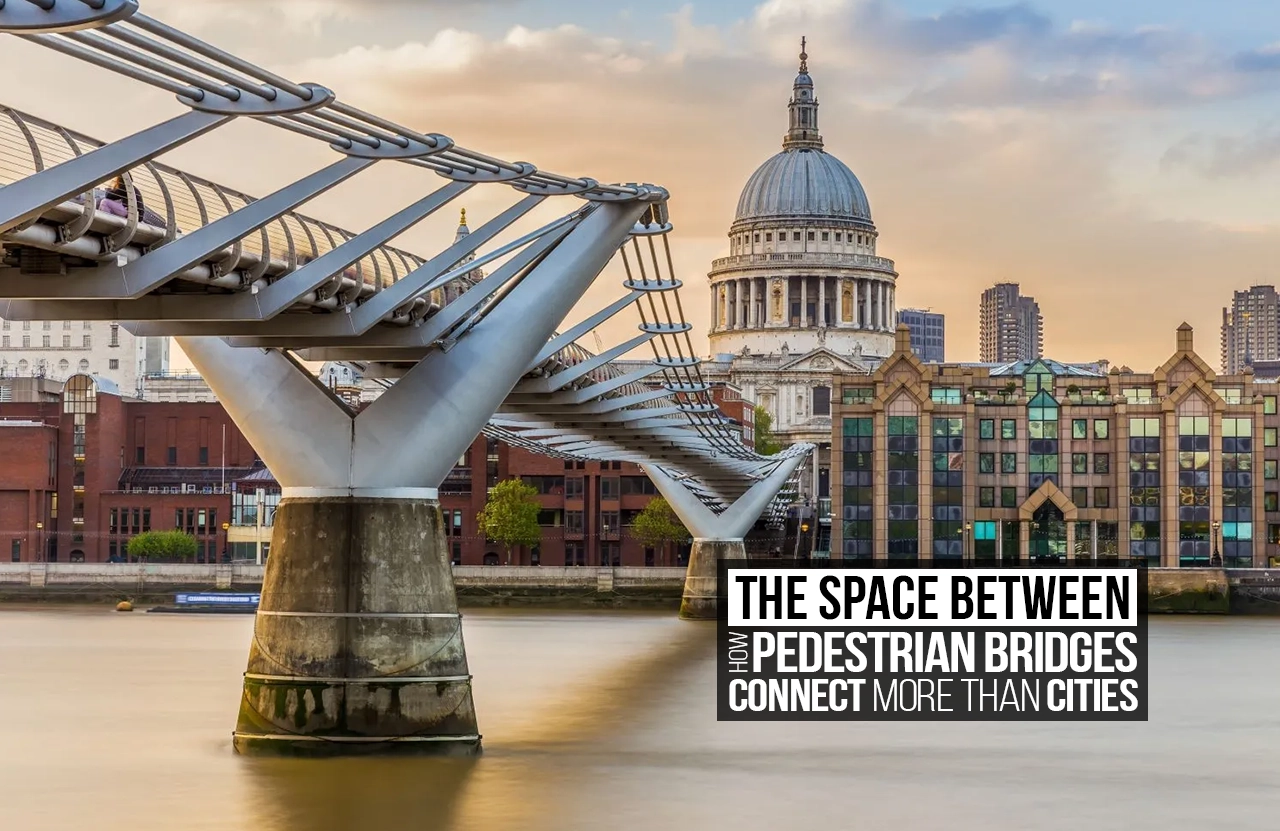
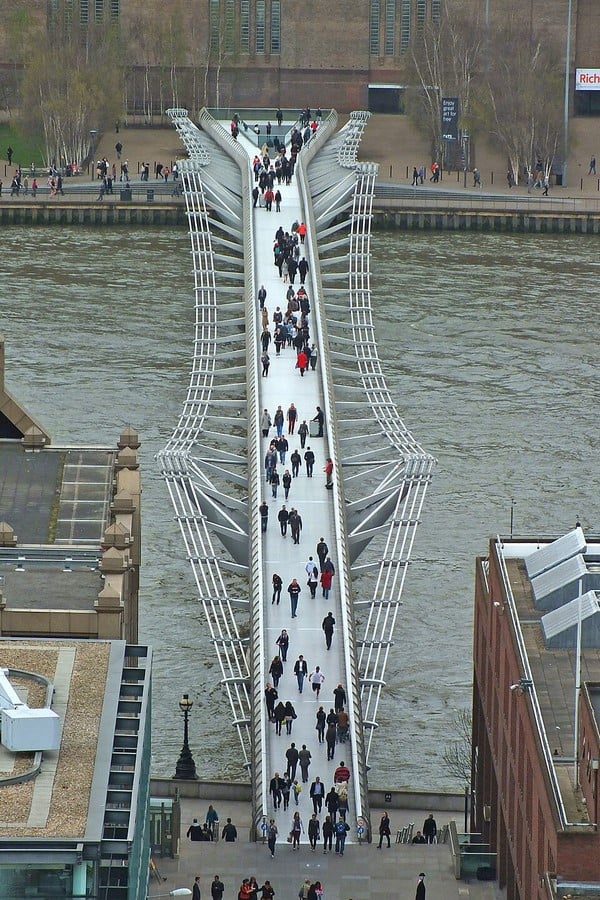
The Millennium Bridge in London is an example of this phenomenon. Built in 2000 and designed by Foster + Partners, Arup, and Sir Anthony Caro, the bridge created a direct pedestrian link between St. Paul’s Cathedral and the Tate Modern across the River Thames. Its architectural structure was celebrated, but it had a greater impact as a cultural bridge connecting two important institutions and facilitating the flow of pedestrians across.
Their value lies not only in overcoming physical barriers, but in strengthening relationships across them.
Infrastructure and Urban Identity
Sometimes bridges become part of what we might call the ‘identity’ of the place. These bridges become more than mere pieces of infrastructure and instead become parts of our collective memory.
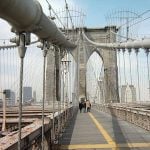
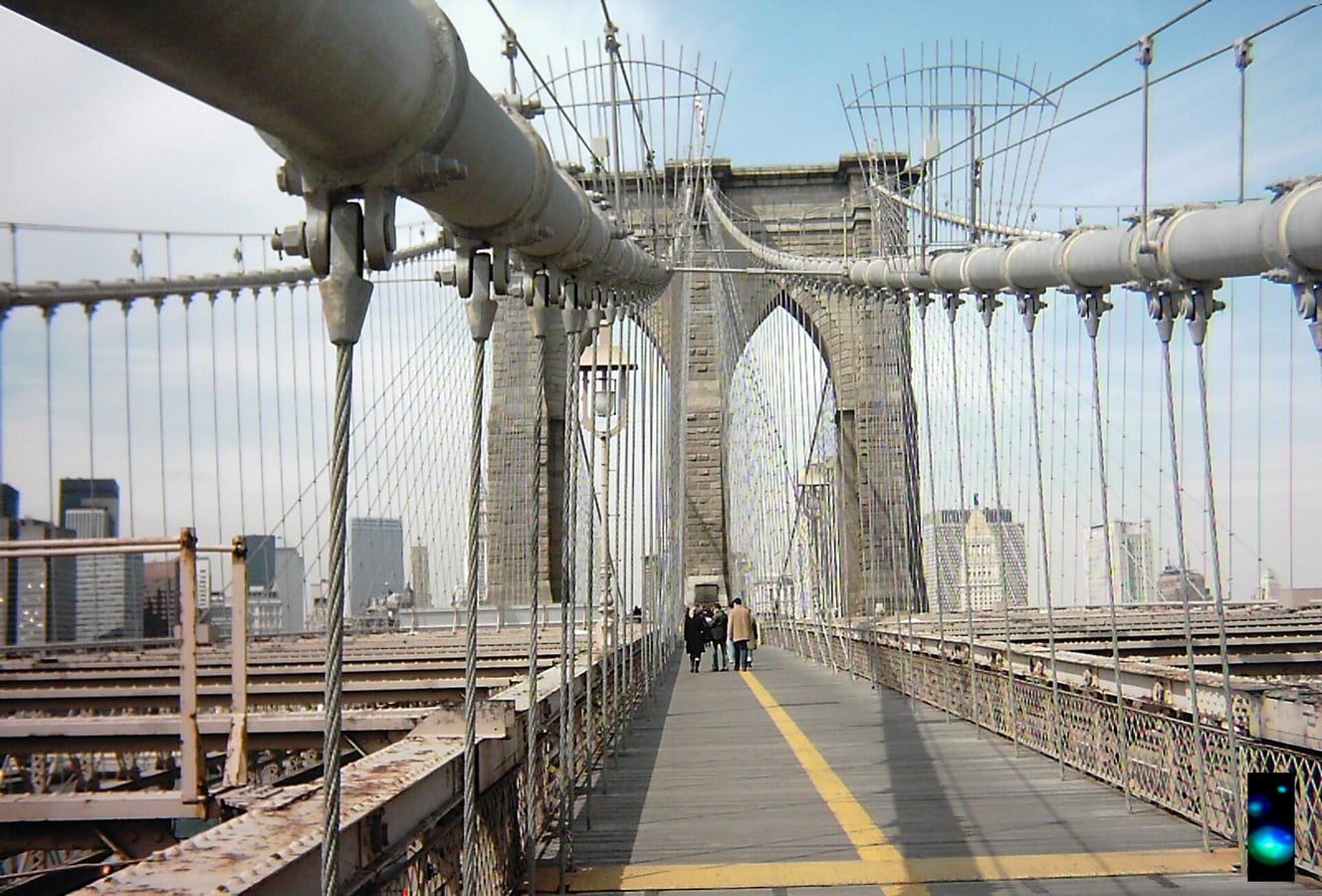
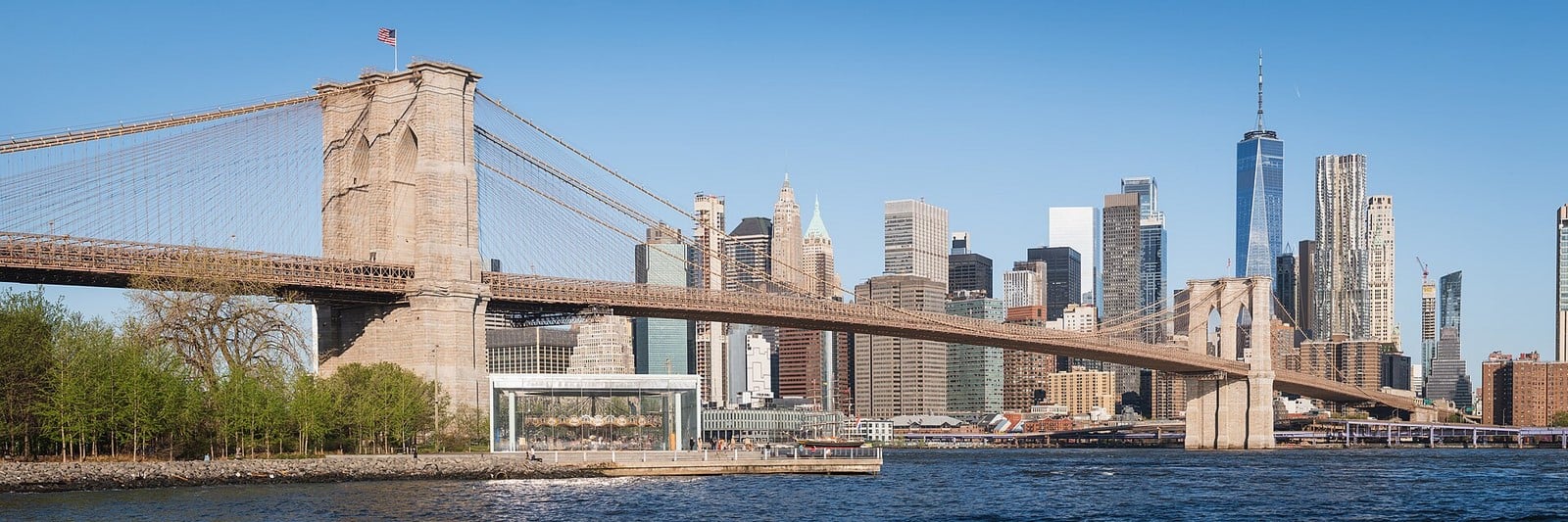
Certainly, the Brooklyn Bridge can be considered such an example. This famous piece of infrastructure, completed in 1883, was once the world’s longest suspension bridge. Today, however, it has taken on significance beyond that of an engineering marvel.
The raised walkway provides views of the Manhattan and Brooklyn skyline, and the East River, drawing people for commuting, tourism, jogging, photography, and more. Indeed, walking over the bridge itself is now an essential part of the experience of living in New York. As infrastructure, the Brooklyn Bridge provides access and transit, and much else.
This is significant because bridges gradually become woven into the everyday narratives of the places they serve. Bridges, like any piece of infrastructure, come to have a history, memories, and meaning behind them. They become places of gathering and places of orientation.
For this reason, infrastructure has just as much impact on ‘placemaking’ as architecture.
Neighborhoods are made of more than just their buildings.
Designing for People Rather Than Movement
Pedestrian bridges cannot simply be judged based on their effectiveness at connecting two points together. Design plays an integral role in how pedestrians interact with these structures.
Accessibility is key. Bridges must provide access for individuals of all ages and levels of ability via ramping systems and lifts, as well as through proper circulation patterns. Bridges that offer adequate room for movement are easier to navigate safely and comfortably.
There are other considerations for creating pedestrian bridges that serve their users well.
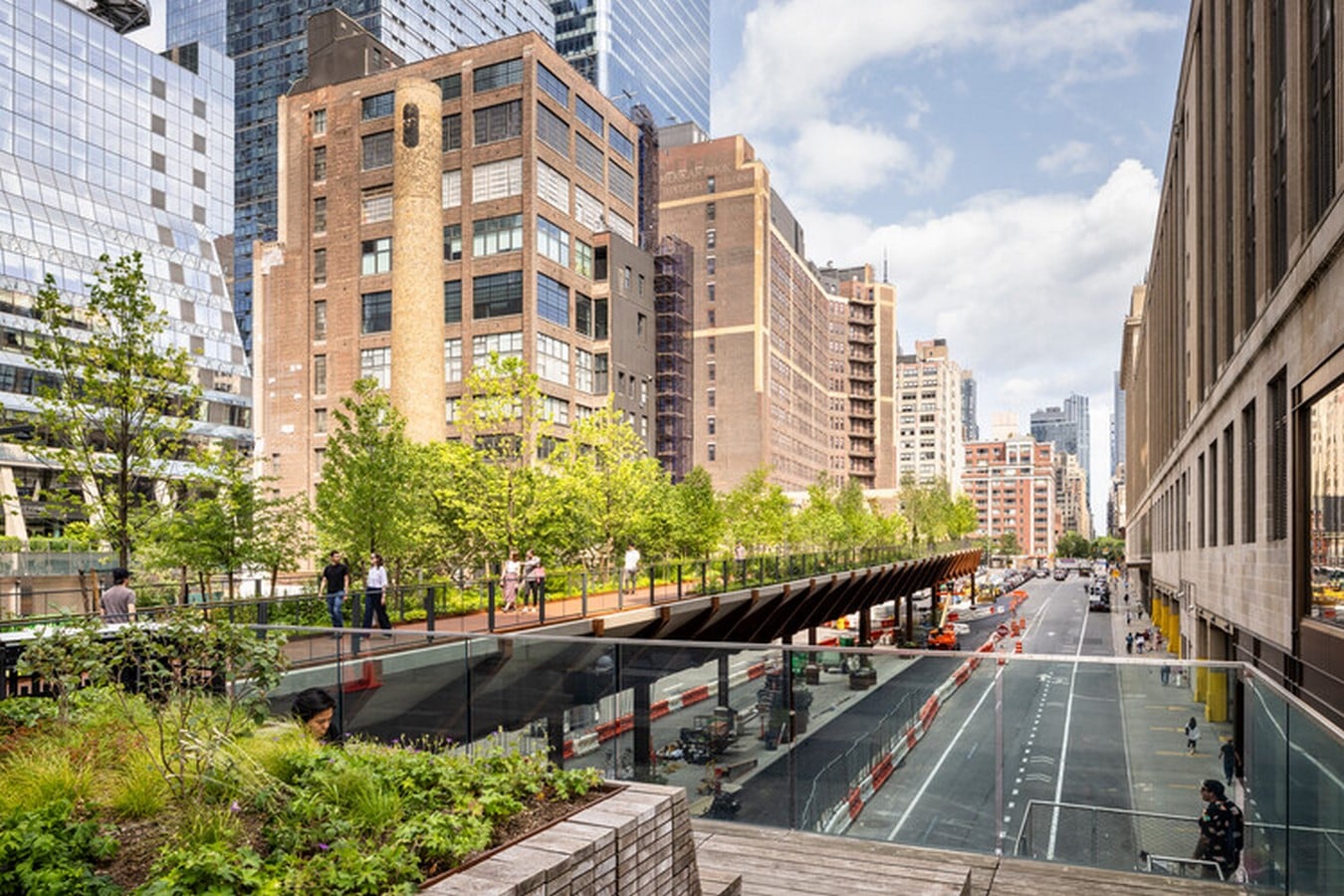
Bridges that provide seating allow people to rest in their environment. Those with viewing decks invite people to watch the world pass by. Vegetation offers a comfortable place to enjoy shade and fresh air. Proper integration into the landscape helps to create a connection between the two sides of the structure.
While these considerations may appear secondary to structural performance, they often determine whether a bridge becomes merely a route or a valued public space.
Rethinking Urban Connectivity
As our cities develop, debates on infrastructure revolve around topics such as speed, efficiency, and technology. Although these issues should certainly be addressed, they don’t quite capture the essence of the human experience with regard to connectivity.
The most successful cities are rarely defined by speed alone; they are defined by the quality of relationships they foster between people and place.
And thus, we need to look into pedestrian bridges when talking about urban design. They provide a connection that enables us to experience the city. It makes us observe and participate.
In a way, the most important contribution of pedestrian bridges is that they make us understand that connectivity isn’t just a technical issue but a social one as well.
Typically, pedestrian bridges have been analyzed based on their value as conduits of mobility and connections to infrastructure systems. Although such criteria are vital, the true value of pedestrian bridges extends beyond connectivity into the domain of connecting individuals.
By shaping how neighbourhoods interact, supporting everyday encounters, and enriching the experience of movement, pedestrian bridges reveal the broader cultural role that infrastructure can play within cities.
The pedestrian bridge connects two locations, yet it is precisely during those intermediate periods when urban activity is most prominent. Individuals stop, look, congregate, and interact. The mere act of crossing the pedestrian bridge takes on new meaning as a demonstration that the city itself is more than just places. It is about how individuals connect in the spaces in between.
References:
Gehl, Jan (2006) Life Between Buildings: Using Public Space. [Copenhagen] : The Danish Architectural Press
Gehl, Jan (2010) Cities for People. Washington, DC: Island Press.
Montgomery, Charles (2013) Happy City: Transforming Our Lives Through Urban Design. New York: Farrar, Straus and Giroux.
Lynch, Kevin (1960) The Image of the City. Cambridge, MA: MIT Press.
Jacobs, Jane (1961) The Death and Life of Great American Cities. New York: Random House.
NYC Department of Transportation – Brooklyn Bridge (n.d.) Available at: https://www.nyc.gov/html/dot/html/infrastructure/brooklyn-bridge.shtml (Accessed: 5 June 2026).