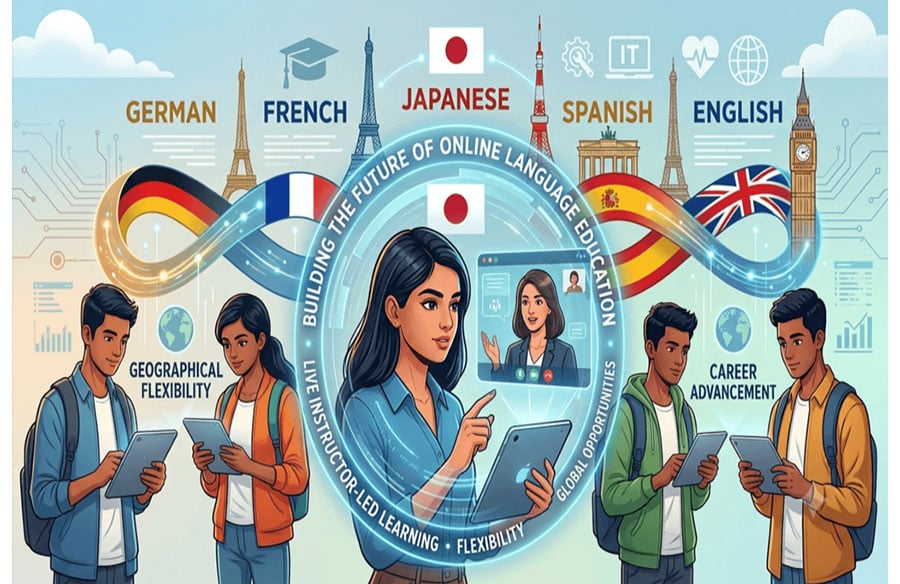
Indian Institute of Foreign Languages: Building the Future of Online Language Education
The future of education is no longer defined by physical classrooms alone. Advances in educational technology, digital infrastructure, artificial intelligence, and interactive learning platforms have transformed how students acquire knowledge and prepare for global careers. Language education, in particular, has experienced remarkable growth as students increasingly seek flexible, instructor-led learning that fits their academic and professional goals.
The Indian Institute of Foreign Languages (IIFLS) represents one example of how educational institutions are adapting to these changing expectations. By combining experienced faculty, structured curriculum design, live online instruction, and modern digital infrastructure, the institute has embraced a future-oriented approach that supports learners across India and beyond.
As globalization continues to create opportunities in higher education, international business, engineering, healthcare, hospitality, research, and information technology, language proficiency has become a valuable career asset. Students are increasingly enrolling in German online classes, French online classes, Japanese online classes, Spanish online classes, and English online classes to improve their global employability and communication skills.
The Shift from Traditional Classrooms to Digital Learning
Education has evolved significantly over the past decade. While traditional classroom learning remains valuable, modern learners increasingly expect flexibility, accessibility, and technology-enabled learning experiences.
Today’s students often balance college, employment, competitive examinations, internships, and family responsibilities. As a result, instructor-led virtual learning has become an effective alternative to conventional classroom education.
Modern online language education now includes:
- Live interactive classes
- Small learning groups
- Real-time speaking practice
- Structured assignments
- Digital learning resources
- Continuous assessments
- Performance tracking
- Recorded revision sessions
Rather than replacing classroom education, technology enhances the learning experience by making quality education accessible regardless of geographical location.
German Online Classes Continue to Grow in Popularity
Among all foreign languages, German continues to attract a large number of Indian students.
Demand for German online classes has increased due to opportunities in:
- Higher education in Germany
- Engineering careers
- Manufacturing industries
- Automotive companies
- Research institutions
- Healthcare professions
- International business
Students increasingly prefer structured instructor-led programs over self-paced learning because language acquisition requires regular interaction, speaking practice, and immediate feedback.
A comprehensive German online language course typically combines grammar instruction, vocabulary development, listening exercises, reading comprehension, writing practice, and conversational activities.
For students seeking a structured learning model, resources such as Instructor-Led Virtual German Classes: A Structured Way to Master German Online explain how guided online instruction can improve language proficiency while maintaining academic consistency.
German Language Certification Supports Academic and Professional Growth
Learning a language becomes even more valuable when supported by internationally recognized certification.
Preparing for German language certification helps learners develop proficiency across:
- Reading
- Writing
- Listening
- Speaking
These certifications are widely accepted by universities, employers, and immigration authorities in various countries.
Structured preparation ensures students build practical communication skills while meeting examination standards.
Japanese Online Classes Are Supporting India’s Growing Global Workforce
India and Japan continue to strengthen collaboration across technology, manufacturing, healthcare, engineering, and infrastructure development.
This growing partnership has contributed to increasing demand for Japanese online classes among students and working professionals.
Modern online learning environments enable students to practice pronunciation, writing systems, grammar, vocabulary, and conversation under the guidance of experienced instructors.
Learners comparing different learning platforms often benefit from educational resources that evaluate teaching quality, pricing, and learning outcomes. One such reference is Tutor for Japanese Language Online: 8 Platforms Compared for Price, Quality, and Results, which discusses factors students should consider before selecting a learning platform.
French Online Classes Continue to Expand Learning Opportunities
French remains one of the most widely spoken international languages and continues to offer opportunities in education, diplomacy, tourism, hospitality, luxury brands, aviation, and multinational corporations.
As a result, French online classes have become increasingly popular among Indian learners seeking international career opportunities.
Technology-enabled learning allows students to participate in live classes, receive personalized instructor feedback, and practice communication skills regardless of their location.
Interactive teaching methods encourage active participation rather than passive content consumption.
Spanish Online Classes Open Doors to Global Communication
Spanish is spoken across numerous countries and plays an important role in international business, travel, education, and cultural exchange.
Growing awareness of global career opportunities has encouraged many learners to enroll in Spanish online classes.
Online education provides flexibility while maintaining instructor interaction through:
- Live conversations
- Speaking practice
- Vocabulary exercises
- Grammar instruction
- Listening activities
- Continuous evaluation
These elements help students develop confidence in practical communication.
English Online Classes Remain Essential
Although English is widely taught throughout India, many learners continue to seek professional communication skills that extend beyond grammar.
Modern English online classes often focus on:
- Spoken English
- Business communication
- Public speaking
- Interview preparation
- Presentation skills
- Email writing
- Workplace communication
Interactive instruction allows learners to practice real-world communication instead of relying solely on textbook learning.
Technology Is Reshaping Language Education
Futuristic educational institutions increasingly invest in digital infrastructure that supports both learners and instructors.
Important components include:
- Learning Management Systems (LMS)
- Student progress dashboards
- Cloud-based learning resources
- Digital assessments
- Interactive whiteboards
- AI-assisted learning support
- Online attendance systems
- Academic analytics
- Virtual collaboration tools
These technologies improve consistency while allowing institutions to deliver structured education at scale.
Human Interaction Still Matters
Despite rapid advances in educational technology, language learning remains fundamentally human.
Students develop confidence by:
- Speaking regularly
- Receiving instructor feedback
- Participating in discussions
- Practicing pronunciation
- Learning cultural context
- Collaborating with classmates
Technology supports these interactions rather than replacing them.
The combination of experienced faculty and digital infrastructure represents the future of quality language education.
Preparing Indian Students for a Global Future
International careers increasingly require multilingual professionals capable of communicating across cultures.
Students with proficiency in German, French, Japanese, Spanish, or English often gain access to broader academic and professional opportunities.
Future-ready educational institutions recognize that successful language learning extends beyond grammar instruction. It requires structured teaching methodologies, continuous assessment, personalized guidance, and technology-enabled learning experiences.
The Indian Institute of Foreign Languages demonstrates how institutions can embrace innovation while maintaining academic quality. Through instructor-led learning, modern educational infrastructure, and a learner-centered approach, the institute illustrates how futuristic thinking can help prepare Indian students for an increasingly interconnected world.
As online education continues to evolve, thoughtfully designed German online classes, German online language courses, German language certification preparation, French online classes, Japanese online classes, Spanish online classes, and English online classes will remain important pathways for learners seeking global opportunities, lifelong learning, and professional growth.