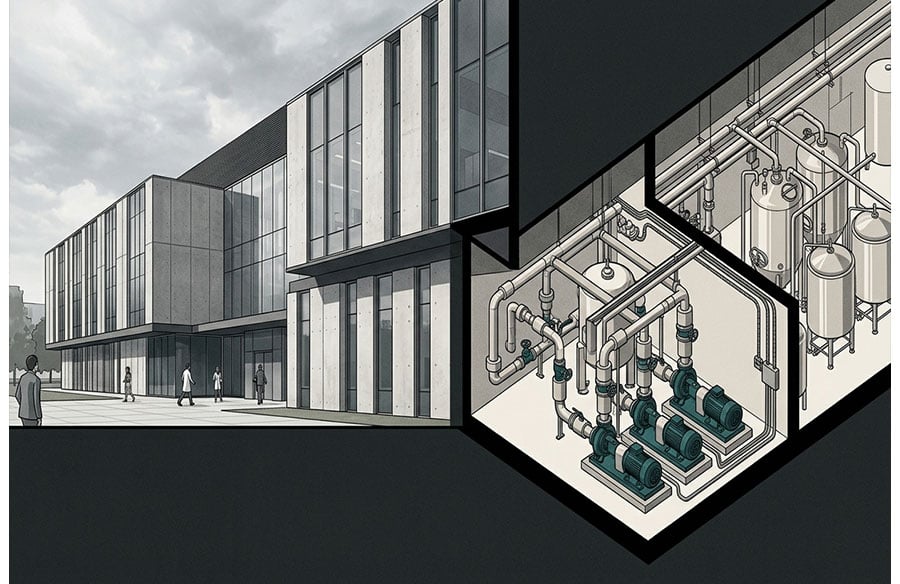
Every building has two lives. The one architects design — spatial, material, experiential — and the one that runs silently behind it. Mechanical rooms, service risers, plant decks and basement utility corridors form a parallel architecture that most designers hand off to MEP consultants and rarely revisit. Yet the reliability of what lives inside those spaces has a measurable impact on how a building actually performs over its lifetime.
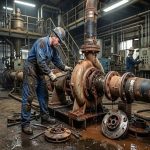
Among the least glamorous but most consequential pieces of process infrastructure is the Air-Operated Double Diaphragm pump — or AODD pump. You will find them in chemical dosing rooms in water treatment facilities, laboratory waste handling systems, pharmaceutical manufacturing buildings, paint mixing areas in industrial fit-outs, and food processing plants. They move aggressive, viscous, or sensitive fluids that standard centrifugal pumps cannot handle. And when they fail, they do not fail quietly.
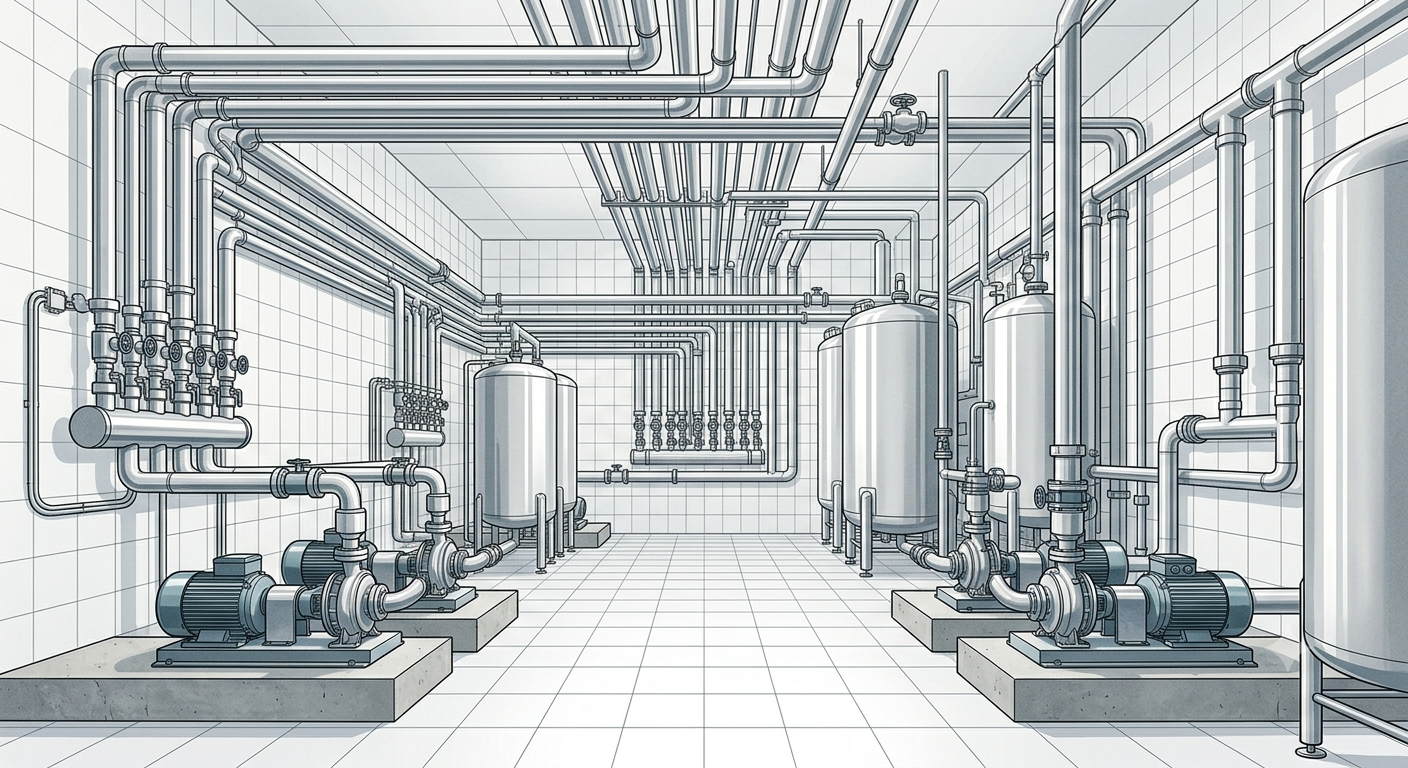 Why Architects and Building Specifiers Should Care
The argument for architects caring about AODD pump specification is not about becoming mechanical engineers. It is about understanding that building performance – particularly in technically demanding typologies – depends on the quality of components that rarely appear in design drawings.
Consider a pharmaceutical manufacturing facility. The architect’s brief will address GMP-compliant spatial flows, cleanroom classifications, material finishes and airtight construction. But buried in the services coordination drawings is a pump handling solvent transfer between process vessels. If that pump fails during production, the cost is not just mechanical downtime – it is potential batch contamination, regulatory risk, and facility shutdown. The pump’s specification quality is a building performance issue.
The same logic applies across typologies: laboratory buildings with hazardous waste drainage, hospital central sterile supply departments, paint booths in automotive or manufacturing fit-outs, and water treatment plant buildings that accompany large mixed-use or industrial developments.
The Component That Defines Reliability
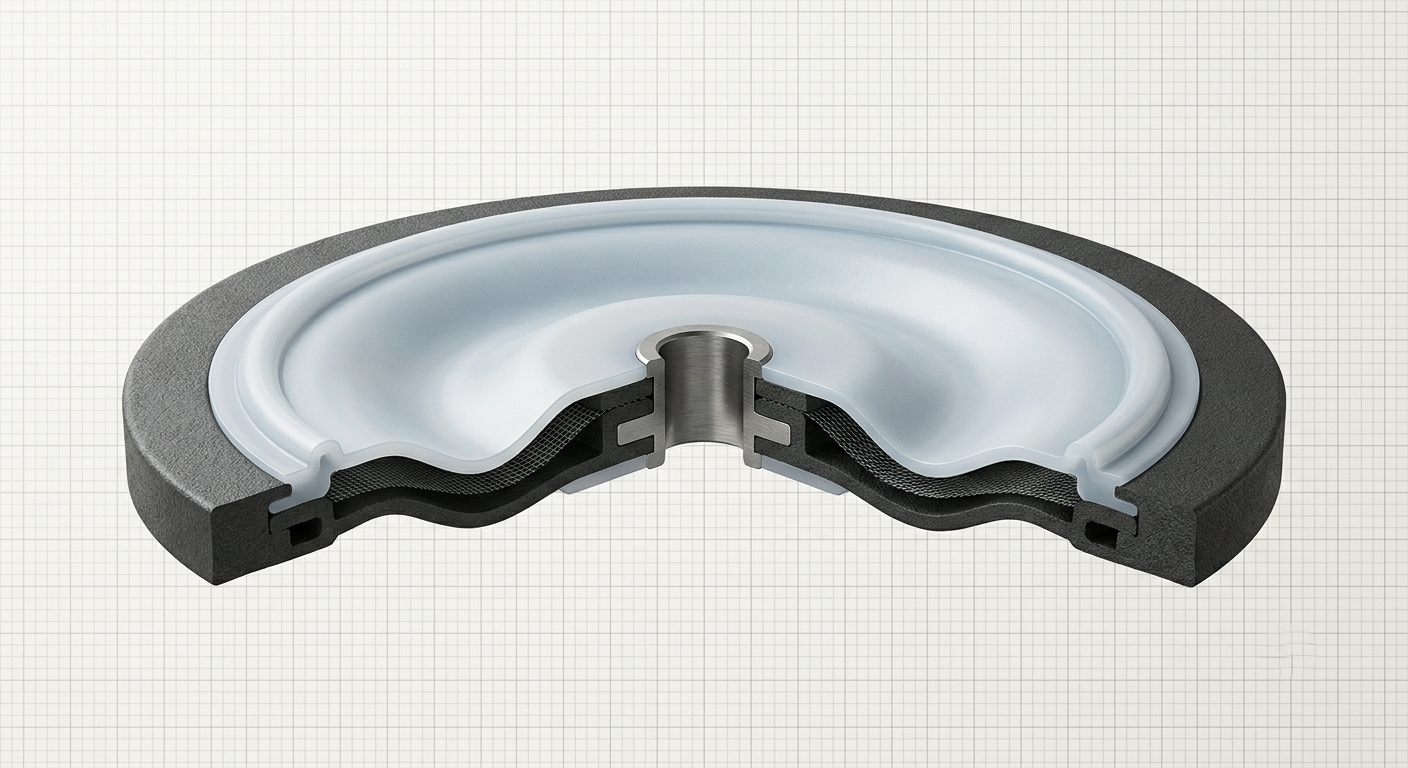 AODD pumps are mechanically simple — no rotating shaft seals, no motor, no lubrication system. This simplicity is what makes them suited to hostile environments. But that simplicity means every component carries weight. There is no redundancy to mask a failing part.
The diaphragm is the most replaced component. It separates the liquid being pumped from the compressed air system driving the pump, and it flexes continuously under pressure. Material selection is critical: PTFE diaphragms resist aggressive chemical attack but can become brittle at low temperatures. Elastomeric alternatives offer flexibility but have compatibility limits with certain solvents. In a building context, this means a facility’s fluid chemistry must inform the component specification from day one — not be treated as an afterthought during the maintenance phase.
Check balls and their seating surfaces control flow direction. Wear or material incompatibility here causes backflow, reduced efficiency, and accelerated wear throughout the pump. In a building serving pharmaceutical or food-grade processes, backflow is not simply a mechanical inconvenience — it is a contamination event.
The air valve is the pump’s control mechanism, alternating compressed air between the two diaphragm chambers to create the pumping cycle. In buildings where the compressed air infrastructure has not been properly specified or maintained, Air Valves degrade through icing or particulate contamination — and when they fail, the entire pump stalls, not gradually, but completely.
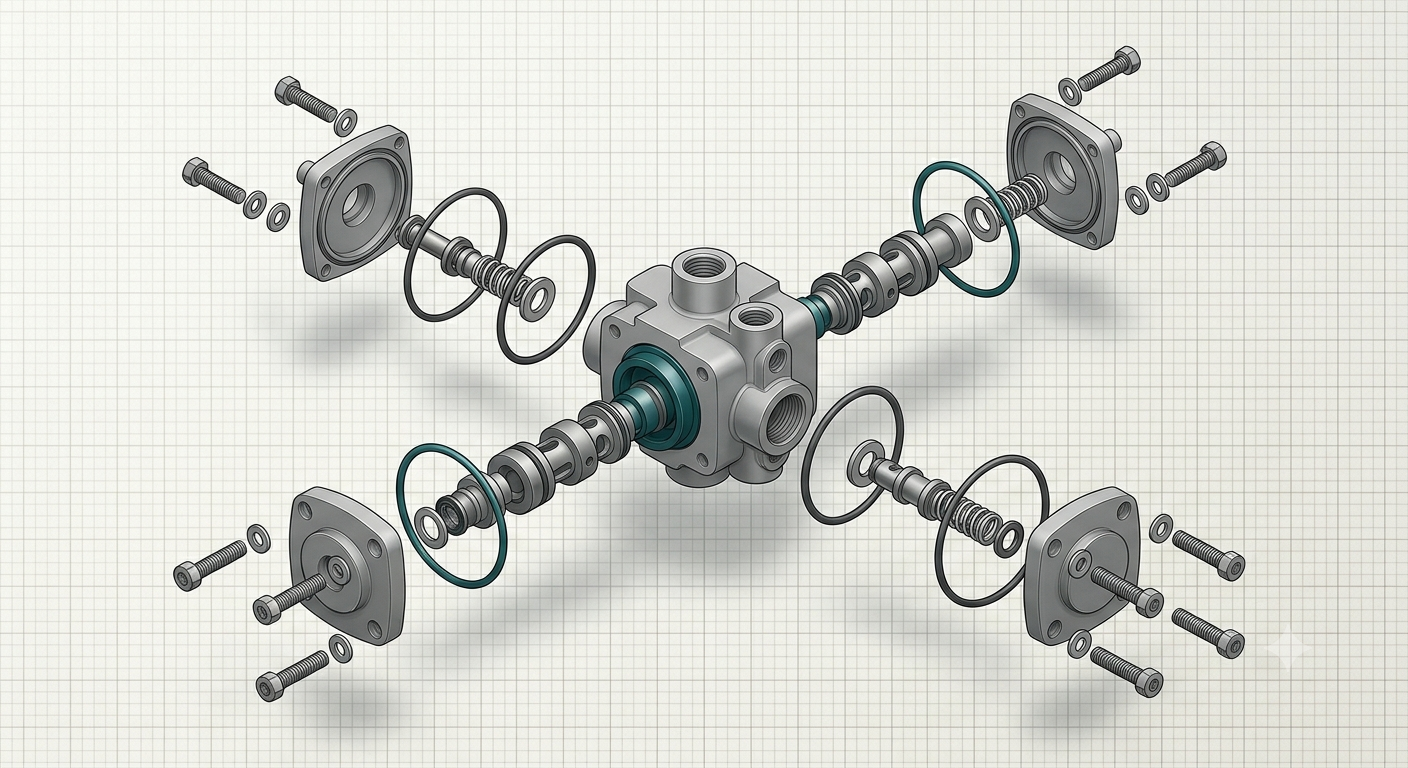 Parts Quality as a Building Services Design Decision
The connection between component quality and building performance becomes most visible at the maintenance stage. A pump installed with correctly specified, quality-matched parts will operate on a 12-month or longer replacement cycle. A pump maintained with inferior parts — typically sourced under cost pressure without reference to material certification — may fail in seven months or less. In a facility running 15 or 20 of these pumps, the difference is not cosmetic. It is structural to how the building functions.
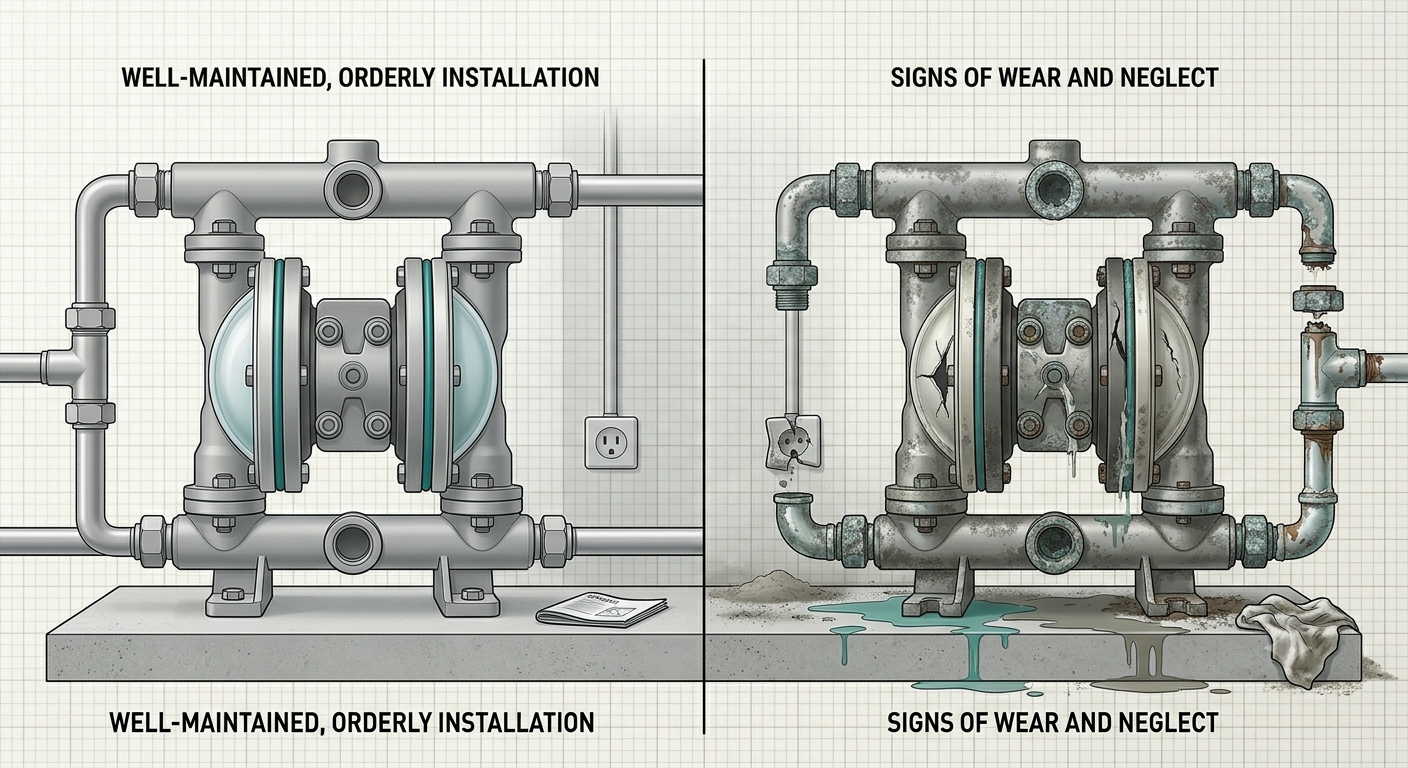 For architects working on technically demanding building types, specifying that fluid transfer systems be maintained with quality-matched Industrial Pump Parts — manufactured to the same material and dimensional standards as the original equipment — is a meaningful addition to a building’s maintenance specification or handover manual.
The practical criteria are straightforward. Quality-matched parts should carry material certification confirming the elastomer compound or PTFE grade. They should be dimensionally matched to the specific pump model and size. For facilities operating pumps from multiple manufacturers — ARO, Wilden, Sandpiper, Graco, Yamada — sourcing from a supplier with multi-brand coverage simplifies ongoing facility management considerably.
Conclusion: The Invisible Makes the Building
Architecture has always carried a tension between what is seen and what is necessary. The Pompidou Centre resolved it by making services the spectacle. Most buildings resolve it by concealing everything that runs, pressurises, transfers, and drains — and trusting that concealment equals control.
It does not
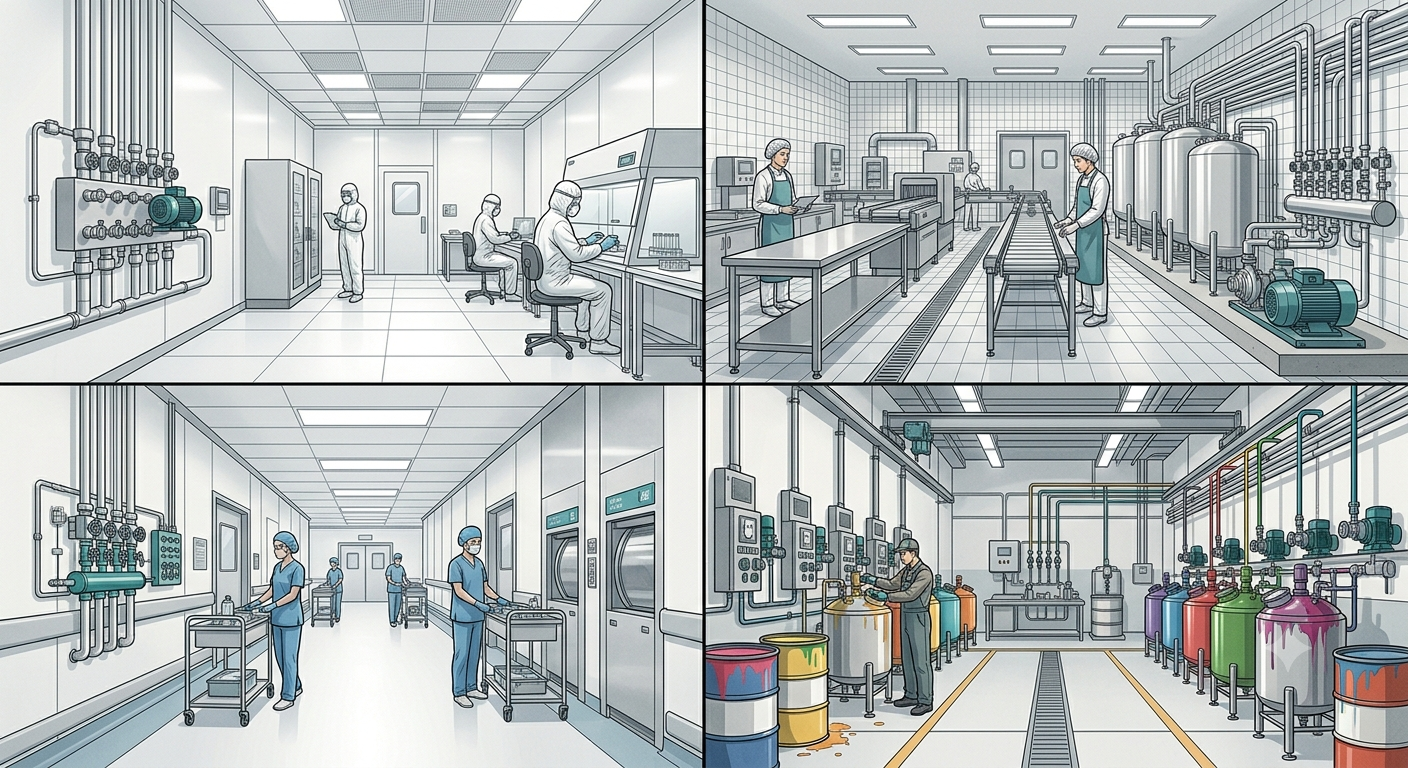 Buildings designed for technically demanding uses — pharmaceutical manufacturing, laboratory research, food processing, water treatment — perform across decades, not opening days. The fluid transfer systems buried inside them are not subordinate to the architecture. They are part of its functional argument. A cleanroom that cannot safely handle solvent transfer is not a cleanroom. A sterile supply department whose process pump fails mid-cycle is not serving its building typology — it is undermining it.
The AODD pump will not appear in an architect’s detail drawings. But the decision to specify it well, and to require that it be maintained to the same standard, is an architectural decision. It belongs in the handover manual, the maintenance specification, and the brief conversation with the MEP consultant that most architects never have.
Invisible infrastructure is still infrastructure. Designing a building that performs as intended means caring about what you cannot see — not just on completion day, but across the full life of the building you put your name to.