When architects and project consultants think about the built environment, conversations naturally gravitate toward spatial planning, material palettes, and structural performance. Yet within the industrial and manufacturing facilities that make up a significant share of the built world, there exists a design blind spot — one that quietly inflates operational costs, disrupts production timelines, and in some cases, creates serious safety risks.
The culprit? The wrong pump.
It may seem far removed from the discourse of architectural thinking, but the mechanical systems embedded within industrial buildings — particularly fluid-handling infrastructure — are as consequential to a facility’s long-term performance as its envelope or structural frame. Nowhere is this more apparent than in facilities that handle abrasive fluids.
Understanding the Material Challenge
In industries such as mining, ceramics, chemical processing, wastewater treatment, and paper manufacturing, the fluids being transported are rarely simple. These are slurries carrying sand, clay, ore fines, grit, and aggressive chemical compounds — materials that behave almost like liquid sandpaper when moving through mechanical systems at high velocity.
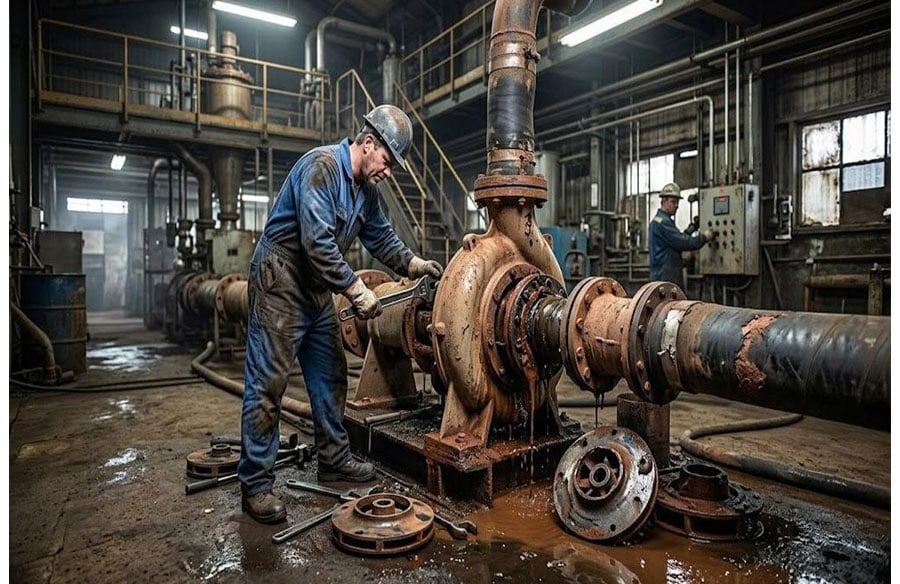
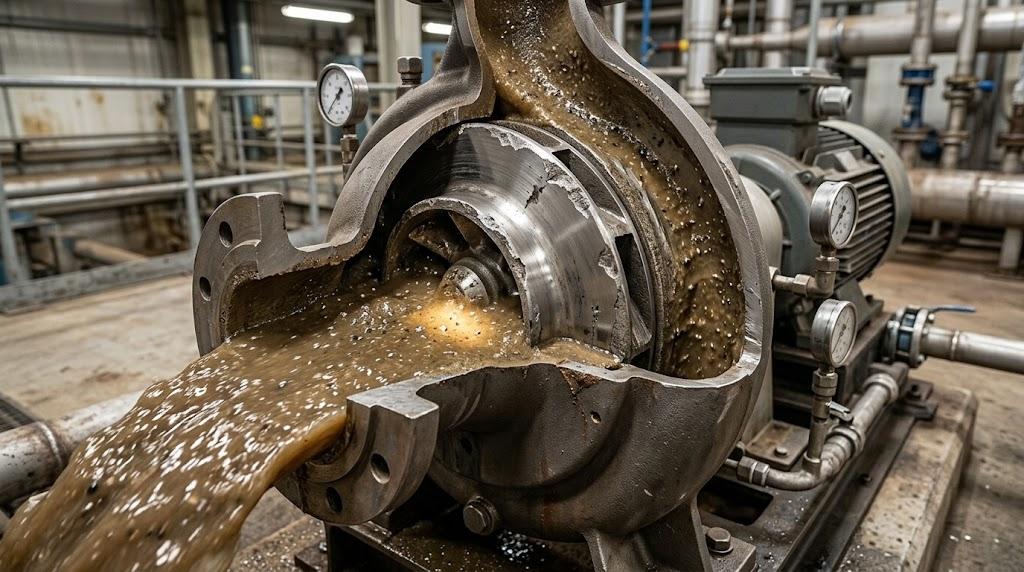 The internal components of a standard pump — the impeller, wear rings, casing, and seals — are subjected to relentless erosion under these conditions. What begins as surface wear quickly compounds into reduced flow efficiency, increased energy demand, and ultimately, mechanical failure. In many facilities, this cycle repeats every three to six months when the wrong pump technology is installed.
This is not simply an engineering procurement issue. It is a building performance issue. The mechanical infrastructure of an industrial facility is inseparable from its operational output, its sustainability profile, and its maintenance economy.
The True Cost of Mismatched Systems
In much the same way that poorly specified building materials lead to premature deterioration and costly remediation, under-specified pump systems generate a cascading series of hidden costs that far exceed the initial capital outlay.
- Accelerated component replacement drives frequent production shutdowns. In heavy industrial contexts, even a few hours of unplanned downtime can translate into substantial financial losses — a reality that rarely appears on a project’s initial cost model.
- Elevated energy consumption is another consequence that compounds silently over time. As internal components erode, the pump must work harder to maintain the same flow rate, placing additional load on the motor and inflating energy bills across an entire operational year.
- Maintenance labour and service costs accumulate alongside these failures. Maintenance teams are redirected from planned work to reactive repairs, and when external service contractors are required, the costs rise further.
Perhaps most critically, safety and compliance risks emerge in chemical processing and wastewater environments. Failing seals can release hazardous fluids, creating both health risks and regulatory exposure — consequences that extend well beyond the mechanical room.
The compounded cost of these failures over two to three years can easily reach three to five times the original pump procurement cost. This is a return on investment calculation that no conscientious project team should ignore.
Material Intelligence as a Design Principle
In architectural practice, we understand that material selection is never purely aesthetic — it is functional, contextual, and long-term. The same intelligence must be applied to mechanical infrastructure.
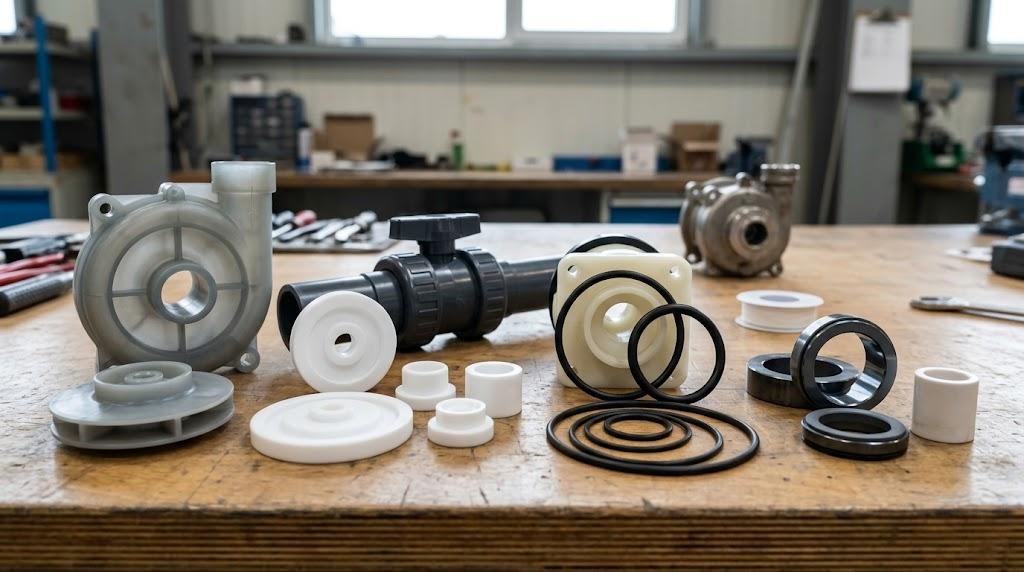 Purpose-built abrasive fluid pumps are engineered with wear-resistant materials and open impeller geometries designed to reduce particle friction across the internal flow path. Unlike standard metallic pumps — which can corrode rapidly when exposed to acidic slurries or aggressive chemical compounds — these systems are calibrated to the specific demands of abrasive fluid environments. The result is not merely extended service life, but a fundamentally more predictable maintenance cycle and a more stable operational output.
The Shift Toward Non-Metallic Systems
One of the more significant material shifts occurring across Indian manufacturing and chemical processing facilities is the growing adoption of non-metallic pump technologies. This mirrors a broader trend in sustainable building design: the recognition that material durability and chemical resistance must be evaluated holistically, not simply by initial cost.
Metallic pump systems — even those fabricated from stainless steel — are inherently vulnerable to corrosion when exposed to acidic slurries and aggressive process fluids. Engineering polymers such as polypropylene (PP) and PVDF (polyvinylidene fluoride) offer measurably superior resistance to both chemical attack and physical abrasion. They are lighter in weight, easier to maintain, and in the right application, significantly outlast their metallic counterparts.
This is the domain where expertise from experienced non metallic pump manufacturers becomes genuinely valuable. The capacity to specify the right polymer, understand fluid chemistry, and translate application demands into an appropriate pump design is analogous to what we expect from high-performance building product specialists: not just a product, but an engineered solution for a defined context.
A Framework for Better Specification
For project managers, facility engineers, and consultants involved in the procurement of industrial mechanical systems, the following questions reframe the decision from a price-first exercise to a value-first one:
- What is the particle concentration and composition of the fluid being handled?
- What is the fluid’s pH level and chemical profile?
- What are the required flow rate and pressure head parameters?
- What are the operating temperature ranges within the system?
- What is the current maintenance frequency, and what is driving it?
- What is the projected total cost of ownership over a three-to-five-year horizon?
These are the questions that separate reactive procurement from considered specification — the same shift that distinguishes a well-designed building from one that merely meets a brief.
The Bigger Picture
Industrial facilities represent a substantial portion of the global built environment, and the systems embedded within them have real consequences for energy consumption, environmental compliance, and operational continuity. Selecting the wrong pump in an abrasive fluid application is, in this light, not only a technical oversight — it is a design failure.
The solution, as with most well-considered design challenges, begins with asking the right questions, engaging with specialists who understand the specific demands of the application, and evaluating performance over time rather than cost at point of purchase.
In a field that rightly values the intelligence of materials, the discipline of long-term thinking, and the integration of systems into the whole, this principle applies as much beneath the slab as it does above it.