After a car accident, people often have very different versions of what happened. One driver may say the other car came out of nowhere. Another may insist they had the green light. Or a witness may remember part of the crash but not the seconds leading up to it. Even the people involved may be too shaken up to explain everything clearly.
All of these factors and limitations create confusion. And that’s where car accident reconstruction can step in and fill the gap.
Accident reconstruction is the process of studying the physical evidence, vehicle damage, road conditions, and available data to understand how a crash happened. It’s not guesswork, like some assume it must be. It’s a careful review of the scene, the vehicles, and the facts that can be measured or verified.
Not every crash needs a full reconstruction. A minor fender bender with clear fault may not require that level of analysis. But when the crash is serious, or the insurance company is questioning the claim, reconstruction can become very important.
The Goal of Accident Reconstruction
The basic goal of accident reconstruction is to answer a simple question: What actually happened?
That simple question can lead to several smaller questions, like:
- How fast were the vehicles moving?
- Where did impact happen?
- Did one driver brake before the crash?
- What direction were the vehicles traveling?
- Could either driver have avoided the collision?
- Did road conditions, vehicle defects, or visibility issues play a role?
These details can matter because fault isn’t always obvious. A crash may look one way at first, but the evidence may tell a different story.
For example, suppose two drivers collide in an intersection. Each one says they had the green light. If there’s no clear video, the case may depend on other evidence. A reconstruction expert may look at things like impact damage, skid marks, and traffic signal timing to better understand the sequence of events.
The Accident Scene
A crash scene often contains clues that disappear quickly. That’s why early documentation matters. A reconstructionist may study photos, measurements, police reports, diagrams, road conditions, traffic signs, lane markings, and damage to nearby objects. If a car struck a guardrail or barrier, that can help explain the path the vehicle took. If there are tire marks, they may show braking or sliding.
This kind of evidence is especially helpful when stories conflict. People may remember things incorrectly after a traumatic event, but physical evidence can help anchor the analysis in something much more objective.
The Role of Vehicle Damage
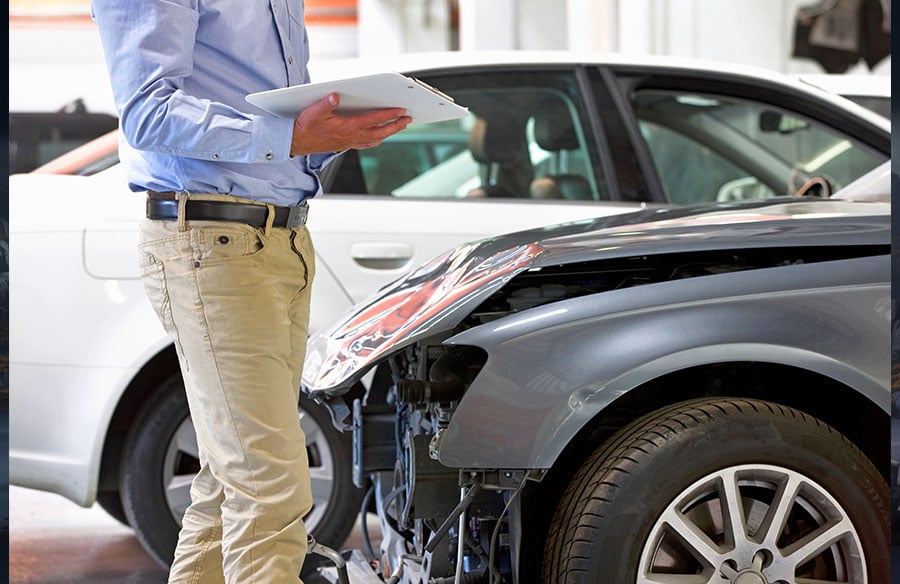
The vehicles themselves can reveal a lot about the crash. A reconstruction expert may look at the location and depth of damage, the direction of impact, paint transfer, or any number of patterns. Damage can often help explain how the accident happened. For example:
- The front corner of one vehicle may show a different kind of impact than the full front end.
- Side damage may help show whether one vehicle was turning, merging, or being struck from an angle.
- Rear-end damage may raise questions about following distance, braking, or traffic flow.
Sometimes the damage also helps show whether the crash matches the story being told. If one driver claims the other vehicle hit them from a certain direction, the damage pattern may support or challenge that claim.
Many modern vehicles contain systems that can record certain information around the time of a crash. This information isn’t always available, and it doesn’t always answer every question. But when it can be retrieved, it may help support the reconstruction.
Why Reconstruction Matters in Injury Claims
Insurance companies don’t always accept your version of events. They may argue that you were partly responsible. Or they might try to say that your injuries don’t match the impact. If the case involves serious injuries or a large claim, the insurer will look for ways to reduce what it has to pay.
A reconstruction can help push the discussion back toward evidence. A car accident attorney may bring in a reconstruction expert when the facts need deeper analysis. This doesn’t happen in every case, but it can be valuable when the outcome depends on proving how the crash occurred.
Reconstruction Can Also Help Explain Severity
A reconstruction may help explain not only who caused the crash, but also why the injuries were so serious.
The reality is that force and direction of impact can affect how a person’s body moves inside the vehicle. This part can matter when an insurance company tries to downplay the injury. If the crash mechanics support the type of harm you suffered, that can help strengthen the connection between the accident and your medical condition.
Adding it All Up
Car accident reconstruction is ultimately about turning evidence into a clearer picture of what happened. You don’t need reconstruction for every accident. But when fault is disputed or the insurance company is pushing back, it can become one of the most important tools in the case.
After a serious crash, you don’t want the insurance company’s assumptions to define the story. You want the facts to do that. Accident reconstruction helps bring those facts into focus and gives you a better chance at a favorable outcome.