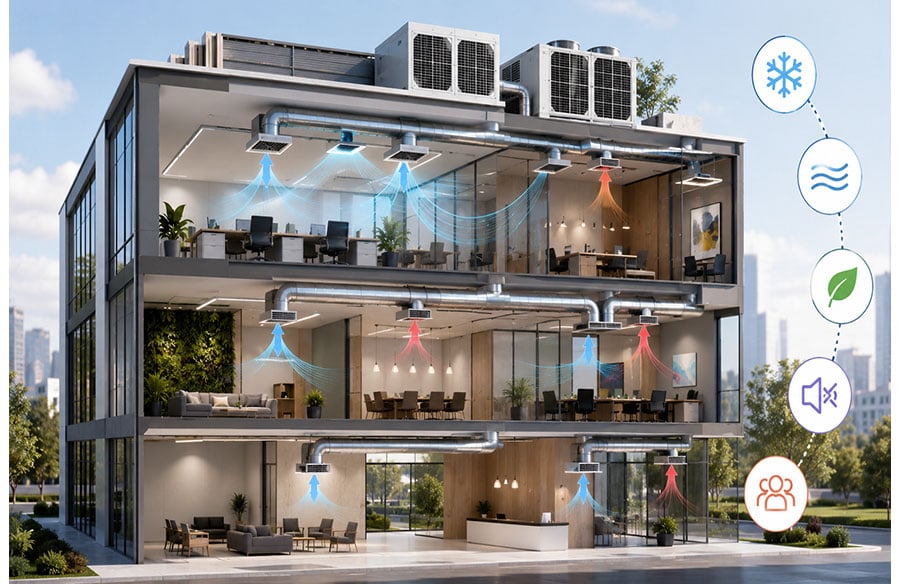
The best building is not just about looking good. People also judge the quality of a place by how comfortable it feels. Proper temperature, clean air and a balanced indoor environment directly impact the daily experience. That’s why HVAC systems are considered a critical part of design and performance in modern homes and commercial buildings.
When HVAC planning is incorporated into a building’s design at an early stage. It’s easier to achieve better comfort, better air quality and greater energy efficiency. That’s why many owners, designers and construction professionals turn to resources like hvacservice.io for reliable information and professional guidance. A proper HVAC strategy not only improves the performance of a building. But also improves the overall experience of residents and users.
The Connection Between Building Design and Indoor Comfort
The design of any building is not limited to its appearance. How comfortable a space feels is equally important. People feel more comfortable in a home, office or any building if the indoor environment is balanced. Why HVAC systems in modern creation are not just deliberate technical requirements but part of the overall project. When there is concord between the building scheme and the climate control system. The space becomes more productive and livable.
Helps maintain uniform temperatures in different rooms.
- Better temperature control
- Greater interior comfort
- Improved user experience
- All-weather comfort
- More usable space
Why Comfort Matters in Residential and Commercial Spaces
Comfort is a basic need in homes and commercial buildings. People stay in any place for a long time only when the environment is pleasant. Appropriate temperature, fresh air and low humidity make daily life easier. If the indoor environment is unbalanced, attention, work speed and overall experience are affected. That is why comfort is considered not just an additional thing but part of the main purpose of the building.
HVAC as a Core Part of Functional Design
HVAC systems are essential building systems due to their control of temperature and other systems building and room performance. An ideal HVAC system is invisible, not affecting space aesthetics, and offers performance and comfort. This drives HVAC system consideration in the preliminary stages of design.
- Efficient Performance
- Quiet System
- Improved Air Flow
- Space Efficiency
- Design Integration
- Consistent Comfort
Indoor Air Quality and Healthier Living Environments
Indoor air quality is fundamental to health and comfort in any building. If the air is not clean and balanced. It directly affects people’s health, focus and daily performance. Modern HVAC systems ensure that fresh air is constantly circulating inside and that pollution, humidity and unwanted particles are kept to a minimum. Good indoor air quality not only reduces the risk of illness but also better the overall living and working setting.
Why Early HVAC Planning Improves Building Performance
Preparing HVAC at an initial stage plays a crucial role in improving the general performance of a building. When the system is decided along with the design, better use of space is possible and no major changes or issues are encountered later. This makes the building more equalized, comfortable and competent.
If HVAC is added at a later stage, technical and design issues often arise. In contrast, proper planning from the beginning results in energy savings, better air circulation and long-term performance. Which makes the building more reliable.
The Value of Working With Qualified HVAC Professionals
Experienced HVAC experts are essential for improving building systems and comfort. They comprehend what systems work best for what buildings and how to size and install systems so they fit. With the good systems in place, buildings have fewer technical problems and systems work more effectively.
Technical Expertise That Supports Better Outcomes
Technical expertise helps HVAC systems do their job better. With the help of experts, buildings do what they are meant to do and HVAC systems help even more.
- Right system for the job
- Right size for the building
- Good installs
- Less problems
- Work better
Conclusion
HVAC systems help buildings do what they are meant to do and they help control the systems that help with air and energy. Great HVAC systems help buildings do what they are meant to do and help with the energy air systems. Great buildings HVAC systems help with building efficiency.
There is no question that HVAC systems help buildings do what they are meant to do and help with the systems that help with energy and air. Good systems help with building effectively and help with the value of the building and help the building do what it needs to do.