Lifting work is routine in construction, manufacturing, warehousing, facilities management, health and social care, logistics and many other sectors. But because loads can be heavy, unstable, awkwardly shaped or moved near people and structures, lifting operations carry serious risk. A dropped load, failed sling, overloaded crane or poorly planned lift can cause life-changing injuries, fatalities, property damage and business disruption. The Lifting Operations and Lifting Equipment Regulations 1998, known as LOLER, provide the legal framework for controlling these risks in UK workplaces.
LOLER is not simply an inspection requirement. It is a management system for ensuring lifting equipment is suitable, lifting operations are properly planned, and people involved in lifting work are competent. Applied well, LOLER turns lifting from a reactive activity into a controlled process based on risk assessment, supervision, maintenance and evidence.
What LOLER Covers
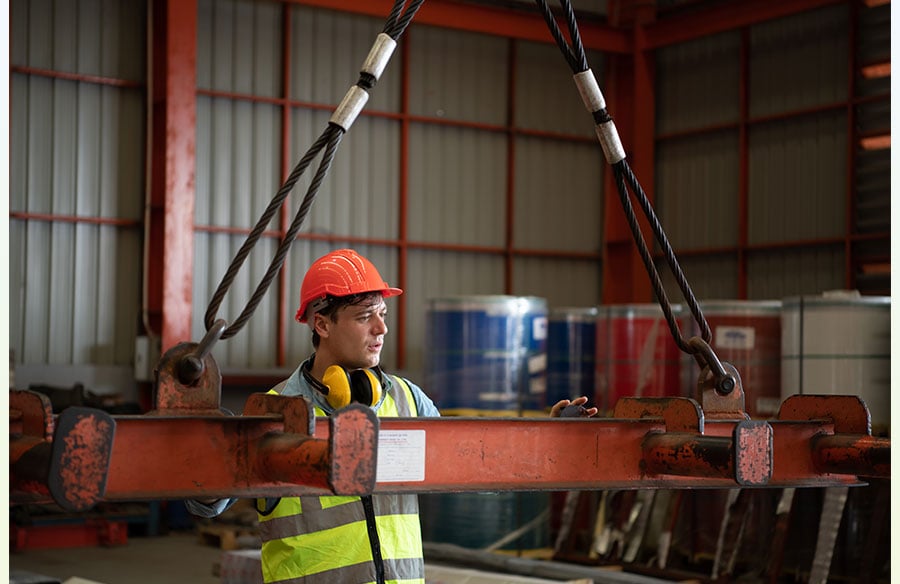
LOLER applies to work equipment used for lifting or lowering loads. This includes cranes, hoists, forklifts used for lifting, passenger and goods lifts, lifting beams, vehicle tail lifts, mobile elevated work platforms, patient hoists, slings, chains, shackles and other lifting accessories. A load can be an object, material, machine part, pallet or person.
The regulations sit alongside broader health and safety duties and work equipment requirements. In practical terms, LOLER focuses on lifting-specific hazards: strength and stability, safe working loads, secure positioning, dropped loads, people being lifted and the organisation of lifting operations.
Proper Planning: The Foundation of Safe Lifting
One of LOLER’s most important roles is requiring every lifting operation to be properly planned by a competent person. The level of planning should match the complexity and risk of the task. A simple, repetitive lift may need a standard procedure, pre-use checks and clear supervision. A complex crane lift over occupied areas, near overhead lines or involving multiple lifting points requires a detailed lift plan and closer control.
Effective planning considers the weight, size, centre of gravity and stability of the load. It also looks at the lifting route, ground conditions, weather, nearby people, communication methods, exclusion zones and emergency arrangements. The lifting equipment and accessories must be suitable for the load and environment, and the safe working load must never be exceeded.
This duty helps prevent a common failure: assuming a lift is safe because it has been done before. LOLER encourages duty holders to assess each task, identify foreseeable risks and put proportionate controls in place before work starts.
Competence and Supervision
LOLER places competence at the centre of safe lifting. Competence is not based on job title alone. It depends on the person having the right knowledge, training, experience and ability for the task. Operators, slingers, signallers, supervisors, maintenance personnel and competent persons carrying out thorough examinations all need role-specific capability.
LOLER is not just about inspections. It provides a framework for safe lifting by making sure equipment is fit for purpose, lifts are planned, and workers are competent. For duty holders, managers and staff involved in lifting equipment checks, structured LOLER training can help build understanding of LOLER management, inspection duties and legal responsibilities.
Thorough Examination and Inspection
A major role of LOLER is ensuring lifting equipment remains safe throughout its working life. This is achieved through thorough examination by a competent person and, where needed, interim inspections and pre-use checks.
A thorough examination is a detailed assessment of lifting equipment and accessories. It is intended to detect defects, deterioration or weaknesses that could make equipment unsafe. The competent person must be able to identify problems and judge their significance for continued use. This may involve visual examination, functional checks, wear measurements, non-destructive testing or other methods, depending on the equipment and risk.
LOLER sets default examination intervals unless a written examination scheme specifies otherwise. Equipment used to lift people, and lifting accessories, generally require thorough examination every six months. Other lifting equipment is generally examined every 12 months. Equipment may also need examination before first use, after assembly at a new location, or following exceptional circumstances such as damage, modification or significant repair.
Inspection and maintenance are not the same. Maintenance keeps equipment working safely, while thorough examination confirms it is still safe to use.
Records, Reports and Defect Management
LOLER strengthens accountability by requiring records of thorough examinations and inspections to be kept. Reports should identify the equipment examined, the examination date, any defects found, the level of risk and the action required. Where a defect is or could become dangerous, it must be acted upon within the required timescale, and in serious cases equipment should be taken out of service immediately.
Good record-keeping helps managers track condition, schedule future examinations, demonstrate compliance and make better replacement decisions. It also prevents equipment from slipping through gaps when moved, hired, repaired or used across multiple sites.
Preventing Human and Operational Failures
LOLER helps prevent failures in both equipment and management systems. Equipment failures may involve worn chains, damaged hooks, unstable machinery, incorrect accessories or overloaded equipment. Management failures often involve poor planning, unclear roles, weak communication, missing records or ignoring known defects.
Through planning, competence, supervision, examination and documentation, LOLER provides several layers of protection. A pre-use check can spot damaged lifting accessories, while a lift plan can identify risks such as unsuitable ground conditions before work begins.