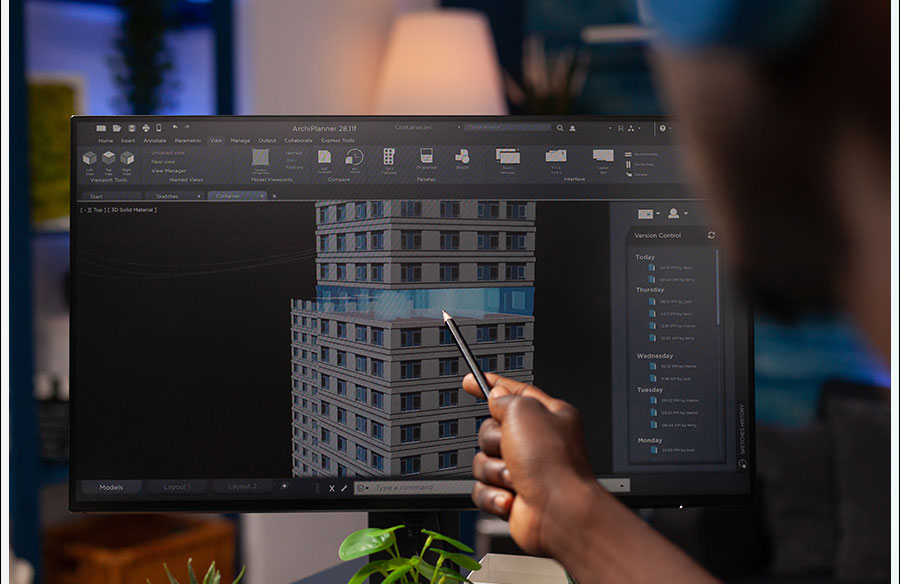
The first time I watched a client navigate a project through a 3D Furniture Configurator instead of reviewing static renders, the conversation changed completely. Questions became more specific. People stopped asking what a space “might” feel like and started reacting to how it actually behaved visually. Materials were swapped in real time, layouts were adjusted immediately, and design discussions became far less abstract. That experience convinced me that interactive 3D environments are not simply improving architectural presentation. They are changing architectural communication itself.
Architecture has always struggled with translation
One of the persistent challenges in architecture is translation.
Architects think spatially. Clients often do not. Designers can look at plans, elevations, and renders and mentally reconstruct the experience of a space. Most people outside the profession cannot.
This creates a communication gap that has existed for decades. Drawings explain structure. Renderings explain atmosphere. Physical models explain form. But none of these methods fully replicate the experience of interacting with a space dynamically.
As projects become more complex and clients become more visually literate, expectations are shifting. People no longer want to passively interpret a design proposal. They want to engage with it directly.
Static renders create a controlled narrative
Traditional architectural visualization is highly curated.
A rendering captures a specific angle, specific lighting conditions, and a carefully selected composition. It tells a visual story, but it also limits the viewer to the perspective chosen by the designer.
This approach works well for presentation, but not always for understanding.
Clients often approve spaces based on visuals that emphasize atmosphere while leaving practical spatial questions unresolved. How does the room feel from another angle? How does the material behave under different lighting? How crowded does the layout become once furniture placement changes?
These questions usually appear later in the process, sometimes after decisions have already been finalized.
Interactive environments change this because they remove some of the distance between representation and exploration.
Interactivity changes the role of the viewer
The most important shift is psychological.
When someone looks at a rendering, they remain an observer. When someone navigates an interactive environment, they become a participant.
That difference affects how people process spatial information. Movement creates a stronger understanding of scale. Perspective changes reveal relationships between objects and circulation paths. Configurable elements allow people to test decisions instead of imagining them abstractly.
In practice, this often leads to more productive conversations. Instead of reacting emotionally to a polished image, clients begin discussing functionality, flow, proportion, and usability with greater clarity.
The design discussion becomes more grounded.
Architectural communication is becoming experiential
Architecture has always depended on visual communication, but increasingly it also depends on experiential communication.
This is particularly important in projects where non-professionals are deeply involved in decision-making. Residential clients, investors, developers, and public stakeholders often evaluate spaces emotionally before they evaluate them technically.
Interactive 3D environments help bridge these perspectives because they combine atmosphere with exploration. Users are not only seeing a space. They are testing relationships inside it.
That distinction reduces ambiguity. It also reduces the mismatch between expectation and reality once construction or implementation begins.
Why configurability matters
One reason interactive environments are becoming more influential is that modern design workflows involve constant variation.
Clients compare materials. Layouts evolve. Furniture systems change. Lighting strategies are adjusted. In traditional workflows, every meaningful change may require new renderings or updated presentation packages.
This slows communication and narrows experimentation.
Configurable digital environments make variation part of the experience itself. Instead of presenting a single “finished” interpretation, designers can expose a range of possibilities inside one navigable system.
That flexibility changes the tone of collaboration. Discussions become iterative rather than approval-driven.
Spatial understanding is difficult to fake
A recurring problem in architecture is that many people approve designs without fully understanding them spatially.
They understand the mood. They understand the style. But they do not fully understand scale, depth, movement, or how elements relate once inhabited physically.
Interactive environments reduce this problem because spatial understanding emerges through exploration rather than explanation.
This matters more than many professionals initially expect. Misunderstandings about proportion and circulation are often responsible for dissatisfaction later in projects. The earlier those issues become visible, the easier they are to resolve.
Real-time visualization changes design workflows internally
The impact is not limited to client presentations.
Interactive 3D systems also influence internal collaboration between architects, designers, visualization teams, and stakeholders. When spaces become explorable rather than fixed, design review becomes more dynamic.
Teams can identify inconsistencies earlier. Material conflicts become easier to notice. Furniture relationships can be tested quickly without rebuilding presentation assets from scratch.
This creates a workflow that is more adaptive and less dependent on static deliverables.
Photorealism is no longer the only priority
For years, architectural visualization focused heavily on photorealism. The goal was to make images indistinguishable from photography.
That pursuit still matters, but interaction is becoming equally important.
A perfectly rendered image may look impressive while still communicating space poorly. An interactive environment with slightly lower visual fidelity may create stronger understanding because the user can move, compare, and experiment inside it.
This changes how value is measured in visualization. Communication quality increasingly matters more than image perfection alone.
Younger audiences already expect interactive environments
Another reason this shift is accelerating is generational familiarity.
People who grew up with games, virtual environments, and real-time digital systems are comfortable navigating spaces interactively. They expect responsiveness. They expect agency. Static presentation formats feel increasingly passive by comparison.
This does not mean architecture should imitate gaming culture directly. But it does mean expectations around spatial communication are changing faster than many firms realize.
Interactive environments feel natural to audiences who already spend large portions of their lives navigating digital space.
Architecture is becoming more collaborative
Interactive environments also redistribute authority in subtle ways.
Traditional presentations often reinforce a one-directional communication model where designers present and clients react. Interactive systems encourage more collaborative exploration.
Clients ask different questions when they can test options themselves. Stakeholders engage more deeply when they can navigate scenarios rather than simply review slides.
This does not reduce the importance of expertise. If anything, it increases the value of strong design guidance because the design process becomes more transparent.
The line between visualization and simulation is blurring
One of the most interesting developments is that interactive architectural environments are moving closer to simulation systems.
Spaces are no longer only being displayed. They are increasingly being tested. Designers evaluate movement, behavior, interaction patterns, and environmental responses in more dynamic ways.
This creates opportunities far beyond presentation. Real-time environments can support planning, user testing, furniture configuration, operational forecasting, and experiential prototyping.
Architectural communication becomes less about showing a future space and more about allowing people to experience aspects of that future before it exists physically.
Why this shift matters
The deeper reason interactive environments matter is not technological novelty. It is clarity.
Architecture depends heavily on imagination. The profession constantly asks people to evaluate spaces before they exist. Anything that reduces the distance between concept and understanding improves the quality of communication.
Interactive 3D environments reduce that distance.
They help clients understand scale more accurately. They make design iteration faster. They expose spatial relationships more clearly. They transform presentations into conversations.
Most importantly, they make architecture easier to experience before it is built.
The broader transition
What we are seeing is part of a larger transition in digital design culture.
Static representation is gradually giving way to responsive, explorable systems. Architecture is moving away from communication based purely on curated imagery and toward communication based on interaction.
That shift affects how projects are reviewed, how decisions are made, and how trust is built between designers and stakeholders.
The firms that adapt early will likely communicate ideas more effectively because they are reducing ambiguity instead of simply improving visual polish.
And in architecture, reducing ambiguity often changes the entire project experience.