Bathroom trends come and go. One year, it’s all about bold tile patterns. The next, it’s white everything. Scroll through social media long enough and it starts to feel like you’re supposed to renovate every five years just to keep up.
But some shifts aren’t just trends. They reflect deeper changes in how people live, age, and use their homes. If you’re remodeling or building, it’s worth separating what’s flashy from what’s here to stay.
Keeping this in mind, here are several bathroom design and architecture trends that aren’t likely to fade anytime soon.
Walk-In Showers and Aging-in-Place Design
One of the clearest long-term shifts is the move toward walk-in showers. This isn’t just about style – it’s about accessibility.
The U.S. population is aging rapidly, largely because the Baby Boomer generation has reached retirement age, and people are living much longer. There are now more than 57.8 million Americans aged 65 and older, representing a pretty healthy 17.3 percent of the population. That number is expected to reach 80 million by 2040 and then balloon to 90 million by as early as 2050.
Those aren’t small numbers. The data reflects a major demographic shift, which means changes in the needs people have at home. As mobility decreases with age, traditional tub-and-shower combinations become less practical. Stepping over a high tub wall can become dangerous. That’s where remodeling to walk-in showers with low or zero thresholds come into play. They can reduce fall risk and make it easier to function independently as people age.
Thankfully, modern designs don’t sacrifice aesthetics for accessibility. Things like frameless glass enclosures, large tile, built-in benches, and sleek grab bars integrated into the design allow the space to feel elevated.
In fact, the majority of younger homeowners are choosing walk-in showers as well – which is a huge positive. A bathroom that works at 35 should still work at 75. That kind of long-term thinking makes this more than a trend.
Warm Minimalism
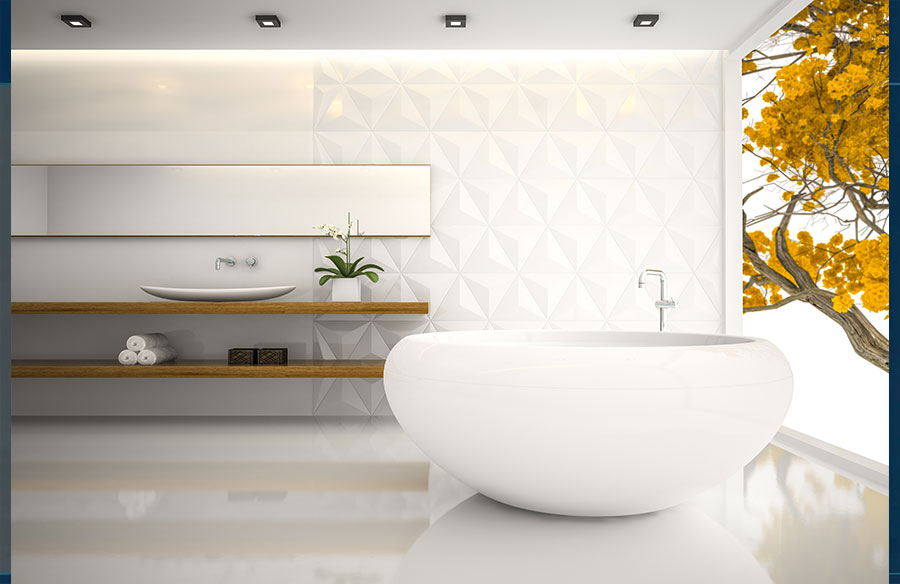
For years, bathrooms leaned heavily into cool-toned minimalism — white tile, gray vanities, chrome finishes. While clean lines remain popular, the palette is warming up.
We’re seeing a lot of natural wood tones, brushed brass hardware, and soft beige or clay-colored tile replacing stark white contrast. This “warm minimalism” feels inviting rather than sterile. It acknowledges that bathrooms are personal spaces where you begin and end your day – so why not make them cozy and relaxing?
Integrated Storage Solutions
As homes become more streamlined, visible clutter feels increasingly out of place. Bathrooms are no exception.
What does this look like in practice? Well, built-in niches in showers, recessed medicine cabinets, drawer organizers, and concealed storage are all becoming standard. And instead of relying on baskets or countertop containers, storage is integrated directly into the architecture.
This shift reflects a broader desire for bathrooms to be calm and relaxing environments. The room feels much more intentional when surfaces are clear and everything has a designated space.
Large-Format Tile and Fewer Grout Lines
Another trend with staying power is the use of large-format tile. Fewer grout lines create a cleaner, more expansive look. They also make maintenance easier, since grout is often the most difficult surface to keep pristine.
You’re also seeing more use of stone-look porcelain that mimics marble or limestone without the same level of upkeep. Homeowners want elegance, but they also want durability. This combination of practicality and refinement suggests that large-format materials aren’t going anywhere soon.
Sustainable Materials and Water Efficiency
Environmental awareness continues to shape design decisions. Low-flow toilets and faucets used to be luxury upgrades. However, they’re now pretty standard in most remodels.
Energy-efficient lighting and sustainable materials – such as responsibly sourced wood or recycled tile – are gaining traction as well. These choices reduce long-term utility costs while aligning with bigger sustainability goals. (In other words, it doesn’t feel like this is something that will go out of style.)
Flexible Layouts
Older homes often placed bathrooms wherever plumbing was convenient, while newer designs consider the flow of the overall floorplan much more carefully.
You’ll see more wet rooms, where showers and tubs share a unified waterproofed space. You’ll also see layouts that separate the toilet area for privacy while keeping vanities open and accessible. This flexibility reflects changing household dynamics. Multi-generational living is more common, so shared bathrooms need to function smoothly for different ages and schedules.
Designing With Longevity in Mind
It’s easy to be drawn toward whatever is trending online. But if you’re investing in a bathroom remodel, longevity should guide your decisions. If you choose materials and layouts that support how people actually live (and age), your bathroom will look good today and continue to make sense for years to come.