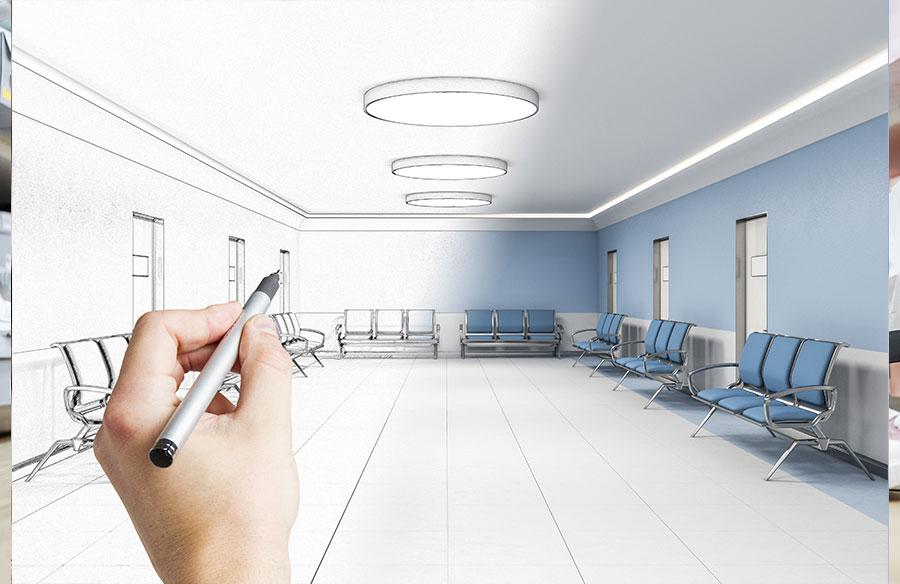
You feel the difference as soon as you step into a well-designed healthcare building. Clear signs guide you effortlessly to your destination, and natural light replaces the harsh glare common in older hospitals. You can find a quiet, comfortable corner to sit before your appointment. These thoughtful details shape how you experience treatment at a time when you may already feel vulnerable. The right environment steadies you; eases tension and allows you to focus your energy on recovery rather than your surroundings.
Smart, digitally enabled healing environments
Hospitals now build digital systems into their core design. When you arrive, interactive screens and mobile directions lead you directly to your clinic, which reduces stress and late arrivals. Dedicated telehealth rooms allow you to attend specialist consultations closer to home, saving energy when you feel unwell.
Design teams futureproof buildings with adaptable cabling, accessible service zones and flexible layouts so new equipment can integrate without major disruption. NHS Digital standards promote secure data sharing, which helps clinicians coordinate your care more efficiently. At the same time, architects use warmer materials, artwork and softer lighting to prevent technology from dominating the space.
Biophilic design and the role of nature in recovery
Designers increasingly draw on nature to support wellbeing. Large windows, courtyard gardens and indoor planting give you visual and physical access to greenery. Even brief exposure to natural light can improve sleep patterns and mood during recovery.
Inside wards, designers use timber finishes, muted colours and sound-absorbing panels to reduce noise and overstimulation. These practical choices create calmer surroundings where you can rest properly and speak openly with family members.
Patient-centred and flexible spaces
Modern facilities prioritise single rooms, accessible bathrooms and adaptable therapy areas. You gain privacy, better infection control and space for loved ones to stay nearby. Clear signage and uncluttered layouts also support people with cognitive or neurological conditions to move safely.
For those rebuilding their life after catastrophic injury, design forms part of a wider recovery pathway. Specialist rehabilitation units often include therapy gyms where you relearn everyday movements, quiet rooms where clinicians explain complex diagnoses and family spaces where you can plan next steps together. When a patient begins to consider practical matters such as returning to work, arranging long-term care or seeking legal advice through brain injury claims, these environments provide the privacy and structure needed to have clear, informed discussions.
Rehabilitation and respite centres as community assets
Rehabilitation and respite centres now feel less institutional and more like community hubs. Shared kitchens, social lounges and accessible outdoor areas allow you to practise everyday skills in realistic settings. Connections with local groups and transport routes help you rebuild independence gradually.