That small water stain on your ceiling could be draining your savings. Verisk’s 2024 analysis revealed that roof repair and replacement costs totaled nearly $31 billion in 2024, up 30% since 2022.
Yet most homeowners only inspect their roof after visible damage appears, when repair costs have already multiplied. The false economy of “waiting it out” transforms $750 average repairs into emergencies costing thousands.
Understanding which problems escalate fastest helps homeowners avoid catastrophic damage and protect their largest investment.
Missing or Damaged Shingles: Small Problem, Big Consequences
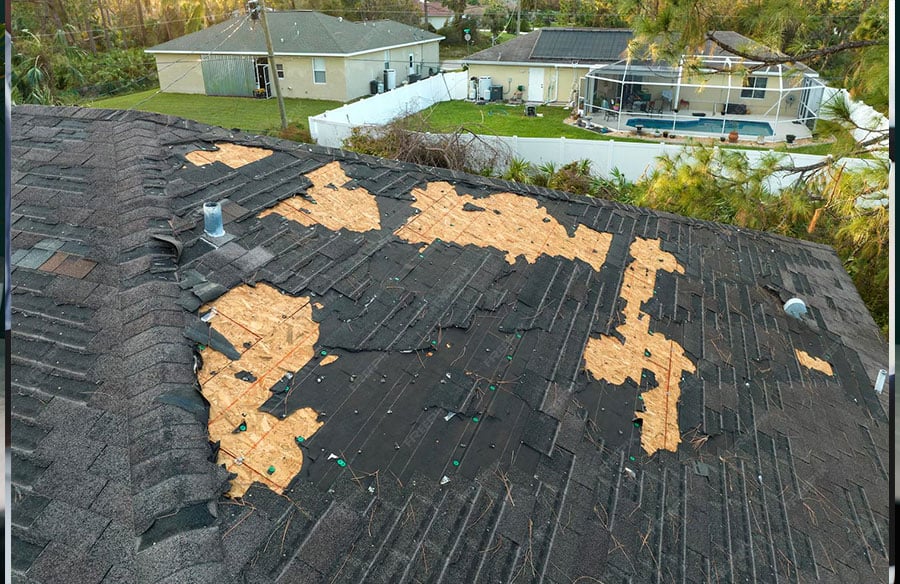
A single missing or damaged shingle creates a direct pathway for water infiltration. Roofing systems function as layered barriers, and when one shingle fails, the underlayment becomes exposed to rain, snow, and ice.
The damage timeline is often short. Moisture can penetrate the underlayment and reach the roof decking within days or weeks. From there, it soaks insulation and eventually appears as ceiling stains inside the home. By that stage, repairs extend far beyond replacing a few shingles.
According to professionals at Bear Mountain Roofing, biannual inspections, especially after severe weather, are essential for identifying damaged shingles before water breaches the roof system. Many vulnerabilities are not visible from ground level and require professional assessment.
Warning signs include granules accumulating in gutters, shingles that curl or buckle, and dark streaks across the roof surface. Addressing these issues early helps prevent minor wear from turning into structural damage.
Clogged Gutters: More Than a Drainage Issue
Homeowners often view gutters as a landscaping concern rather than a roofing one. That misconception leads to neglect until damage becomes extensive.
When gutters clog with leaves and debris, water backs up along the roof edge and seeps under shingles from above. Standing water also stresses fascia boards, causing warping and rot.
In colder regions, clogged gutters create ice dams that force melting snow back under shingles and into attic spaces.
The cost difference is dramatic:
- Professional gutter cleaning: $195-$625
- Water damage from overflowing gutters: average $8,000 in foundation and fascia repairs
- Fascia replacement: $1,200-$3,000
The problem compounds over time. What starts as overflow becomes rotted wood, then rafter damage, then interior water stains. Angi’s 2025 data shows fascia and soffit repairs averaging $600 to $6,000, depending on damage extent.
Quarterly inspections and seasonal cleanings prevent this cascade of failures.
Flashing Failures: The Hidden Weak Point
Flashing is the thin metal installed around roof penetrations like chimneys, skylights, and vent pipes. It creates watertight seals where different roof planes meet.
These junctions are the most vulnerable points on any roof. A 2023 study by the National Association of Home Builders found that flashing failures account for approximately 95% of all chimney-related leaks.
Rust, separated seams, and deteriorated caulking develop gradually but remain hidden from view. Most flashing sits behind chimneys or tucked in roof valleys, invisible without climbing onto the roof.
When chimney flashing fails, water runs down inside walls, soaking drywall, framing, and insulation. Repair costs typically range from $400 to $1,600 for standard replacements. Water damage can push total costs beyond $10,000 when mold remediation and structural work are required.
Red flags include:
- Water stains near chimneys or skylights
- Peeling paint on walls adjacent to roof penetrations
- Musty attic odors
- Visible rust or separated flashing material
Professional inspections remain the only reliable method for catching flashing problems before they cause interior damage.
Minor Leaks: The Procrastination Trap
Small leaks trigger a dangerous pattern of postponement. Homeowners see a water stain, place a bucket underneath, and promise to address it later.
The delay proves costly.
Typical damage progression:
- Week 1-2: Surface water staining
- Month 1-3: Saturated insulation, mold spore growth
- Month 6+: Structural wood rot, electrical hazards
The Insurance Information Institute reports that water damage and freezing account for nearly 24% of all homeowners’ insurance claims. Average claim amounts exceed $11,000.
Mold remediation alone ranges from $2,000 to $10,000, depending on contamination extent. The Environmental Protection Agency identifies hidden moisture intrusion as the leading cause of indoor mold growth, creating both structural and health risks.
Even minor leaks require immediate professional assessment. Temporary measures can limit damage while waiting for contractors, but they’re not solutions.
Prevention vs. Emergency Repair Economics
The homeowners who avoid major roofing disasters are not necessarily those with the newest roofs. They are the ones who invest in routine inspections and maintenance.
Regular roof checks catch problems while they are still manageable. Missing shingles are replaced before water reaches the decking, and flashing issues are addressed before mold develops. These proactive steps cost far less than emergency repairs and help preserve the roof’s lifespan.
The Bottom Line
Roof problems rarely announce themselves with obvious symptoms. They develop quietly, hidden from ground-level view, and escalate quickly when ignored. The gap between a minor issue and a major repair can be measured in weeks rather than years.
Homeowners who treat their roof as critical infrastructure protect themselves from preventable damage. Regular inspections, prompt repairs, and attention to early warning signs make the difference between routine maintenance and costly, disruptive repairs. The best time to address a roof problem is immediately. The second-best time is right now.