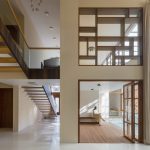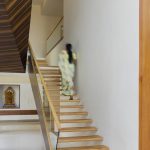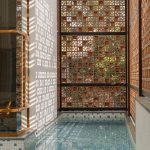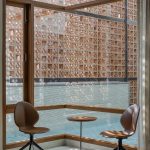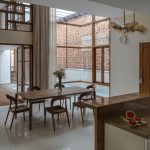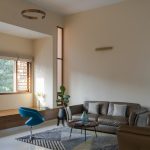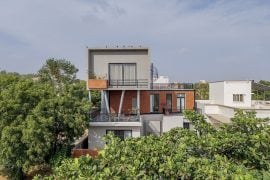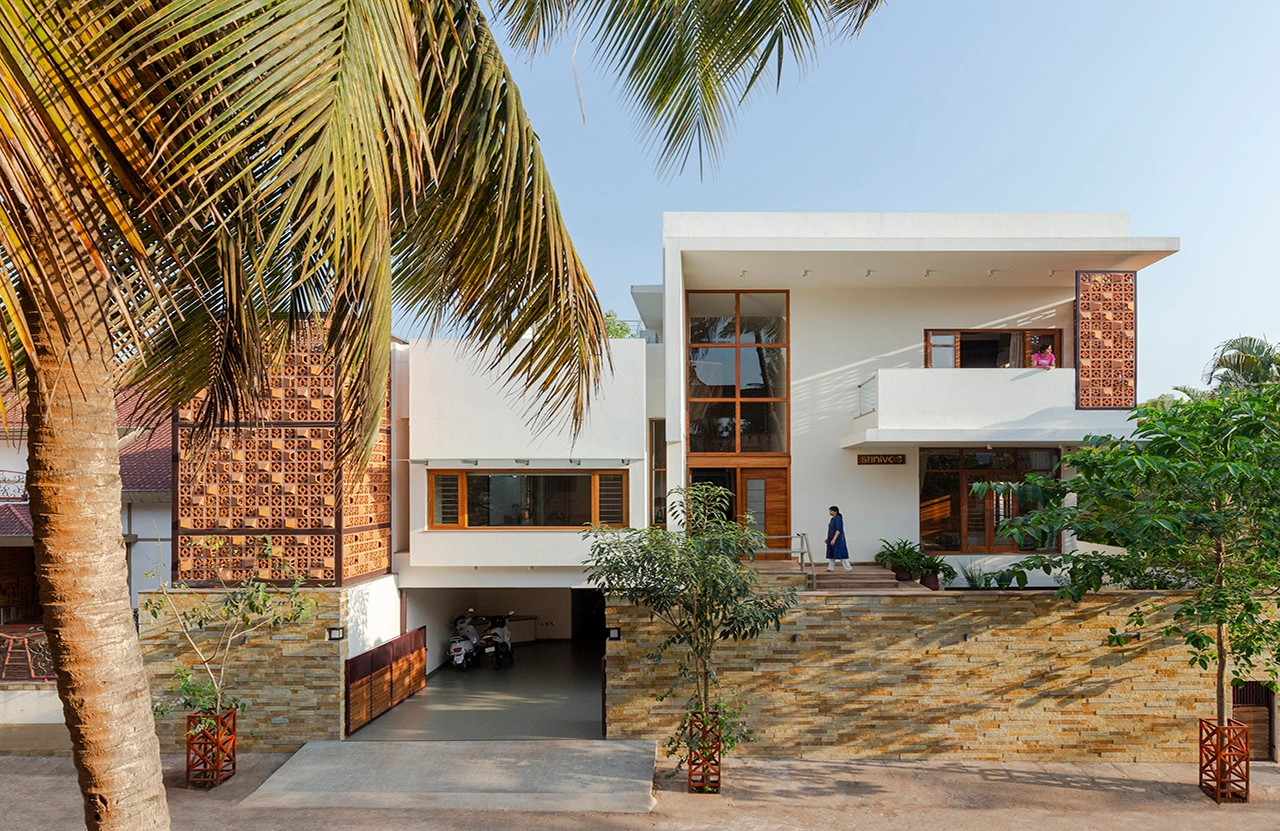
Set within the dense fabric of an old urban neighborhood, this residence negotiates the paradox of a maximal lifestyle within a framework of minimal aesthetic sensibilities. The programmatic brief was exacting: parking for seven cars, expansive service zones, four bedrooms, a home theatre, and a swimming pool, all on a constrained site where every square metre carried weight.
Project Name: The Pool Pavilion
Studio Name: Thirdspace
Project Location: Belagavi, Karnataka, India
Completion Year: 2024
Gross Built Area (m2/ ft2): 600 sq.m
Studio Principals: Praveen Bavadekar & Namrata Betigiri
Project Team: Praveen Bavadekar, Madhuri Gulbani
Structural Design: D L Kulkarni & Associates, Belagavi
Photographer: Suryan and Dang
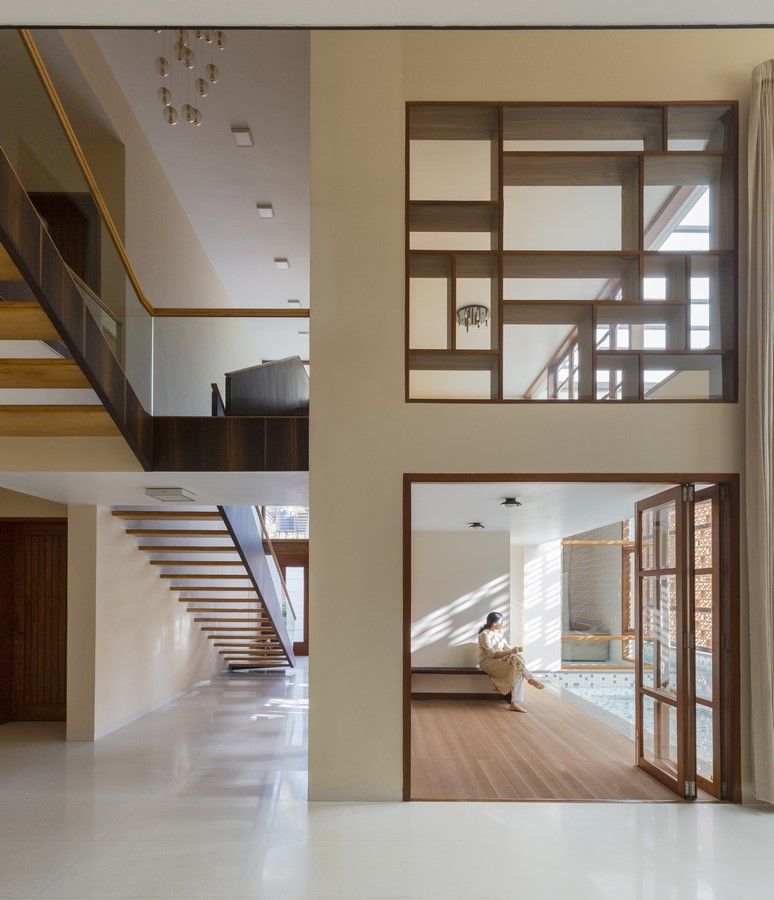
To reconcile these demands without forfeiting openness and spatial generosity, the design adopts a series of calibrated, strategic moves.
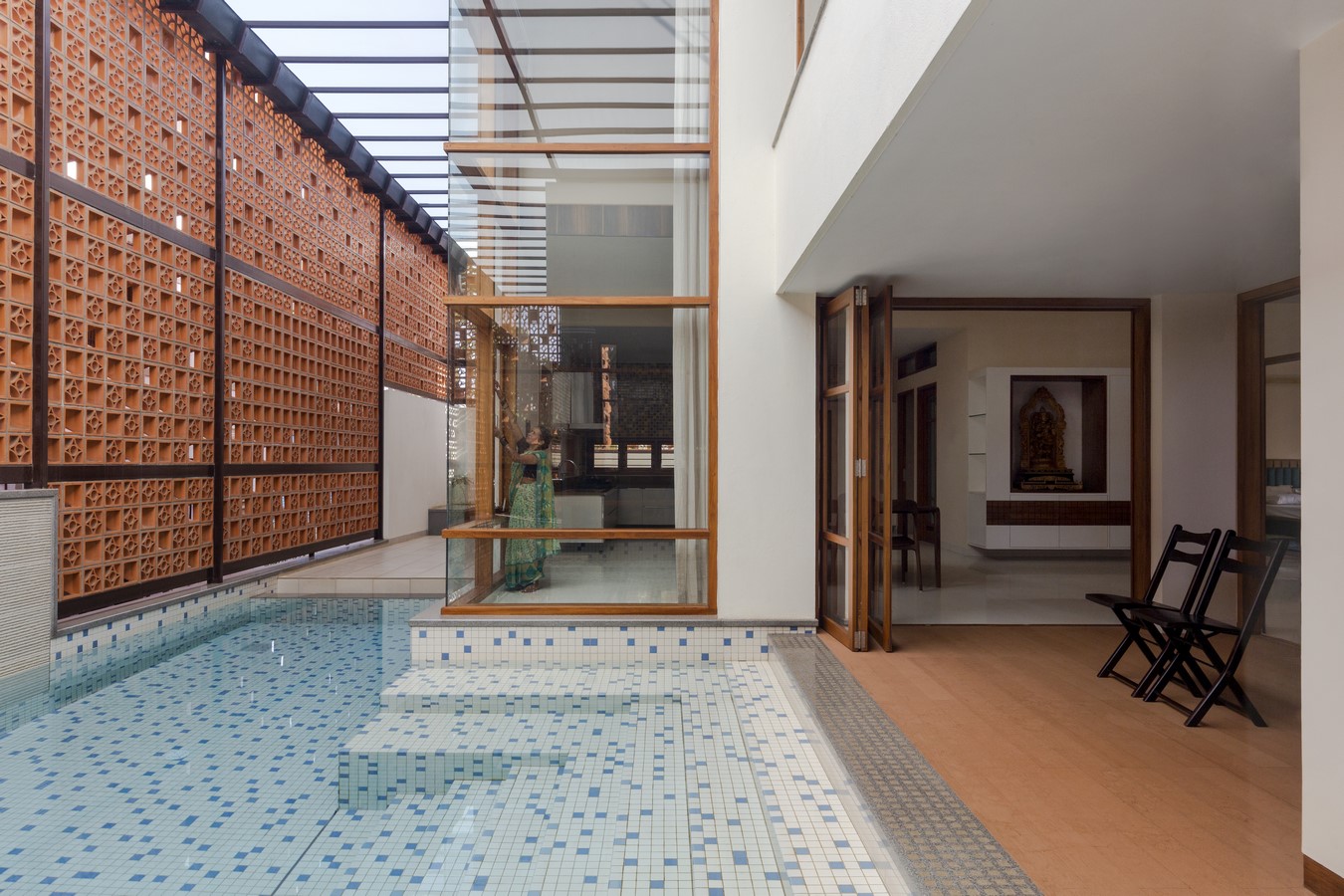
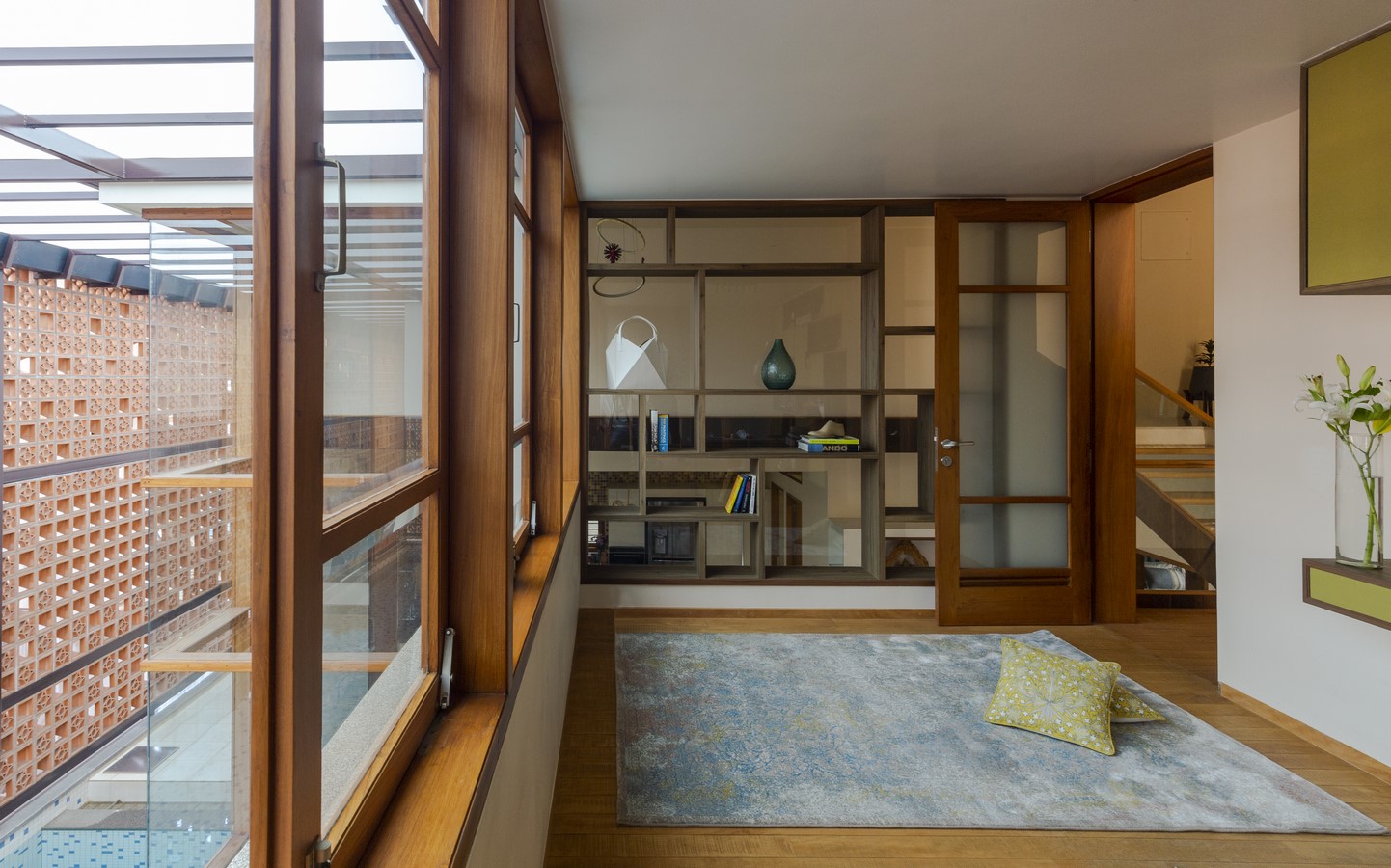
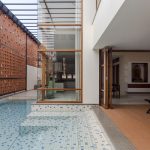
The home is elevated on a high plinth, allowing the semi-ground floor to discreetly house service functions within a compressed volume. This gesture liberated the upper ground plane, where the eastern setback was reimagined as a swimming pool. Rather than a residual margin, the setback transforms into a pavilion-like extension of the house: semi-open in nature, bound by a terracotta screen on three sides and capped with a glass canopy. Functioning simultaneously as a performative landscape and a passive cooling device, the pool orchestrates both micro-climate and experience.
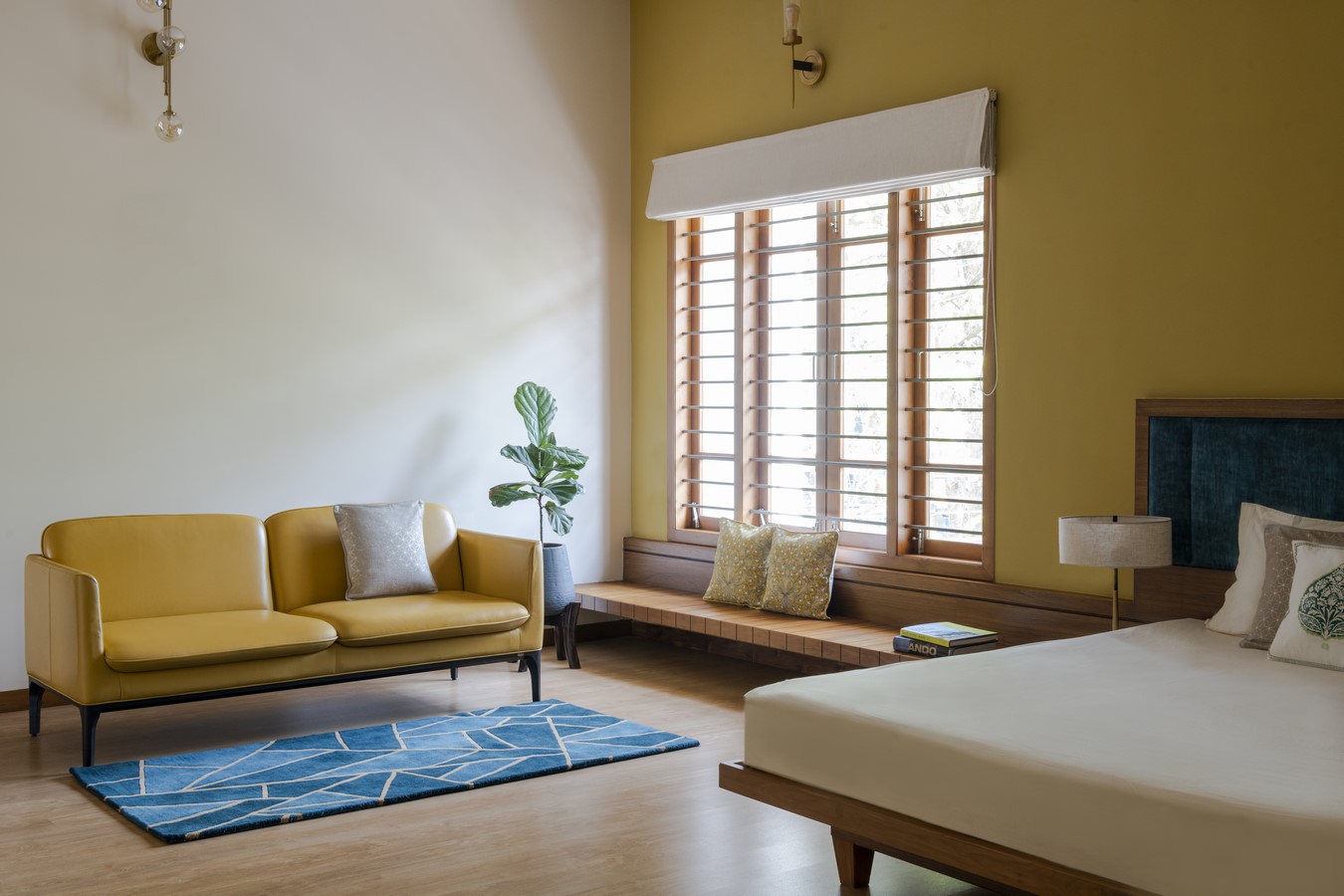
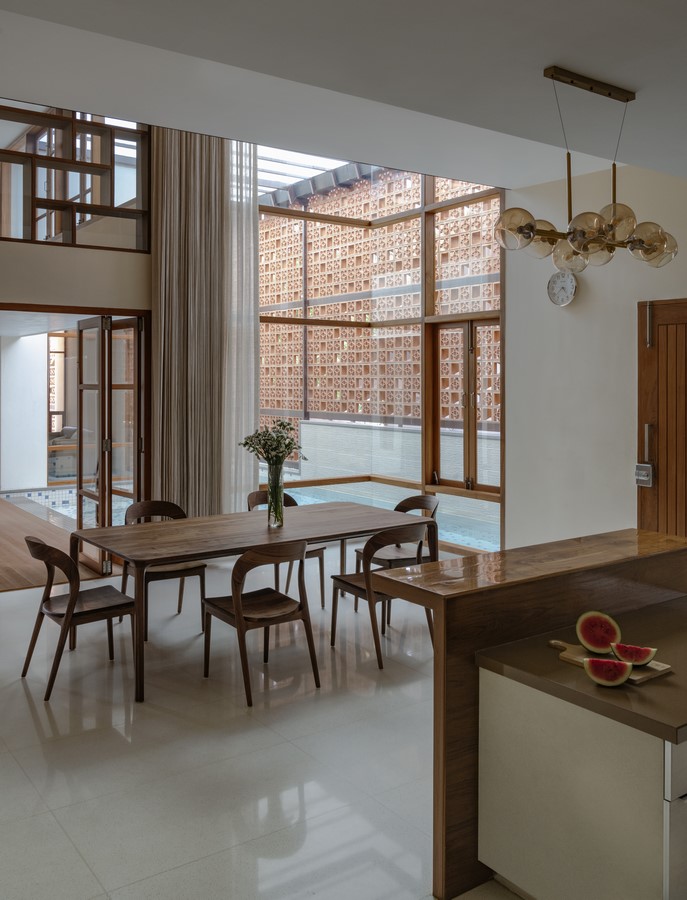
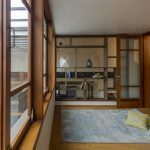
Public zones unfold along a north-south spine, poised between two contrasting volumes: the porous, fluid enclosure of the pool and the more opaque, insulated block containing the bedrooms and private retreats. The pool is accessed through a deck adjoining the living spaces and a sit-out near the dining, embedding water as a spatial and sensorial counterpoint within daily life. By modulating the section, the design opens layered visual connections across the house, where reflections from the water suffuse interiors with a softened, diffused light.
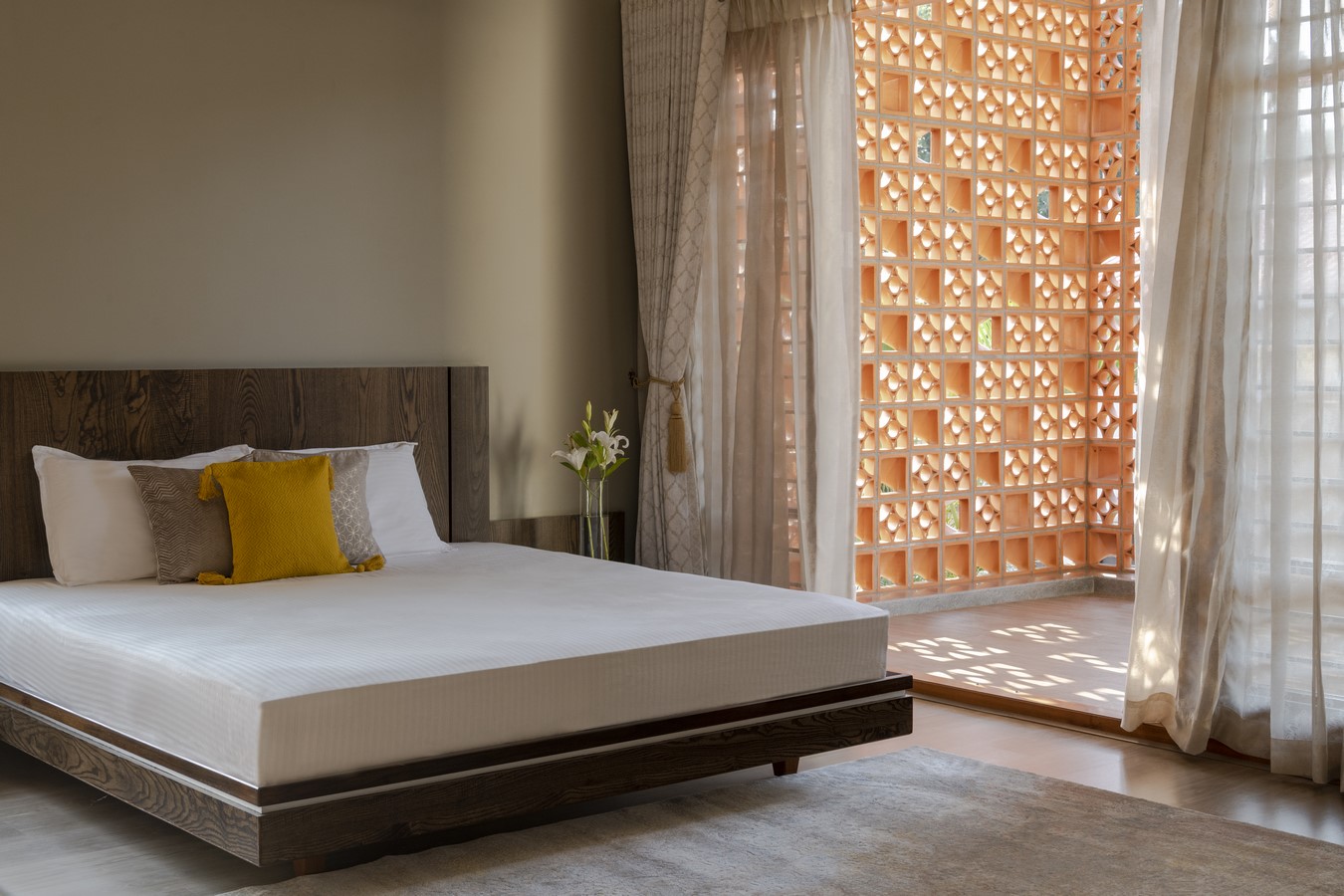
The architecture deftly aligns multiple, and at times contradictory, imperatives, programmatic density, spatial openness, and adherence to Vastu Shastra, into a cohesive whole. Vastu principles are not imposed as constraints but instead interwoven into an interlocking matrix of spaces that toggle between intimacy and openness, privacy and porosity.
Externally, the house presents a reserved, almost inscrutable presence, belying the openness of its interiors, where spatial overlaps, framed vistas, and sectional transparency enrich the experience of movement and inhabitation. A restrained material palette of timber tones, neutral finishes, and subtle accents of colour reflects the client’s aesthetic sensibilities and their deeper spiritual-philosophical leanings.
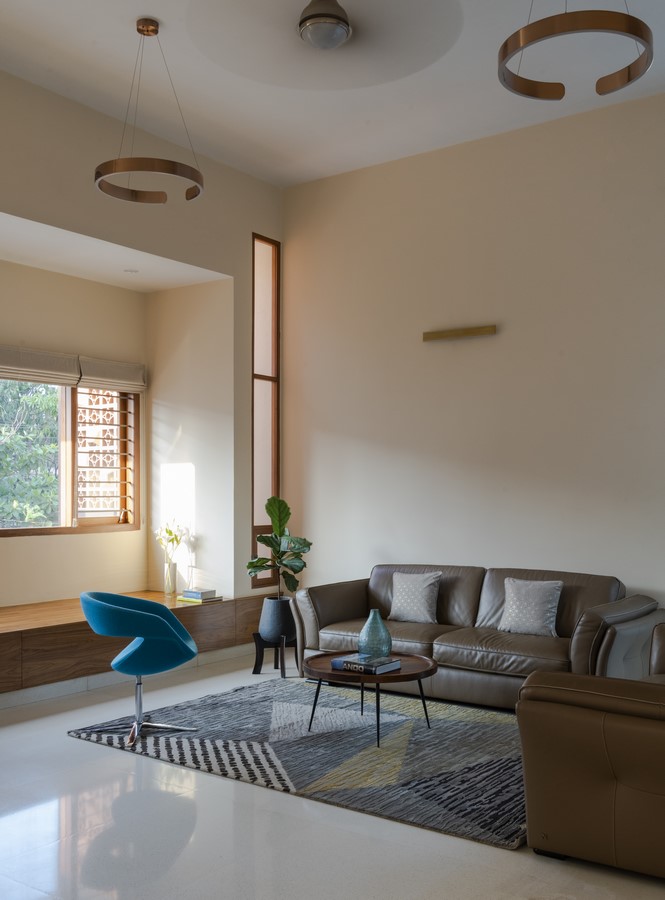
The result is an architecture that is simultaneously rigorous and poetic, maximizing lifestyle aspirations while foregrounding spatial clarity, atmospheric nuance, and contextual sensitivity.