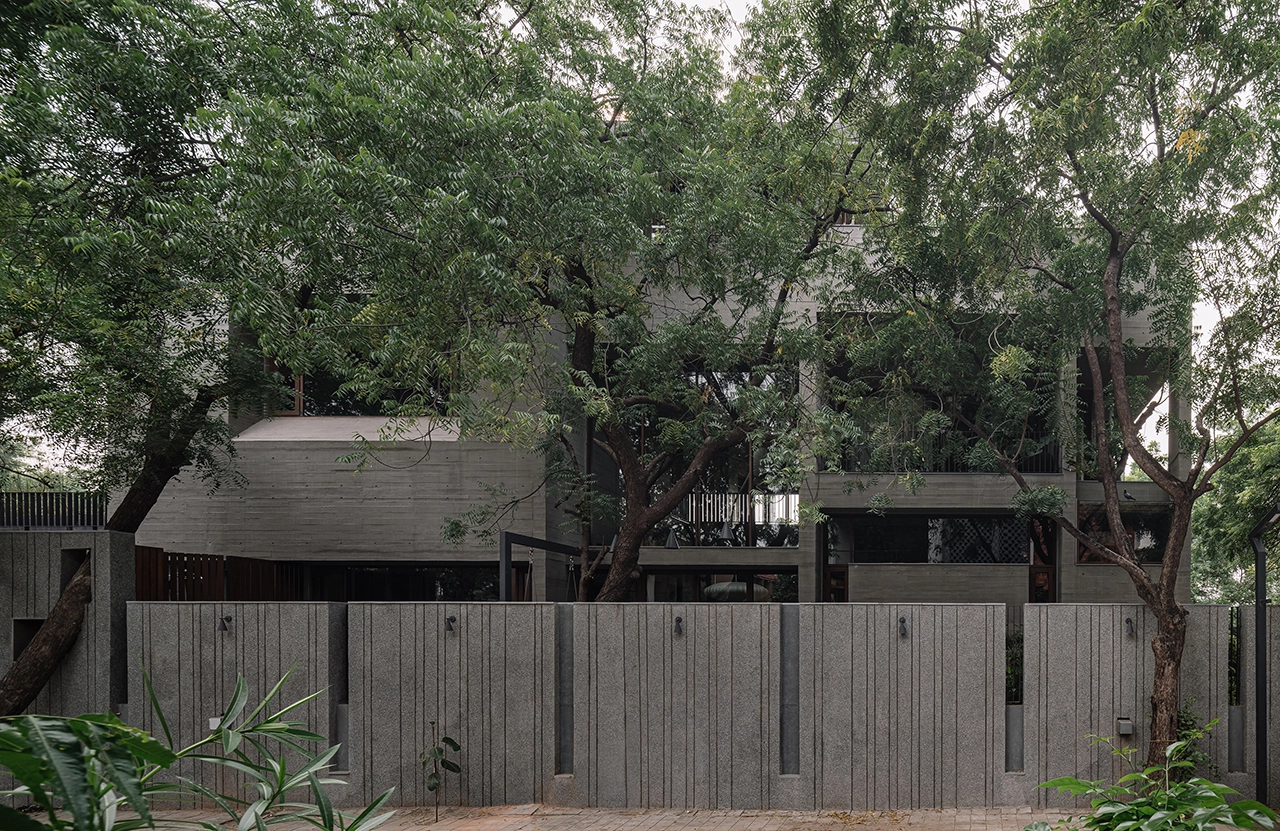
Studio Saransh’s MS House in Ahmedabad offers a bold answer. The design of the house begins with a simple promise: to preserve the site’s nine mature neem trees at all cost. The result is a concrete structure that bends to nature’s will, influencing every decision—from spatial layout to the architectural form and material palette—in the process. This sensitivity to context and environment is a hallmark of Studio Saransh’s design ethos, which emphasises functional elegance with an impactful design language.
Project Name: MS House
Studio Name: Studio Saransh
Location: Ahmedabad, Gujarat
Finish date: July, 2024
Status: Completed
Built-Up Area: 605 sqm
Site area: 543 sqm
Design Team: Vishal Gohel, Anamica Gupta
Photography: Ishita Sitwala | The Fishy Project
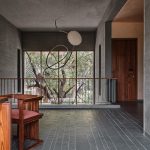
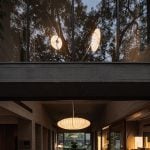
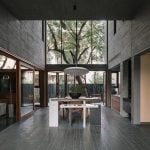
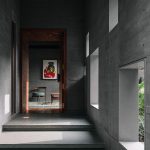
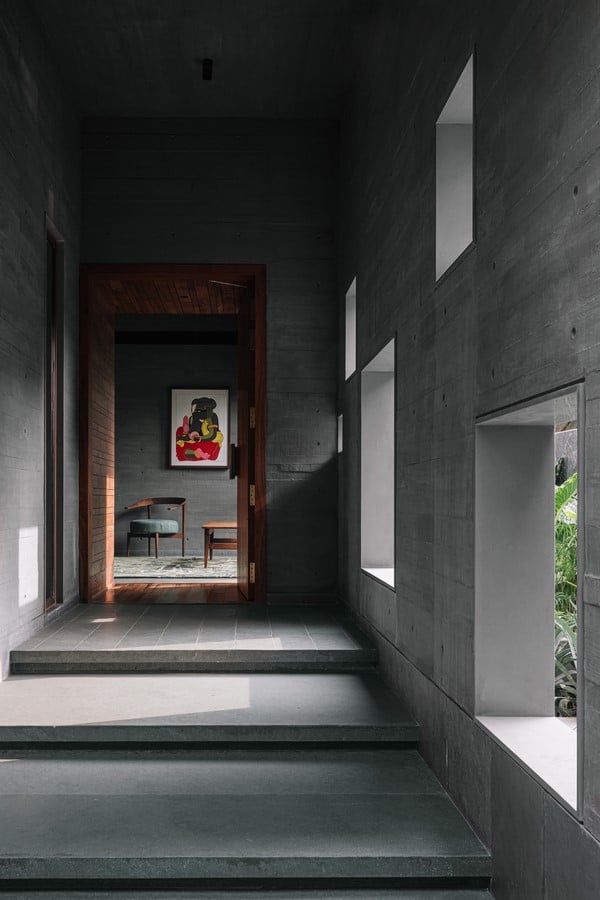
The influence of nature is evident from the moment one approaches the site. The boundary wall winds around a tree trunk to preserve its growth, and a downward-curving branch near the entrance lobby reinforces this connection. A dramatic entrance corridor with square punctures in the wall leads the visitors into the home. These carefully positioned openings transform an otherwise austere passage into a dynamic space, where dappled sunlight casts ever-changing patterns across the flooring and walls, while offering glimpses of the lush greenery beyond. Inside, the house is organised around a double-height central bay that celebrates the neem tree as its focal point. Oriented East-West, it becomes a place where the family gathers for morning tea and meals under the canopy.
“The central bay is more than just a design element—it is the soul of the house”, explains Malay Doshi, the principal architect at Studio Saransh. It anchors two wings: the front housing the living room, verandah and garden; the other accommodating the guest room, the kitchen and ancillary spaces. “Every element of this house is shaped by the site’s natural context and the family’s needs, embodying our belief that a good design must seamlessly integrate function, individuality, and environment,” adds Kaveesha Shah, the principal interior designer at Studio Saransh.
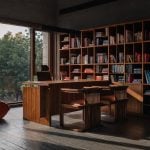
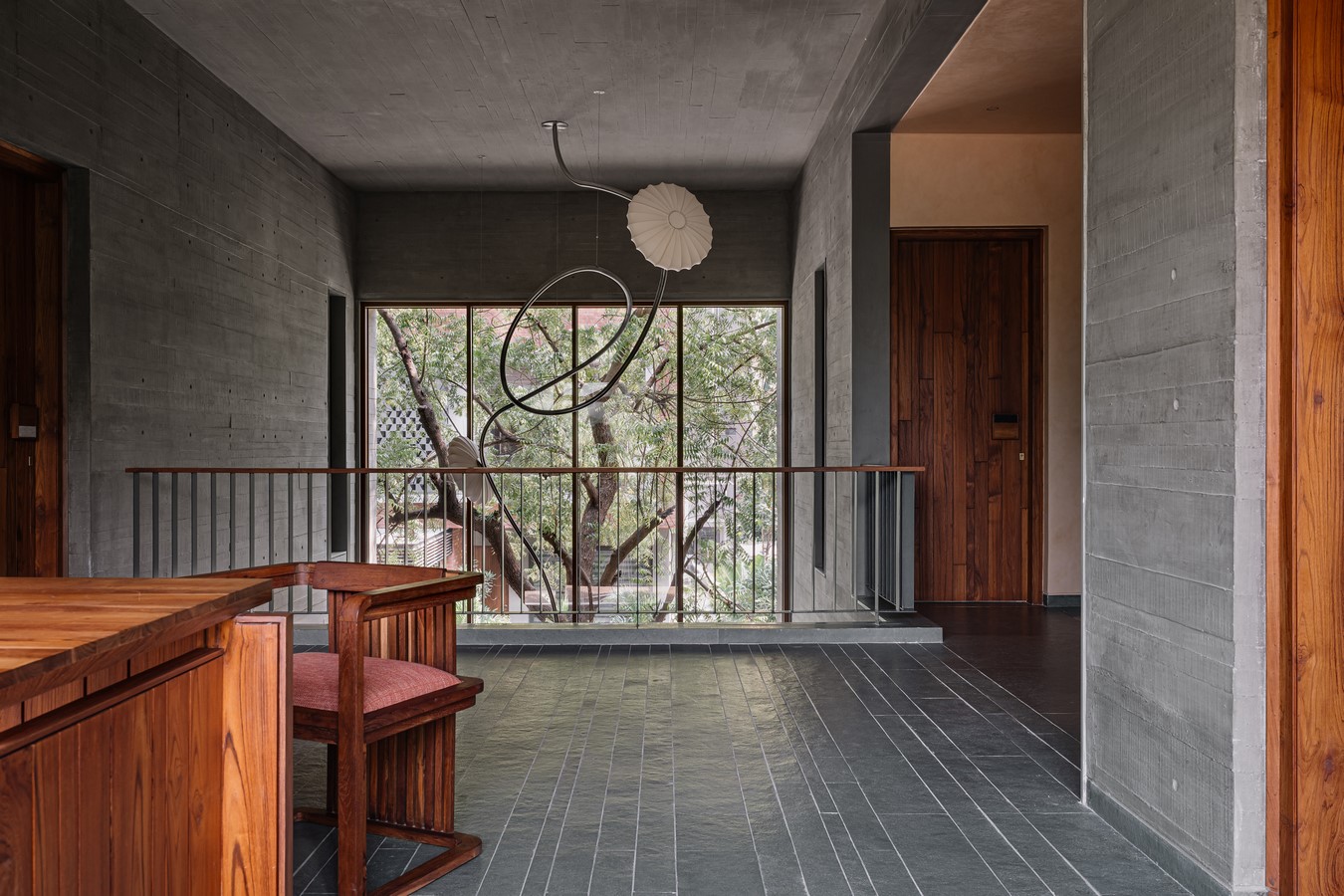
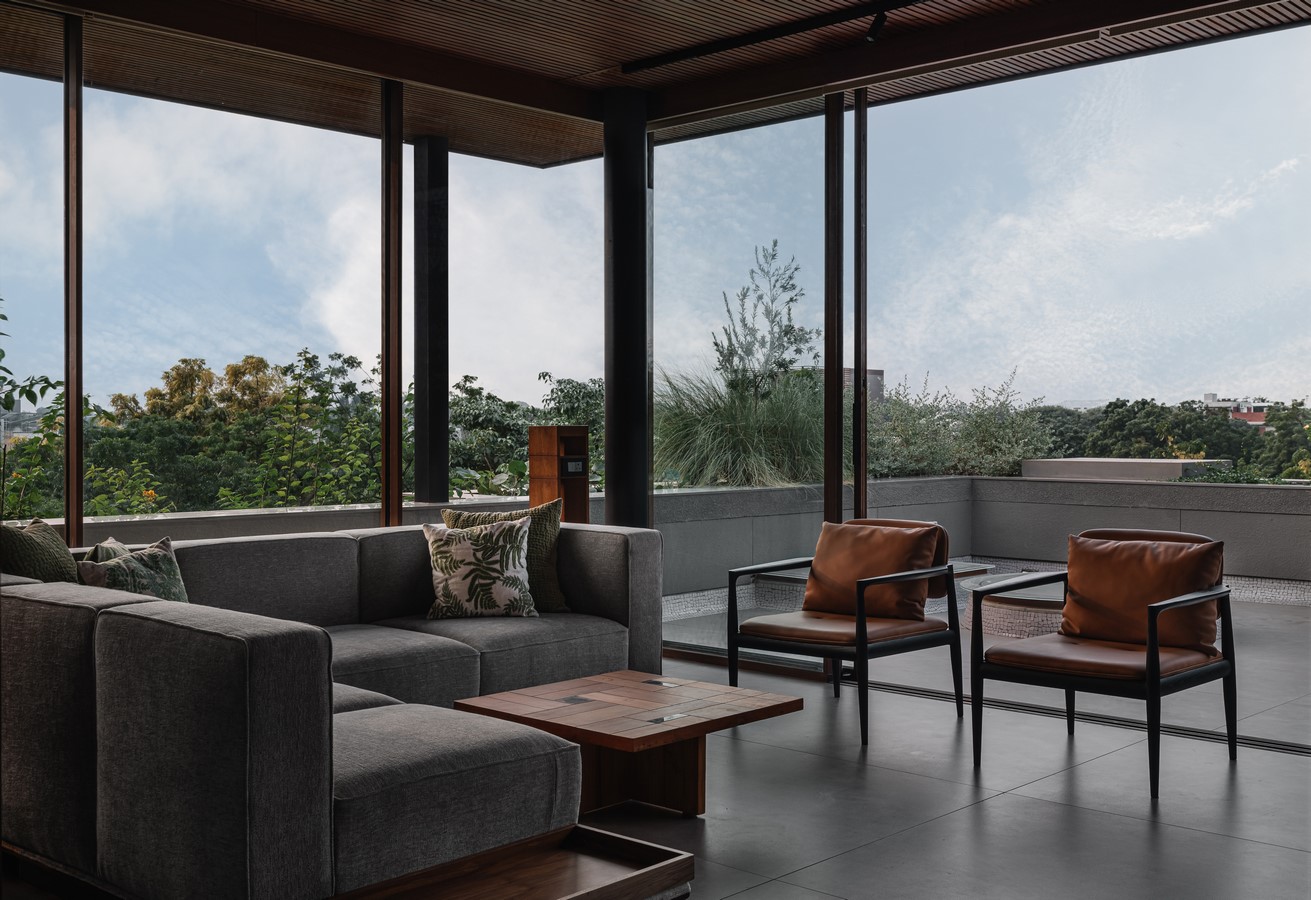
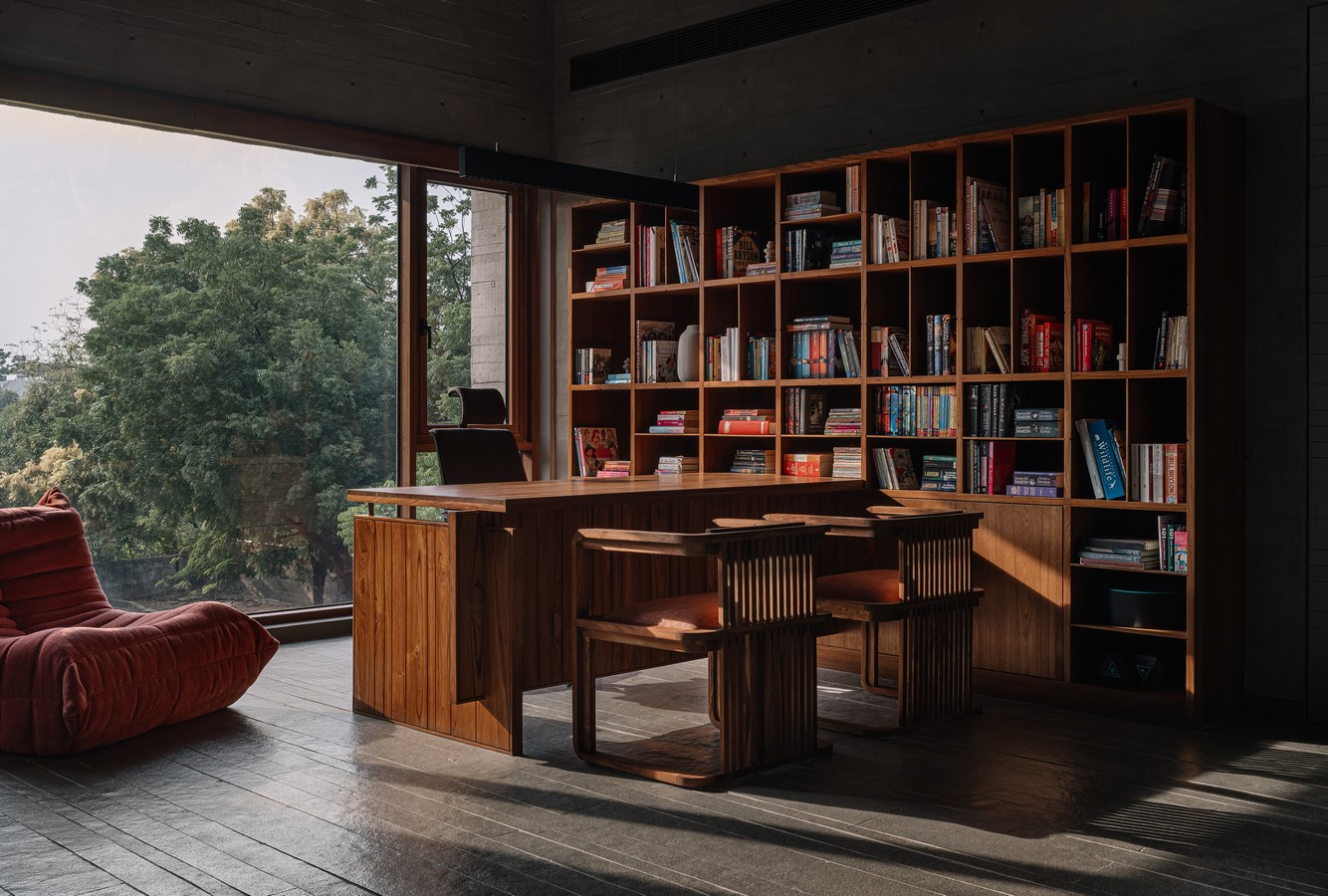
On the upper floor, the central bay transitions into a study area overlooking the dining space below. Each space establishes its own relationship with the trees outside. The master bedroom, for instance, positioned directly above the living room, opens to a shaded balcony overlooking the trees, while the daughter’s bedrooms occupy the quieter rear wing with the views of the backyard. The second floor serves as a social terrace with a family lounge, bar, and powder room, creating an inviting space for gatherings above the neem canopies under the open sky.
The landscape scheme further dissolves the boundaries between nature and architecture. Beyond the preserved neem trees, a careful curation of tropical and local plant species adds layers to the green foliage. A serene water feature near the entrance provides a gentle acoustic backdrop while reflecting fragments of sky and foliage. On the terrace, creepers are planted strategically along the parapet—an intentional gesture that will, over time, allow the greenery to spill over the building’s sharp concrete geometries.
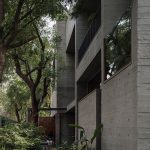
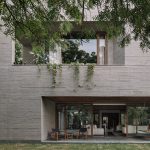
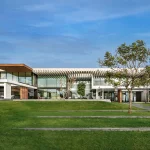
The Brutalist aesthetic manifests strongly in the house’s exterior, where bold geometries of the concrete facade disappear quietly within the green foliage. Square punctures within the facade, and deep chamfered window sills further maximise this effect, whilst allowing diffused light to cast playful shadows. The facade, enveloped in wooden-strip textured concrete, subtly mirrors the textures of the trees, softening the structure’s visual presence while enhancing its tactile appeal. However, beneath its raw concrete geometries, MS house quietly reveals its most significant achievement: a Brutalist house crafted into a home, by a multidisciplinary team of architects and interior designers.
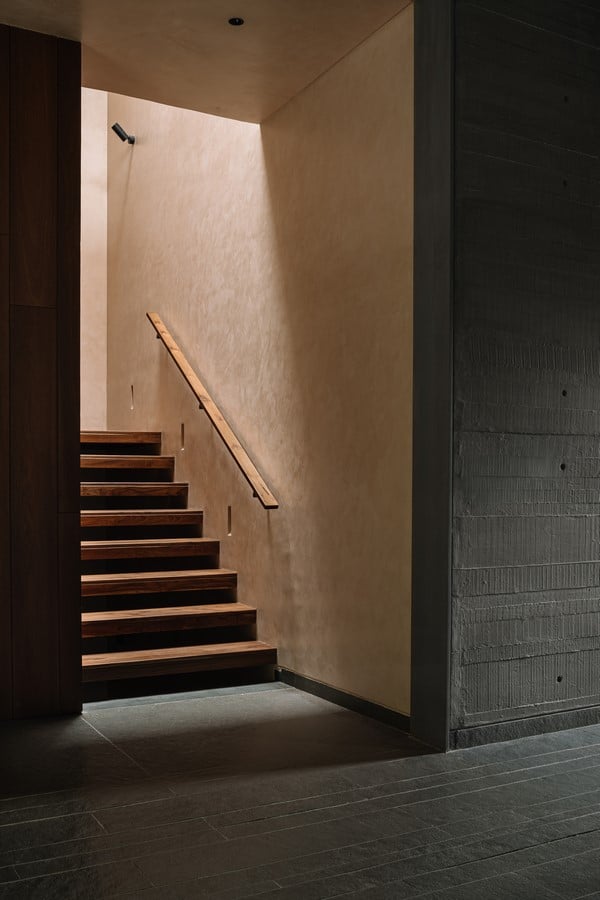
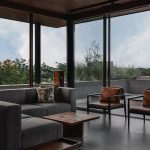
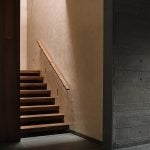
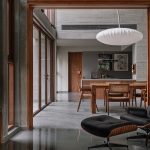
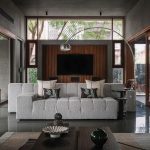
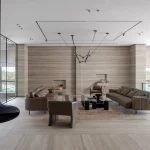
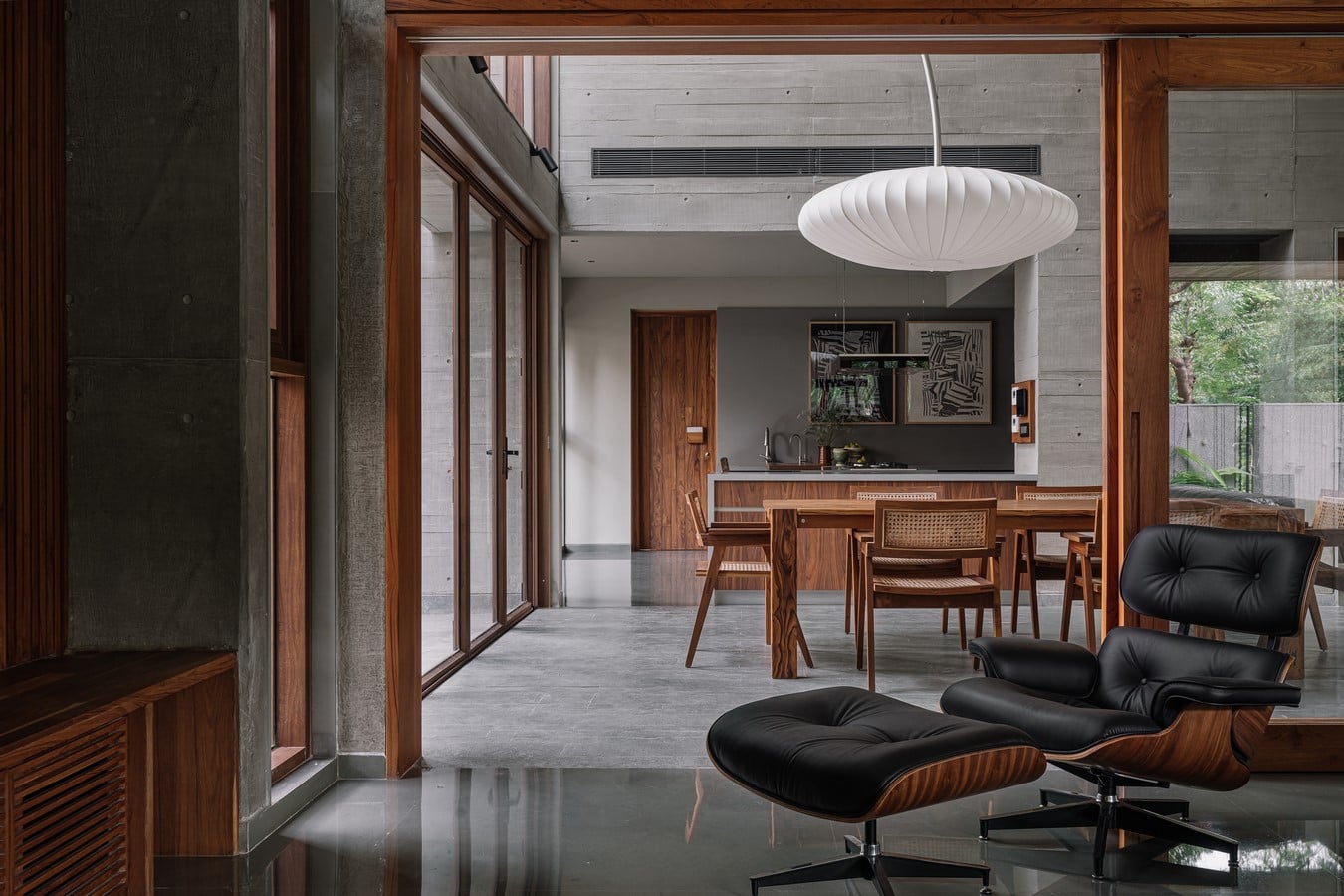
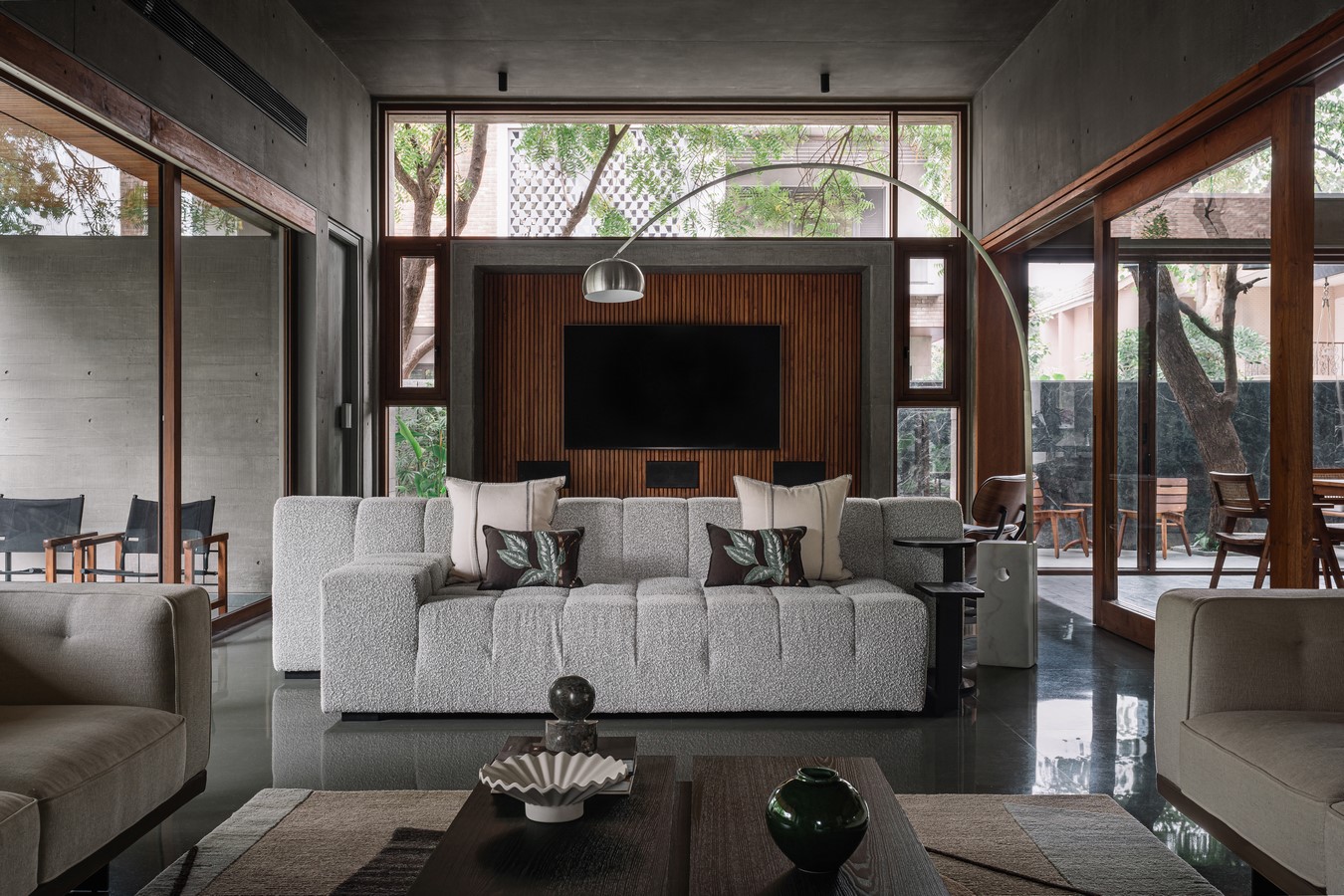
Inside, the material palette is deliberately restrained yet thoughtful, with concrete and lime plastered walls and grey Kota flooring creating a cohesive design that ties the home’s interior and exterior together. The kota flooring in a leather finish extends the concrete plank pattern to the floor of the central bay, making it feel like the “outside”. In spaces with ply cast concrete, the kota is laid in a seamless polished finish. It forms an ideal backdrop for the dining ensemble—a custom order wooden table by TDW with the rosewood detailing mirroring the linearity of the concrete and kota pattern, and teak and wicker chairs from Mistry at Finest, paired with a single point suspension parametric lamp designed in collaboration with Andlabs. The living room incorporates smooth-polished plywood cast concrete surfaces and ethically sourced Valsadi teak panelling, with ribbon windows framing the views of the foliage outside. The living room is designed to function as two clusters of seating, one with a custom sectional sofa set and an iconic Eames chair with the Arco lamp from Flos bringing the space together—while the second more formal furniture setup featuring custom designed fabric lamps and an abstract art rug from Jaipur Rugs.
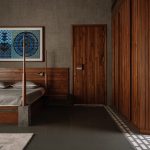
The bedrooms reflect distinct personalities of their occupants while maintaining an intimate connection to nature. The master bedroom, in ply cast concrete surfaces and kota flooring with terrazzo detailing, features a custom four-poster bed with stone pedestals and wooden posts. The daughters’ rooms maintain their distinct personalities—one embracing graphite tones, the other featuring sage green walls and green marble-infused terrazzo flooring. This colour palette extends into their respective ensuite bathrooms. The guest bedroom, designed for elderly parents, offers a calm retreat with natural tones and minimal detailing.
The bathrooms become a design narrative of their own, with thoughtfully curated details. The master ensuite is bathed in natural light from two skylights: a circular one above the sink and a square one hidden in the shower, while the black powder room on the terrace, featuring full-height glazing, overlooks an array of Champa trees, creating an illusion of a private courtyard. A custom concrete basin, designed in collaboration with Artemis Cast Stone, sits on its walls, allowing the glazing to extend to the floor, whereas wooden blinds provide much needed privacy to this space.