Inception of the Design
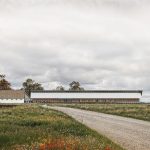
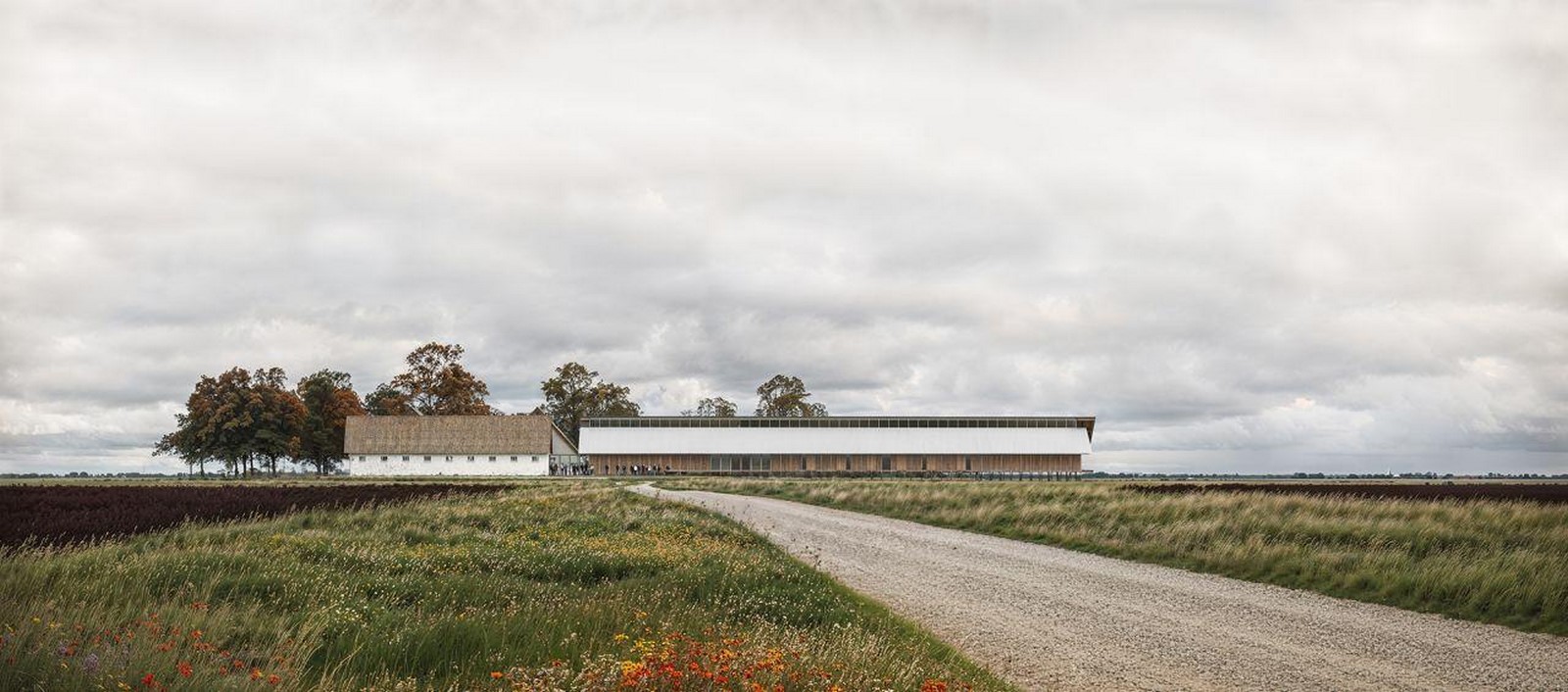
Cobe, a studio based in Copenhagen, Denmark, recently unveiled a new design curated for a museum commemorating the life and work of the legendary Danish furniture designer, Hans Wegner, known as the ‘Master of the Chair.’ Taking to their social media handles, Cobe describes the upcoming structure not only as a repository of various artefacts, sculptures, and chairs designed by the stalwart, but also as a vestigial tribute to his design philosophy and sensibilities, which dictated that the team of architects incorporate inspirations into its form, function, and materiality. Rooted in Wegner’s life and background, the museum has been conceived as an organic extension to a historic farm in Tønder, southwestern Denmark, from 1445, thus honouring his origins against the backdrop he grew up in. The design seamlessly blends the nature, neighbourhood context, and history in a peaceful symphony, evoking nostalgia and awe, while serving as a platform for international visitors and enthusiasts to witness the prowess of the great designer.
Hans Jørgensen Wegner
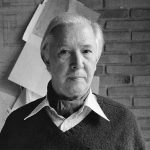
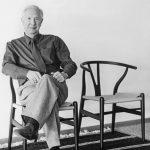
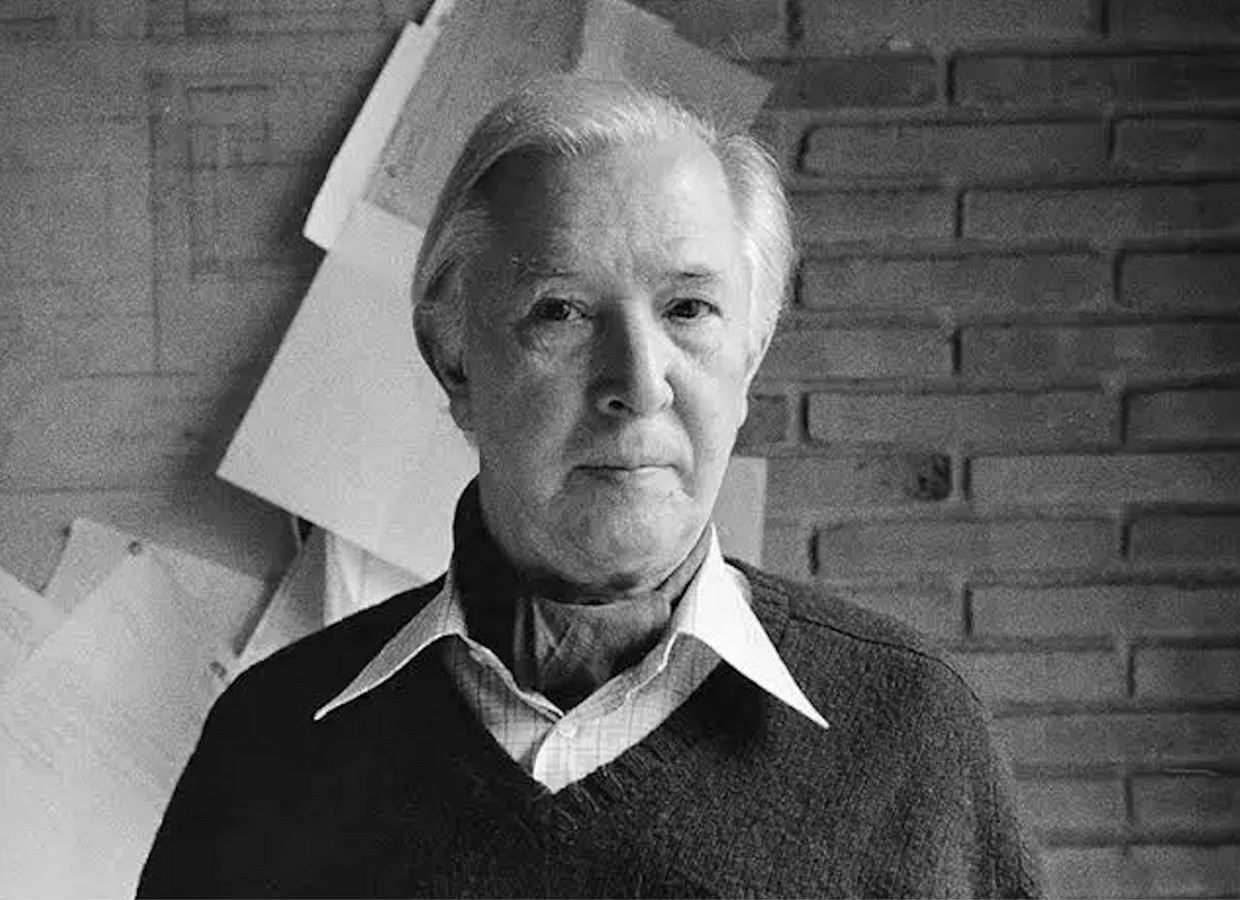
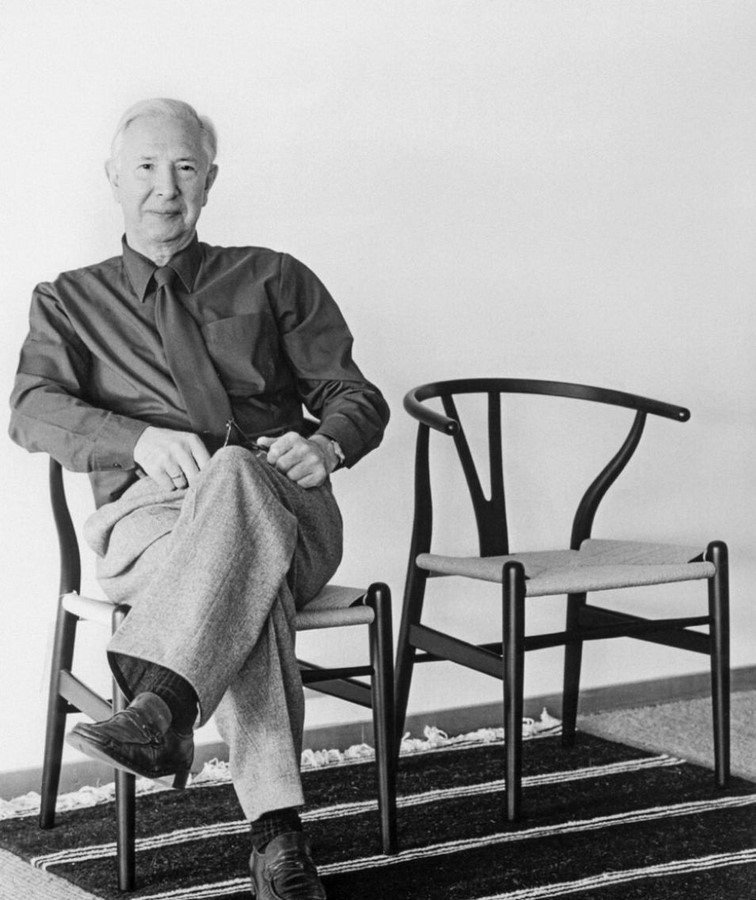
Hailed as one of the key proponents of ‘Danish Design,’ Hans Jørgensen Wegner was a Danish furniture designer who is known to have propagated the principles of Organic Functionality, modernism, and groundedness to local settings in terms of style and materials. Hailed as the ‘King of Chairs,’ the designer was born on 2 April 1914 in Tønder, the very place where the museum is being established. He went on to secure an education in cabinet making and carpentry from Teknologisk Institut and Danmarks Designskole, where he was instructed under esteemed architects and designers, namely H. F. Stahlberg and Orla Mølgaard-Nielsen, some instrumental figures at the time. The latter played a pivotal role in his life, associating him with master cabinet maker Johannes Hansen, which subsequently set the track for his own style. He gained international success with chair models such as the Dolphin Lounge chair, Peacock chair, Round chair and his most notable and flagship work, the Wishbone chair.
Design Particulars
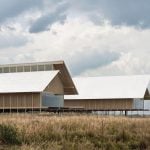
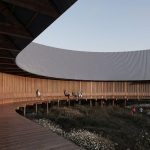
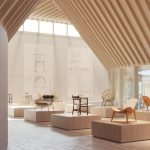
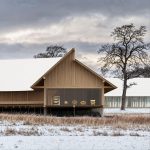
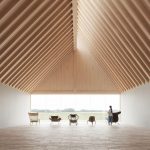
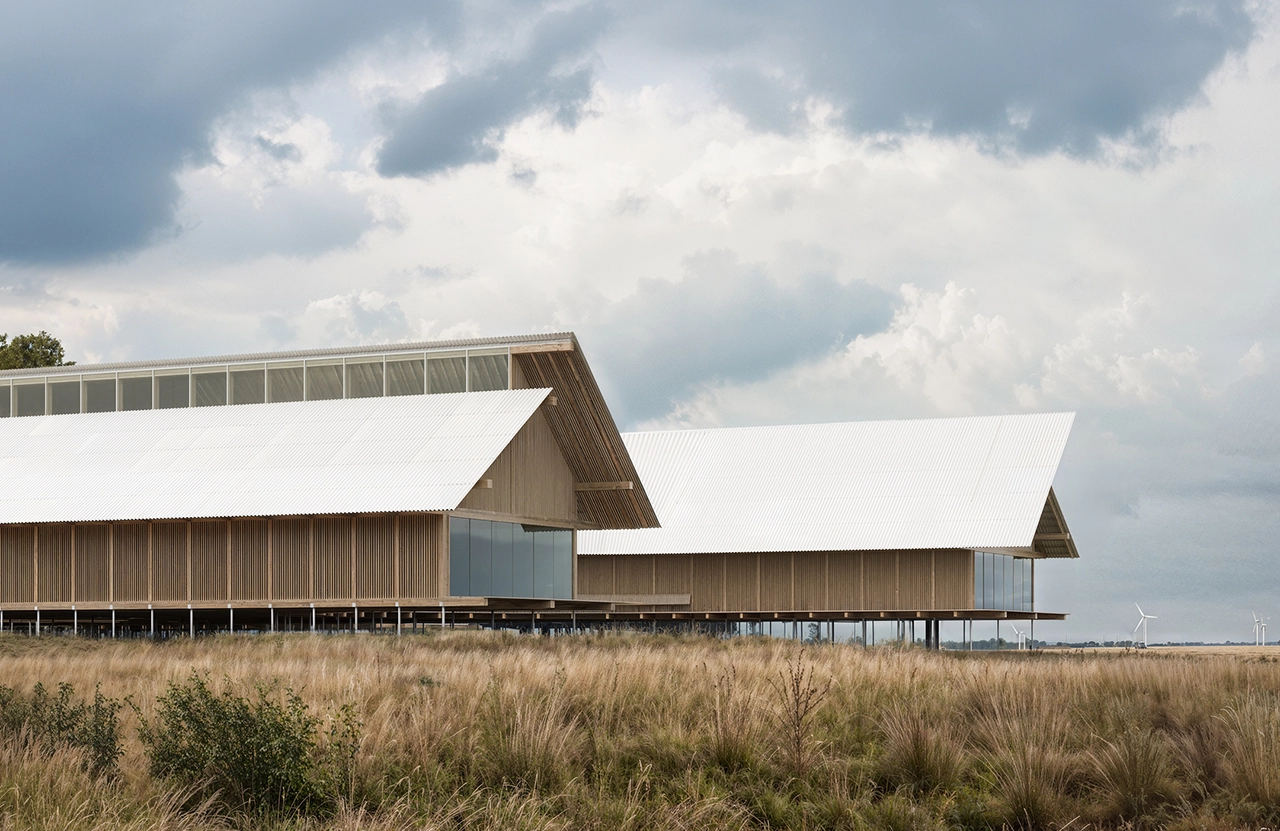
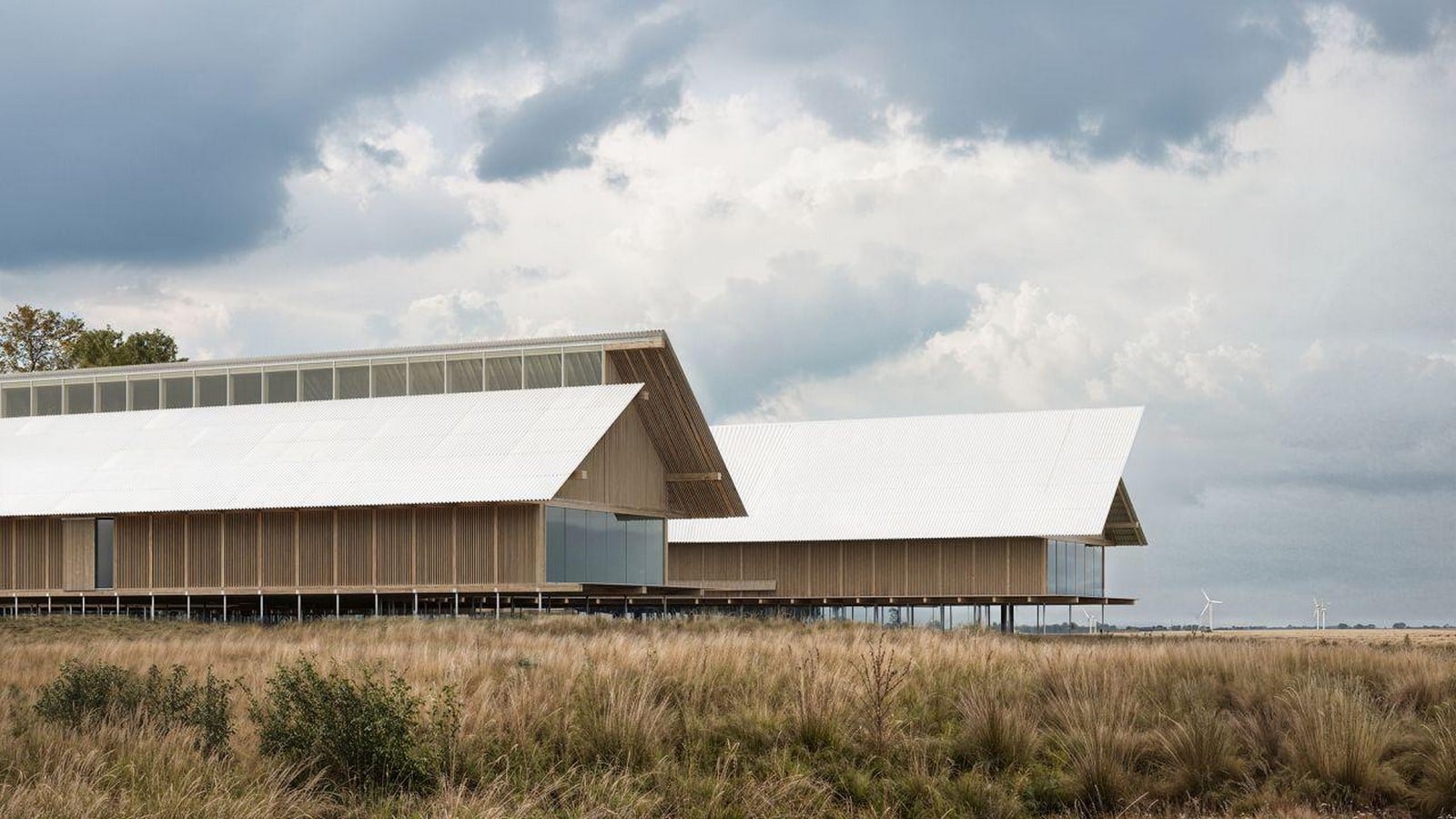
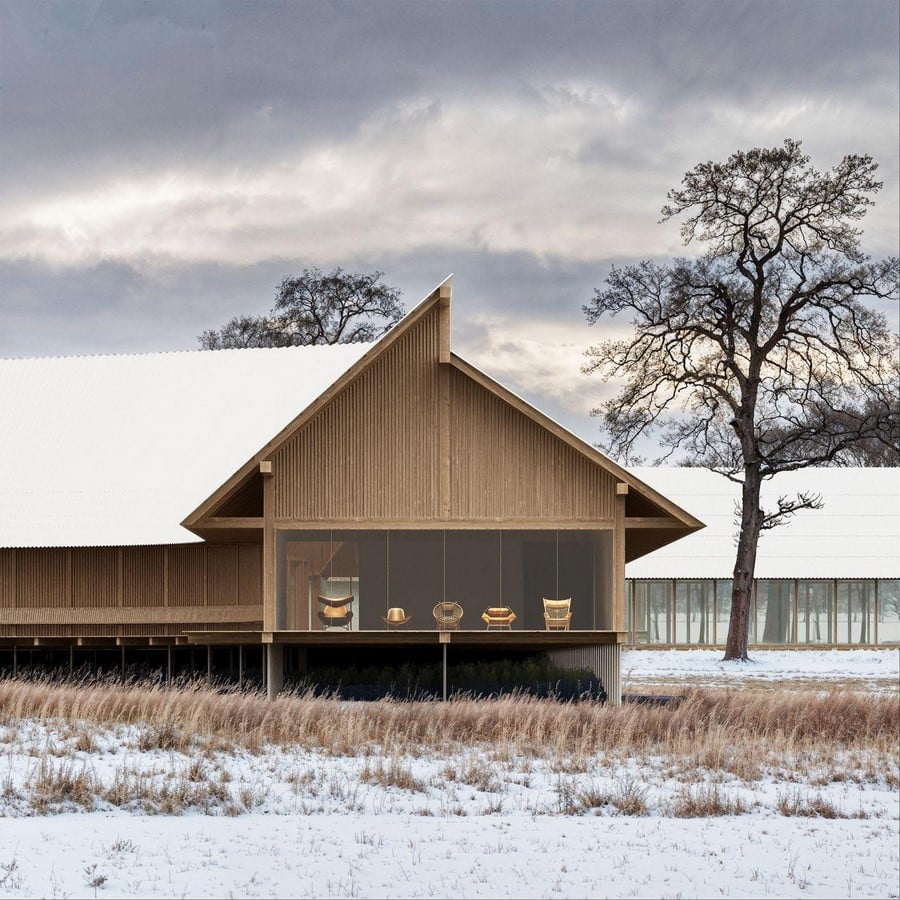
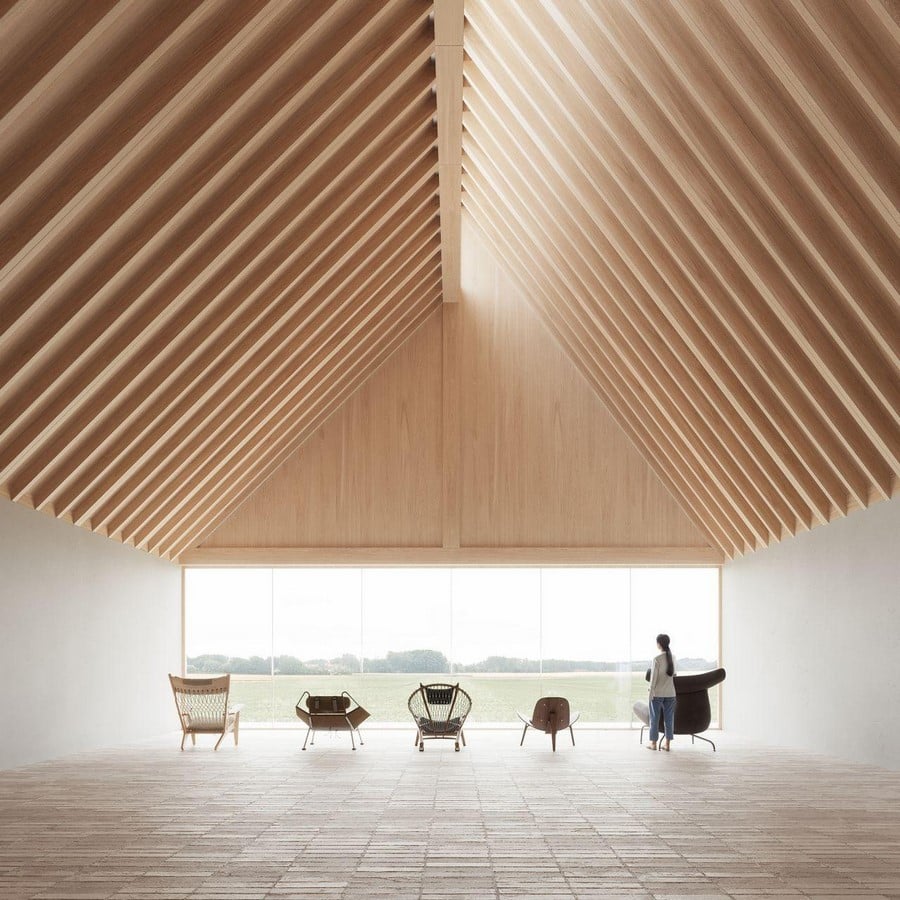
The 5,000 metre square proposal now being executed by Cobe was finalised and selected through a competitive review procedure in 2024, wherein Cobe emerged as the Victor, with the studio now striving to realise the design with meticulous detailing and implementation. Balancing along the lines of Wegner’s approach and extensive handling of wood, the design acts as a timber addition to the existing farmhouse, combining vernacular forms and historical relevance to sheer modernism. It furthers the concept of adaptive reuse, providing the rural landscape with a new identity and purpose. Effortlessly bridging form and function as emphasised by Wegner and his works, the building is an articulate entity built entirely of timber and raised on stilts to accommodate considerations of both topography and climate. Encased by a white and reflective sloping roof, it features bands of clerestory windows and glazed facades to let in adequate natural lighting while resonating with the expansive winter landscape.
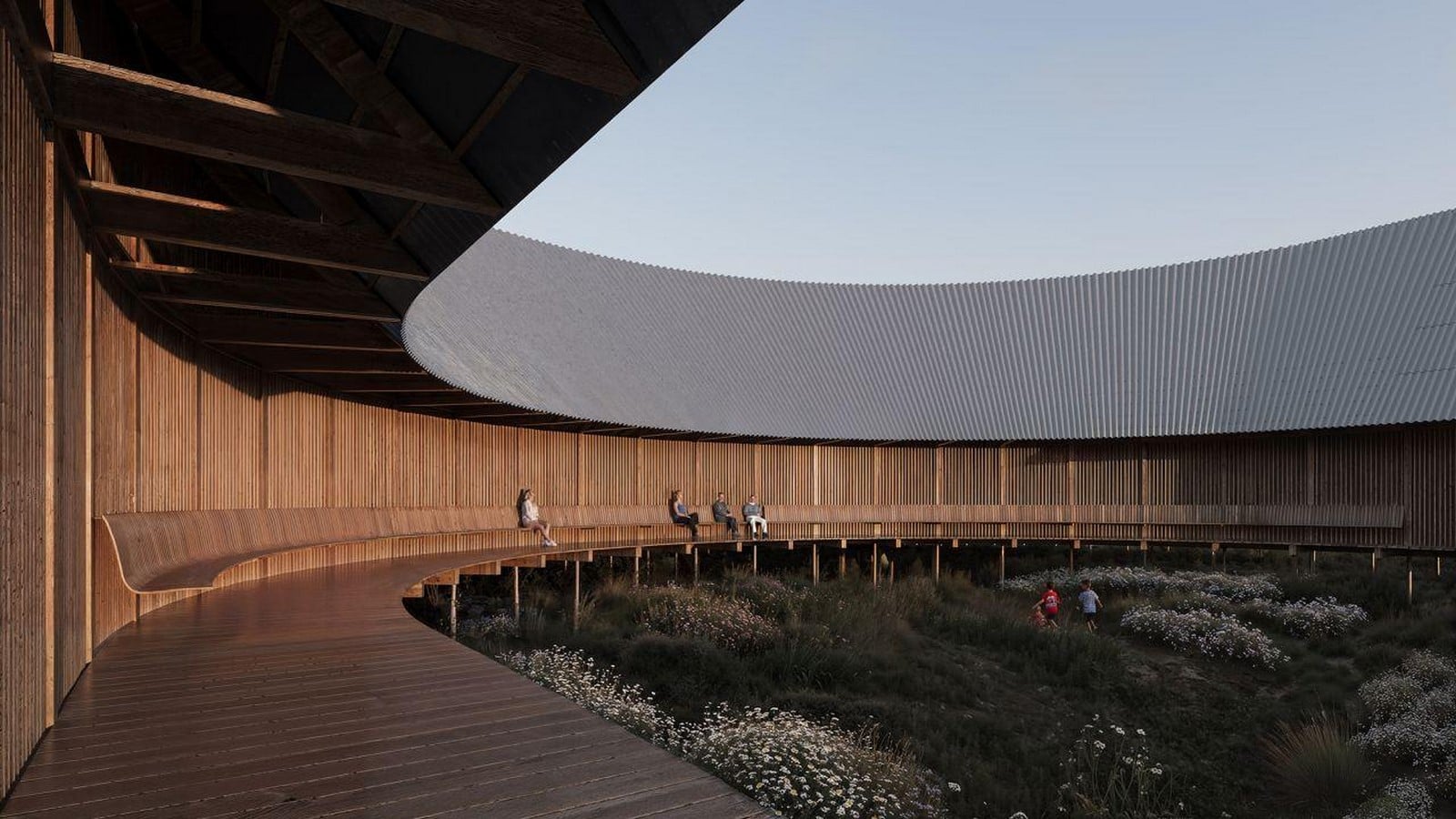
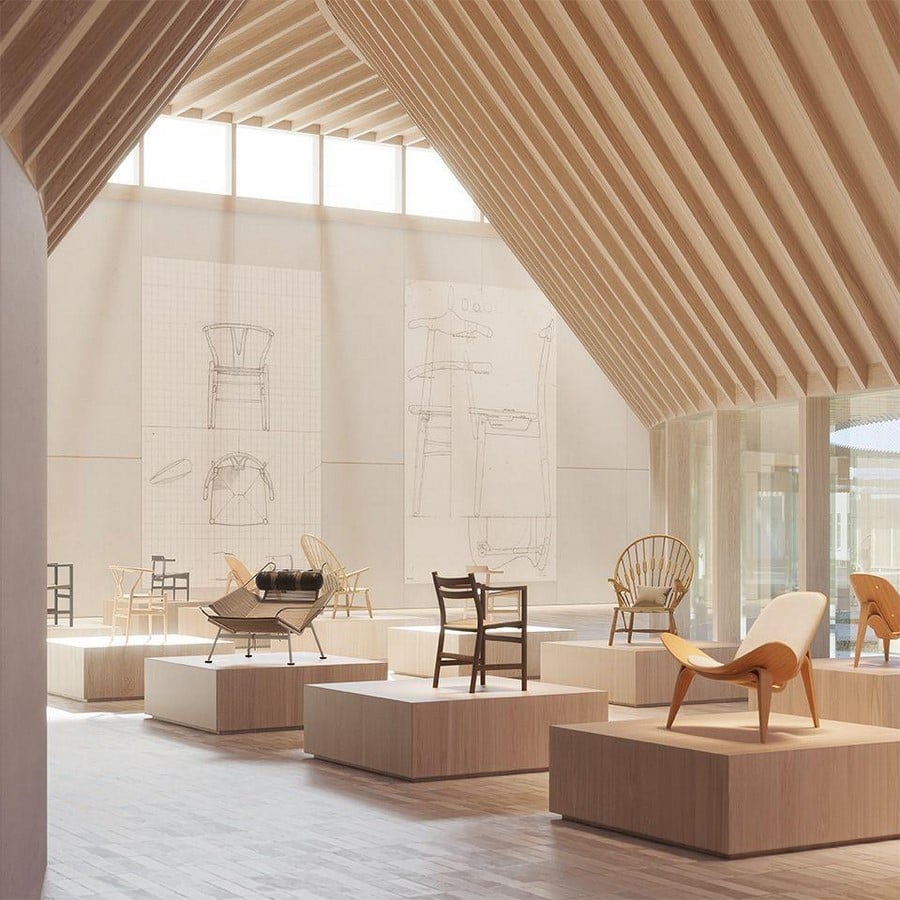
Staying true to the spirit of Wegner’s work and philosophy, the building ideates as an icon and sculptural marvel, along with nurturing a strong sense of functionality and simplicity. With wooden members along the facades, sprawling landscape integration to courtyards and seating decks, the design embraces both the community and environment in its entirety. A strong sense of volume, proportion, and human scaling creates belongingness and appreciation of the magnificence, spotlighting the works of the celebrated designer through models, panels, and photographs. The project ultimately forms a means to coalesce simple constructions, vernacular technology and materials, and cultural allusions to deliver to the world a museum that justifies the life-long legacy of Hans Wegner, simulating aspects of his ideals and principles into a rooted, built form.
The references are listed as follows in Harvard Citation style:
Wikipedia Contributors (2019). Hans Wegner. [online] Wikipedia. Available at: https://en.wikipedia.org/wiki/Hans_Wegner.
Cobe (2025). We’re excited to share our design for Museum Wegner – dedicated to the life and legacy of Danish designer Hans J. [online] Linkedin.com. Available at: https://www.linkedin.com/posts/cobe_were-excited-to-share-our-design-for-museum-activity-7364174583702192128-Hnmr/?utm_source=share&utm_medium=member_android&rcm=ACoAAETK3M0BDqeGyfwpWWqvvrCrwHPplav6MUY [Accessed 25 Oct. 2025].
Crook, L. (2025). Cobe plans Museum Wegner for ‘an absolute legend in Danish design’. [online] Dezeen. Available at: https://www.dezeen.com/2025/10/07/cobe-museum-wegner-denmark/ [Accessed 25 Oct. 2025].
Scandinavian Design (2025). Scandinavian Design. [online] ScandinavianDesign.com. Available at: https://scandinaviandesign.com/wegner-museum-tonder-cobe-design/ [Accessed 25 Oct. 2025].
Metalocus.es. (2025). On stilts in the landscape. A Museum for Hans J. Wegner by Cobe. [online] Available at: https://www.metalocus.es/en/news/stilts-landscape-museum-hans-j-wegner-cobe [Accessed 25 Oct. 2025].
Dogan, R. (2025). Cobe Unveils Design for Museum Wegner in Tønder, Denmark. [online] ArchDaily. Available at: https://www.archdaily.com/1035113/cobe-unveils-design-for-museum-wegner-in-tonder-denmark [Accessed 25 Oct. 2025].